Vittoriano


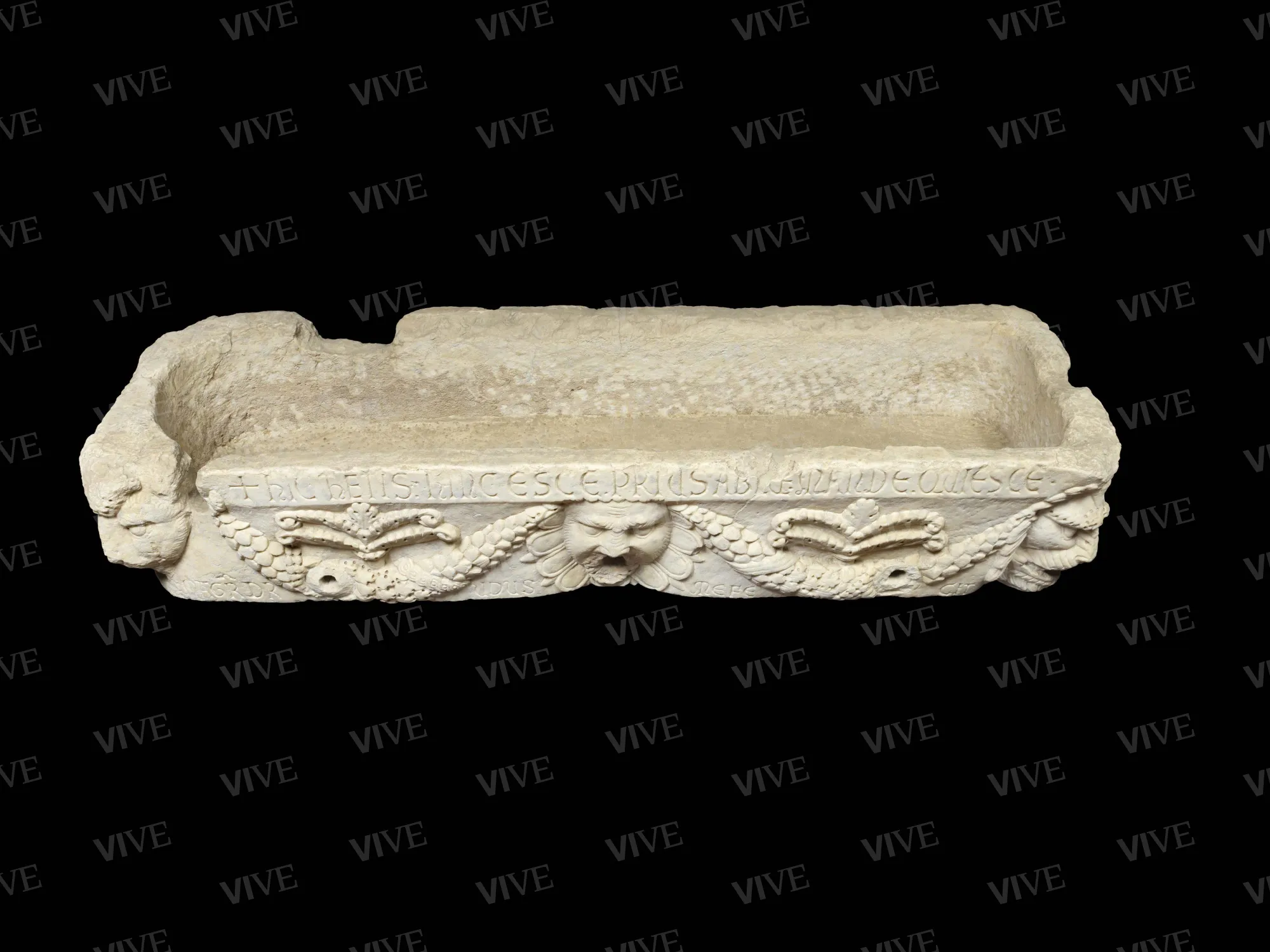
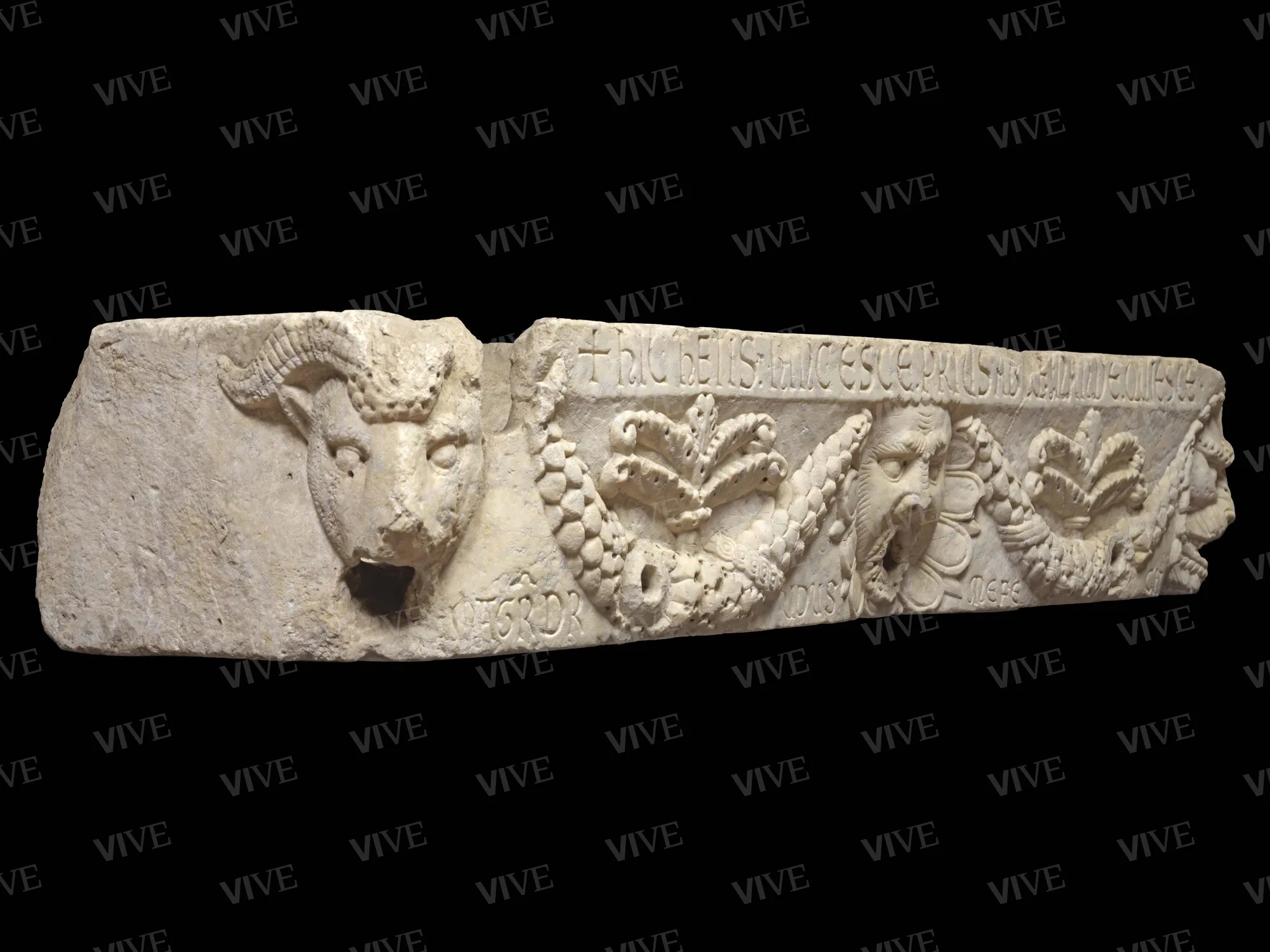
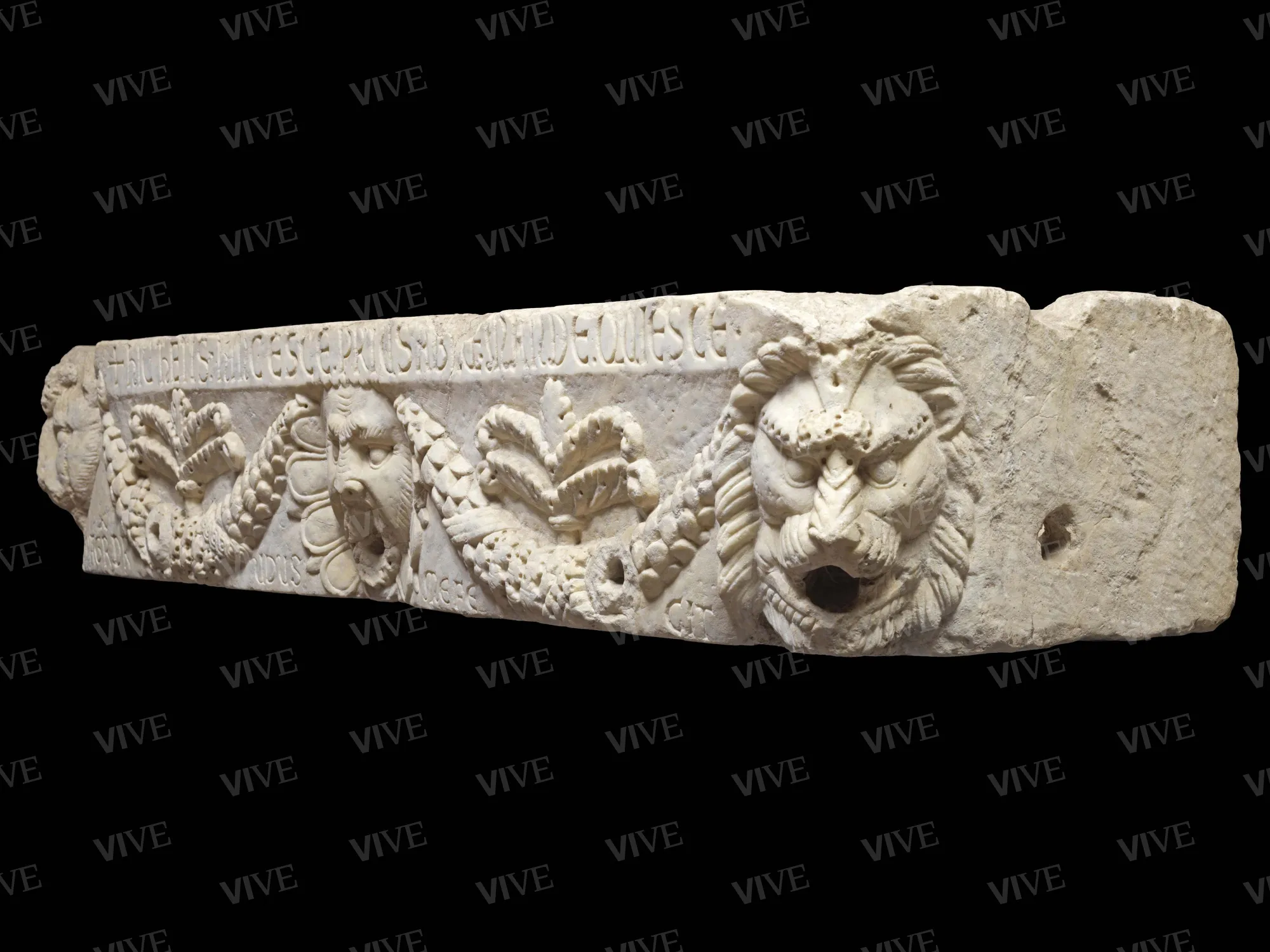
Rectangular basin, whose front is decorated in the center with a human mask with grotesque, frowning face and from whose gaping mouth is a waterspout. The face is surrounded by nine petals, and the temples of the face give rise to two plant festoons with two acanthus tufts. On the upper part of the main section of the basin, above the decoration just described, runs a band on which an inscription is engraved; along the lower edge, between the sculpted images, runs a second band that presents the name of the author of the basin.


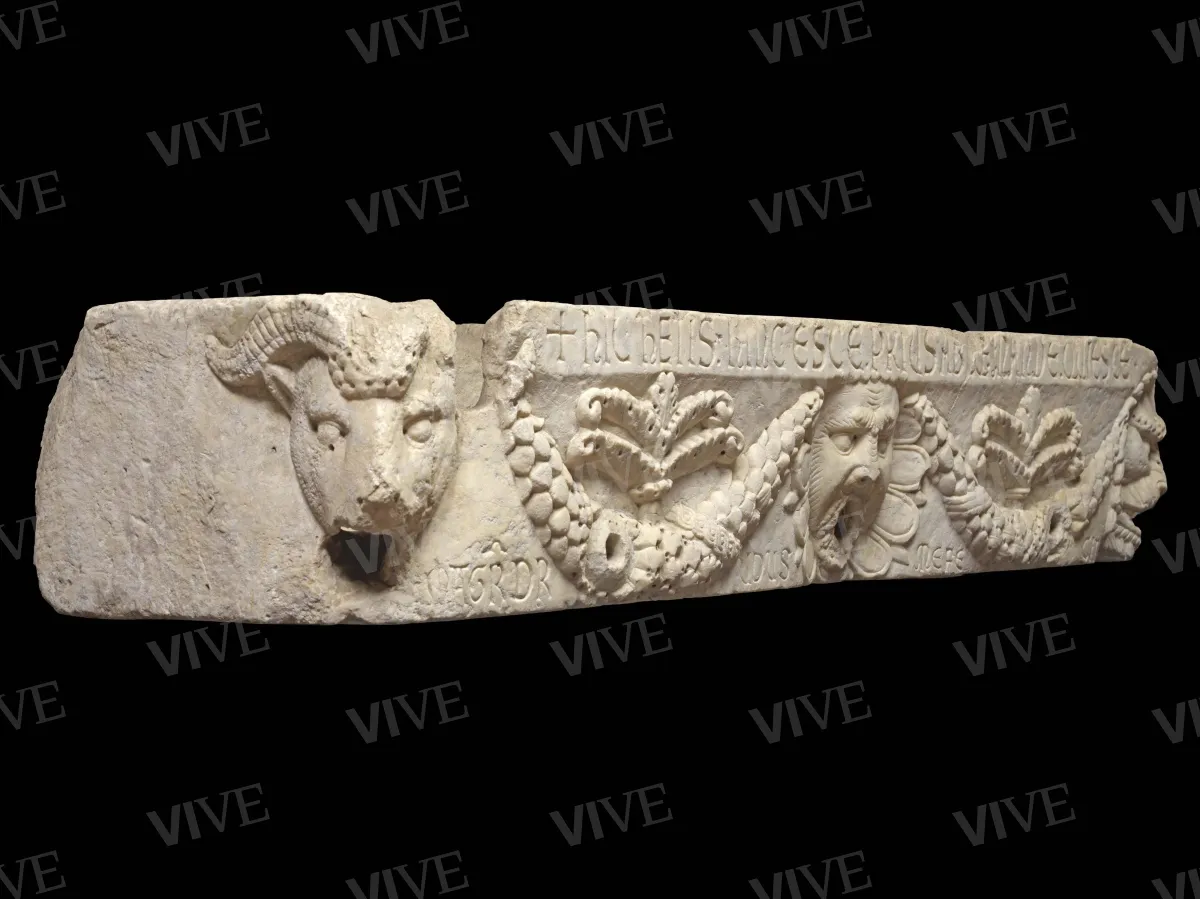
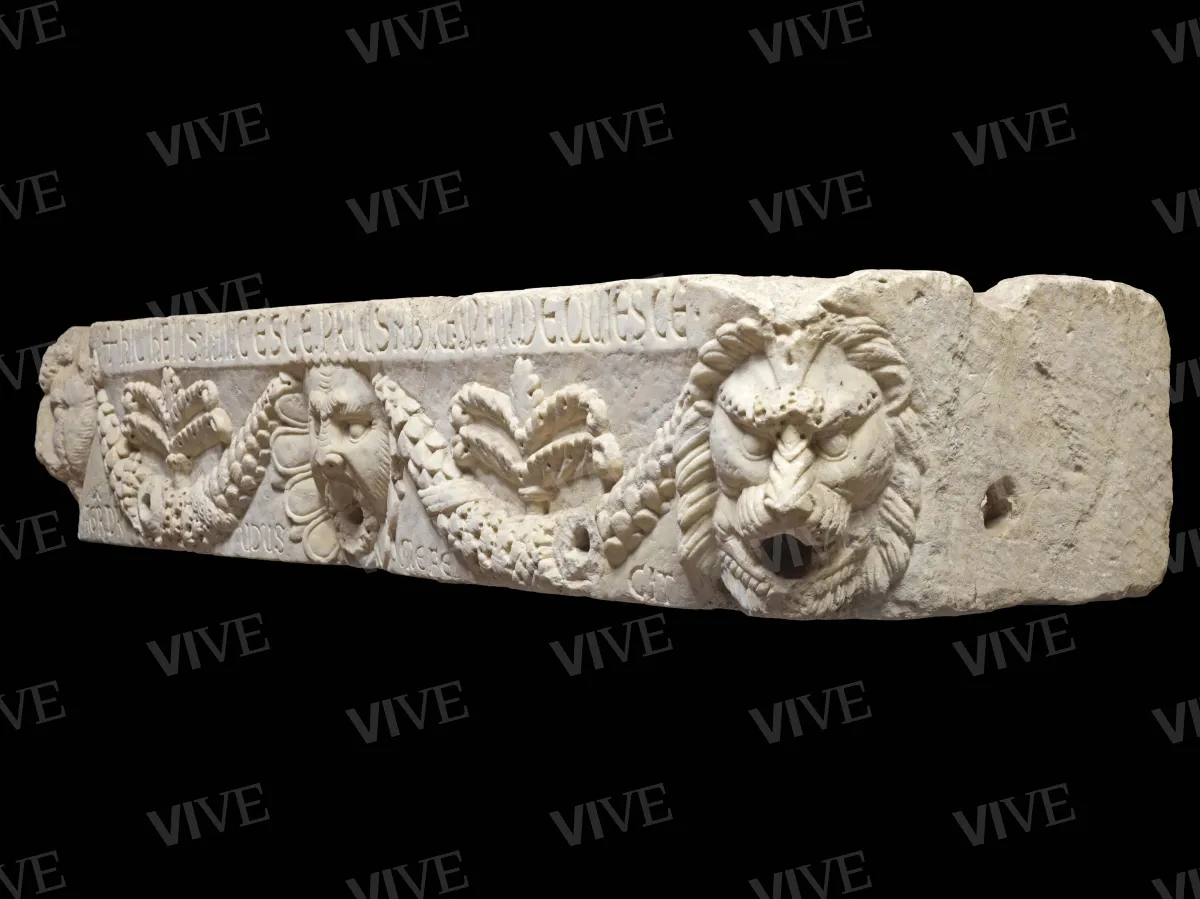
Rectangular basin, whose front is decorated in the center with a human mask with grotesque, frowning face and from whose gaping mouth is a waterspout. The face is surrounded by nine petals, and the temples of the face give rise to two plant festoons with two acanthus tufts. On the upper part of the main section of the basin, above the decoration just described, runs a band on which an inscription is engraved; along the lower edge, between the sculpted images, runs a second band that presents the name of the author of the basin.
The front of this rectangular basin is decorated in the center with a human mask with grotesque, frowning face and from whose gaping mouth is a waterspout. The face is surrounded by nine petals, and the temples of the face give rise to two plant festoons with two acanthus tufts. On the upper part of the main section of the basin, above the decoration just described, runs a band with the following engraved inscription: “HIC THETIS HINC ESCE PRIUS ABLVUE MANDE QUIESCE.” Along the lower edge, between the sculpted images, runs a second inscription—“MAGRI DR/UDUS/ ME FE/CIT”—which is even more important as it presents the name of the author of the washbasin, Drudo da Trivio, a Roman marble worker who was active in Rome and the Patrimonium Petri between the 1220s and 1250s, and who had already worked on the ciborium of the cathedral of Ferentino (Gianandrea 2006, pp. 112–117), the furnishings of the presbytery for the cathedral of Civita Castellana (Claussen 1987, pp. 67–71 and 82–91), and the lost liturgical furnishings of the church of Lanuvio (Gianandrea 2006, pp. 145–146). There is also a third inscription mentioned (Santangelo 1954, p. 12) in Santa Francesca Romana, and another lost inscription in Santa Maria Nova, probably dating back to the time of the restorations promoted between 1216 and 1227 by Pope Honorius III (Claussen 1987, pp. 144–153; Gianandrea 2008, p. 206, n. 42).
We have no information regarding the provenance of the piece, and the reconstruction of the artifact’s collection history is rather complex. The first to mention Drudo’s work was Giovannoni (1904), who outlines its main characteristics and mentions its original placement in the furnishings of the presbytery of the cathedral of Civita Castellana around 1230 (Giovannoni 1904, pp. 1–10; Claussen 1987, pp. 67–71 and pp. 82–91). Between 1880–1889 (when the Palazzo Venezia Museo Nazionale was first being organized) and 1901, the basin was held in the collections of the museum of Palazzo Massimo alle Terme with the inventory number MNR 677 (Latini 1998–1999; Gianandrea 2008, p. 206). In 1911, the basin was exhibited in the Castel Sant’Angelo museums in the section dedicated to Roman marble workers, where it was defined as a sarcophagus and thus included in the Classical cultural context (General Guide 1911, pp. 77–78). In 1920, the work entered the collections of Palazzo Venezia (Latini 1998–1999). Restoration work was undertaken in 1984 and between 2002 and 2003 (Gianandrea 2008, p. 206).
Valentina Fraticelli
Entry published on 12 February 2025
Good.
1984;
between 2002 and 2003.
“HIC THETIS HINC ESCE PRIUS ABLVUE MANDE QUIESCE”;
“MAGRI DR/UDUS/ ME FE/CIT.”
Originally part of the presbytery furnishings of the cathedral of Civita Castellana, circa 1230;
Rome, during the organization of the Museo Nazionale Romano, 1880–1889;
Rome, collected in the Palazzo Massimo alle Terme museum, inventory no. MNR 677, 1901;
Rome, Museo di Palazzo Venezia, 1920.
Museo di Castel Sant’Angelo, 1911, section dedicated to Roman marbles, where it was defined a sarcophagus.
Giovannoni Gustavo, Drudus de Trivio marmoraro romano, in Miscellanea per nozze Hermanin-Hausmann, Roma 1904, pp. 1-10;
Guida generale delle mostre retrospettive in Castel Sant’Angelo, Bergamo 1911;
Bessone Aureli Antonietta Maria, I marmorari romani, Roma 1935;
Hermanin Federico, Il Palazzo di Venezia, Roma 1948;
Hutton Edward, The Cosmati, London 1950;
Matthiae Guglielmo, Componenti del gusto decorativo cosmatesco, in «Rivista dell'Istituto Nazionale di Archeologia e Storia dell'arte», I, 1952, pp. 248-281;
Santangelo Antonino (a cura di), Il Museo di Palazzo Venezia, Catalogo delle sculture, Roma 1954;
Claussen Peter Cornelius, Magistri Doctissimi Romani (Corpus Cosmatorum I), Stuttgart-Wiesbaden 1987;
Bassan Enrico, Drudo da Trivio, ad vocem, in Dizionario Biografico degli Italiani, 41, Roma 1992, pp. 717-719;
Latini Massimo, Il lapidarium medievale del Museo Nazionale del Palazzo di Venezia, tesi di laurea in Storia dell'arte medievale, facoltà di Conservazione dei beni culturale, Università della Tuscia, a.a. 1998-99;
Gianandrea, in Barberini Maria Grazia (a cura di), Tracce di pietra. La collezione dei marmi di Palazzo Venezia, Roma 2008, p. 206;
Gianandrea Manuela, Drudo de Trivio e Luca di Cosma: gli artisti, le opere e il loro intervento a Civita Castellana, in Creti Luca (a cura di), La Cattedrale cosmatesca di Civita Castellana, Atti del convegno internazionale di studi (Civita Castellana, 18-19 settembre 2010), Roma 2012, pp. 217-232.