Vittoriano


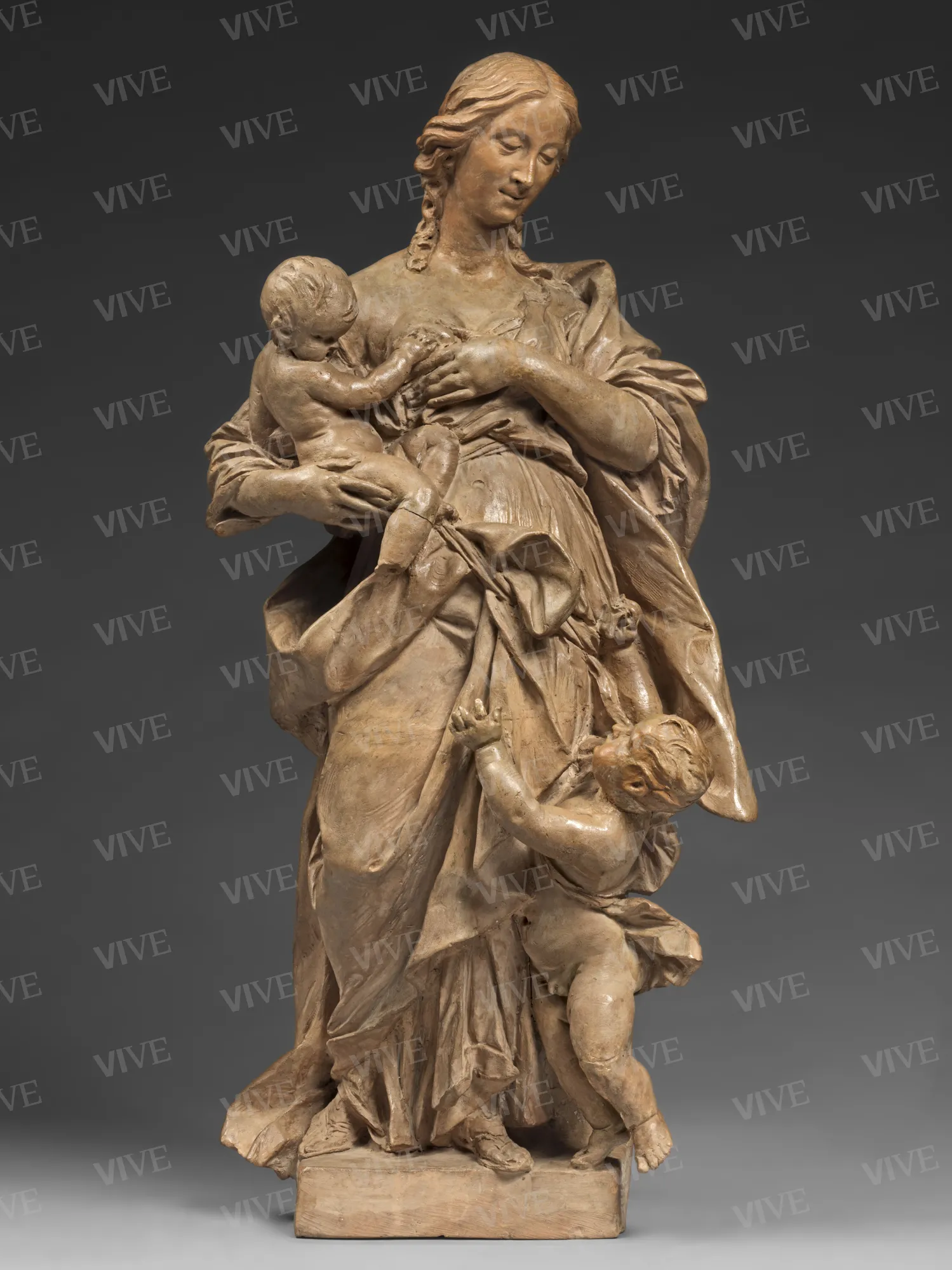
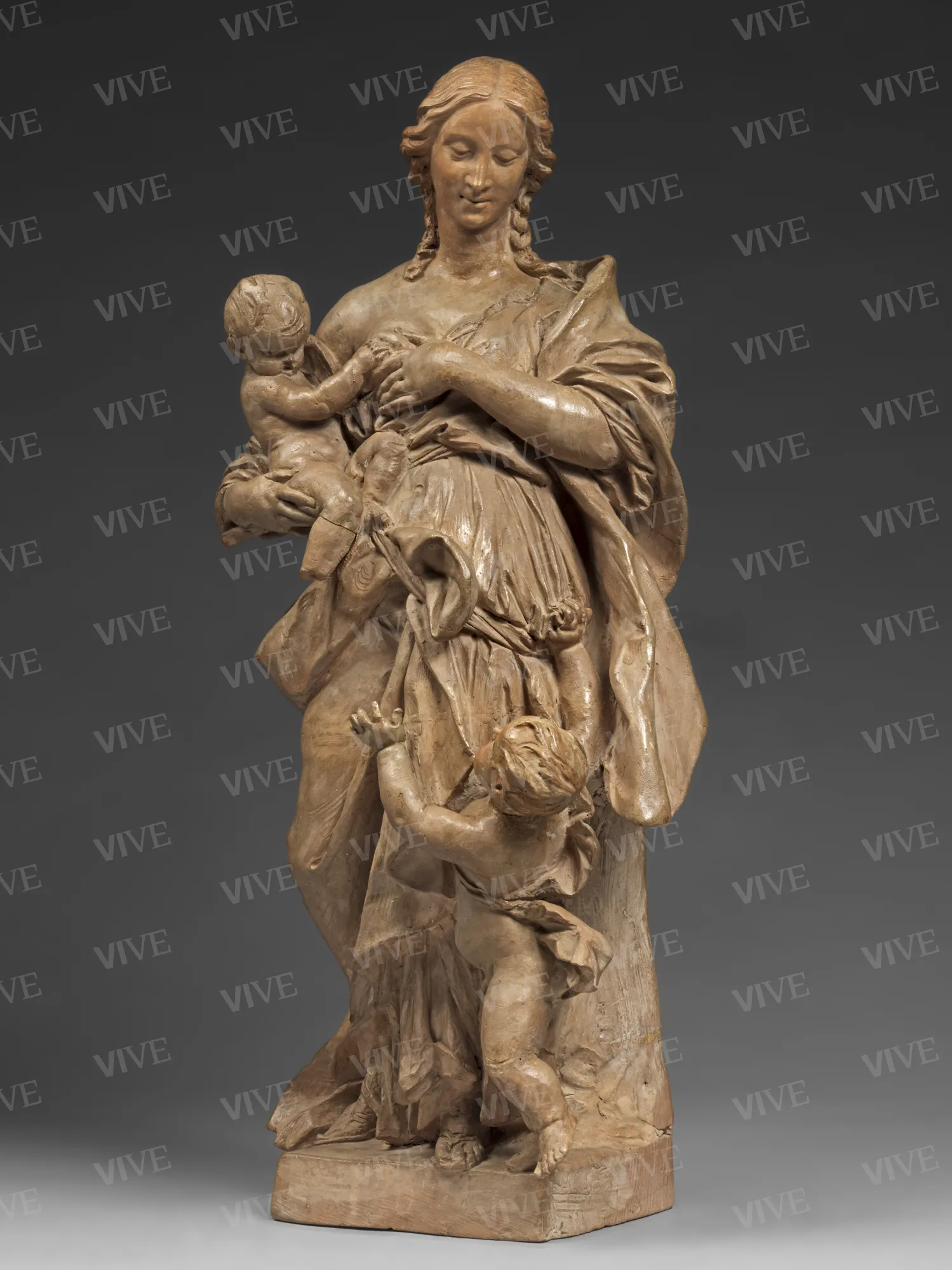
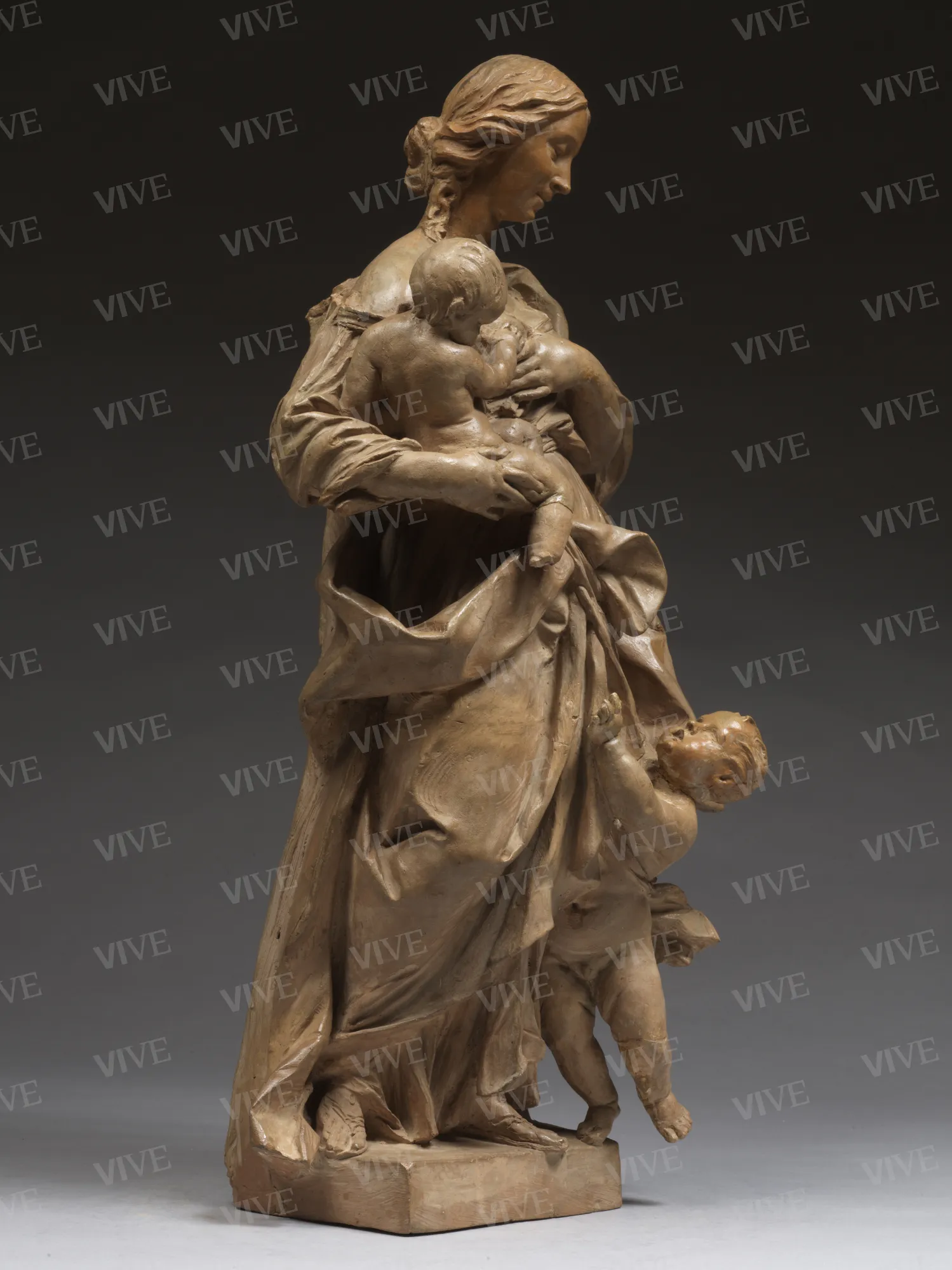
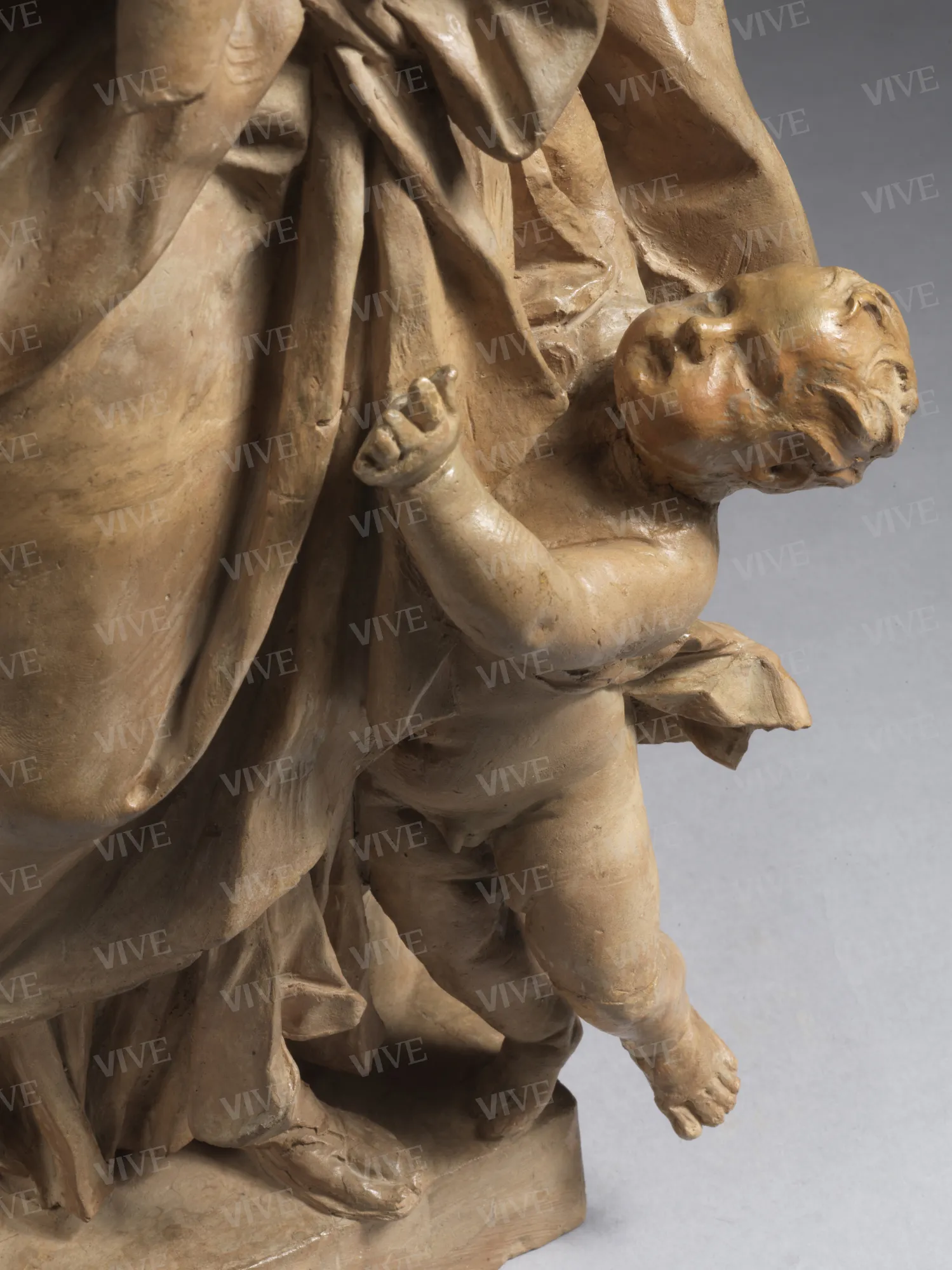
Bernardino Ludovisi sculpted the statue of Charity for one of the niches in the portico of Saint Peter’s Basilica between 1728 and 1732. The piece currently housed at the Museo Nazionale di Palazzo Venezia is a preparatory bozzetto, likely created shortly before the completion of the final work, as indicated by its refined finish and the delicately rendered folds of the drapery. The female head and additional components of the cherubs are attributed to a nineteenth-century restoration. The sophisticated modeling and graceful execution of the terracotta demonstrate Ludovisi's considerable influence from his contemporaries Camillo Rusconi, Pietro Bracci, and Pierre Legros.
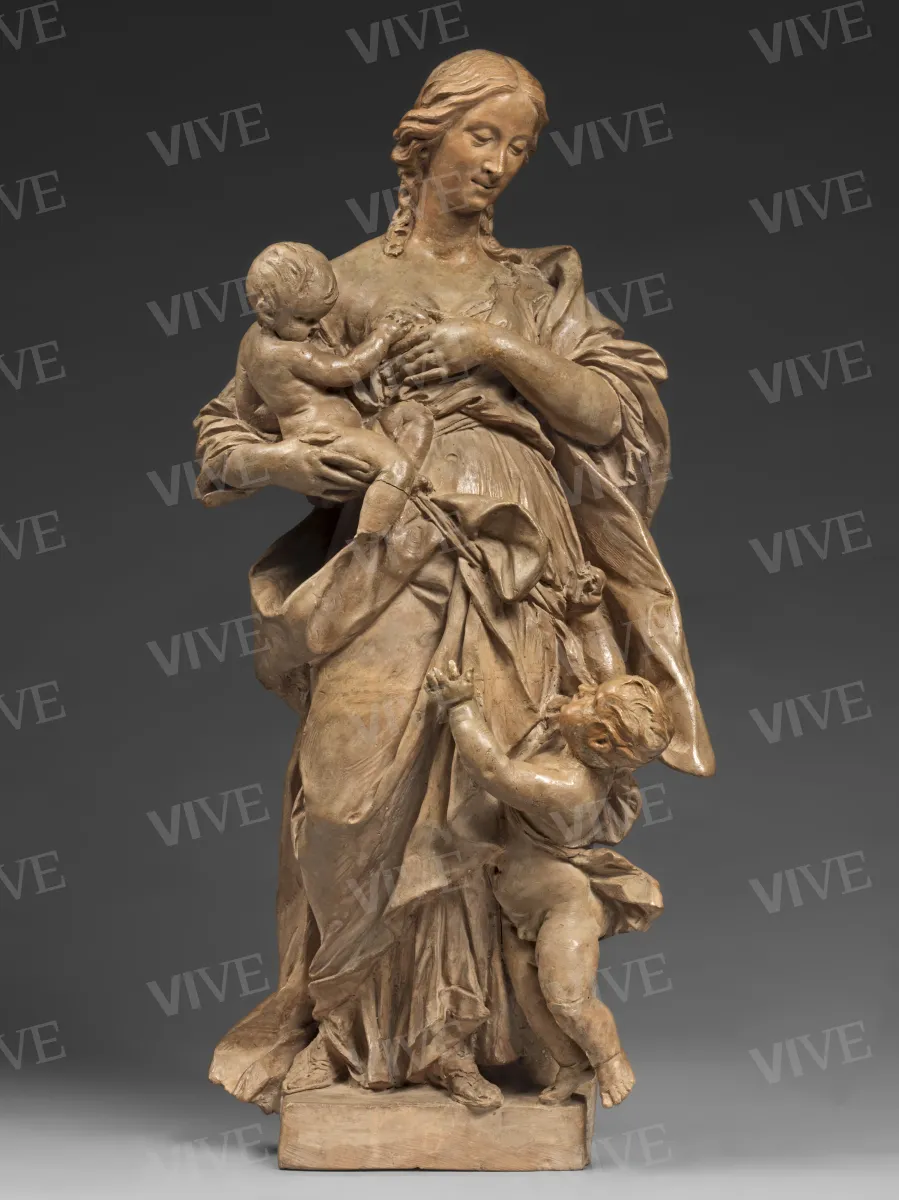
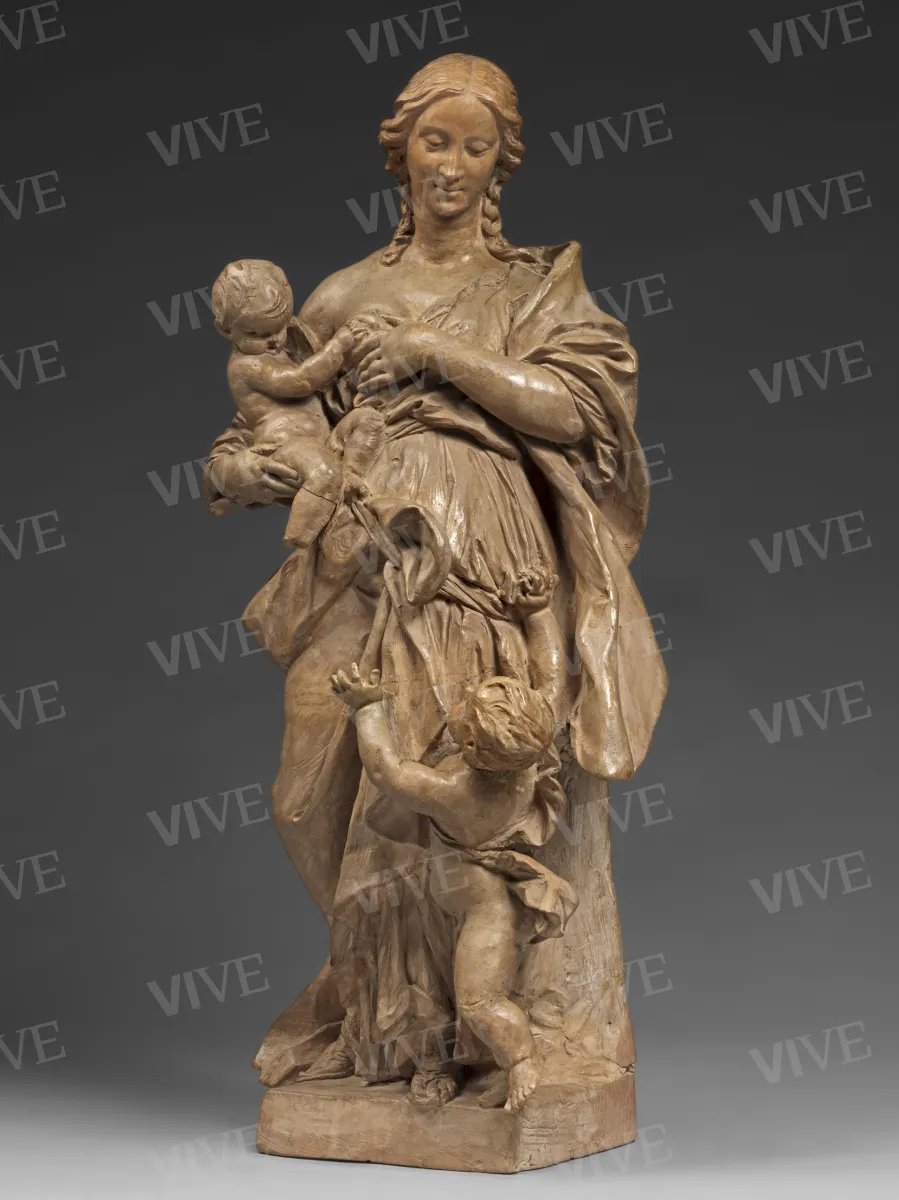
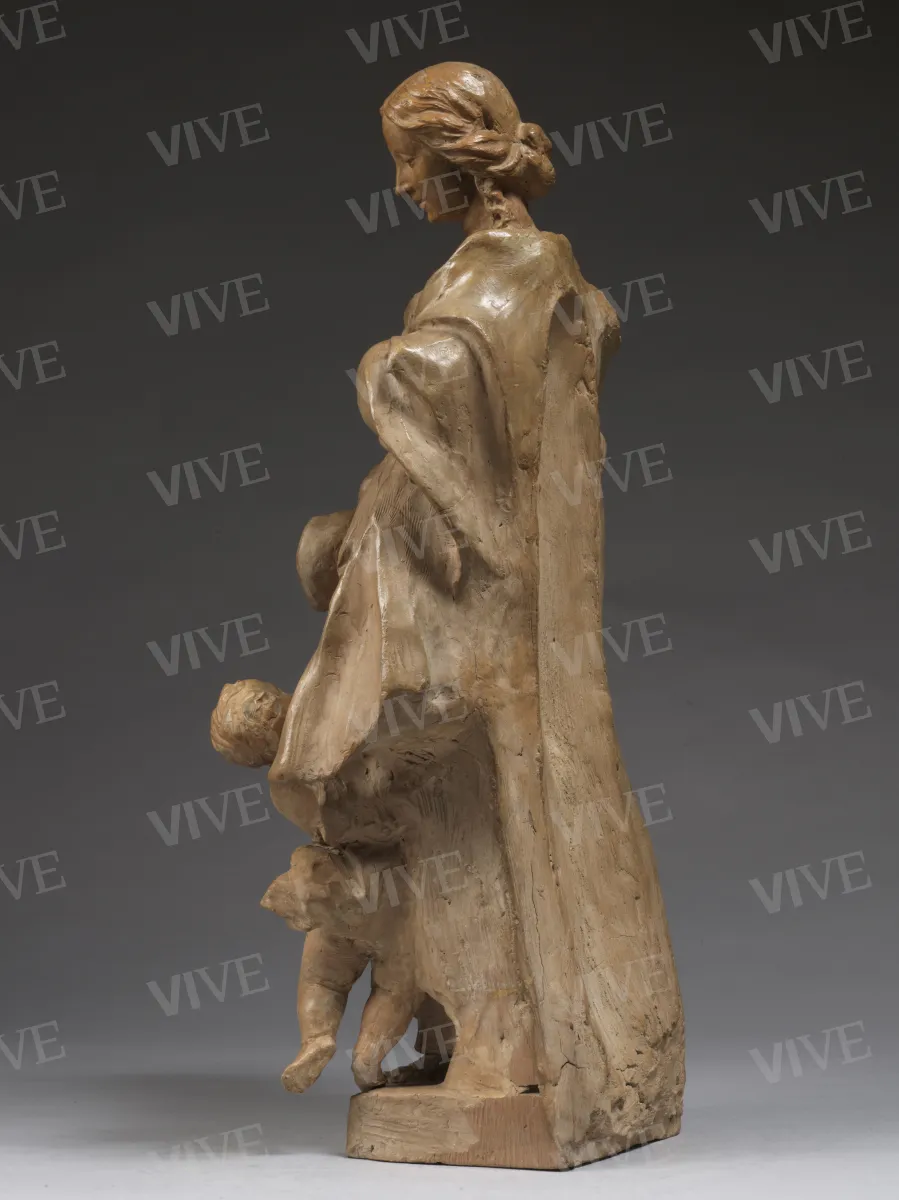
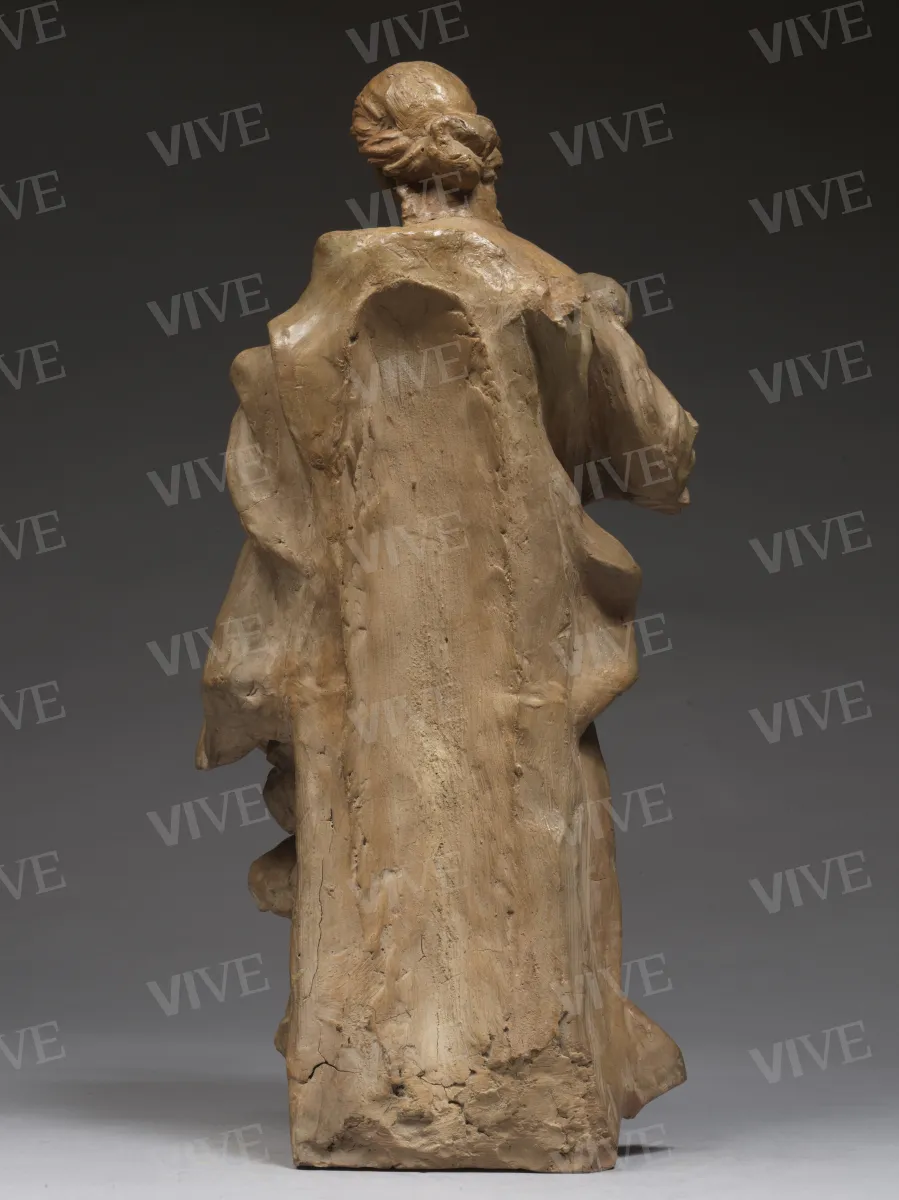
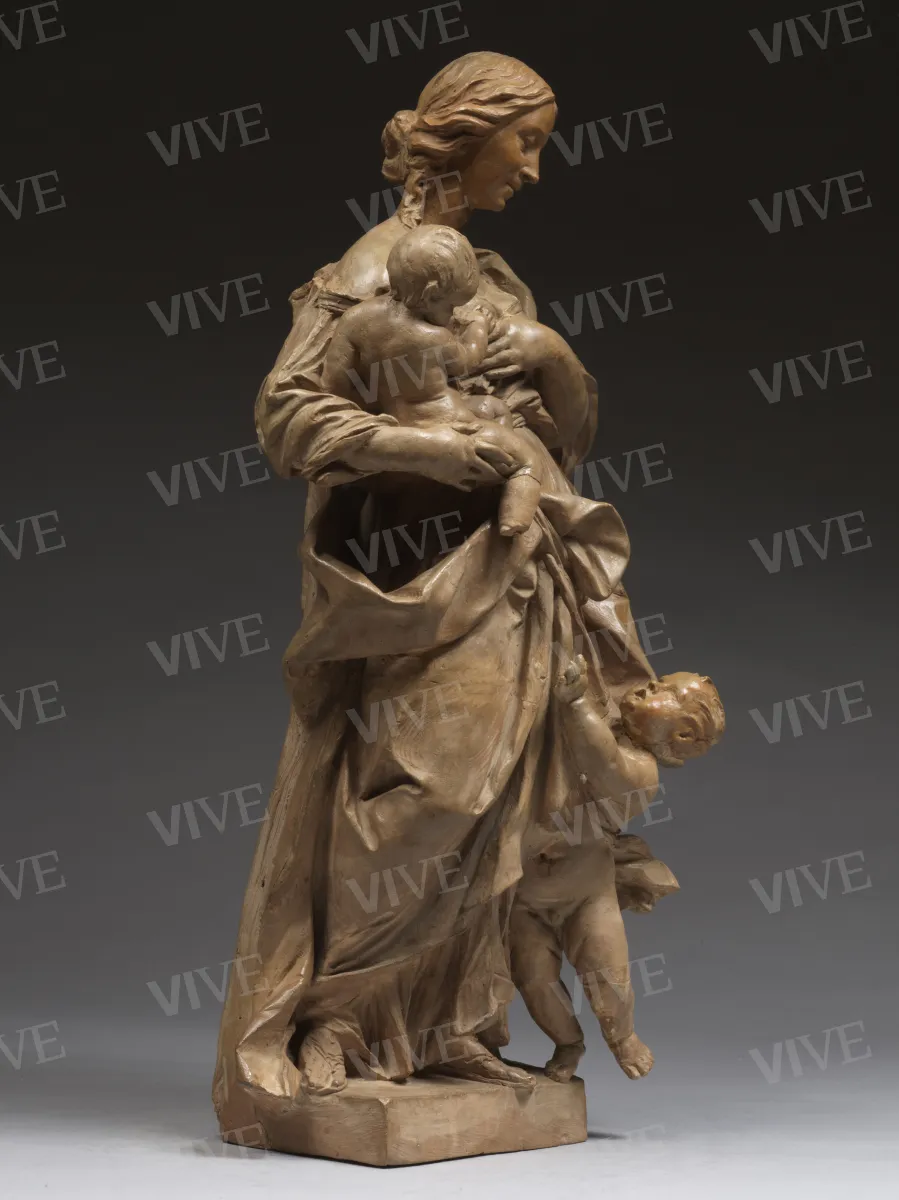
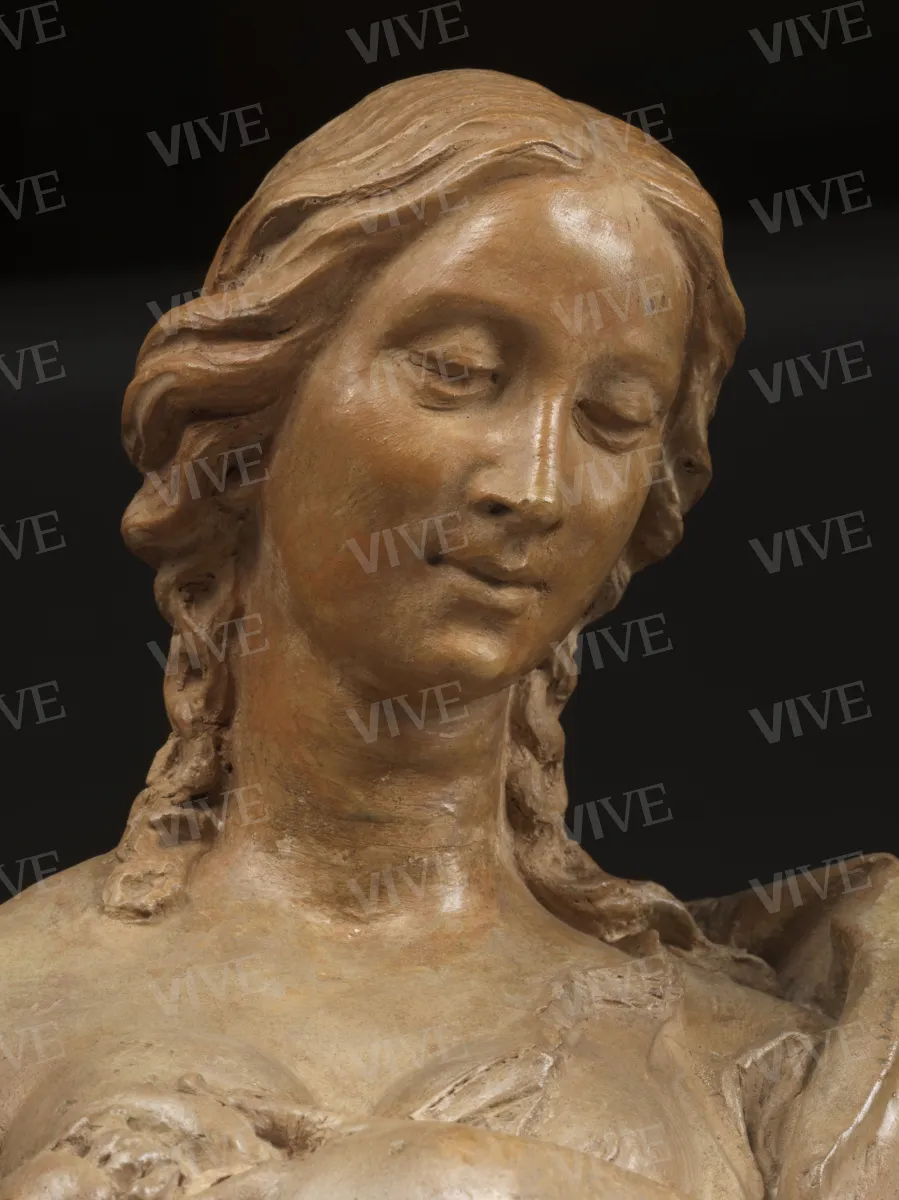


Bernardino Ludovisi sculpted the statue of Charity for one of the niches in the portico of Saint Peter’s Basilica between 1728 and 1732. The piece currently housed at the Museo Nazionale di Palazzo Venezia is a preparatory bozzetto, likely created shortly before the completion of the final work, as indicated by its refined finish and the delicately rendered folds of the drapery. The female head and additional components of the cherubs are attributed to a nineteenth-century restoration. The sophisticated modeling and graceful execution of the terracotta demonstrate Ludovisi's considerable influence from his contemporaries Camillo Rusconi, Pietro Bracci, and Pierre Legros.
The earliest documentation concerning the career of Bernardino Ludovisi (Rome, 1694-1749), recipient of the first prize in sculpture at the Clementine Competition in 1716, originates from the 1720s. During this period, Ludovisi commenced his established tenure in Rome as part of the Colonna family's service. His initial commission, the Evangelists for the façade of the church of Santissima Trinità dei Pellegrini, was succeeded by prominent public projects. These included the creation of the figure of God the Father for the altar of the chapel of Sant’Ignazio al Gesù, which he signed as “Bernardino Ludovisi romano F.A. 1726 d’anni 33.” He also undertook significant papal commissions, such as contributing to the Trevi Fountain and designing the façades of Santa Maria Maggiore and San Giovanni in Laterano, including work on the Corsini Chapel at the latter.
Between 1728 and 1732, for the decoration of the niches in the portico of Saint Peter’s, situated between the narthex and the Scala Regia, the statue of Charity was commissioned and executed. Enggass (1968, 442) was the first to document the relevant payments and to identify the terracotta housed in Palazzo Venezia as the preparatory model for the sculpture. The exceptional quality of the workmanship indicates an advanced stage of design achieved at the commencement of the project (Giometti 2011, 93), specifically in the latter half of 1728. On December 13, Ludovisi was allocated fifty scudi for the travertine statue representing Charity, which was currently being crafted by the sculptor (Archive of the Rev. Fabbrica di S. Pietro, Arm. I, vol. 425, Enggass 1968; Minervino 2001, 276). The remaining balance of 450 scudi was settled in August 1732, followed by an additional charge of 60 scudi for the incorporation of the two cherubs, as depicted in the bozzetto.
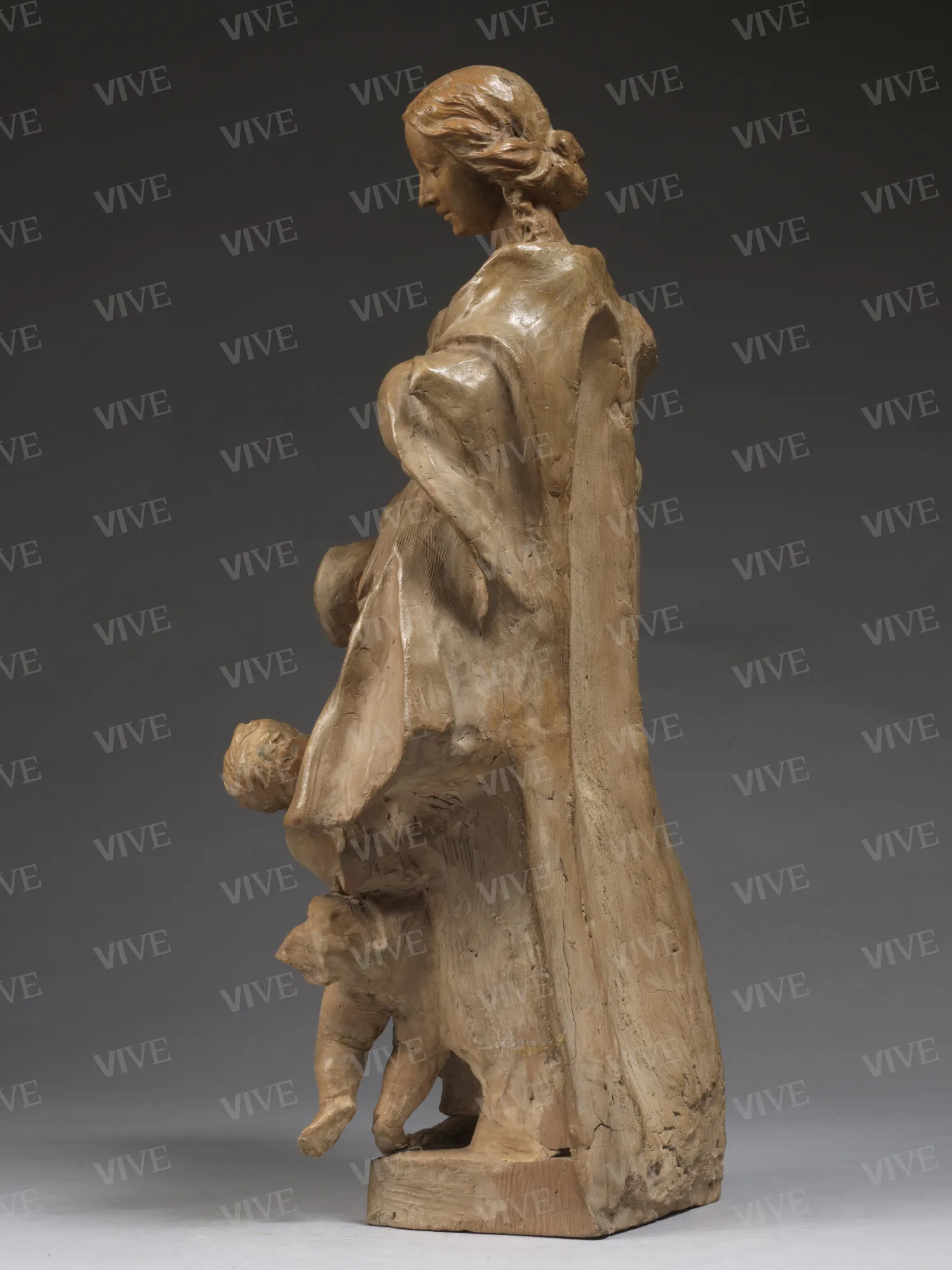
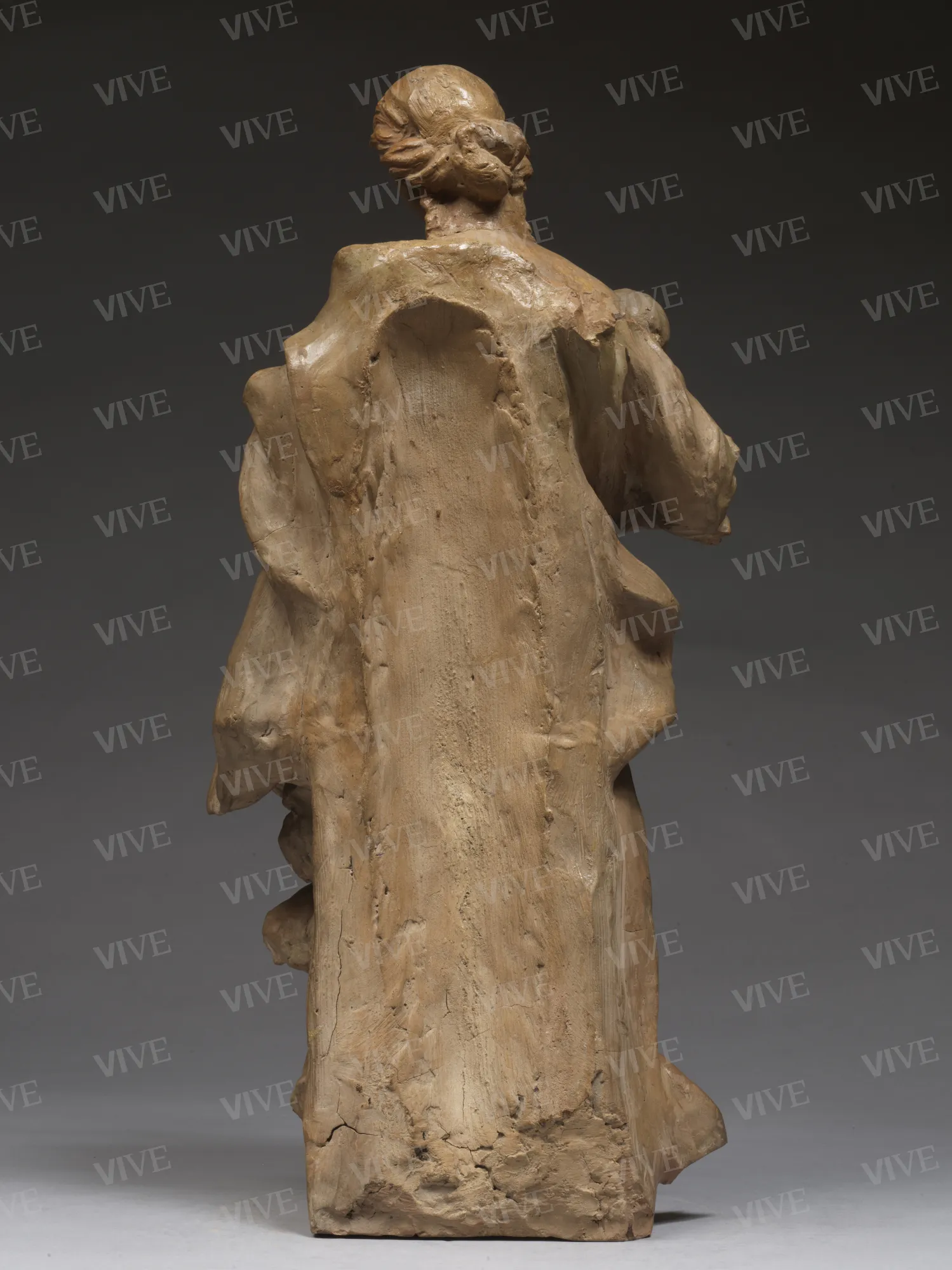
The sculpture was incorporated into the Cavaceppi Collection after 1776, as it is absent from the inventory created for the proposed sale to the Pope for the Museo Pio Clementino. It is first documented in Cavaceppi's posthumous inventory of 1799, listed as item no. 376: “model of Bernardino Ludovisi’s Thought of Charity located under the portico of Saint Peter’s, with the central figure missing its head, as well as the head of the cherub and one leg. The piece measures approximately two palms in height.” This analysis clarifies the distinctions between the woman's facial features and Ludovisi's models, supporting Minervino's (2001) theory regarding a nineteenth-century restoration, likely undertaken when the piece was acquired by its new owner, Torlonia. This restoration also incorporated elements such as the cherub’s head beneath, and a portion of the leg of the figure in her arms. Additionally, the concave groove on the back of the statue indicates that it may have originally been supported by an external structure.
In comparison to the travertine statue, the terracotta piece is distinguished by its refined and elegant forms. These two works exemplify contrasting aspects of Ludovisi’s style: the pronounced plasticity and dynamic drapery—an influence attributed to his association with Pietro Bracci, considered by many, including Enggass 1968, 438, to be Ludovisi’s mentor—are balanced by a more restrained stylistic approach, characteristic of Camillo Rusconi and Pierre Legros. The figure of Charity exhibits both the posture and the subtle treatment of drapery that are reminiscent of Pellegrini’s model of Saint Matthew for the church of the Santissima Trinità (Florence, Grassi Collection, Schlegel 1963, 266), as well as the statues created for the basilica of Mafra, an important commission for the King of Portugal undertaken directly after the works for Saint Peter’s.
Chiara Carpentieri
Entry published on 16 October 2025
Good. During the nineteenth-century restoration, the missing heads of Charity and the cherub at the base were replaced. Additionally, there is a fracture in the right leg of the cherub held in the arms, which is also missing its foot.
After 1802.
On the front of the base, “136,” the inventory number assigned by Vincenzo Pacetti in 1802.
Rome, Collezione Cavaceppi, 1799;
Rome, Collezione Torlonia, 1802;
Rome, Collezione Evangelista (Evan) Gorga, 1949;
Rome, Museo Nazionale di Palazzo Venezia, 1949.
Archivio di Stato di Roma, Trenta Notai Capitolini, Ufficio 31, December 1799, c. 755r-v (no. 376);
Biblioteca dell’Istituto nazionale di Archeologia e Storia dell’Arte, Ms. Lanciani 5, f. 78.
Schlegel Ursula, Beiträge zur römischen Plastik des 18. Jahrhunderts, in «Mitteilungen des Kunsthistorischen Institutes in Florenz», 10, 1961, 63 (1963), 4, p. 266;
Enggass Robert, Bernardino Ludovisi. I - The Early Work, in «The Burlington Magazine», CX, 789, 1968, p. 442;
Gasparri Carlo, Ghiandoni Olivia (a cura di), Lo studio Cavaceppi e le Collezioni Torlonia, in «Rivista dell'Istituto di Archeologia e Storia dell'Arte», XVI, 1993, pp. 19, 243;
Savettieri, in Pinelli Antonio (a cura di), La Basilica di San Pietro, Modena 2000, p. 470, n. 179;
Minervino Olga, Nuovi contributi su Bernardino Ludovisi scultore romano, in Debenedetti Elisa (a cura di), Sculture romane del Settecento, III. La professione dello scultore, Roma 2003, p. 276;
Pittiglio, in Barberini Maria Giulia, Sconci Maria Selene (a cura di), Guida al Museo Nazionale del Palazzo di Venezia, Roma 2009, p. 90, cat. 99;
Giometti Cristiano (a cura di), Museo Nazionale del Palazzo di Venezia. Sculture in terracotta, Roma 2011, pp. 93-94, cat. 92.