Vittoriano


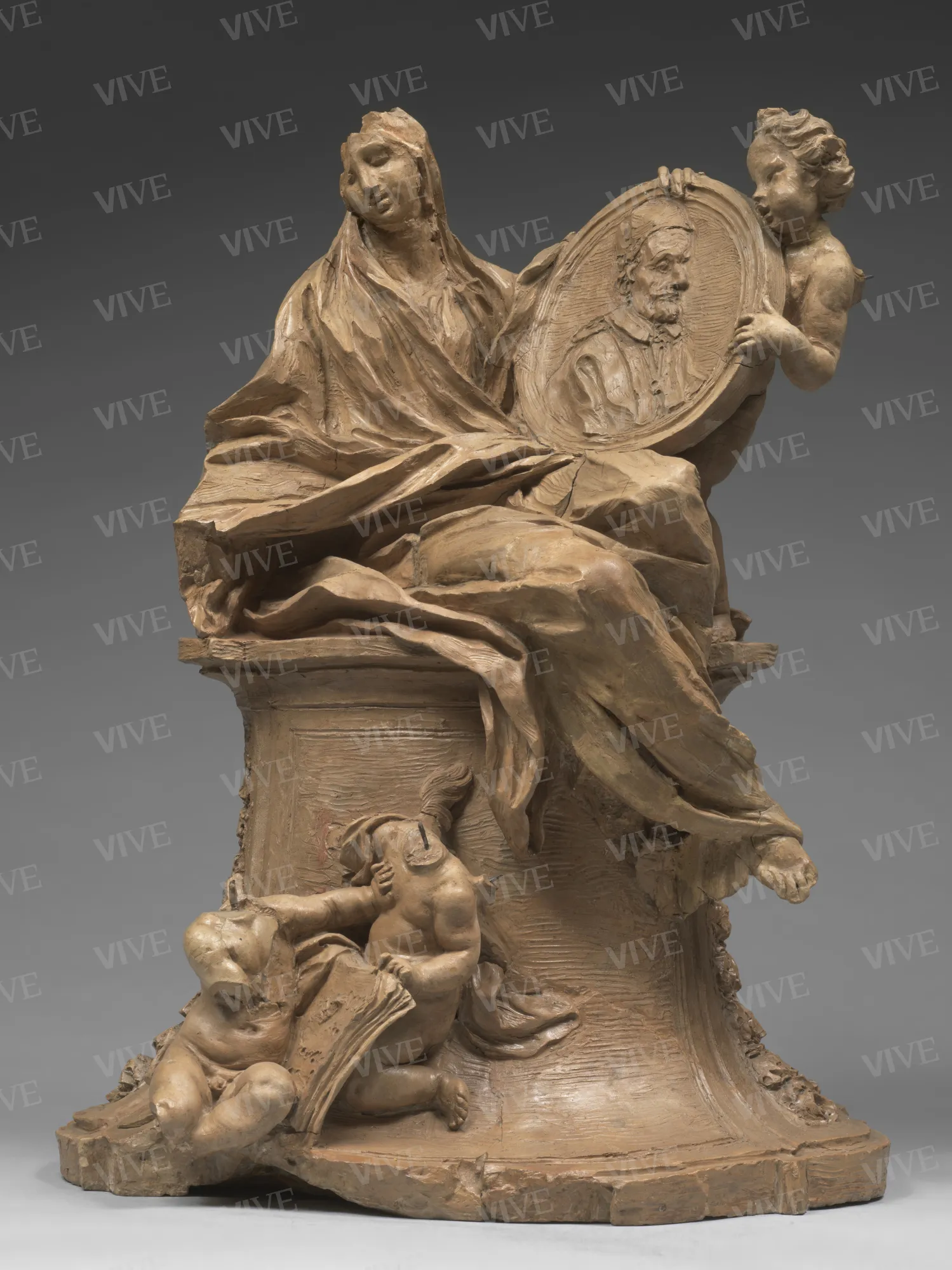
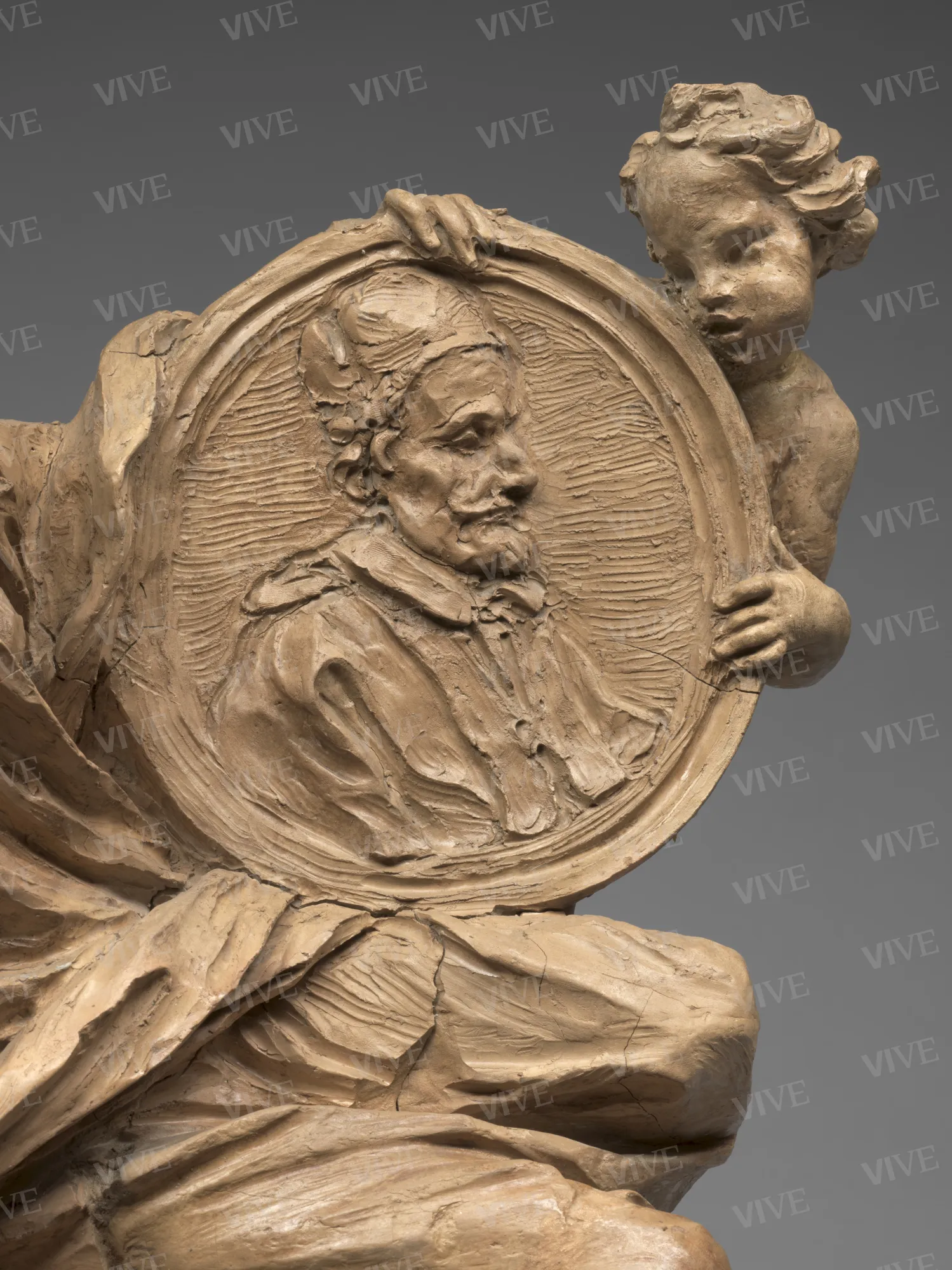
The terracotta represents a female figure, likely Faith, holding a portrait of Innocent XI, who served as pope from 1676 to 1689. This work is associated with the funeral monument executed in 1701 at Saint Peter’s by Pierre Etienne Monnot, following a design by Carlo Maratti. The dynamic drapery depicted on Virtue and the lively cherubs indicate the possible involvement of Pierre Legros, who, along with other artists, competed for the papal chapel commission. However, the attribution remains uncertain due to records indicating payment to Francesco Moratti for a model of the tomb.
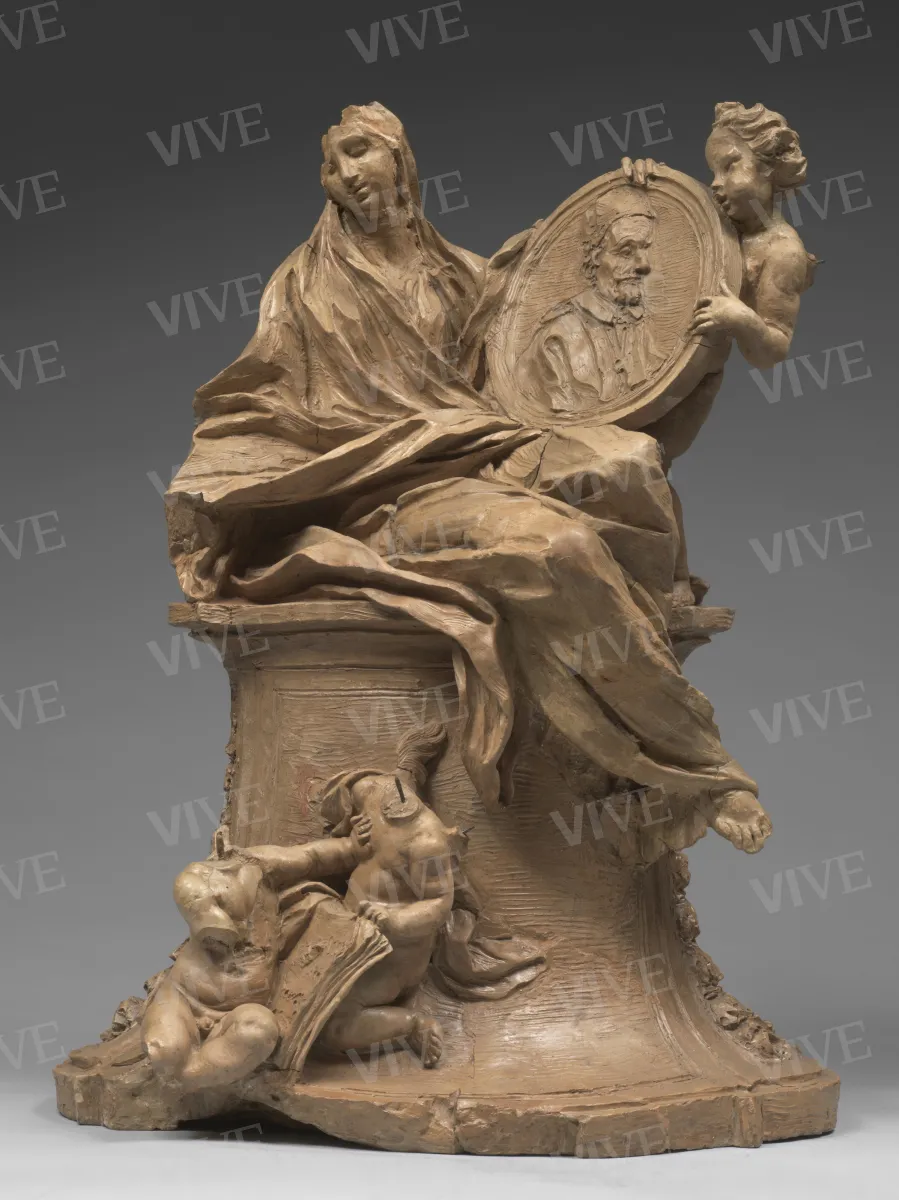
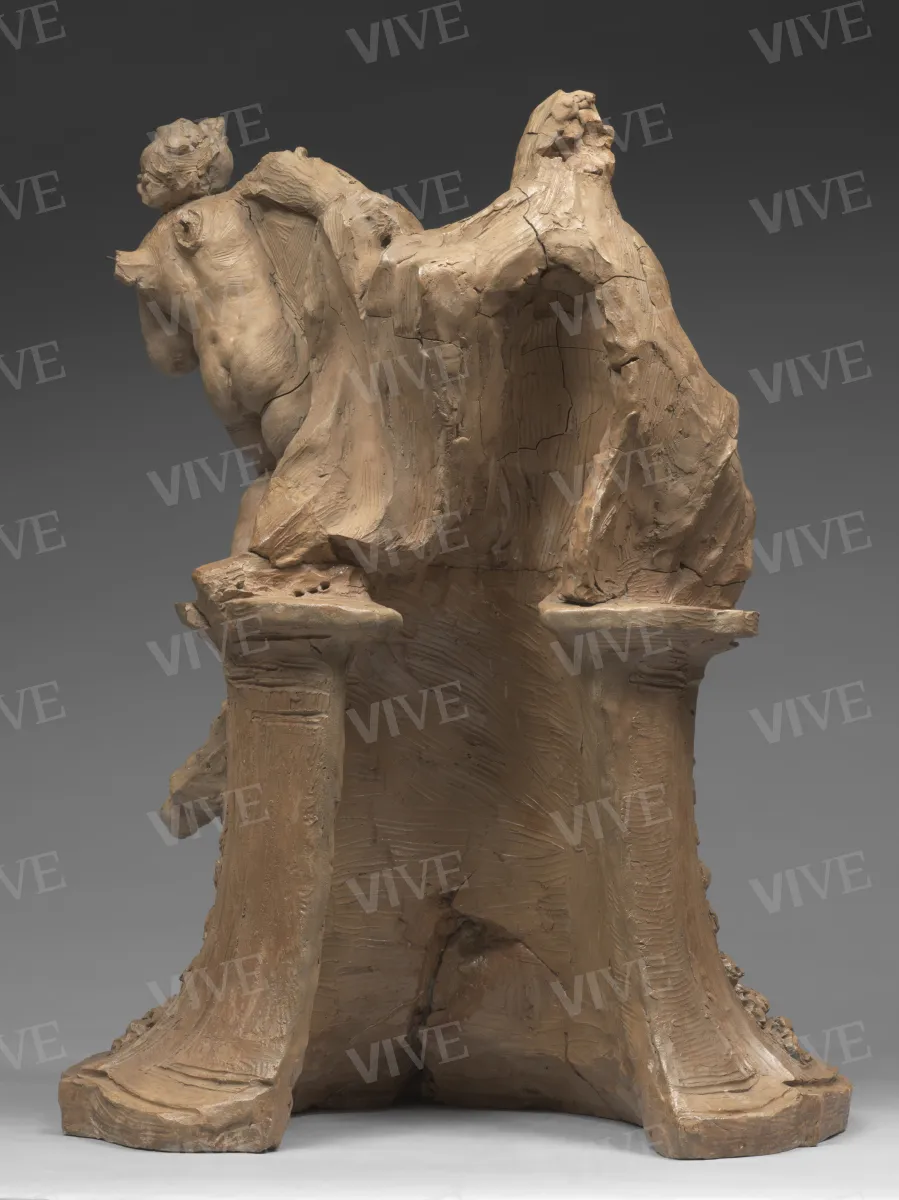
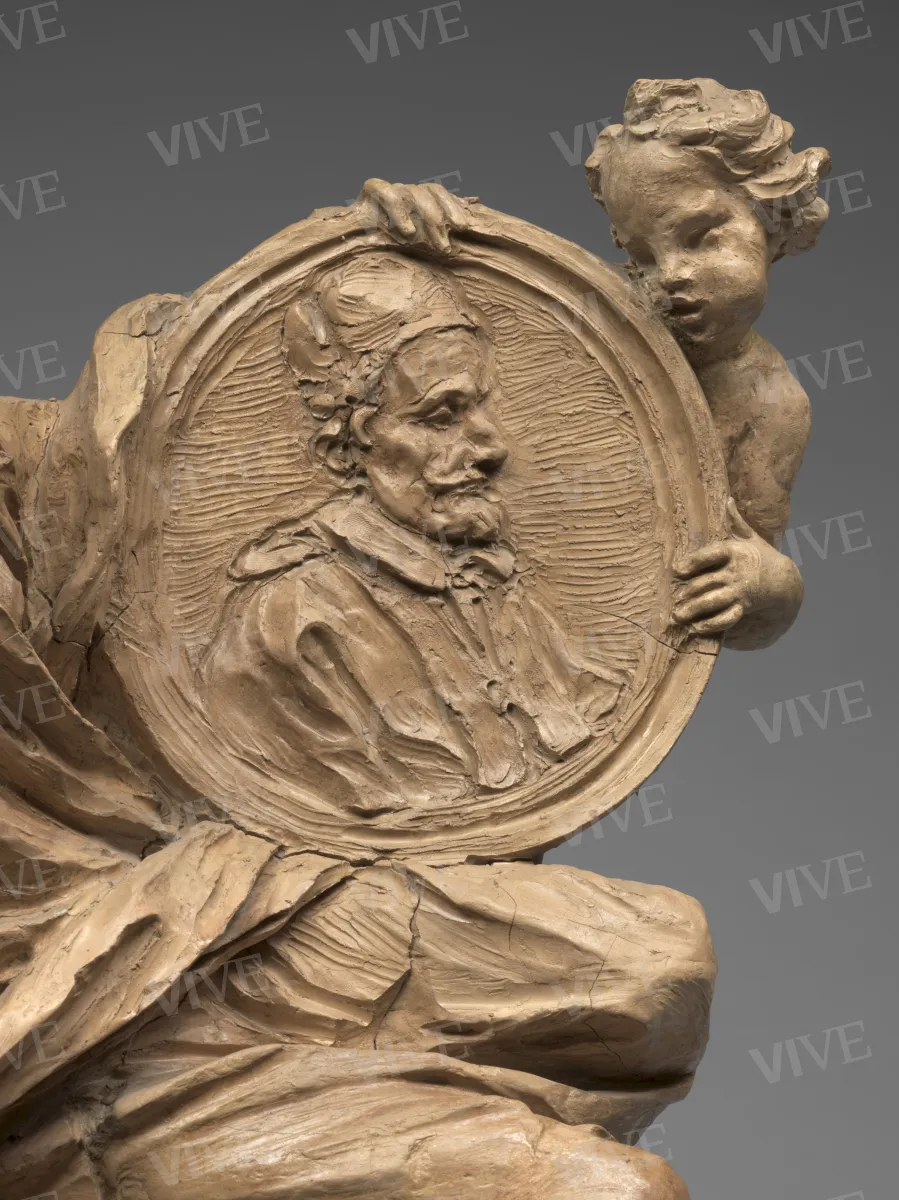
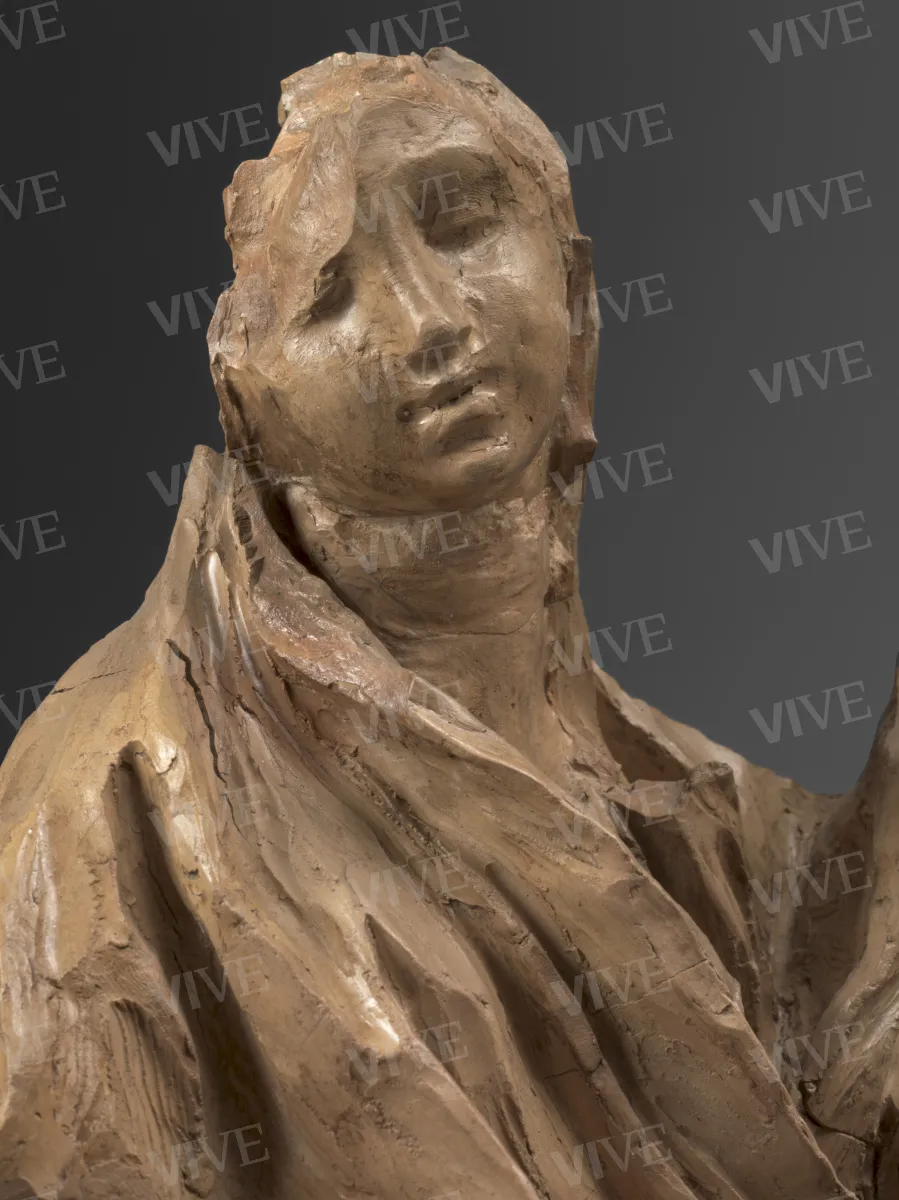
The terracotta represents a female figure, likely Faith, holding a portrait of Innocent XI, who served as pope from 1676 to 1689. This work is associated with the funeral monument executed in 1701 at Saint Peter’s by Pierre Etienne Monnot, following a design by Carlo Maratti. The dynamic drapery depicted on Virtue and the lively cherubs indicate the possible involvement of Pierre Legros, who, along with other artists, competed for the papal chapel commission. However, the attribution remains uncertain due to records indicating payment to Francesco Moratti for a model of the tomb.
The sculptural group features a richly draped female figure, identified as Faith, who, assisted by a cherub, presents a medallion bearing the portrait of Benedetto Odescalchi. This sketch is therefore understood to be associated with the funerary monument of Pope Innocent XI, executed by Pierre Etienne Monnot (1657–1733) with artistic direction from painter Carlo Maratti (1625–1713), who was responsible for the design (Bacchi 1995, 39–52; Montanari 2000, pp. 561-563, cat. 595-604). Supervision of the chapel's construction, inaugurated on June 28, 1701, was conducted by Prince Livio Odescalchi (1658–1713), who, as early as 1693, had engaged Cardinal Ferdinando d’Adda to coordinate arrangements with Domenico Guidi (Bershad 1973, 739; Bacchi 1995; Giometti 2011, 82–83, cat. 77; Bacchi 2021, 274). A competition was held featuring prominent sculptors of the era, including Guidi, Angelo De Rossi, Pierre Legros (1666–1719), and Francesco Moratti. According to Lione Pascoli, Livio Odescalchi requested additional drawings and models “to his satisfaction” before selecting those by Maratti and Monnot (Pascoli ed. 1992, 946–947). The development and design of the monument can be traced through extant graphic materials, notably a substantial collection of Maratti’s drawings housed at the Academia de San Fernando in Madrid (Bacchi 1995; Giometti 2011; Bacchi 2021, 267–276), which are dated between 1695 and 1697 (Mena Marqés 1975, II, 705–706). Additionally, a drawing from the Kupferstichkabinett in Berlin (inv. KdZ 4993, formerly in the Pacetti Collection; Sobotka 1914, 23, fig. 1), though attributed to Maratti, is more accurately ascribed to De Rossi due to its closer resemblance to Bernini’s prototype for the tomb of Urban VIII (Bacchi 1995). This drawing bears the inscription “1691” on the reverse, which, if genuine, would suggest an earlier initiation of the project..
Monnot produced two models: The first, located in the Bargello Museum in Florence (inv. 454), is signed and dated 1697. This version highlights Monnot’s artistic independence and his connection to the French tradition of portraying the deceased in a kneeling pose. It may correspond to “the first thought of Innocent XI’s deposit in S. Pietro di Mosiù Mannot,” as referenced in Cavaceppi’s study, the 1776 List (no. 96, Stanza dei Metalli), and later in the 1799 post-mortem inventory (Gasparri, Ghiandoni 1993, 24, 226; Barberini 1991, 135–136). The second model, an elaborate composition in terracotta and painted wood, was recently acquired by the Galleria Nazionale d’Arte Antica Barberini Corsini in Rome and more closely aligns with Maratti’s graphic guidelines (Bacchi 1995, 49–50; Bacchi 2021).
Ludwig Pollak, who possessed the terracotta now housed in the Palazzo Venezia Museum during the early twentieth century, attributed it as an autograph piece by Monnot. Conversely, Brinckmann (1923, I, 118–119), while acknowledging the likeness of Pope Innocent XI in the effigy, found the straightforward interpretation of the work as a papal portrait relief unlikely for such a commission. Instead, he more convincingly attributed the terracotta to Ercole Ferrata, considering it a model for Lelio Falconieri’s tomb at San Giovanni dei Fiorentini (circa 1669). Olga Raggio further substantiated its intended placement in the Falconieri chapel and identified the work as Melchiorre Cafà’s model, documented in Ferrata’s posthumous inventory (Raggio 1965, 59, cat. 46; Ferrari Papaldo, 1999, 507). While the provenance remains uncertain, numerous terracottas from Pollak’s collection, which later entered the holdings of the Palazzo Venezia Museum, correspond with pieces catalogued in the Cavaceppi Collection and eventually acquired by the Torlonia family. The terracotta examined here may be associated with the Cavaceppi inventory’s reference to a “Small wax model of a small deposit, with a medal in low relief, about two palms high, eighty bajocchi” (Cavaceppi Inventory 1779, n. 290; Gasparri, Ghiandoni 1993, 241); although the medium differs, the formal qualities and dimensions are analogous. Additionally, two items described as “deposit sketches” appear in the 1802 Book compiled during the sale to the Torlonia family (Gasparri, Ghiandoni 1923, 25–26, 282–283).
The model was subsequently acquired by the Gorga Collection as an autograph work by Monnot, and entered the Museo di Palazzo Venezia in 1960 following notification by Carlo Sestieri from the Ufficio Esportazione, or export office. Brugnoli (1969, p. 343) maintained the attribution to Monnot, though he noted similarities between the allegorical figure and Legros’s Religion from the monument to Gregory XV in Sant’Ignazio, particularly regarding “composition and stylistic execution.” Ursula Schlegel (1974, p. 60) was the first to definitively attribute the sculptural group to Legros, identifying the dynamic treatment of Faith's drapery as characteristic of the French sculptor—a perspective later endorsed by Enggass, Bacchi, and Giometti (Enggass 1976, I, 83–84; Bacchi 1995, 39–52; Giometti 2011). This hypothesis suggests the model predates 1697, preceding Maratti’s series of drawings and Monnot’s signed sketch that established the more definitive form of the monument, which diverges significantly from the earlier medallion portrait design.
The discovery of a payment from Livio Odescalchi to Francesco Moratti, dated January 6, 1696, for the “model of the deposit made for the Holy Memory of Innocent XI,” led Walker (2002, 24–25, 31 n. 11) to recognise the significance of the terracotta in relation to the Paduan sculptor’s oeuvre. This attribution was further substantiated by Marchionne Gunter (2003, 77, 142), who highlighted the inclusion of a wax model of the same monument in Moratti’s 1719 asset inventory (“23 A model of the tomb of the Holy Memory of Pope Innocent XI with wax figures estimated at one scudo and fifty ba[iocchi]”).
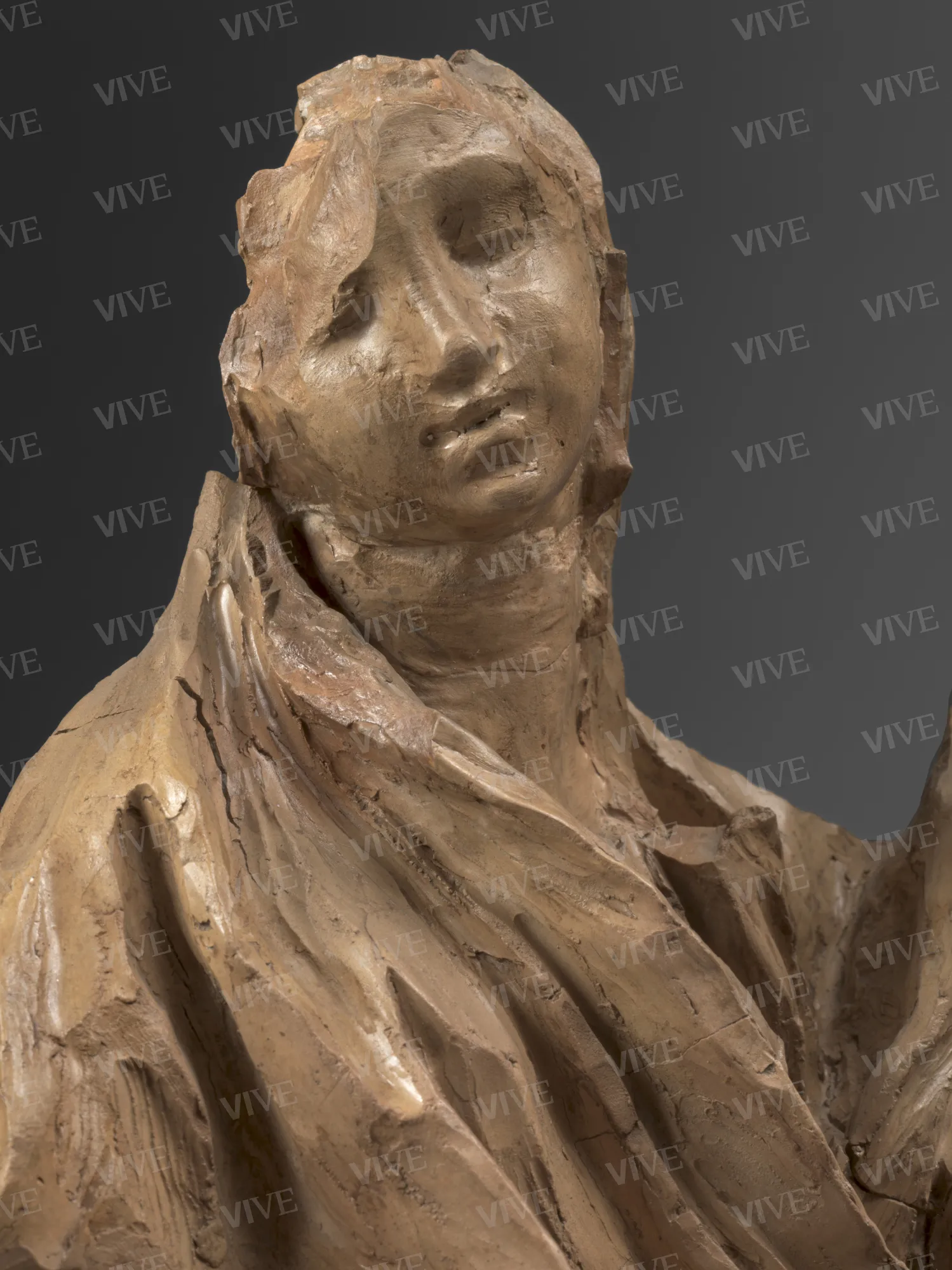
The sketch presents a sophisticated and distinctive solution that aligns with the iconographic conventions prevalent in funerary sculpture of the late eighteenth century. The figure of Faith, rendered with flowing and delicate contours, exemplifies the stylistic traits characteristic of Legros and strongly supports attribution to his authorship. Notably, in comparison to other works by the sculptor, such as the referenced statue of Religion, there is a marked similarity to the textured surface of Francis Xavier’s terracotta robe (Hermitage, inv. 632), which is dynamically enlivened and accentuated by pronounced folds. The cherubs depicted at the base of the pedestal, competing for the book intended to record the pontiff’s achievements, evoke the duo featured in the bas-relief of the Vision of Saint Francis of Paola, also housed in the Museo Nazionale di Palazzo Venezia.
In 2008, the antiques market saw the return of a substantial terracotta bas-relief depicting the Battle of Kahlenberg (Finarte Semenzato 2008, 126–129, cat. 45). This piece was auctioned with an attribution to Monnot as a preparatory model for the panel illustrating the Siege of Vienna by the Turks, situated at the center of the pedestal of the Monument to Innocent XI. Conversely, Cristina Ruggero (2014, 441–444) attributed the work to Legros, citing notable similarities with the battle scene portrayed in the relief of the monument to Frédéric Maurice de La Tour d’Auvergne, Duke of Bouillon, produced by the artist in 1707 for the Hôtel-Dieu in Cluny.
Chiara Carpentieri
Entry published on 16 October 2025
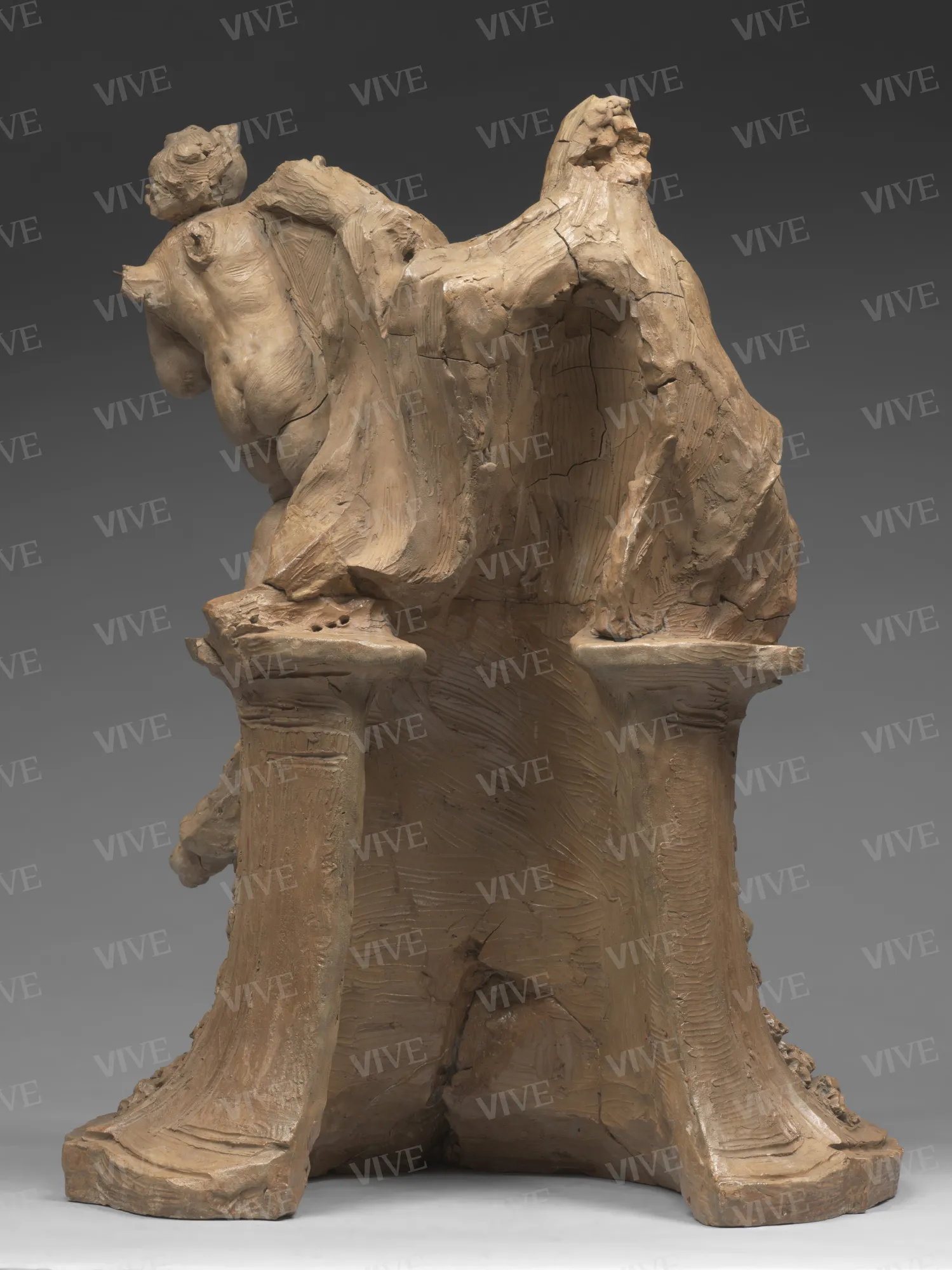
Fair. However, there are some breaks and missing pieces. The female figure is missing her left foot, part of the top of her head, and her right hand. Fractures are present in the left corner of her dress and along the drapery at leg level. The cherub supporting the frame is missing both wings, while the remaining two cherubs lack their heads. Additionally, a fracture can be observed on the lower edge of the pedestal.
Rome, Collezione Cavaceppi-Torlonia (?);
Rome, Collezione Pollak;
Rome, Collezione Evan Gorga, 1948;
Rome, Ufficio Esportazioni, 1960.
Sobotka Georg, Ein Entwurf Marattas zum Grabmal Innocenz’ XI. im Berliner Kupferstichkabinett und die Papstgräber der Barockzeit, in «Jahrbuch der Königlich-Preuszischen Kunstsammlungen», 35, 1914, pp. 22-23;
Brinckmann Albert E., Barock-Bozzetti, Frankfurt am Main 1923, pp. 118-119;
Brugnoli Maria Vittoria, Due bozzetti del Seicento: Ercole Ferrata e Pierre Etienne Monnot, in «Bollettino d’arte», 45, 1960, pp. 339-345;
Raggio in Cummings Frederick (a cura di), Art in Italy: 1600-1700, catalogo della mostra (Detroit, The Detroit Institute of Arts, 6 aprile-9 maggio 1965), New York 1965, pp. 59-60
Bershad David Leonard, Two additional papal busts by Domenico Guidi, in «The Burlington magazine», 115, 1973, pp. 736-739;
Schlegel Ursula, Bozzetti in terracotta by Pietro Stefano Monnot, in «Bulletin/Museum of Fine Arts, Boston», 72, 1974, 367, pp. 56-68
Mena Marqués, Manuela B, Los dibujos de Carlo Maratta y de su taller en la Real Academia de Bellas Artes de San Fernando de Madrid, 2 voll. Madrid 1975;
Enggass Robert, Early Eighteenth-Century Sculpture in Rome: An Illustrated Catalogue Raisonné, London 1976, p. 84;
Barberini Maria Giulia, Sculture in terracotta del barocco romano: bozzetti e modelli del Museo Nazionale del Palazzo Venezia, Roma 1991, pp. 62, 135-136;
Pascoli Lione, Vite de’ Pittori, Scultori, ed Architetti moderni, 1730-1736, Marabottini, Alessandro (a cura di), Perugia 1992, pp. 946-947;
Gasparri Carlo, Ghiandoni Olivia, Lo studio Cavaceppi e le collezioni Torlonia, in «Rivista dell’Istituto Nazionale d’Archeologia e Storia dell’Arte», XVI, 1993 (1994), pp. 25-26, 282-283;
Bacchi Andrea, "L’operatione con li modelli": Pierre Etienne Monnot e Carlo Maratta a confronto, in «Ricerche di storia dell’arte», 55, 1995, pp. 39-52;
Bissell George, Pierre Le Gros, 1666-1719, Reading 1997, p. 41;
Ferrari Oreste, Papaldo Serenita, Le sculture del Seicento a Roma, Roma 1999, p. 507;
Montanari, in Pinelli Antonio (a cura di), La Basilica di San Pietro, Mirabilia Italiae, Roma 2000, pp. 561-563, catt. 595-604;
Walker Stefanie, Livio Odescalchi, Pietro Stefano Monnot e Carlo Maratta: una rivalutazione alla luce di nuovi documenti, in Debenedetti Elisa (a cura di), Sculture romane del Settecento, Studi sul Settecento romano, 2, Roma 2002, pp. 23-40;
Marchionne Gunter Alfredo, L’attività di due scultori nella Roma degli Albani: gli inventari di Pietro Papaleo e Francesco Moratti, in Debenedetti Elisa (a cura di), Sculture romane del Settecento, Studi sul Settecento romano, 3, Roma 2003, pp. 67-146;
Ruggero Cristina, Virtutum omnium simulacrum in statua monumenti funebri barocchi di alti dignitari ecclesiastici tra progetto e realizzazione, in «Römisches Jahrbuch der Bibliotheca Hertziana», 36 (2005), pp. 139-210 (p. 181, fig. 49);
Gamba Carlo, Francesco Moratti, ad vocem, in Dizionario Biografico degli Italiani, volume 69 (2007):
Finarte Semenzato, Importanti dipinti e sculture antichi, catalogo d’asta (Roma, Palazzo Patrizi, 24-29 maggio 2008), Roma 2008, pp. 126-129, cat. 45;
Giometti Cristiano (a cura di), Museo Nazionale di Palazzo Venezia. Sculture in terracotta, Roma 2011, p. 13;
Ruggero Cristina, "Dextera tua Domine percussit inimicum": la tomba di Innocenzo XI e un bassorilievo di Pierre Legros, in Bösel Richard, Menniti Ippolito Antonio, Spiriti Andrea (a cura di), Innocenzo XI Odescalchi Papa, politico, committente, Roma 2014, pp. 431-448;
Bacchi, Andrea, Monnot : il modello per il monumento a Innocenzo XI Odescalchi, in «Bollettino d'arte», 7. serie, anno 105, 47/48 (luglio/dicembre 2020), pp. 267-276.