Vittoriano


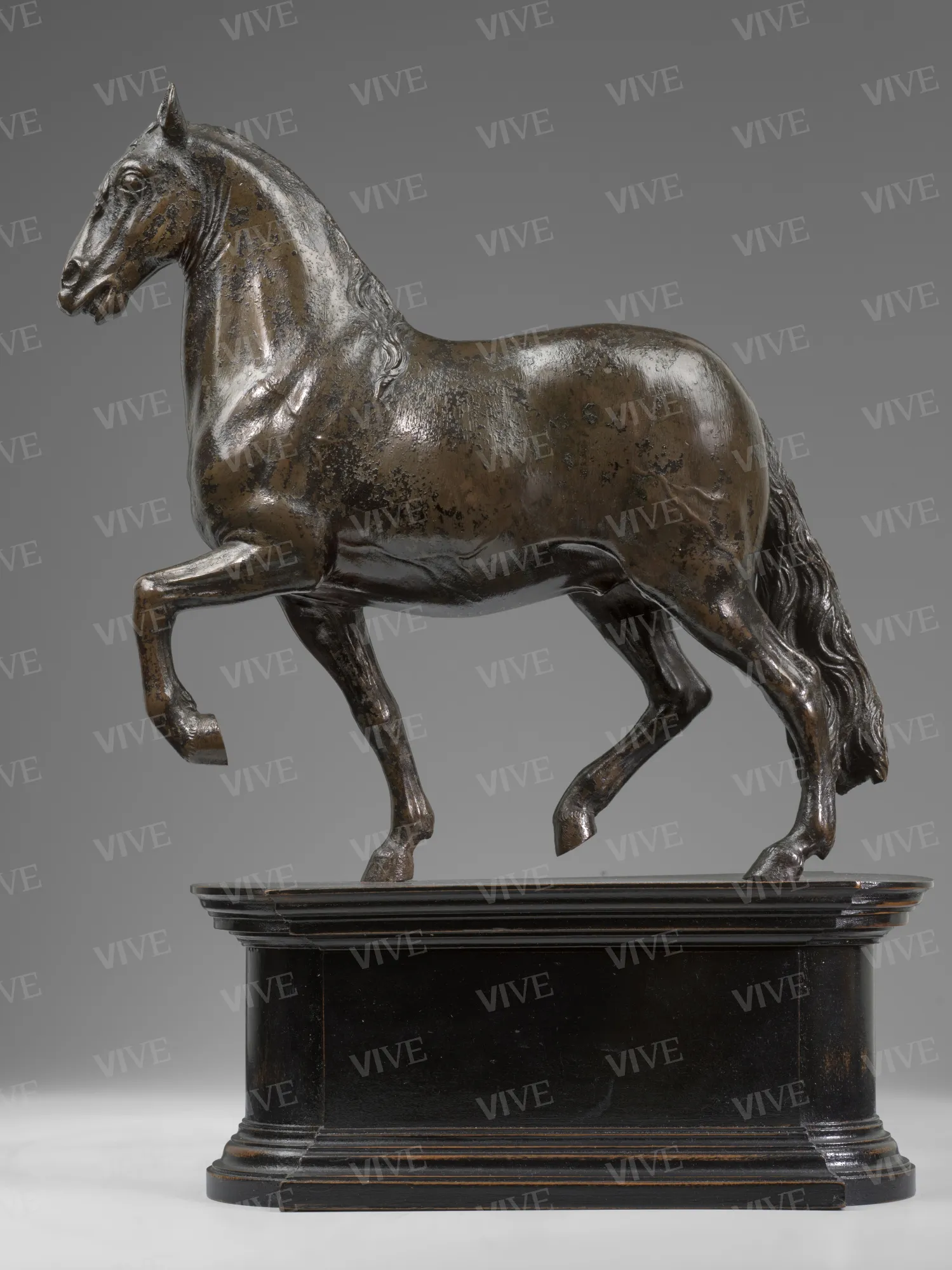
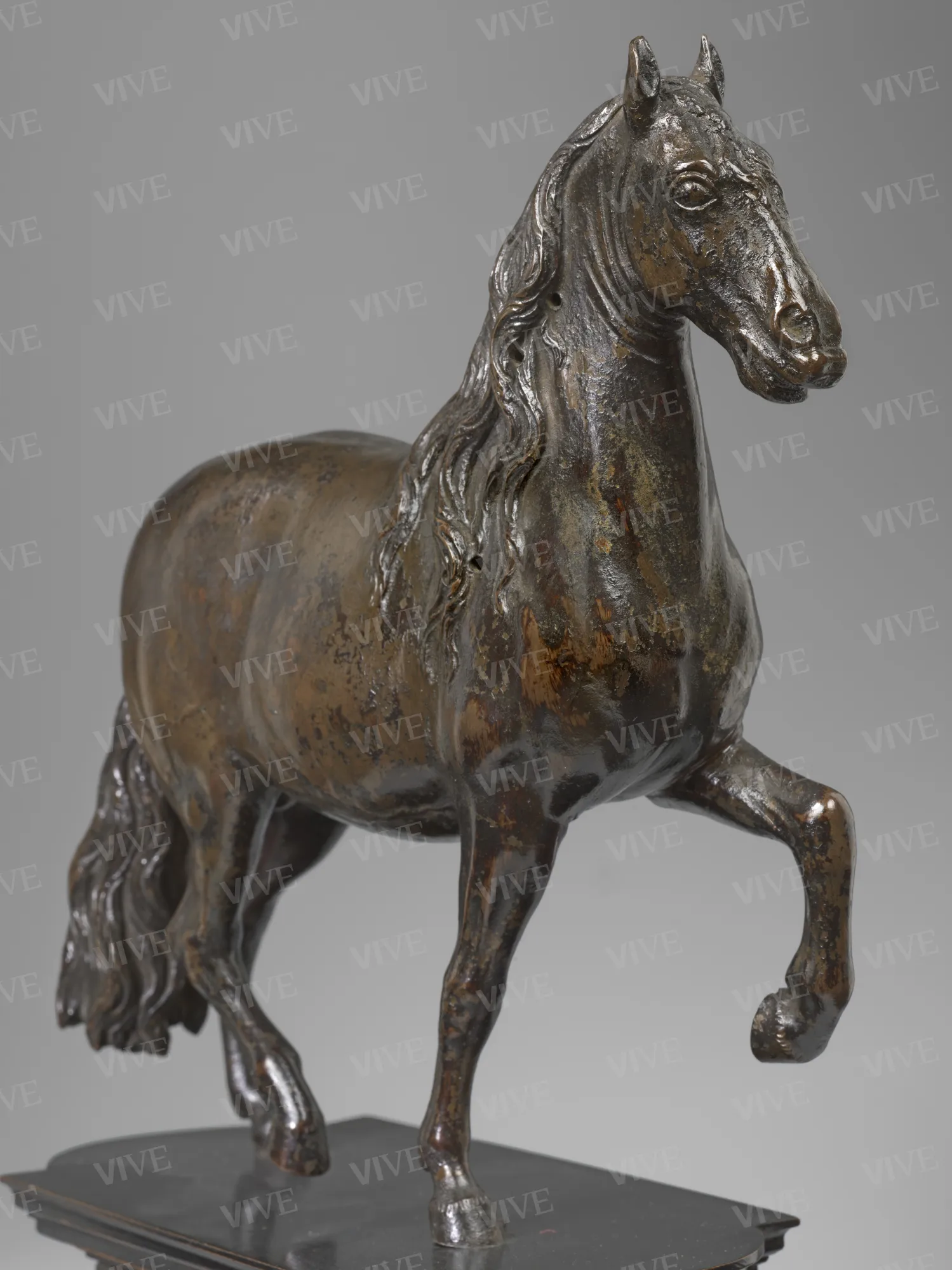
The sculpture depicts a trotting horse similar to the Andalusian breed. The bronze statue, attributed to Pietro Tacca and dating back to the first decade of the seventeenth century, is similar to the type of horse used in the main equestrian monuments created by the sculptor, sometimes based on models by his master Giambologna. In addition to the steeds in the equestrian portraits of Ferdinando I de’ Medici and Philip III of Spain, the bronze can be compared to the horse described by the painter Ludovico Cardi, known as Cigoli, in a preparatory drawing for the destroyed monument to Henry IV of France.
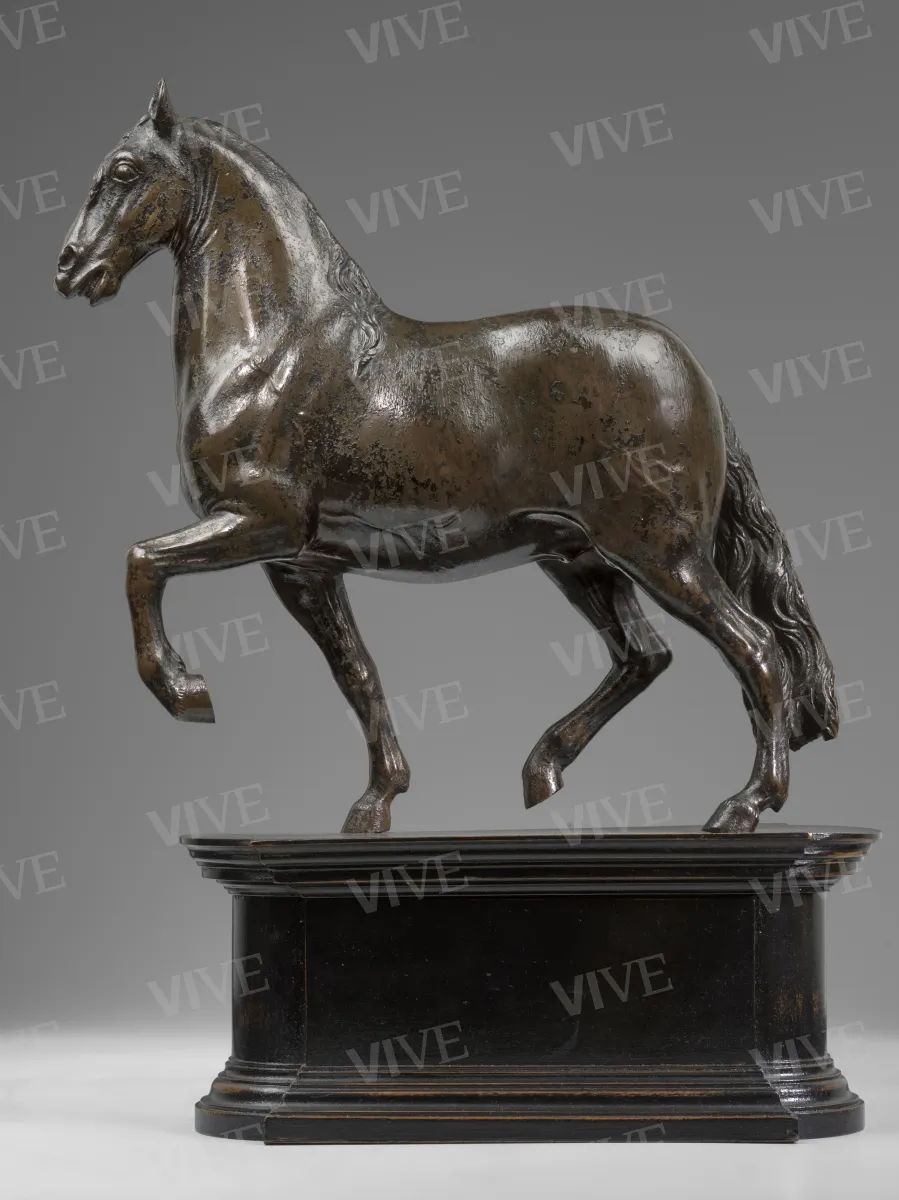
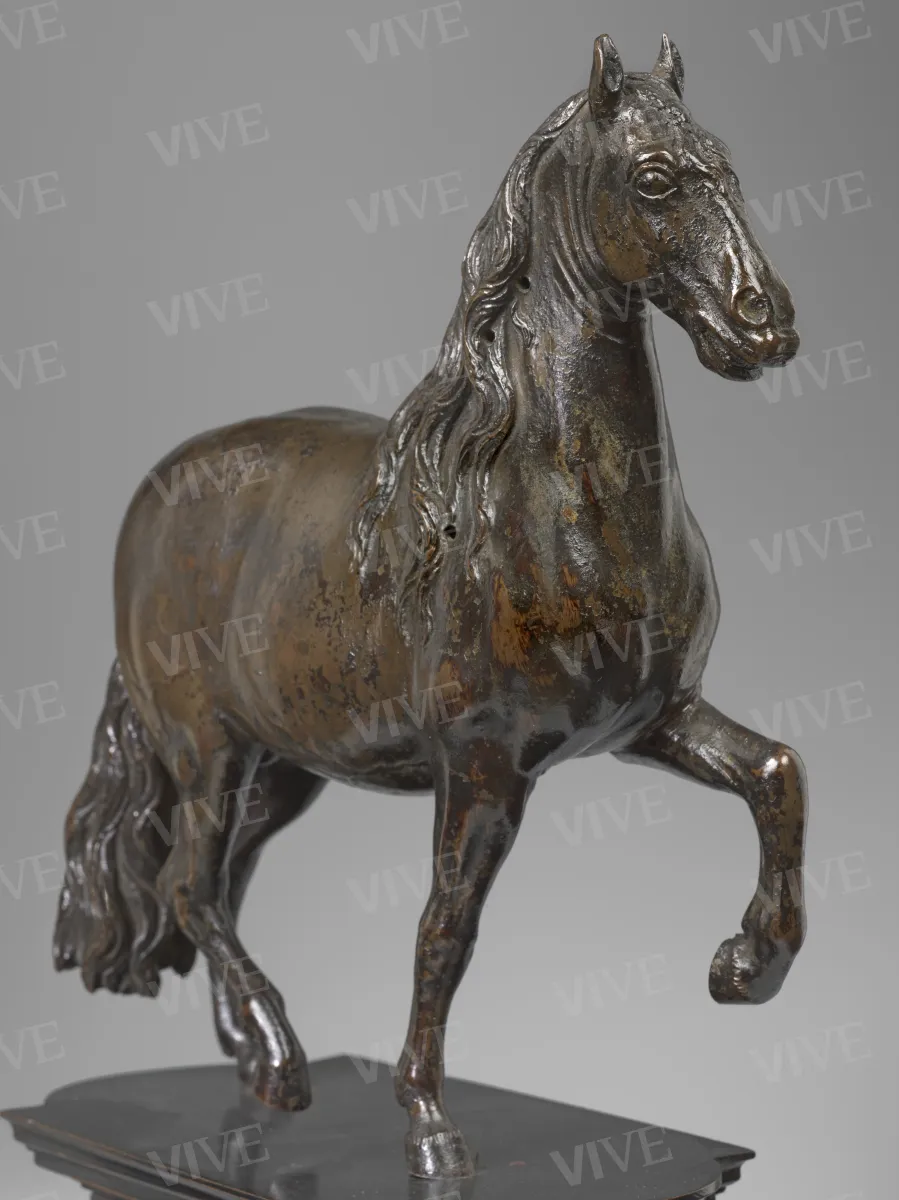
The sculpture depicts a trotting horse similar to the Andalusian breed. The bronze statue, attributed to Pietro Tacca and dating back to the first decade of the seventeenth century, is similar to the type of horse used in the main equestrian monuments created by the sculptor, sometimes based on models by his master Giambologna. In addition to the steeds in the equestrian portraits of Ferdinando I de’ Medici and Philip III of Spain, the bronze can be compared to the horse described by the painter Ludovico Cardi, known as Cigoli, in a preparatory drawing for the destroyed monument to Henry IV of France.
The small bronze depicts a horse at a trot, and the striking naturalism that emerges from observing its gait is also evident in the precise description of the equine breed, similar to the type known as the Andalusian horse. The animal, athletic and slender in its musculature, is characterized by the rounded shape of its rump and, above all, by its distinctive small muzzle and subconvex profile. It should come as no surprise, however, that horses of Iberian origin were present in Italy, often sent by the Spanish crown as diplomatic gifts that were particularly appreciated at the court of the Florentine grand dukes (Falomir 2013, 13).
The attribution of the Horse to Pietro Tacca (1577–1640), pupil and heir of Giambologna, is due to the early intuition of Ludwig Pollak (1922, 98, n. 67), who recognized the author of the sculpture when it was still in Alfredo Barsanti’s Roman collection, from which it then passed to the Museo di Palazzo Venezia in 1934 (Fiaschi 1923, 14–15 and then Hermanin 1948, 303).
The relationship between the bronze and a culture influenced by Giambologna was also implicitly endorsed by Antonino Santangelo (1954, 51), who, however, leaned towards attributing the work to Adriaen de Vries, who was documented in the workshop of the Flemish master as early as the first half of the 1580s. More recently, Pietro Cannata (2011, 82–83, n. 88) has also highlighted the dependence of the bronze statue in question on the models of equestrian portraits commissioned from Giambologna but mainly executed by Tacca, a specialist in monumental toreutics and this particular sculptural genre (Gasparotto 2006, 89–105 and Zikos 2007, 55–73).
Despite the differences in size, the Horse in the Museo di Palazzo Venezia is similar to the type of mount cast in 1602 for the Equestrian Portrait of Ferdinando I de’ Medici (Florence, Piazza della Santissima Annunziata) and also to the steed cast in 1608 for the Equestrian Portrait of Philip III of Spain (Madrid, Plaza Mayor; the creation of the statues of the knights, cast separately, followed about three years after the completion of the horses; Zikos 2007, 62–65). Furthermore, according to the composition handed down from a preparatory study attributed to Ludovico Cardi, known as Cigoli (Florence, Uffizi Galleries, Cabinet of Drawings and Prints, inv. 970F), the steed cast in 1607 for the lost equestrian monument of Henry IV of France also seems comparable to the small bronze statue in question; in the sheet, as well as in the general posture and conformation of the mount, there are striking similarities in the design of the mane falling along the right profile of the animal (Florence, Uffizi Galleries, Cabinet of Drawings and Prints, inv. 970F; Monaci Moran, 2007, 158).
The bronze statue should be dated to the first decade of the seventeenth century, since Tacca’s reflections on the theme of the trotting horse seem to concentrate on this phase, that is, before he began work on the model of the rearing horse (known as ‘alla corvetta’) already planned around 1615–18 for the Equestrian Portrait of Louis XIII (Florence, Museo Nazionale del Bargello; V. Montigiani, in Pietro Tacca 2007, 166–167, n. 19).
However, the lack of documentary evidence and the fact that the work belongs to a copious and serial production complicate the certain definition of its chronology and authorship. In fact, the models by Giambologna available in the workshop in Borgo Pinti, inherited by Pietro Tacca, were also used by the sculptor’s son, Ferdinando Tacca. Other pupils of the Flemish master, such as Antonio and Giovan Francesco Susini, also devoted themselves to the genre of equestrian bronzes, often reusing models of horses (or knights’ armor) and replacing only the heads of the subjects when necessary (Montagu 1965, [67]).
The horse in question is one of at least five similar examples. A high-quality cast in gilded bronze is now in the collections of the Rijksmuseum in Amsterdam (inv. BK–16507; cf. M. Verber, in From Vulcan’s forge 2005, 82–83, n. 23). A small bronze with a brown patina is kept in the storerooms of the Gallerie Estensi in Modena (inv. 2223; cf. E. Corradini, in Sovrane passioni 1998, 478). One example was already in Daniel Katz’s London gallery (see M. Verber, in From Vulcan’s forge 2005, 82–83, n. 23, fig. 23a), while another, of slightly inferior quality to the casts listed above, appeared on the American antiques market (New York, Doyle, Important English and Continental 2003, January 22, n. 167). The Trotting Horse in the Museo di Palazzo Venezia stands out for the good quality of the casting and the careful retouching of the surfaces; the finishing touches are particularly evident in the treatment of the pulsating veins running along the animal’s abdomen and also in the clear chiseling of the mane which, unlike other known bronzes, has six small holes of identical diameter in this specimen. As for the function of the holes, which are certainly not of a technical nature, it is conceivable that they were inserts for decorating the hair, such as separately cast ornamental bows (already Pollak 1922, 98, n. 67).
Gerardo Moscariello
Entry published on 16 October 2025
Good. Well-preserved brown patina, minimal traces of irrelevant black paint.
Rome, Collezione Alfredo Barsanti (before 1934).
Pollak Ludwig, Raccolta Alfredo Barsanti. Bronzi italiani (Trecento - Settecento), Roma 1922, p. 98, n. 67;
Fiaschi Vico, Piccoli bronzi attributi a Pietro Tacca, in «Il marmo nell’arte, nell’industria, nel commercio (Rassegna Apuana)», 3, 1923, pp. 14-15, p. 10, fig. 4;
Hermanin Federico, Il Palazzo di Venezia, Roma 1948, p. 303;
Museo di Palazzo Venezia. Catalogo delle sculture, Santangelo Antonino (a cura di), Roma 1954, p. 51;
Montagu Jennifer, Bronzes, London 1965;
Torriti Piero, Pietro Tacca da Carrara, Genova 1984 [1975], p. 87, n. 29;
Bentini Jadranka (a cura di), Sovrane passioni. Le raccolte d’arte della Ducale Galleria Estense, catalogo della mostra (Modena, Galleria e Museo Estense, 3 ottobre-13 dicembre 1998), Milano 1998;
Scholten Fritz, Verber Monique (a cura di), From Vulcan’s forge. Bronzes from the Rijksmuseum, Amsterdam 1450-1800, catalogo della mostra (Londra, Daniel Katz ltd., 15 novembre-16 dicembre 2005; Vienna, Liechtenstein-Museum, 7 aprile-3 luglio 2006), London 2005;
Verber, in Scholten Fritz, Verber Monique (a cura di), From Vulcan’s forge. Bronzes from the Rijksmuseum, Amsterdam 1450-1800, catalogo della mostra (Londra, Daniel Katz ltd., 15 novembre-16 dicembre 2005; Vienna, Liechtenstein-Museum, 7 aprile-3 luglio 2006), London 2005, pp. 82-83, n. 23, fig. 23a;
Gasparotto Davide, Cavalli e cavalieri. Il monumento equestre da Giambologna a Foggini, in Paolozzi Strozzi Beatrice, Zikos Dimitrios (a cura di), Giambologna. Gli dei, gli eroi. Genesi e fortuna di uno stile europeo nella scultura, catalogo della mostra (Firenze, Museo Nazionale del Bargello, 2 marzo-15 giugno 2006), Firenze 2006, pp. 88-105;
Falletti Franca (a cura di), Pietro Tacca. Carrara, la Toscana, le grandi corti europee, catalogo della mostra (Carrara, Centro Internazionale delle Arti Plastiche, 5 maggio-19 agosto 2007), Firenze 2007;
Monaci Moran, in Falletti Franca (a cura di), Pietro Tacca. Carrara, la Toscana, le grandi corti europee, catalogo della mostra (Carrara, Centro Internazionale delle Arti Plastiche, 5 maggio-19 agosto 2007), Firenze 2007, p. 158;
Montignani, in Falletti Franca (a cura di), Pietro Tacca. Carrara, la Toscana, le grandi corti europee, catalogo della mostra (Carrara, Centro Internazionale delle Arti Plastiche, 5 maggio-19 agosto 2007), Firenze 2007, pp.166-167, n. 19;
Zikos Dimitrios, “Ars sine scientia nihil est”. Il contributo di Pietro Tacca al bronzo italiano, in Falletti Franca (a cura di), Pietro Tacca. Carrara, la Toscana, le grandi corti europee, catalogo della mostra (Carrara, Centro Internazionale delle Arti Plastiche, 5 maggio-19 agosto 2007), Firenze 2007, pp. 55-73;
Cannata Pietro (a cura di), Museo Nazionale di Palazzo Venezia. 3. Sculture in bronzo, Roma 2011, pp. 82-83, n. 88;
Falomir Faus Miguel, Dono italiano e “gusto spagnolo” (1530-1610), in von Bernstorff Marieke, Kubersky-Piredda Susanne (a cura di), L’arte del dono. Scambi artistici e diplomazia tra Italia e Spagna, 1550-1650, Atti del convegno internazionale (Roma, Biblioteca Hertziana, 14-15 gennaio 2008), Cinisello Balsamo 2013, pp. 13-26.