Vittoriano


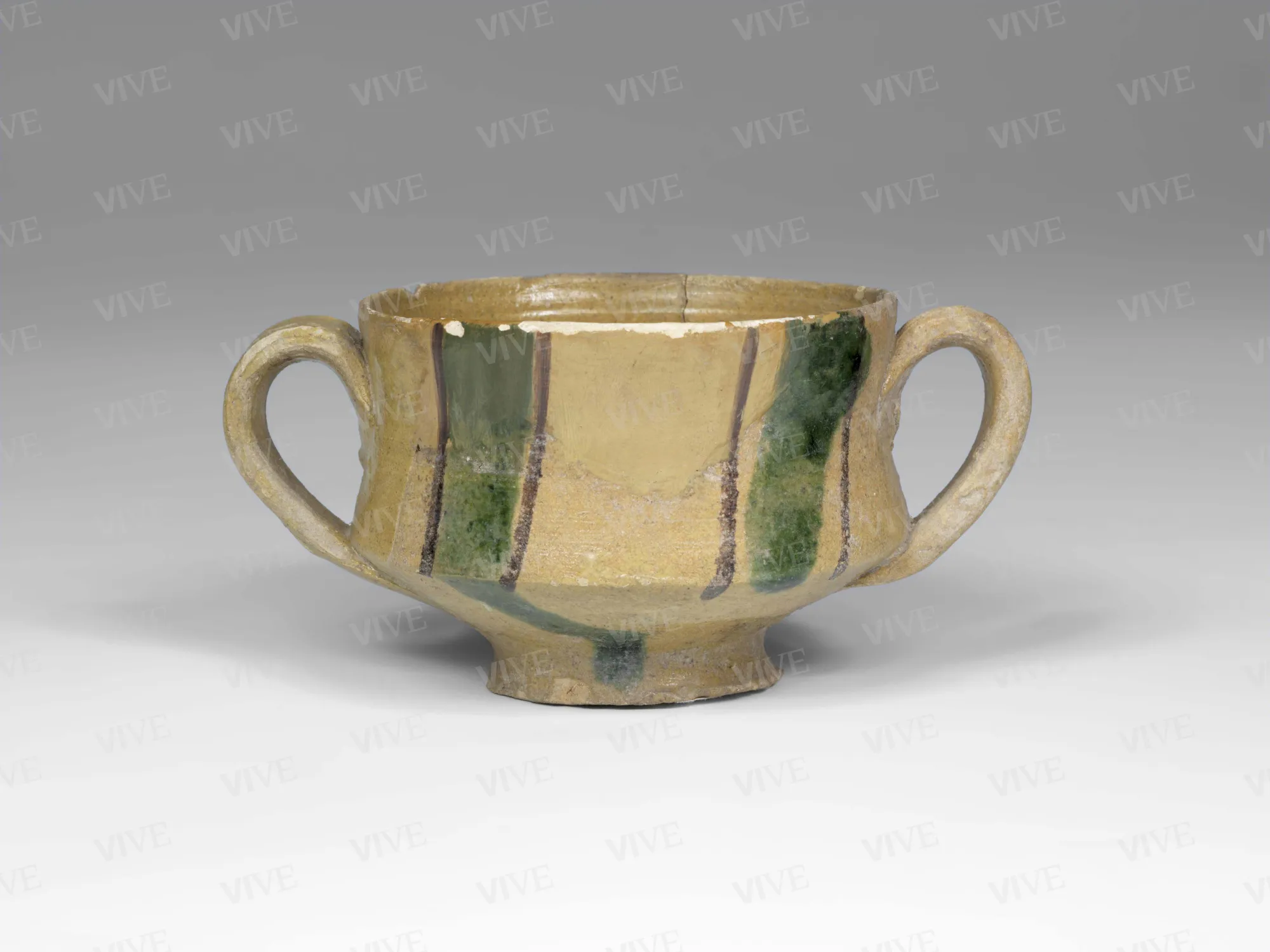
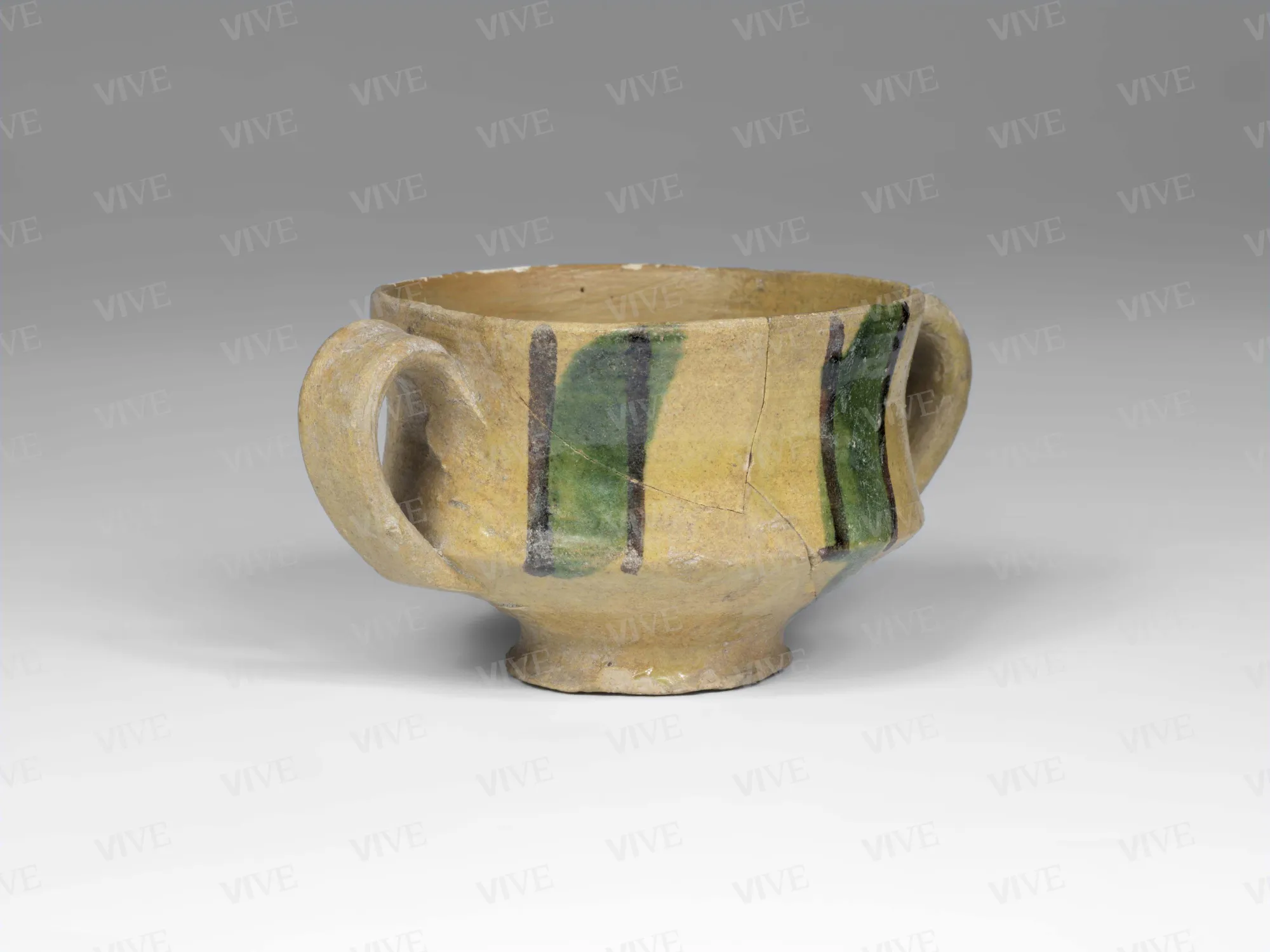
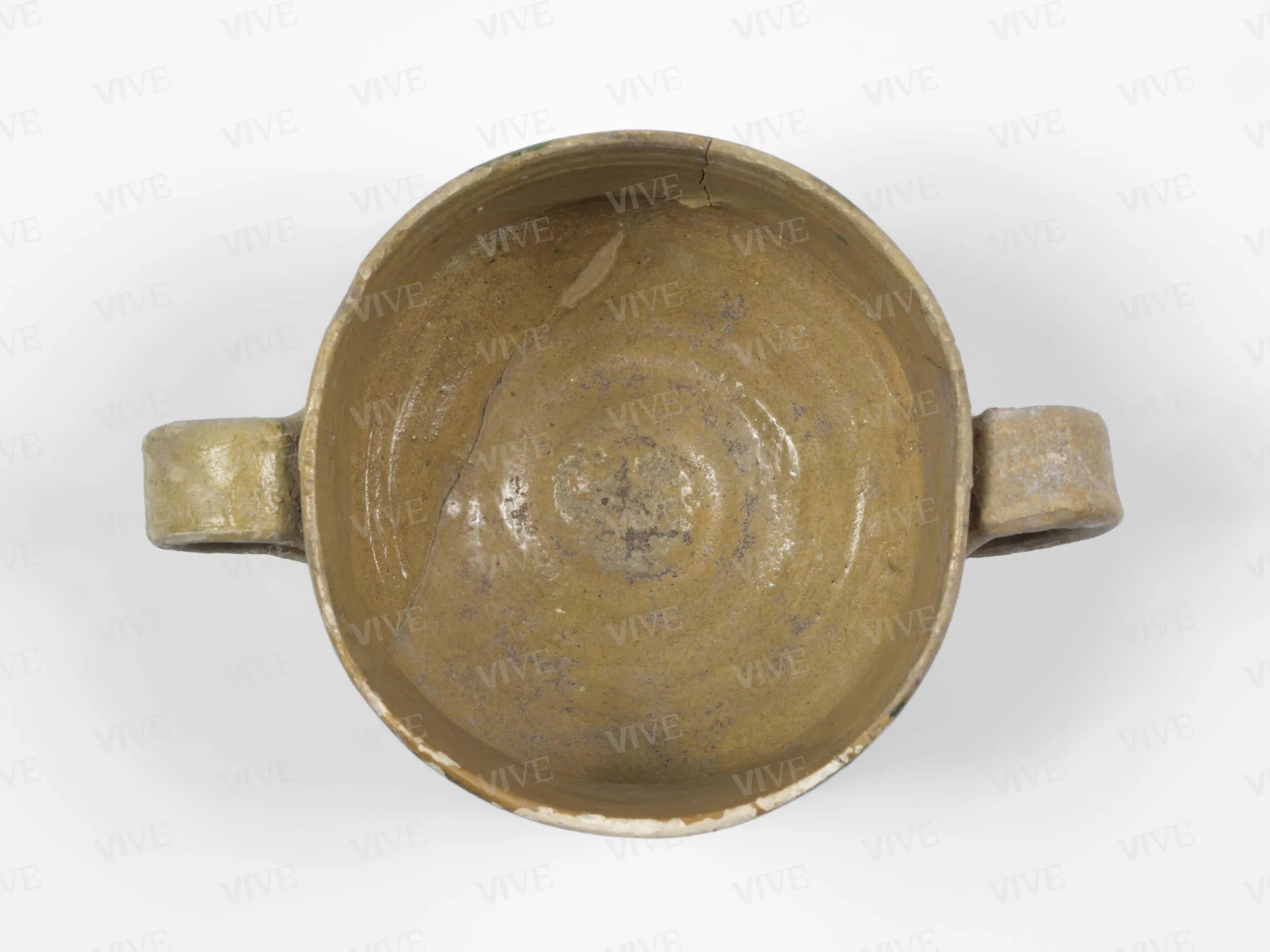
Hull-shaped, two-handle bowl on small, flared foot; it has an indistinct vertical rim with opposing vertical oval-section handles. The bowl has been restored with imitation additions along part of the rim and is painted under glaze. While the inner surface is undecorated, the outer surface is characterized by parallel vertical bands profiled in brown and filled in green.
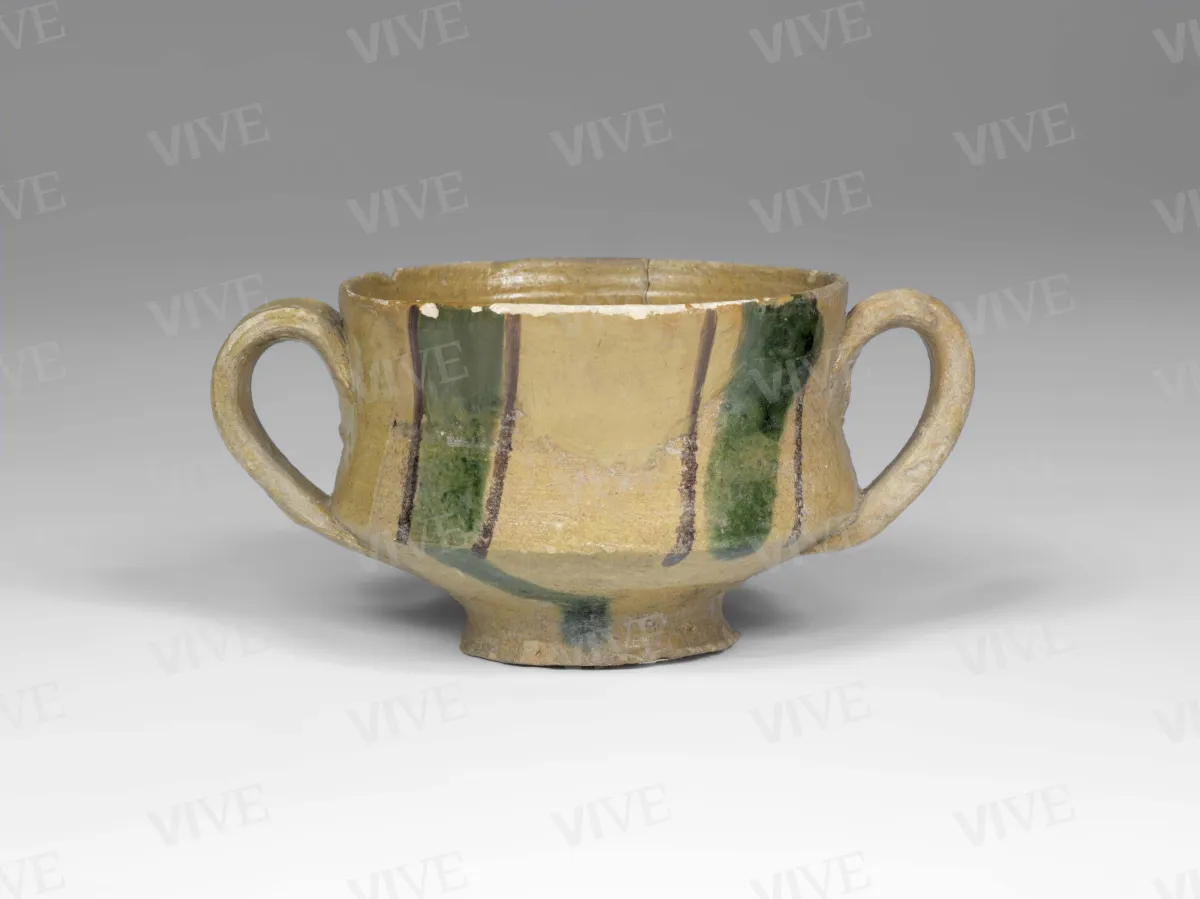
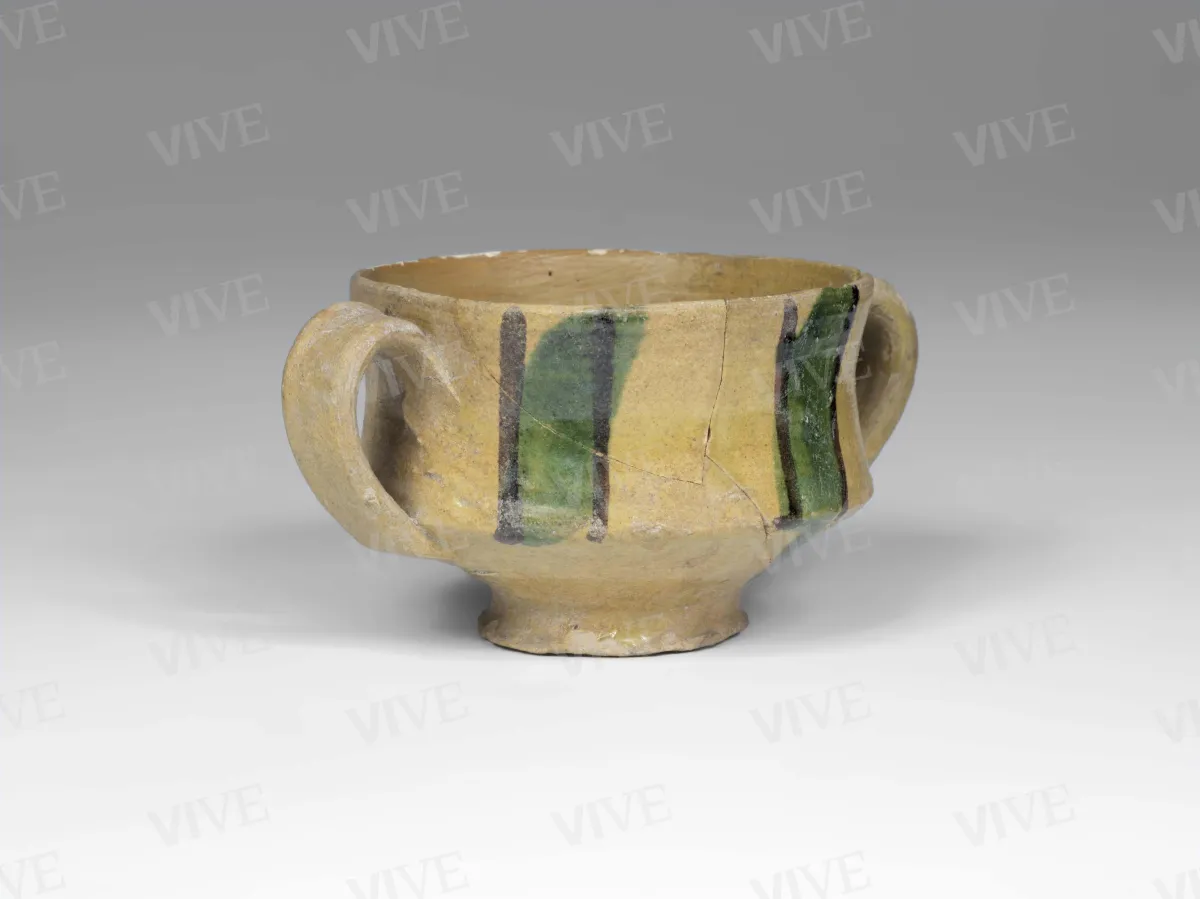
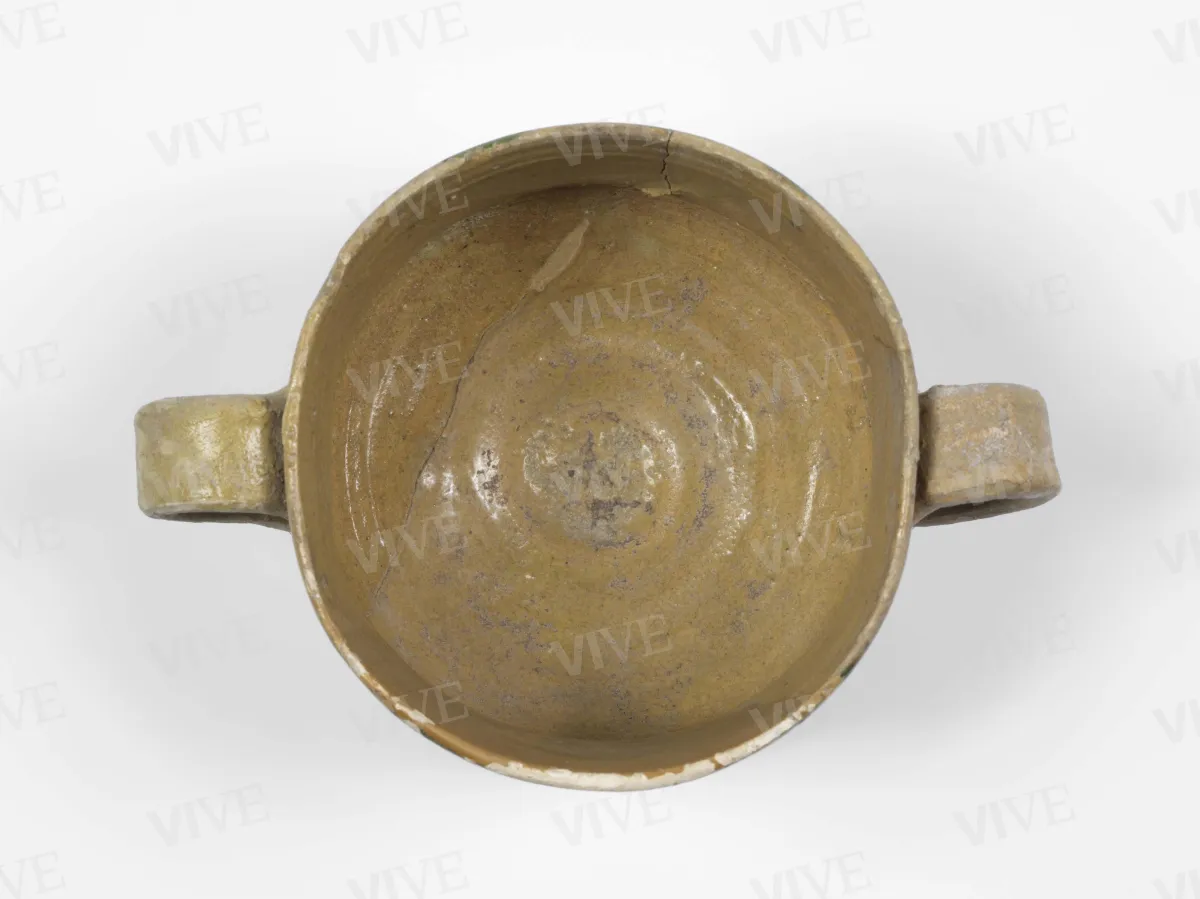
Hull-shaped, two-handle bowl on small, flared foot; it has an indistinct vertical rim with opposing vertical oval-section handles. The bowl has been restored with imitation additions along part of the rim and is painted under glaze. While the inner surface is undecorated, the outer surface is characterized by parallel vertical bands profiled in brown and filled in green.
Hull-shaped, two-handle bowl on small, flared foot; it has an indistinct vertical rim with opposing vertical oval-section handles. The bowl has been restored with imitation additions along part of the rim and has painted under glaze. While the inner surface is undecorated, the outer surface is characterized by parallel vertical bands profiled in brown and filled in green.
The find belongs to the so-called Latium pottery or majolica category, which refers to a cluster of coated pottery of Roman and Latium (now Lazio) production that preceded the Proto-majolica phase. In fact, between the late-twelfth and thirteenth century we see the birth of a series of tableware artifacts that quickly replaced earlier types. In Rome, these types have well-defined characteristics such as a stanniferous glaze coating, the prevalence of closed forms over open ones, and the absence of an initial start-up phase of production that is in fact immediately configured as well-defined morphologically and stylistically. In an early phase, which can be dated to the first half of the thirteenth century, decorations are drawn in three colors (copper green, manganese brown, and rust yellow) and the most frequent forms are globular pitchers with applied spouts. In this initial phase, it is possible to assume production took place in the workshops previously responsible for creating red-painted ceramics, with which, it must be said, the Latium Proto-majolica finds have much in common. In a subsequent phase, the rust yellow of the decorations tends to disappear and the pitcher profiles tend to be longer and narrower. Coupled with this, the decorations become more concise and linear and there is a larger number of finds. Therefore, it seems likely that, as demand increased, production was necessarily sped up, thus leading to a simplification of decorations. In the first half of the fourteenth century, production probably came to an end with the start of the production of Proto-majolica by craftsmakers in the Umbria-Latium area.
These small hull-shaped, two-handle bowls were mainly used for drinking but could also contain dipping sauces for raw vegetables and flatbreads, cooked fruit, or sweets. Similar shapes with slight morphological variations are found up to the end of the fourteenth century, when more advanced fairing made it easier to hold the container with the hands. The handles thus became superfluous, and were eliminated.
Beatrice Brancazi
Entry published on 12 February 2025
The vessel is relatively well preserved but has been restored with imitation additions along part of the rim.
The artifact belongs to the Collezione Del Pelo Pardi, which consists of about 180 pieces and was put together during the first decades of the twentieth century by Giulio Del Pelo Pardi who, a close friend of Pericle Perali and Gaetano Ballardini—two seminal figures in the discovery, study, and attempted preservation of ancient ceramics in those years—was probably influenced by them in his desire to collect and preserve materials that were copiously plundered from Orvieto to be sold on the international black market. In 1950, Del Pelo Pardi donated his collection, accompanied by a typewritten catalog prepared by Pericle Perali, to the Museo di Palazzo Venezia, where its traces were soon lost. Fortunately, however, in the 1990s, during a survey undertaken to retrieve and review the materials in the museum's depository, a collection was recovered and assumed to be the Del Pelo Pardi collection. Patient restoration work on the fragments, which lasted a total of four years, eventually confirmed this hypothesis and provided an incredible array of Orvieto majolica then published in Sconci 2000.
Mazzucato Otto, Indagini su una forma. La ciotola romana del primo Quattrocento, Roma 1982;
Whitehouse David, Introduzione allo studio della ceramica medievale orvietana, in Satolli Alberto (a cura di), La ceramica orvietana degli anni Venti, Orvieto 1983, p. 11, forma 7c.
Satolli Alberto, La tradizione ceramica a Orvieto, Orvieto 1995, p. 75, nn. 21-22, p. 76, n. 23;
Sconci Maria Selene (a cura di), Oltre il frammento: forme e decori della maiolica medievale orvietana. Il recupero della collezione Del Pelo Pardi, Roma 2000, p. 130, n. 89;
Ricci Marco, Vendittelli Laura, Museo Nazionale Romano – Crypta Balbi, ceramiche medievali e moderne. I, Ceramiche medievali e del primo rinascimento (1000-1530), Roma 2010, pp. 47-75.