Vittoriano


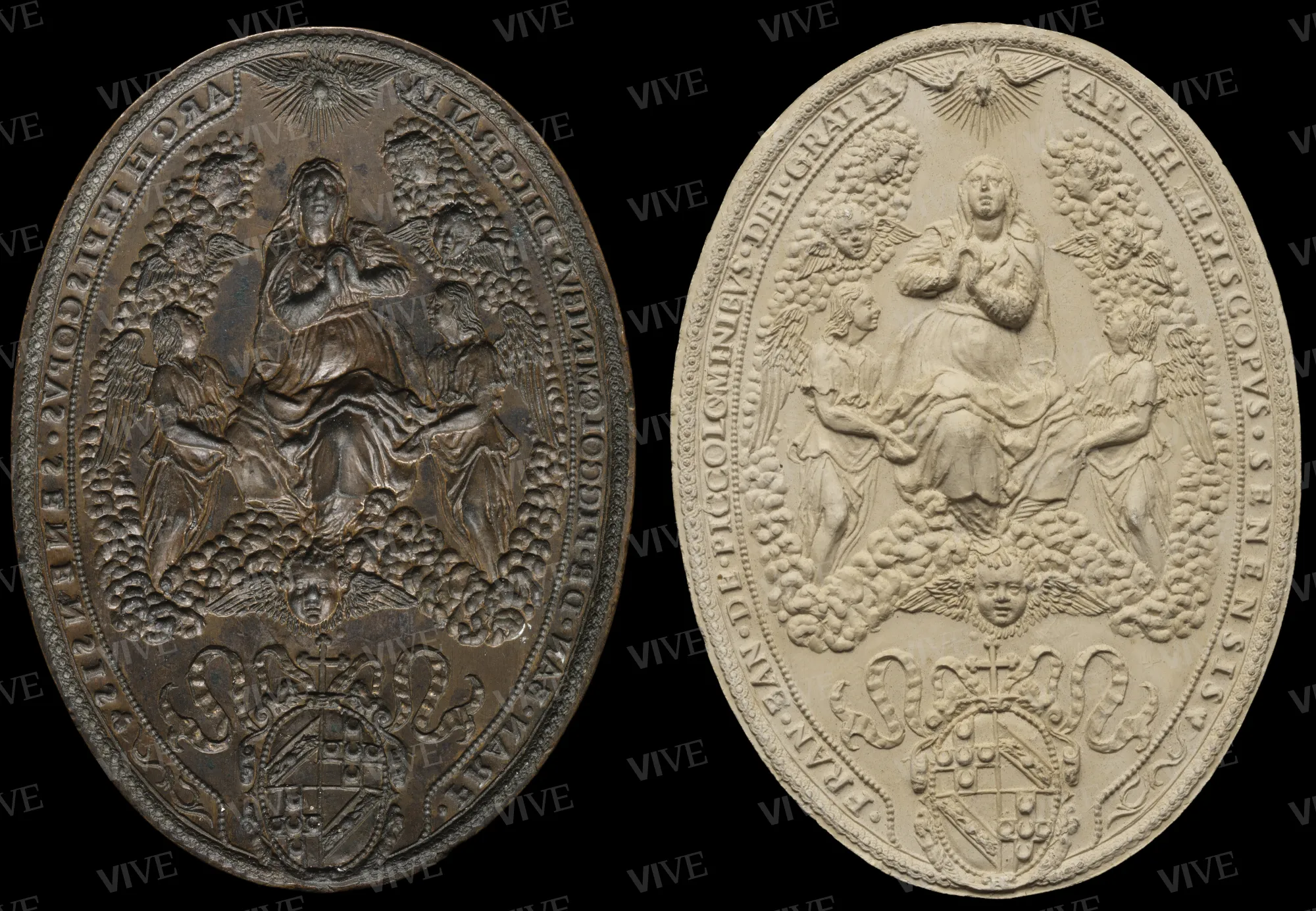
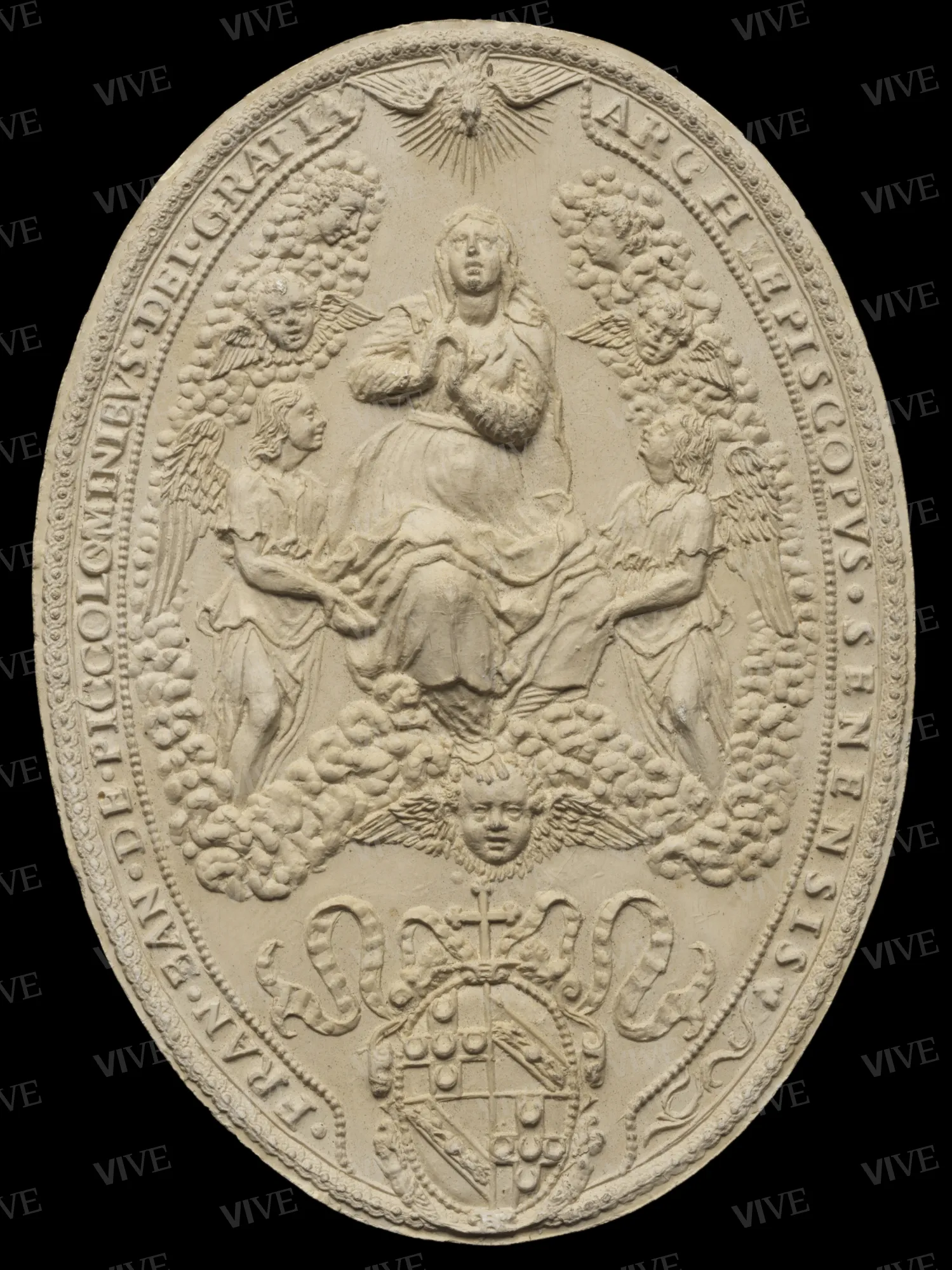
According to the inscription and coat of arms located at the base of the composition, this seal belongs to Archbishop Francesco Bandini Piccolomini of Siena (1505–1588). In alignment with the precedent set by his predecessors, the ecclesiastic selected the Virgin Assumed into Heaven surrounded by angels as his emblem. The image, elegantly crafted within the small oval, is likely attributed to an artist active in Rome during the latter half of the sixteenth century.
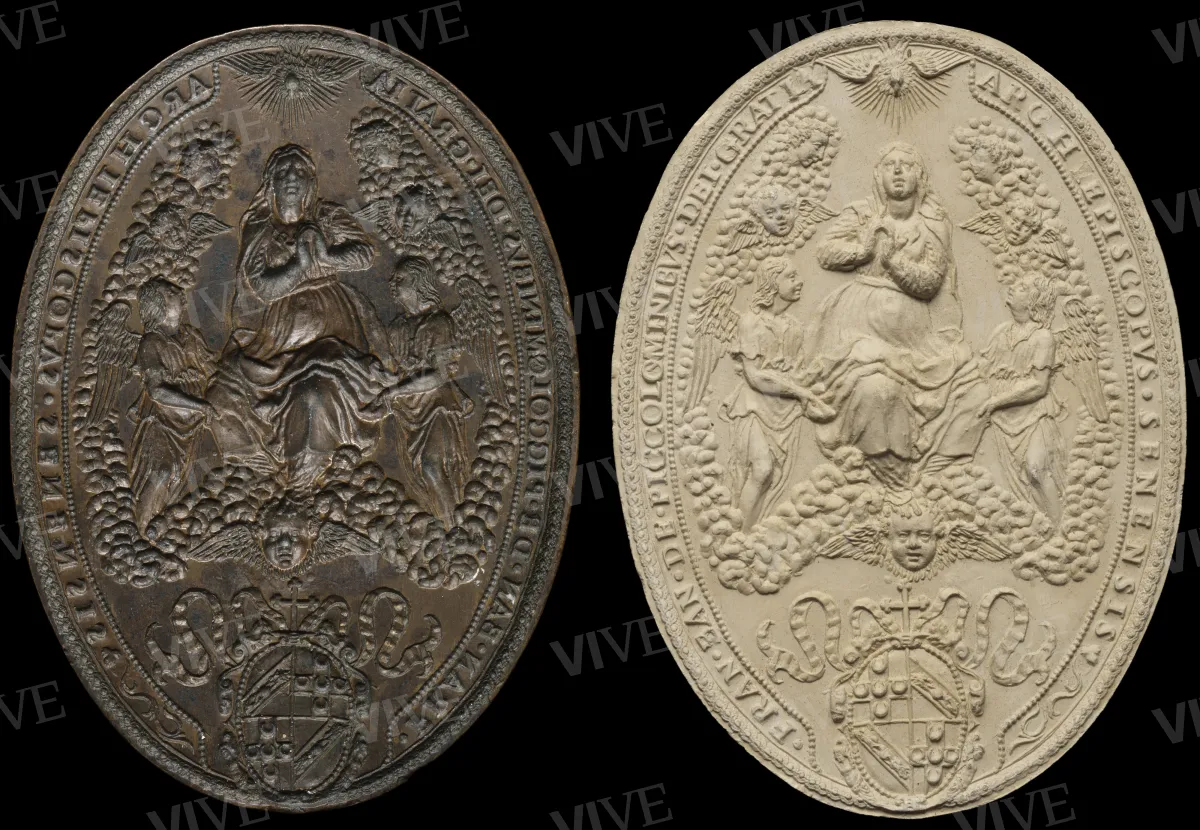
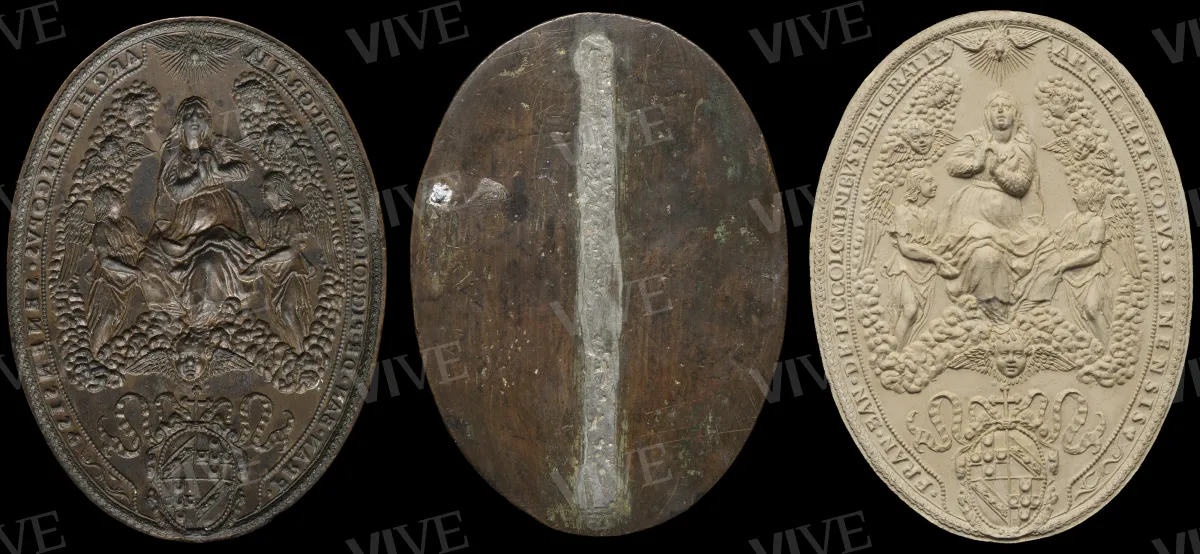
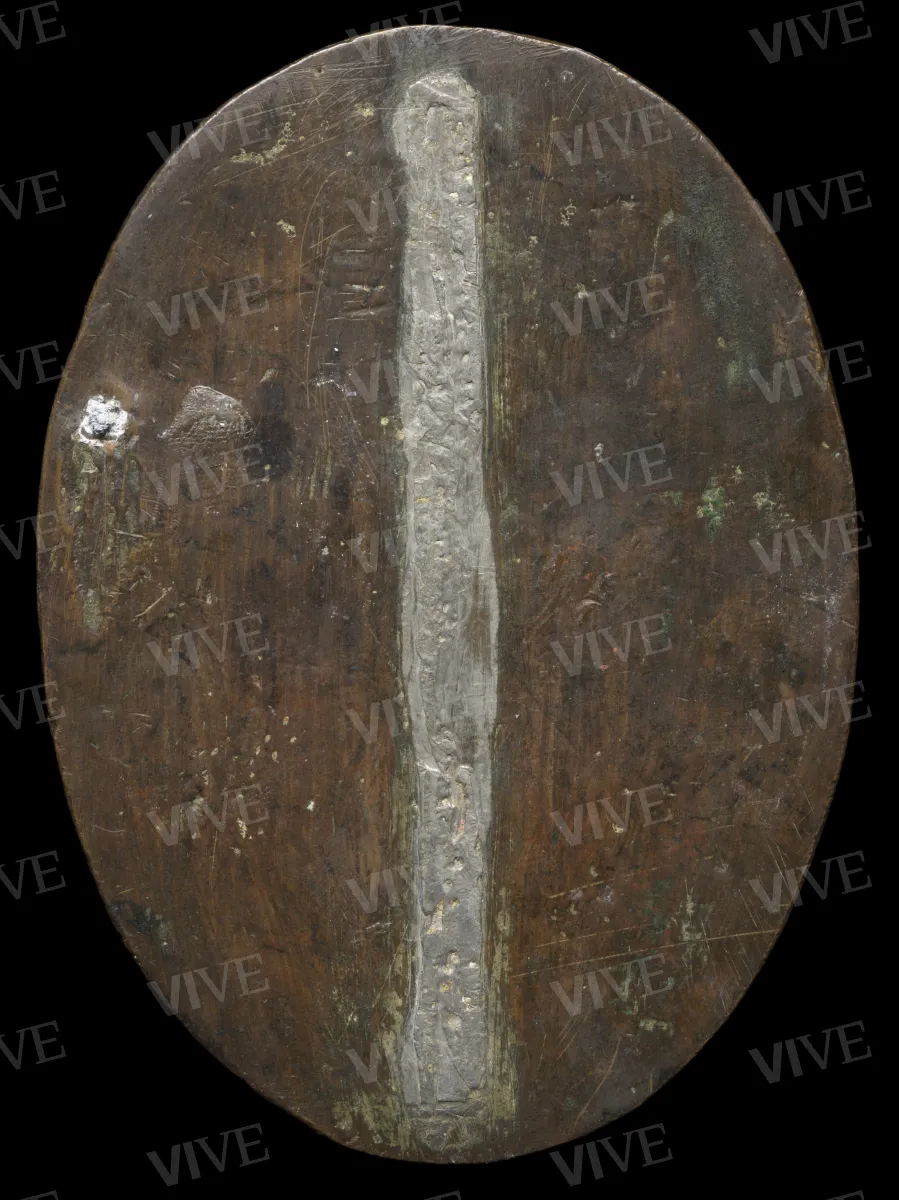
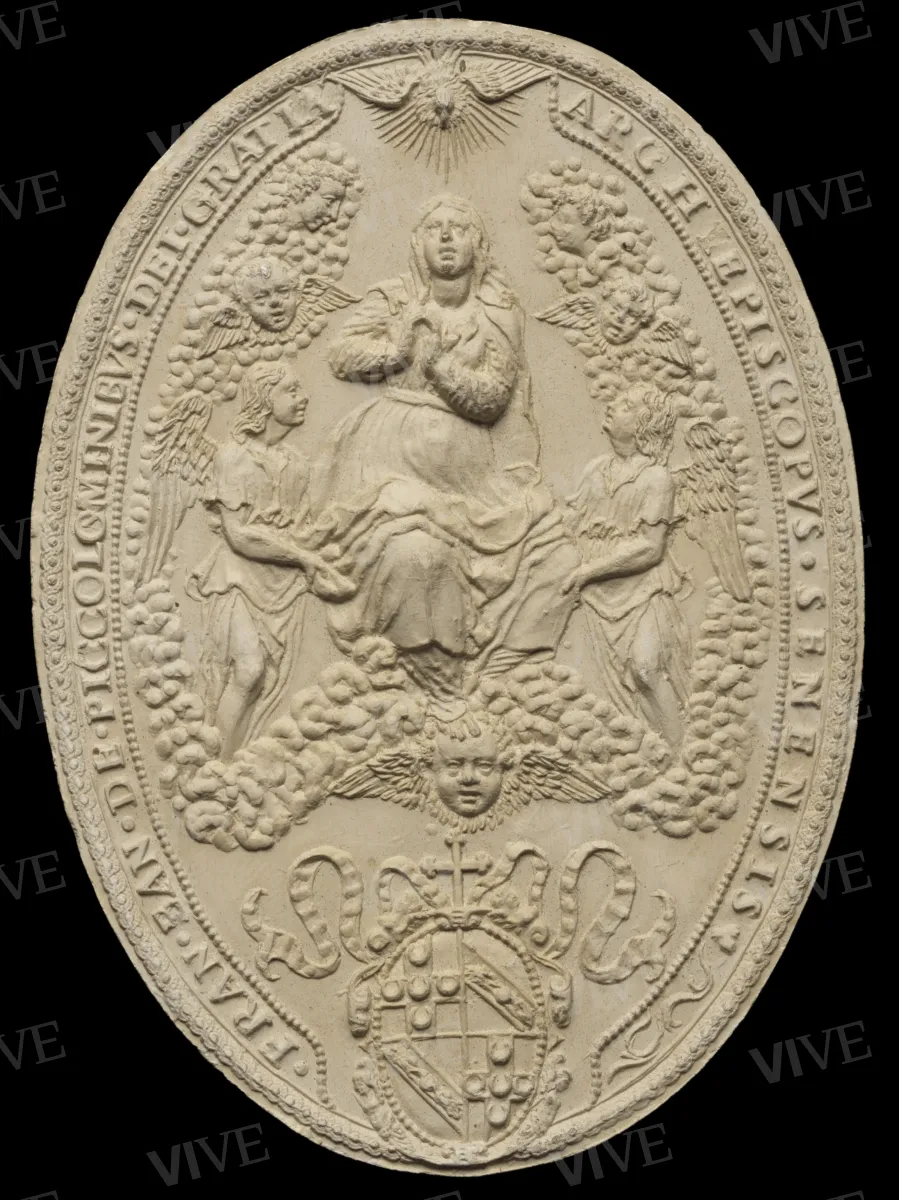
According to the inscription and coat of arms located at the base of the composition, this seal belongs to Archbishop Francesco Bandini Piccolomini of Siena (1505–1588). In alignment with the precedent set by his predecessors, the ecclesiastic selected the Virgin Assumed into Heaven surrounded by angels as his emblem. The image, elegantly crafted within the small oval, is likely attributed to an artist active in Rome during the latter half of the sixteenth century.
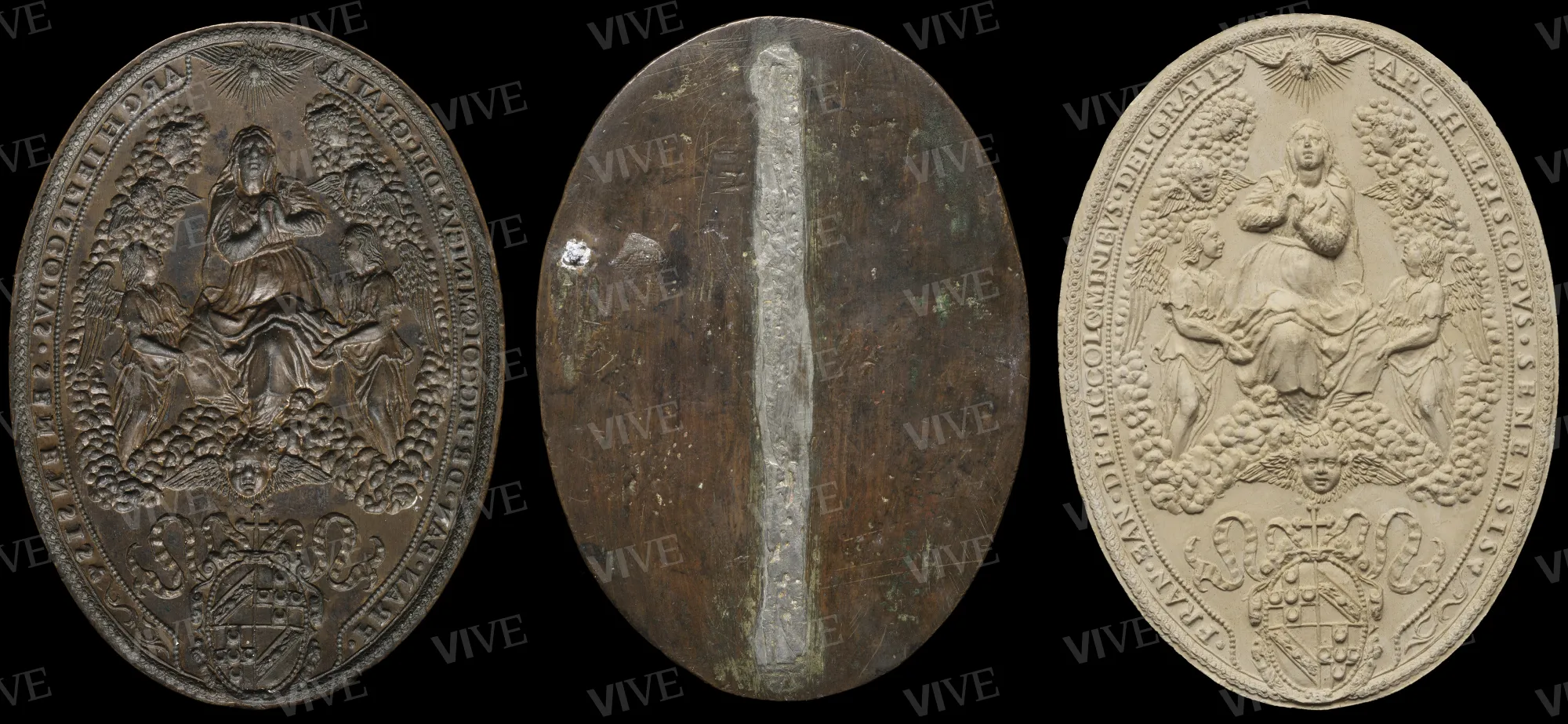
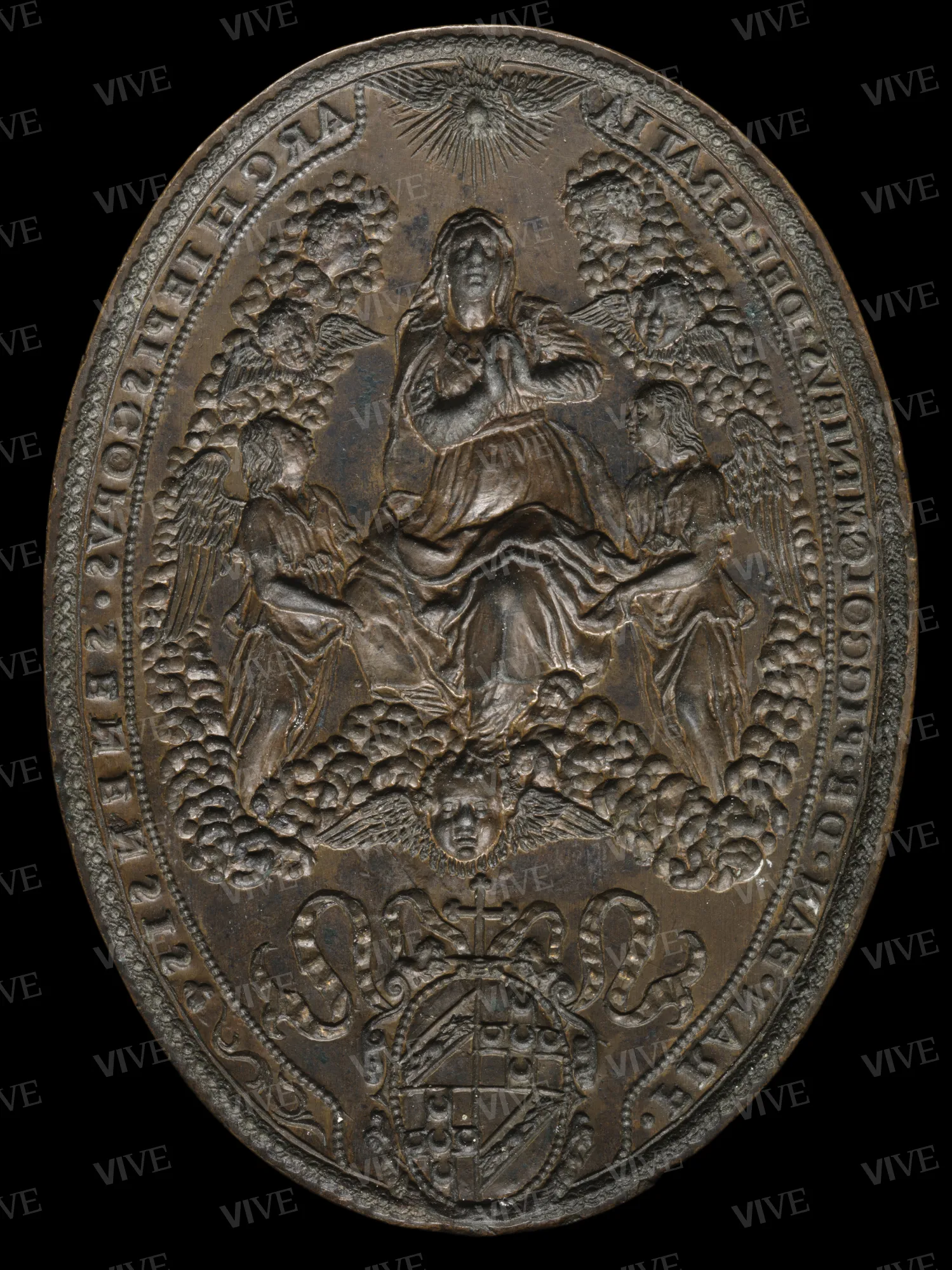
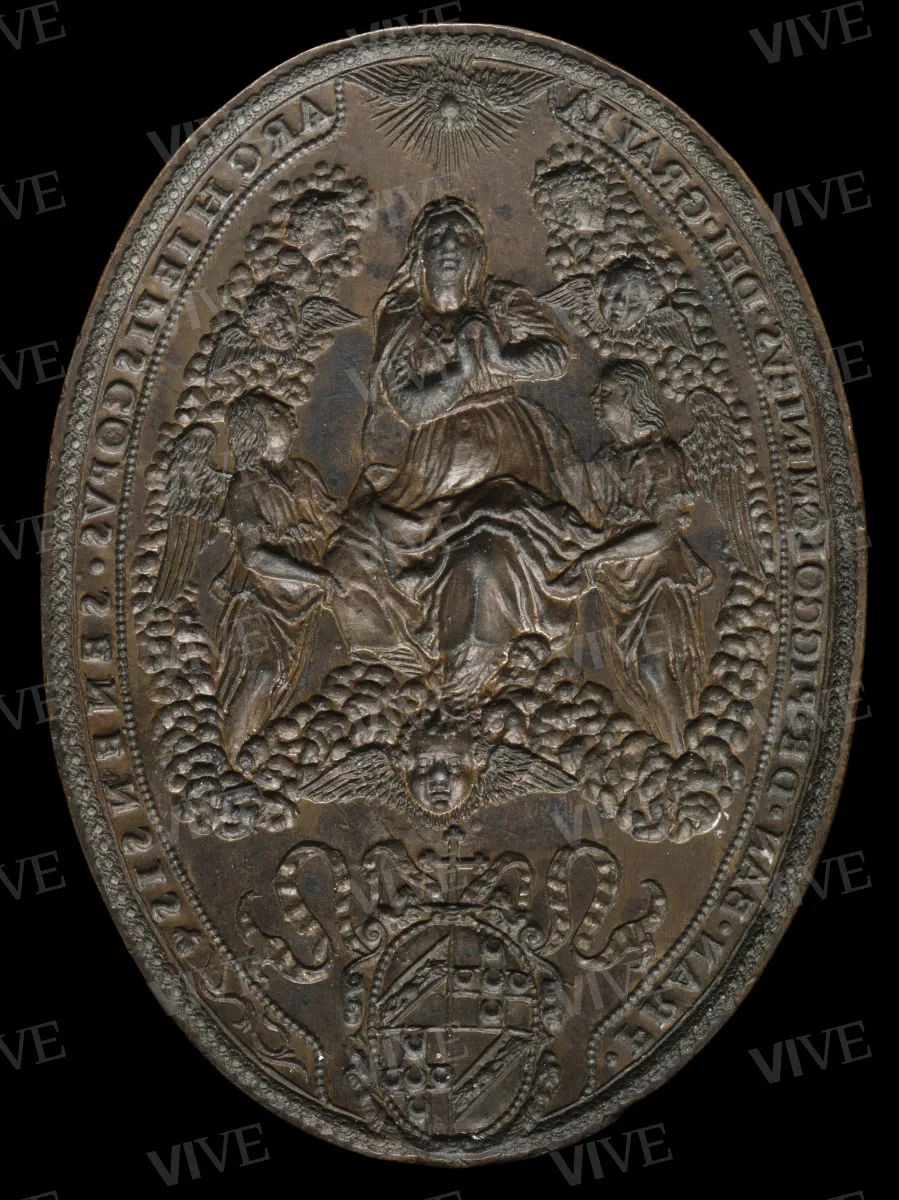
This oval seal, which was acquired by the Italian State and arrived at the Museo Nazionale di Palazzo Venezia in 1903 from the collection of the Roman scholar Costantino Corvisieri, depicts two angels in profile supporting the Virgin. The Virgin is seated on a mound of cirrus clouds with her hands joined in prayer and looks towards the dove of the Holy Spirit, which is placed at the top of the composition with outstretched wings. The Madonna, veiled and wrapped in a large cloak, rests her feet on a cherub and is surrounded by four other winged cherub heads, two on each side, immersed in clouds (Modigliani 1903, 223).
At the base of the seal is a quartered coat of arms featuring a cross with five crescents in the first and fourth quarters and a band with two eagle heads facing each other and swallowing a sphere in the second and third quarters; the whole is topped by a cross and fluttering ribbons (Inventory of seals 1911, 38 n. 85; Becchetti 2012, 62–63 n. 2). The inscription along the edges, enclosed within a string of pearls, identifies this as the coat of arms of Archbishop of Siena Francesco Bandini Piccolomini (1505–1588).
The subject, son of Sallustio Bandini and Montanina Piccolomini Todeschini (sister of Cardinal Giovanni and niece of Pope Pius III), advanced quickly in his career. He was appointed to the Sienese episcopate shortly after his uncle’s death and received official consecration in 1538. He was instrumental in founding the Accademia degli Intronati and was actively engaged in the political affairs of both his city and Rome. He held several significant positions, including Governor of Rome in 1556, Governor of the Province of the Patrimony of Saint Peter in Tuscia in 1559, and Vice Camerlengo in 1560 (Alberigo 1963, 735–737).
The bishops of Siena commonly selected the image of the Assumption of the Virgin, especially as she is the patron saint of the city’s cathedral. Pope Pius II Piccolomini had previously shown interest in this subject, influenced by Saint Bernardino of Siena's veneration for the Virgin of Camollia (Fattorini 2009, 325–353). When Pius II promoted the See of Siena to an archdiocese and granted Antonio Piccolomini the title of metropolitan archbishop, Antonio chose the Assumption as the symbol for his seal. Later, Ascanio Piccolomini used the same symbol when he succeeded Francesco Piccolomini.
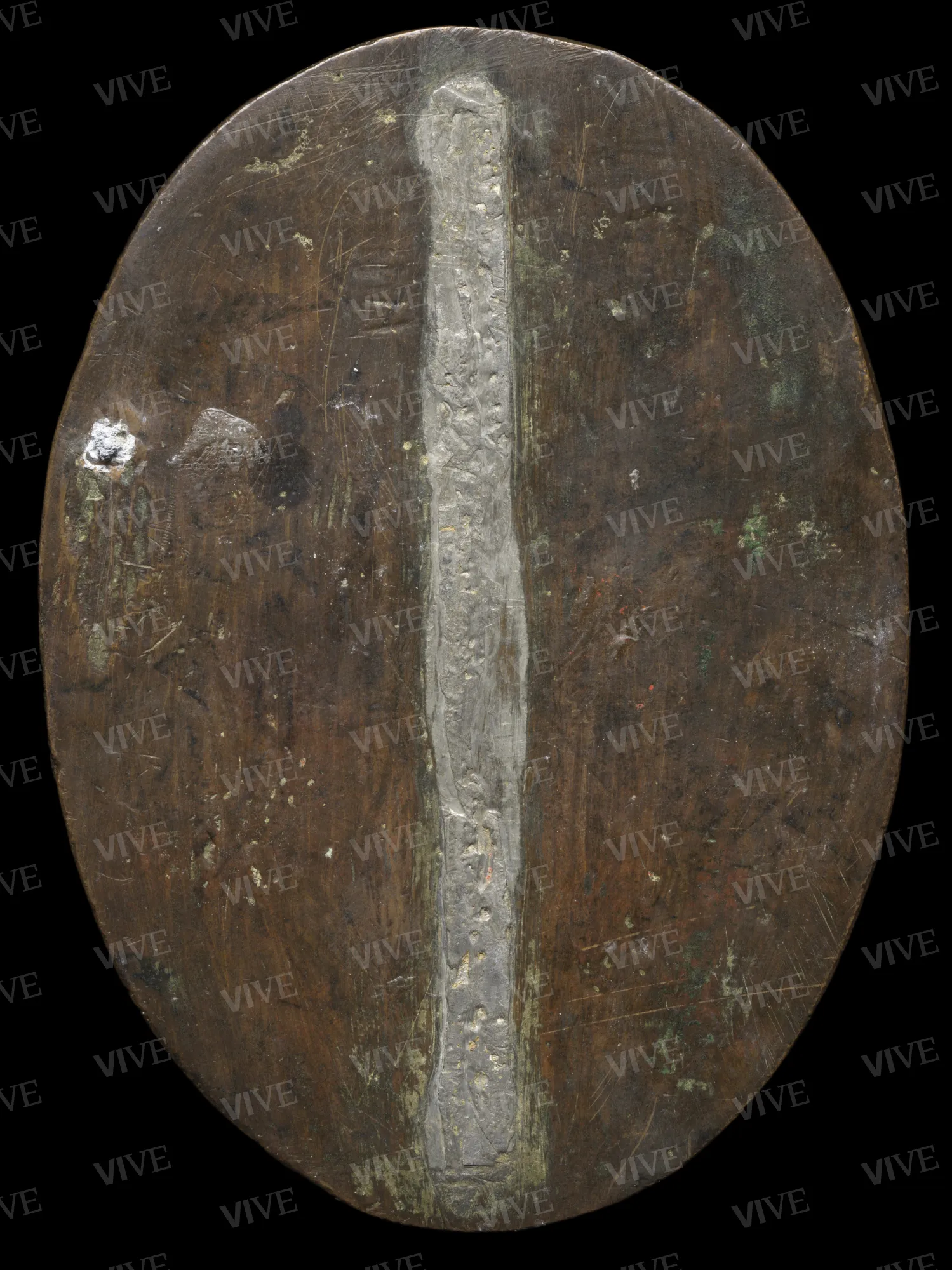
Among the episcopal seals depicting the Assumption, none match the artistic quality of Bandini’s work; it stands as a true masterpiece of Mannerist sigillography. The matrix is likely to have been created between Archbishop Bandini’s official consecration in 1538 and his death in 1588. However, the composition's style suggests a chronology extending into the latter half of the sixteenth century. It is plausible that Francesco Bandini Piccolomini engaged an artist from Rome, with which he maintained ongoing and productive relationships.
Marco Scansani
Entry published on 12 June 2025
Good.
“FRAN • SAN • DE • PICCOLOMENIBUS • DEI • GRATIA”;
“ARCH EPISCOPUS • SENENSIS.”
Rome, Collezione Corvisieri, 1903;
Rome, Museo Nazionale di Palazzo Venezia, purchased by the Italian State, 1903.
Modigliani Ettore, La collezione sfragistica Corvisieri, in «L’arte», VI, 1903, pp. 223-224;
Inventario dei sigilli Corvisieri: esposizione internazionale di Roma 1911, mostre retrospettive in Castel S. Angelo, Roma 1911;
Alberigo Giuseppe, Bandini Piccolomini, Francesco, ad vocem, in Dizionario Biografico degli Italiani, 5, Roma 1963, pp. 735-737;
Fattorini Gabriele, Pio II e la Vergine di Camollia: (l’Assunta di Simone Martini, la pala del Vecchietta per Pienza e una cappella di Antonio Miraballi Piccolomini), in Nevola Fabrizio (a cura di), Pio II Piccolomini, il papa del Rinascimento a Siena, Atti del convegno (Siena, 5-7 maggio 2005), Siena 2009, pp. 324-353;
Becchetti Luca, Sigilli ecclesiastici dalla collezione Corvisieri italiana, Roma 2012.