Vittoriano


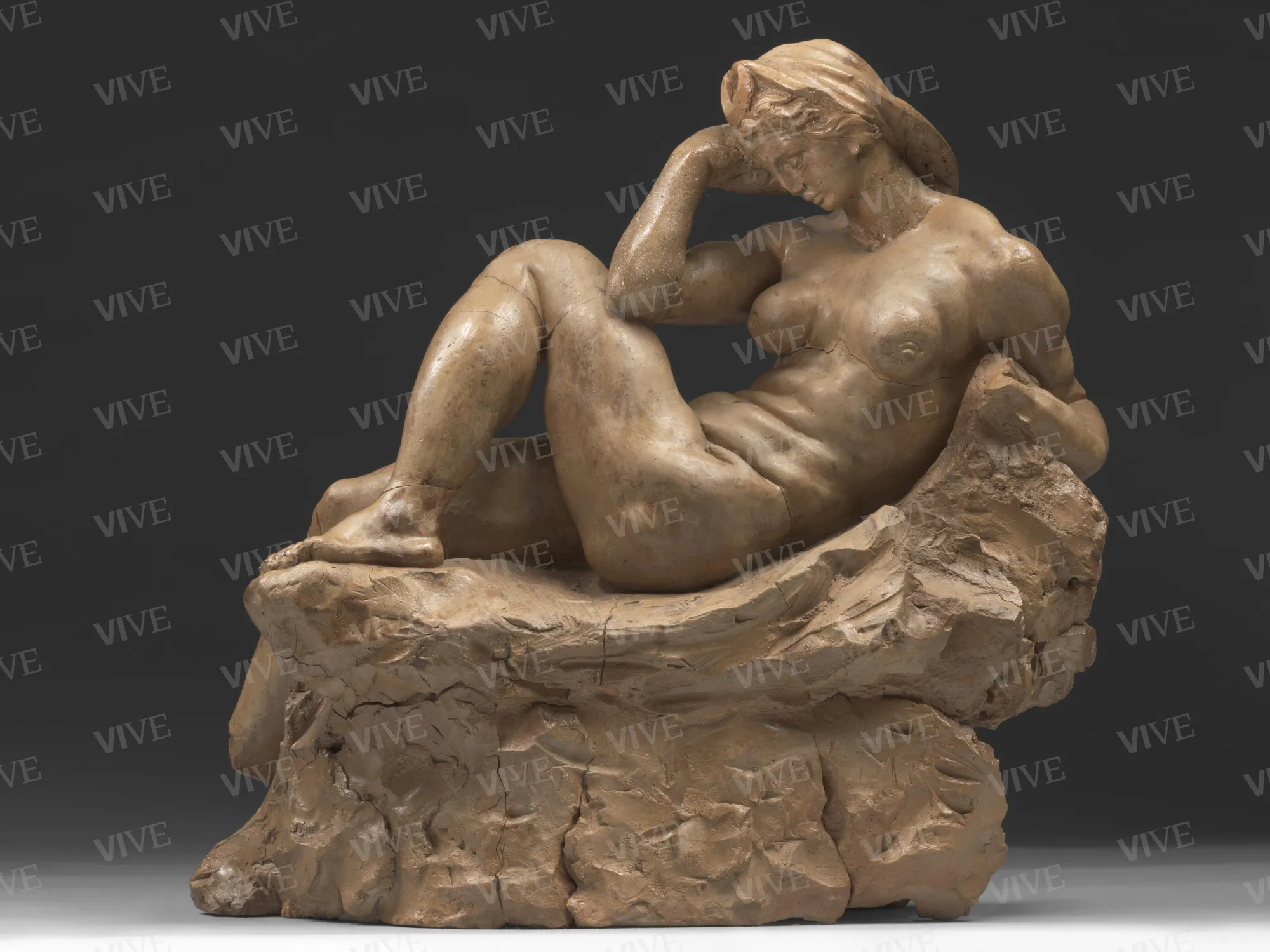
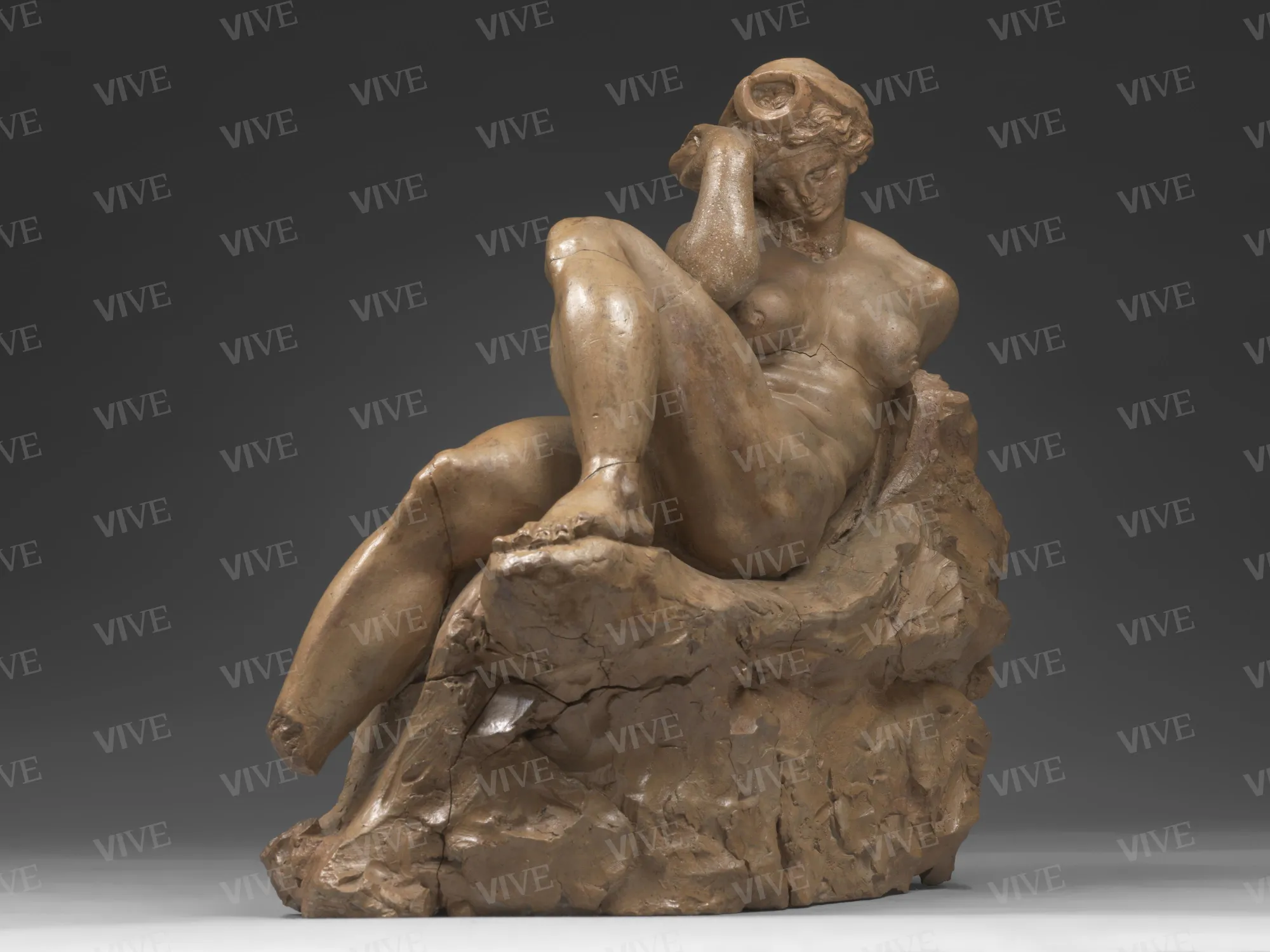
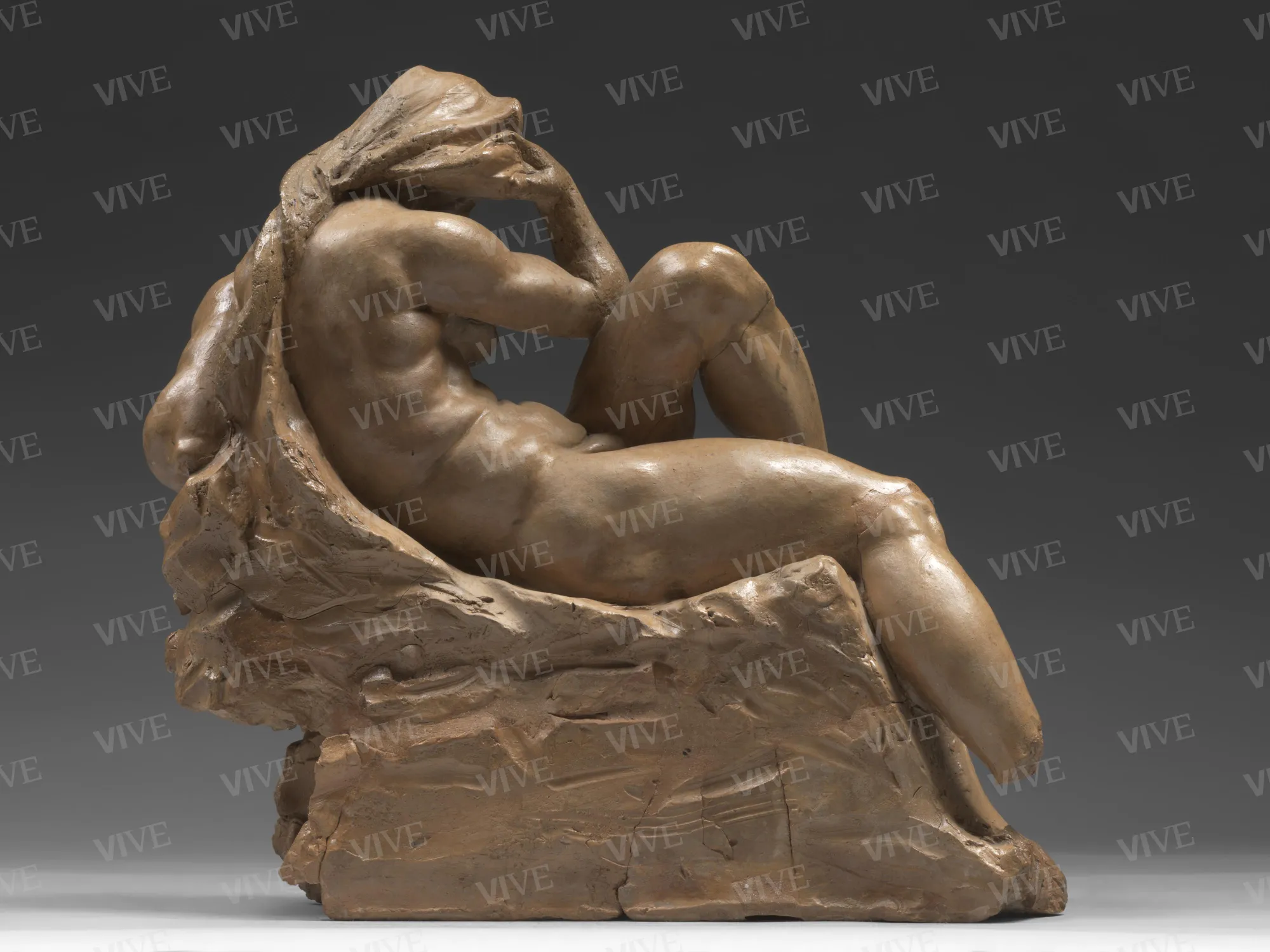
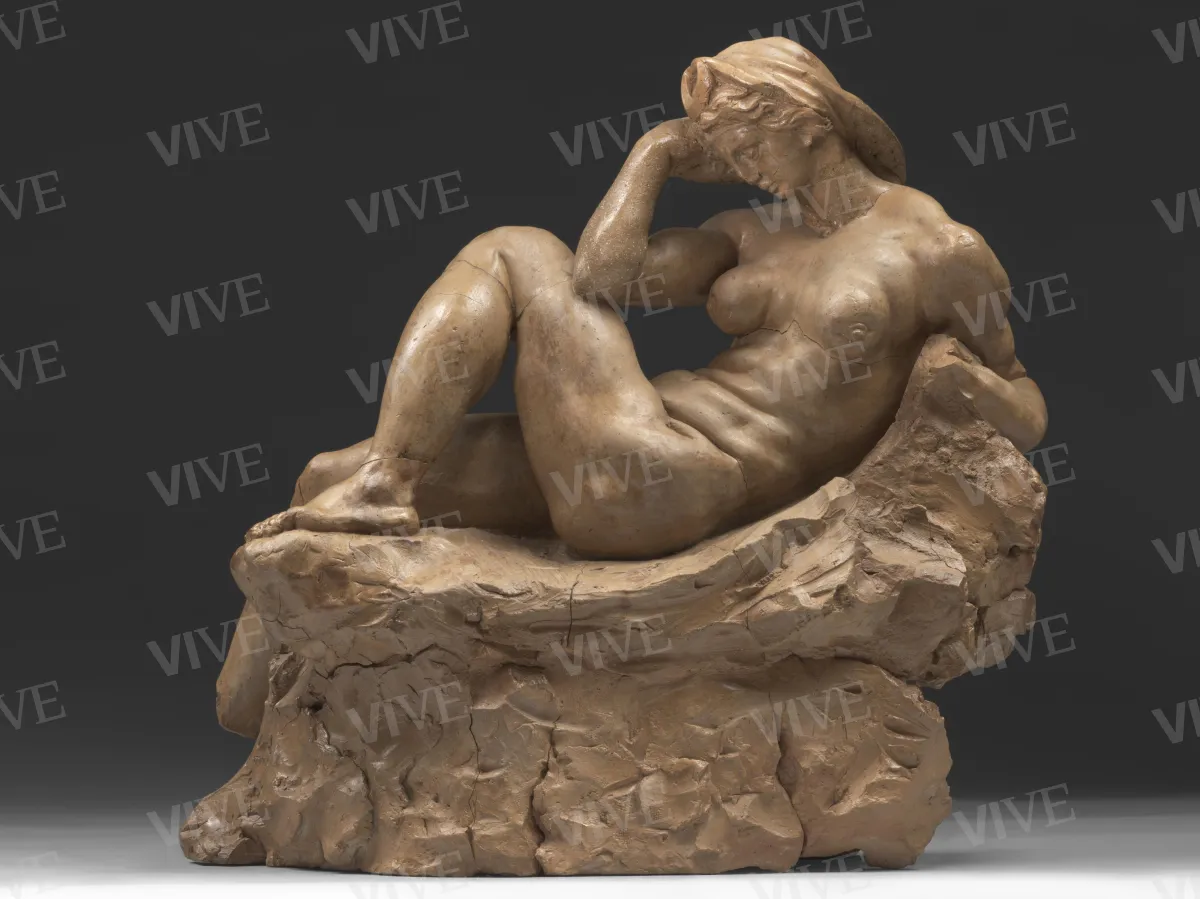
This terracotta is a scaled-down interpretation of Michelangelo’s Night, the renowned statue positioned on the tomb of Duke Giuliano de’ Medici in the New Sacristy of San Lorenzo, Florence. Clay and plaster reproductions of this work were already circulating during the sixteenth century. In this instance, however, the figure is largely devoid of its original iconographic elements and is set atop an amorphous base, which still bears visible impressions of the sculptor’s hands. The liberties taken with Michelangelo’s design and the rock-like support suggest that this piece was created during the Baroque period.
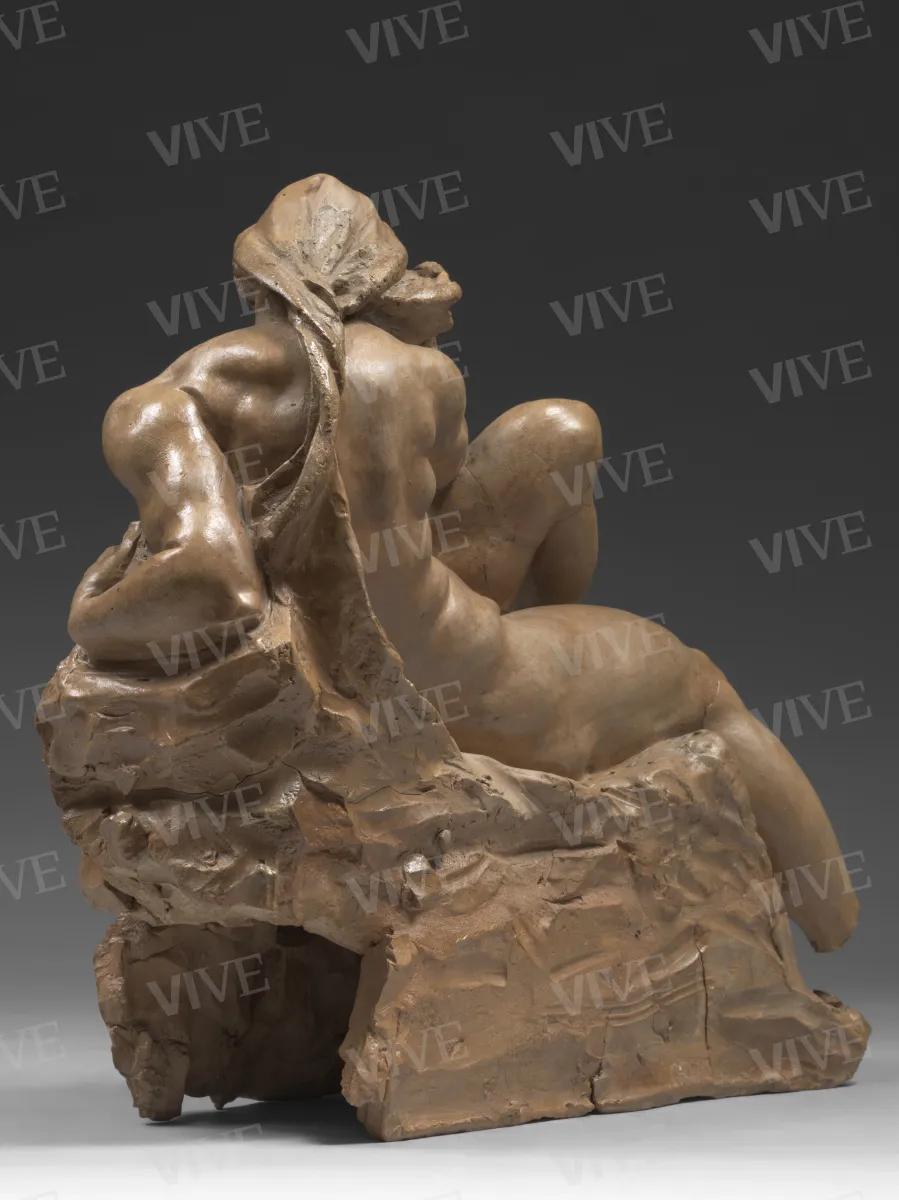
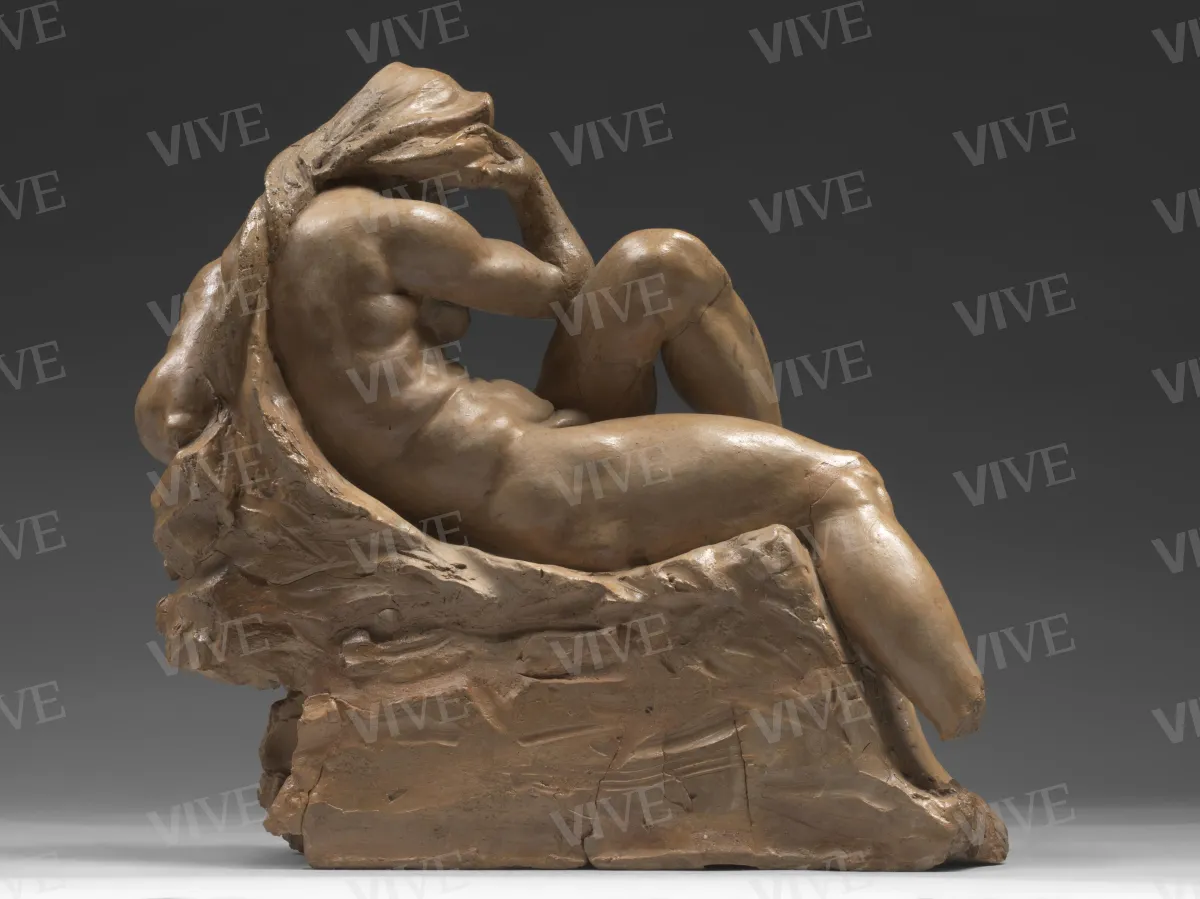
This terracotta is a scaled-down interpretation of Michelangelo’s Night, the renowned statue positioned on the tomb of Duke Giuliano de’ Medici in the New Sacristy of San Lorenzo, Florence. Clay and plaster reproductions of this work were already circulating during the sixteenth century. In this instance, however, the figure is largely devoid of its original iconographic elements and is set atop an amorphous base, which still bears visible impressions of the sculptor’s hands. The liberties taken with Michelangelo’s design and the rock-like support suggest that this piece was created during the Baroque period.
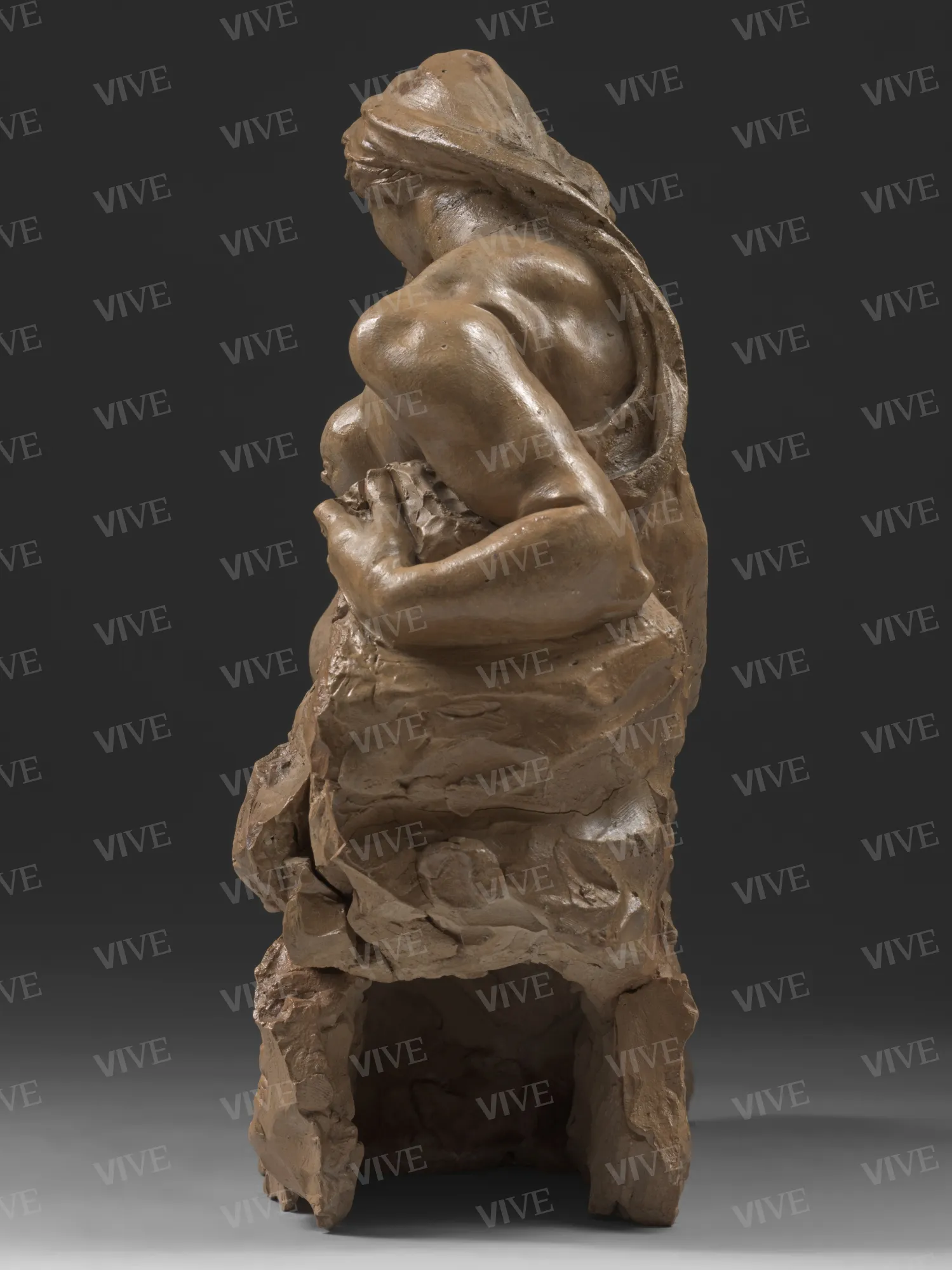
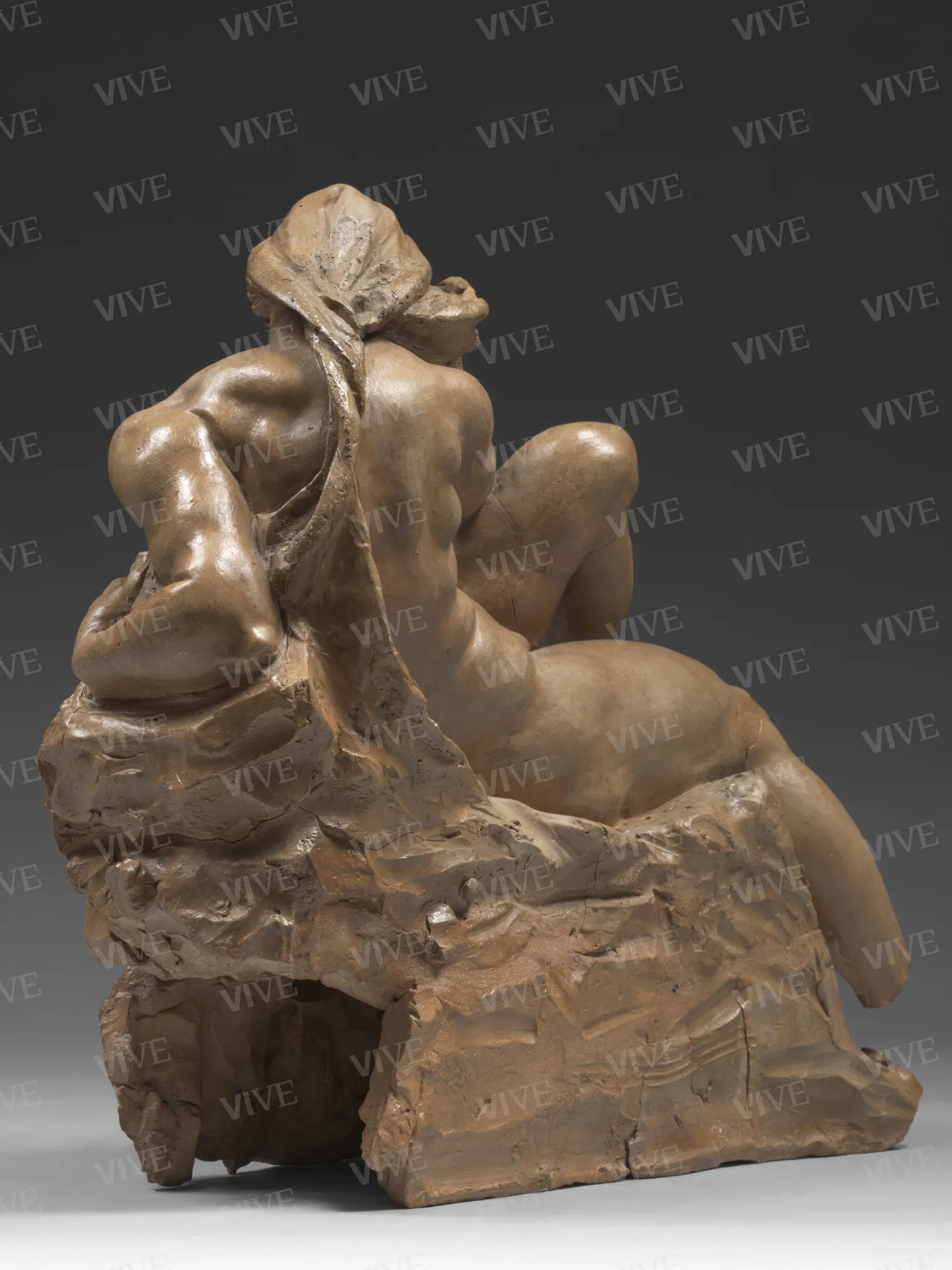
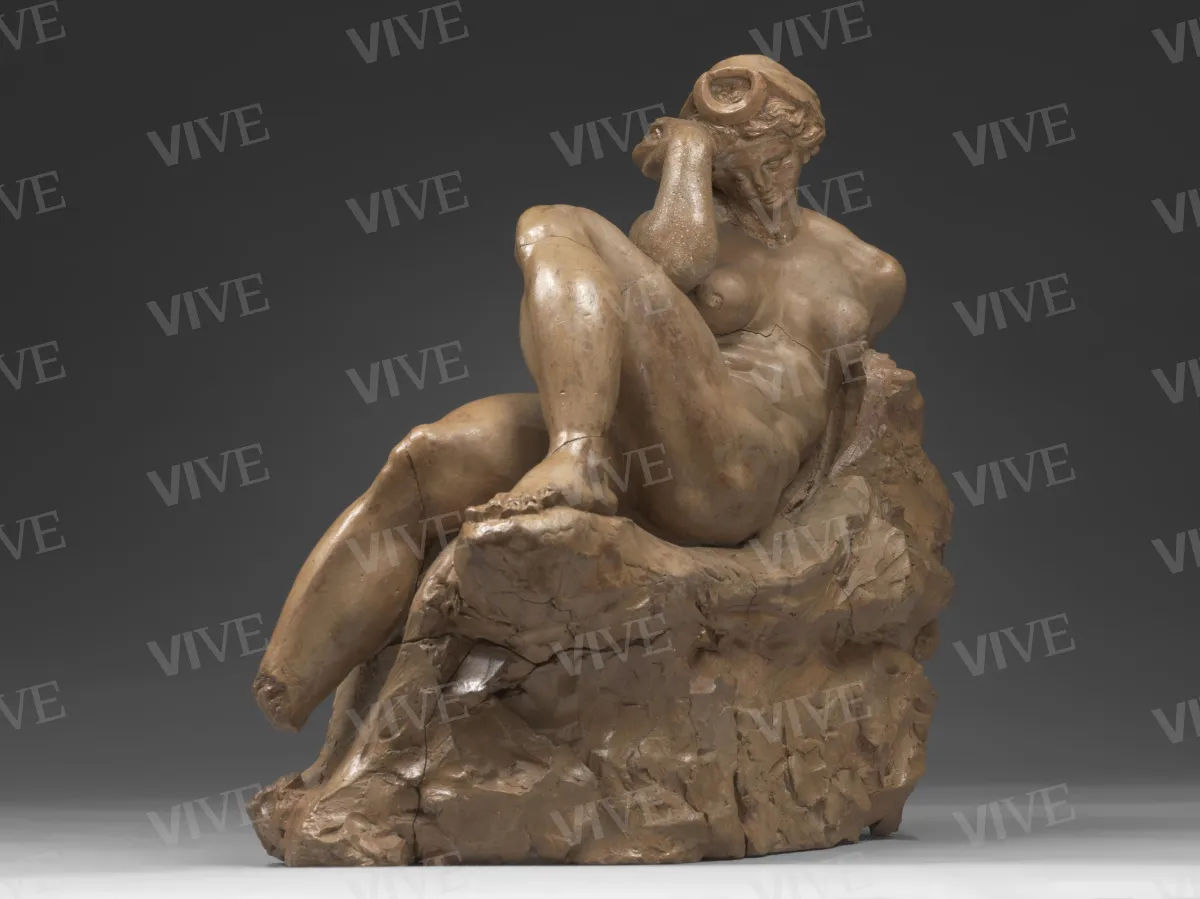
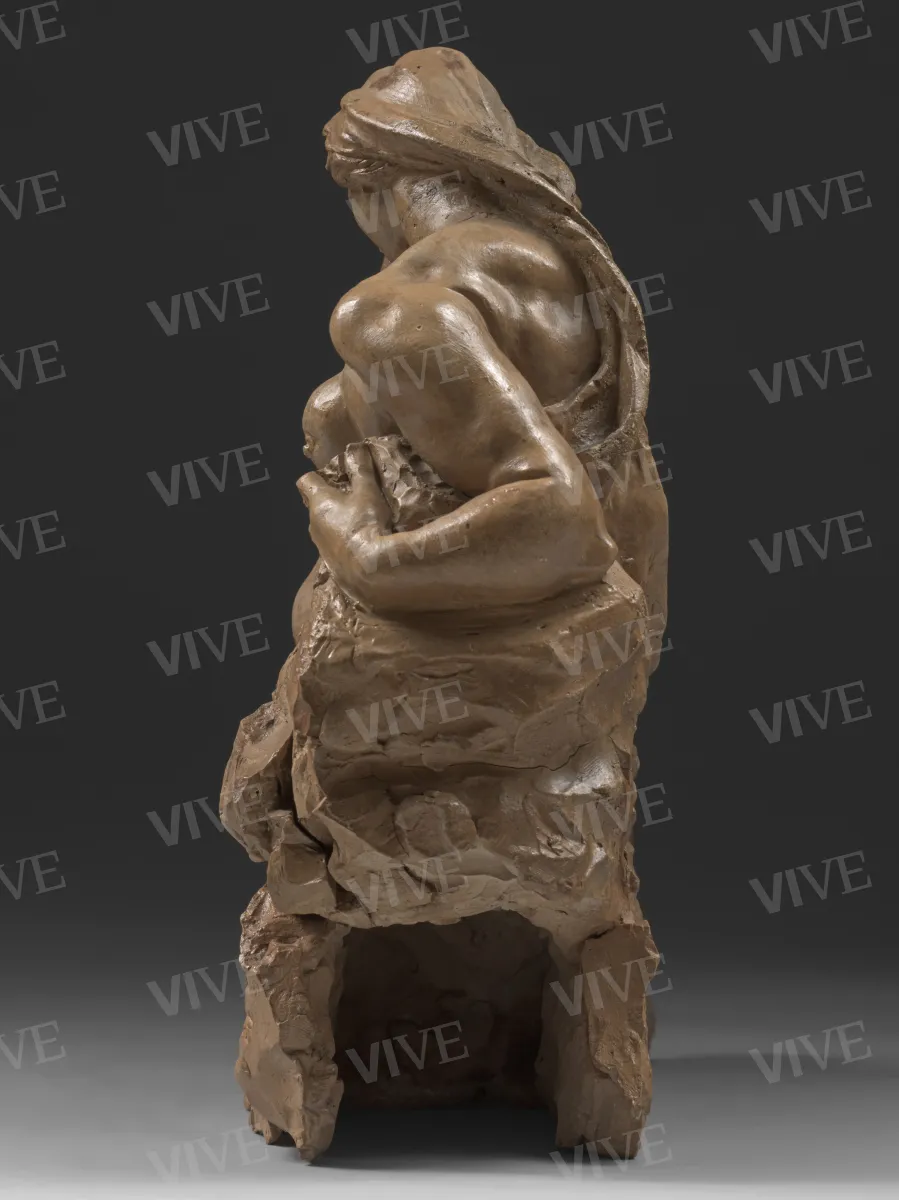
This clay reduction represents a female figure with robust limbs, depicted while asleep with her head supported by the back of her right hand. The work is based on Night, sculpted by Michelangelo in 1534 for the tomb of Giuliano de’ Medici, Duke of Nemours, located in the Sagrestia Nuova of San Lorenzo in Florence. In comparison to the model, the figure's torso is less rotated, the head exhibits a different tilt, and the braid across the chest has been omitted. The piece is stripped of most iconographic elements except for the crescent moon; unlike Michelangelo’s original, it does not rest on a sarcophagus volute shielded by drapery. Instead, it reclines directly on a roughly shaped block resembling a large stone. This unfinished support retains clear evidence of the sculptor’s process: visible are the impressions left by a damp cloth used to maintain moisture in the clay, as well as fingerprints and marks from a knife, stick, and toothed tool. The cracks present resulted from material contraction during the firing process.
The figure, which is much more refined, has suffered some damage. In addition to the cracks present under the artifact’s breast and in the left leg, above and below the knee, and on the ankle, the right foot and two toes on the other foot are missing. During a restoration conducted at an unspecified time, materials of a contrasting color were used, rendering the intervention immediately discernible. The restoration involved the integration of the right forearm, a portion of the neck, a segment of the right knee, and nearly the entire veil draped across the back. This piece belonged to the extensive collection of models maintained by Bartolomeo Cavaceppi at his studio on the Via del Babuino in Rome. In the terracotta inventory compiled circa 1776, the piece is listed as "bozzetto of Twilight," described as a woman standing in the Medici warehouse in Florence and attributed to Michelangelo. The misidentification of the subject, recorded as Twilight instead of Notte, was subsequently perpetuated in later documentation.
A more challenging reference appears in the post-mortem inventory of 1799–1800, which lists “number four Twilights by Michelangelo.” In the subsequent 1802 inventory, Michelangelo’s “Twilight” is again mentioned and appraised at one scudo and twenty baiocchi (Gasparri, Ghiandoni 1994, 224, 251, 282). At that time, a formal collaboration had been formed between Marquis Giovanni Torlonia and the artists Giuseppe Valadier and Vincenzo Pacetti, resulting in the incorporation of nearly all of Cavaceppi’s models into the Torlonia collections.
Night subsequently experienced the same transition as other works from its group, moving from the Torlonia family collection to that of the Greek-born tenor Evan Gorga (Collections 1948, 9, inv. 130). In 1932, Gorga pawned several terracotta sculptures, including Night; Ministry officials later reclaimed these pieces because his collection had already been officially cataloged (Giometti 2011, 24–25). Consequently, in 1949, Night, together with 120 other sculptures, was transferred to the Museo di Palazzo Venezia.
The attribution to Tribolo (Barberini 1996) remains unconvincing. Vasari ([1568] 1966–1997, 5, 205) referenced "earth" reductions of all four personifications from the Medici tombs, three of which, excluding Night, are currently housed in the Museo Nazionale del Bargello. However, the dimensions and techniques of these pieces do not match those of the work under discussion. The suggestion to link our figure with a terracotta depicting the same subject from the Petri collection in Caracas is not persuasive, due to challenges regarding its dating and attribution (Della Chiesa d’Isasca 2001/2002). Consequently, the piece has been ascribed to an unidentified sculptor from the sixteenth century (Vaccari 2002; Giometti 2011).
Nevertheless, the distinctions between this piece and Michelangelo’s marble indicate that it is unlikely that the work dates to the same period as the original. The unfinished upper support, which closely resembles a natural rock formation, would not be characteristic of sculptors working prior to Gian Lorenzo Bernini. As noted by Camilla Parisi, Filippo Della Valle (1698–1768), a Florentine sculptor working in Rome, created figures “copied from Michelangelo’s deposits” that exhibit typological similarities to the present example. In 1753, Della Valle proposed casting these figures for Marquis Carlo Ginori, intended for production at the Doccia porcelain manufactory (Balleri 2014, 444, doc. 4; Persona 2017, 144, cat. 15). While refraining from conjecture regarding the initial origin of this terracotta from Della Valle’s workshop, it is possible to ascribe its creation to the peak of the Baroque period.
Luca Siracusano
Entry published on 16 October 2025
Good.
Collezione Bartolomeo Cavaceppi, 1776-1799;
Rome, Collezione Giovanni Torlonia, 1802;
Rome, Collezione Evan Gorga, 1948;
Rome, Museo Nazionale di Palazzo Venezia, 1949.
Athens, Georgia Museum of Art, October 5–November 24, 1996, Masterpieces of Renaissance and Baroque Sculpture from the Palazzo Venezia, Rome.
Collezioni Gorga, raccolte archeologiche e artistiche, Roma 1948, p. 9, inv. 130;
Giorgio Vasari, Le vite de’ più eccellenti pittori, scultori e architettori nelle edizioni del 1550 e 1568, a cura di Bettarini Rosanna, Barocchi Paola, Firenze 1966-1997, 6 voll., 5, p. 205;
Gasparri Carlo, L’eredità Cavaceppi e le sculture Torlonia, in Gasparri Carlo, Ghiandoni Olivia, Lo studio Cavaceppi e le collezioni Torlonia, Roma 1994 («Rivista dell’Istituto Nazionale di Archeologia e Storia dell’Arte», ser. III, XVI, 1993), pp. 1-56;
Gasparri Carlo, Ghiandoni Olivia, Lo studio Cavaceppi e le collezioni Torlonia, Roma 1994 («Rivista dell’Istituto Nazionale di Archeologia e Storia dell’Arte», ser. III, XVI, 1993), pp. 224, 251, 282;
Barberini, in Barberini Maria Giulia, Gasparri Carlo (a cura di), Bartolomeo Cavaceppi scultore romano (1717-1799), Roma 1994, p. 129, cat. 65;
Zuraw Shelley, “With Superior Thought”. Renaissance and Baroque Sculpture from the Palazzo Venezia, in Zuraw Shelley, Barberini Maria Giulia (a cura di), Masterpieces of Renaissance and Baroque Sculpture from the Palazzo Venezia, Rome, catalogo della mostra (Athens, Georgia Museum of Art, 5 ottobre-24 novembre 1996), Athens, Ga. 1996, pp. 25-30, nota 6;
Barberini, in Zuraw Shelley, Barberini Maria Giulia (a cura di), Masterpieces of Renaissance and Baroque Sculpture from the Palazzo Venezia, Rome, catalogo della mostra (Athens, Ga., Georgia Museum of Art, 5 ottobre-24 novembre 1996), Athens, Ga. 1996, pp. 48-49, cat. 5;
Della Chiesa d’Isasca Eleonora, Un bozzetto in terracotta raffigurante "La Notte" della tomba medicea di Michelangelo attribuito a Nicolò Tribolo, tesi di specializzazione, Scuola di specializzazione in tutela e valorizzazione dei beni storico-artistici, Università della Tuscia, Viterbo, a.a. 2001-2002;
Agati, in Campitelli Alberta (a cura di), Il Museo del Casino dei Principi, Roma 2002, p. 93, nota 8;
Vaccari, in Falletti Franca, Katz Nelson Jonathan (a cura di), Venere e Amore. Michelangelo e la nuova bellezza ideale, catalogo della mostra (Firenze, Galleria dell’Accademia, 26 giugno-3 novembre 2022), Firenze 2002, pp. 170-171, cat. 15;
Cristiano Giometti, Museo Nazionale del Palazzo di Venezia. IV. Sculture in terracotta, Roma 2011, pp. 24, 36-37, cat. 9;
Balleri Rita, Modelli della Manifattura Ginori di Doccia. Settecento e gusto antiquario, Roma 2014, p. 444, doc. 4 ;
Persona, in Montanari Tomaso, Zikos Dimitrios (a cura di), La fabbrica della bellezza. La manifattura Ginori e il suo popolo di statue, catalogo della mostra (Sesto Fiorentino, Biblioteca Ernesto Ragionieri, già sede della manifattura di Doccia, 14 giugno-1 ottobre 2017), Firenze 2017, p. 144, cat. 15.