Vittoriano


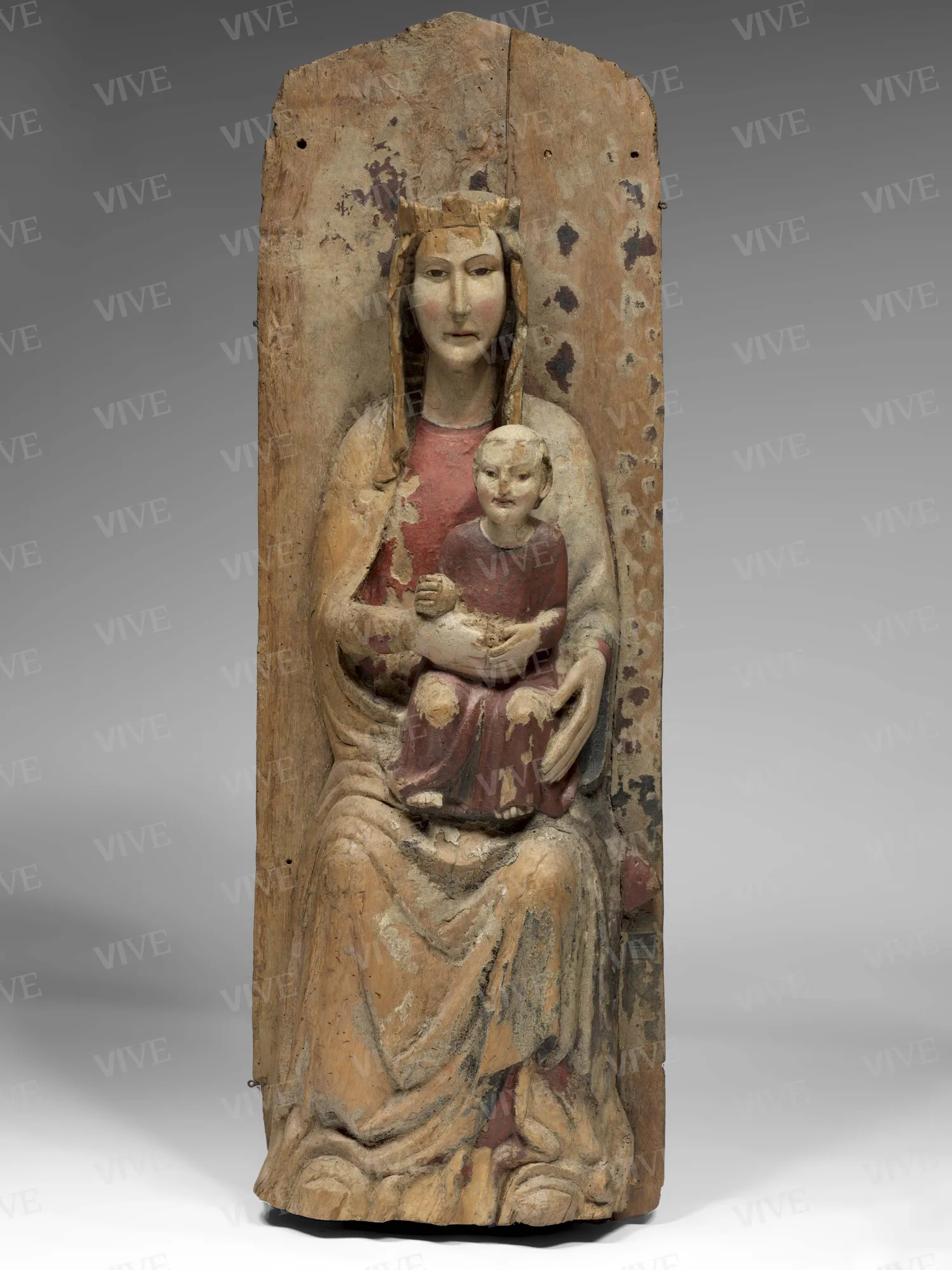
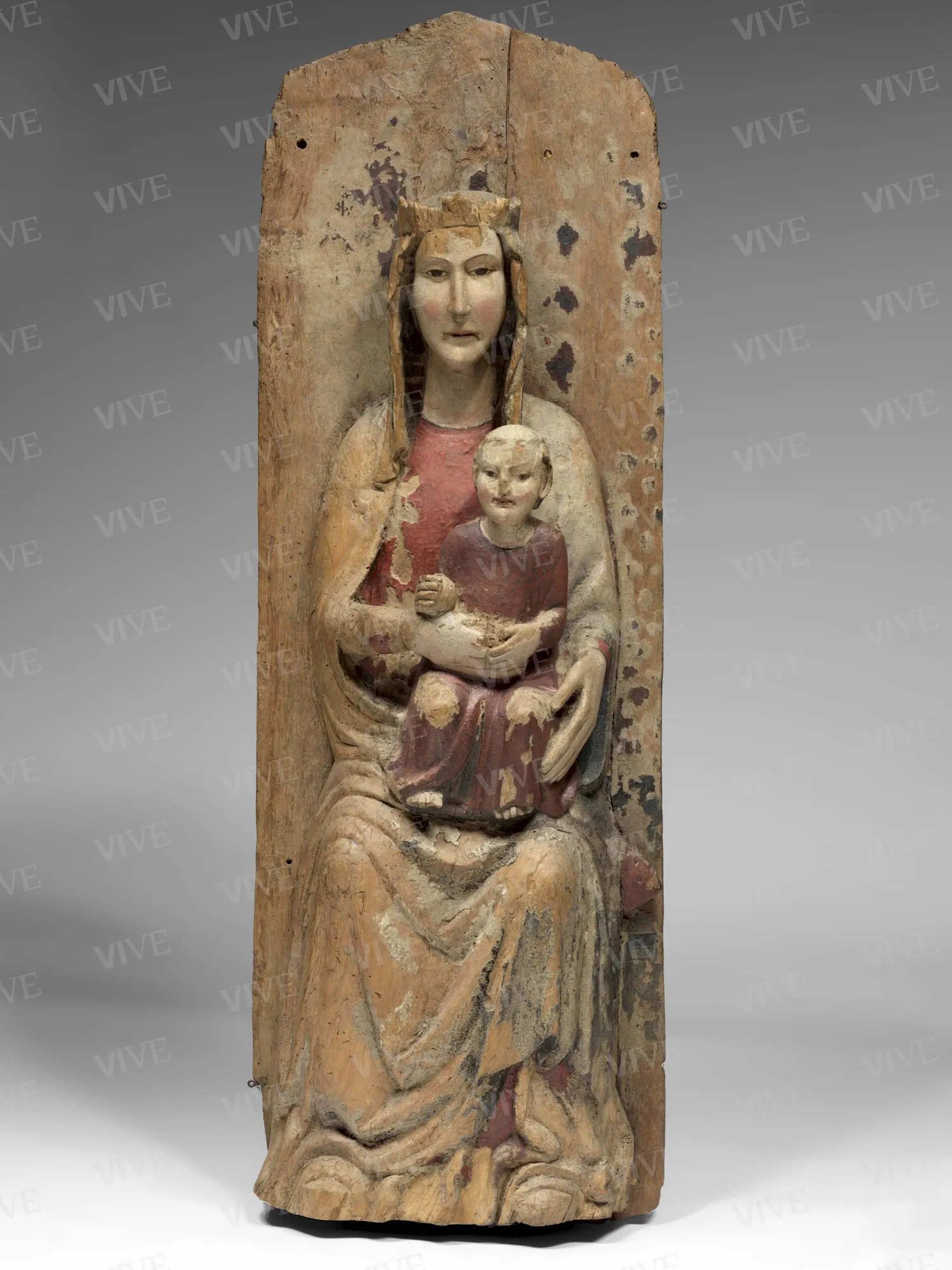
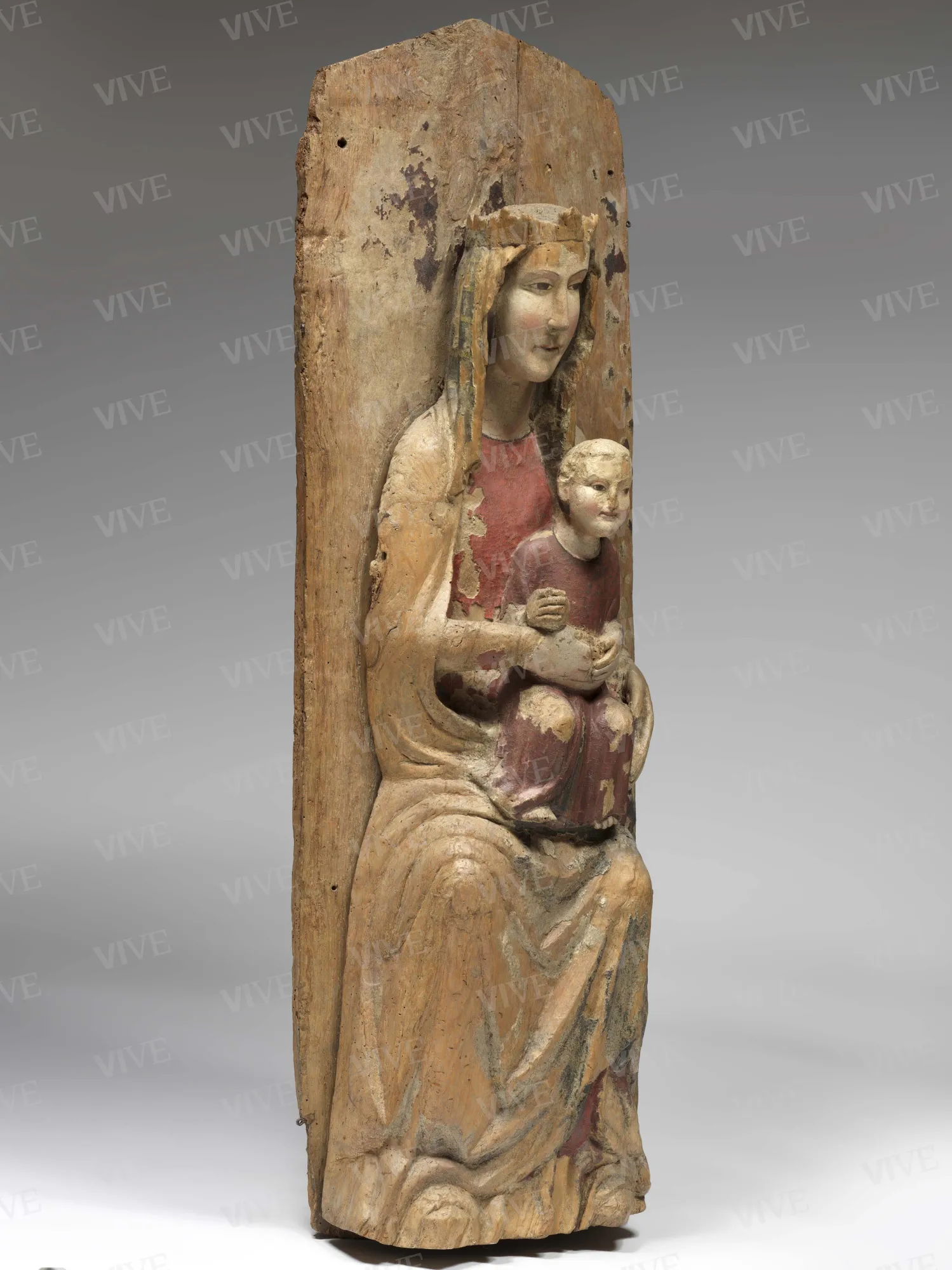
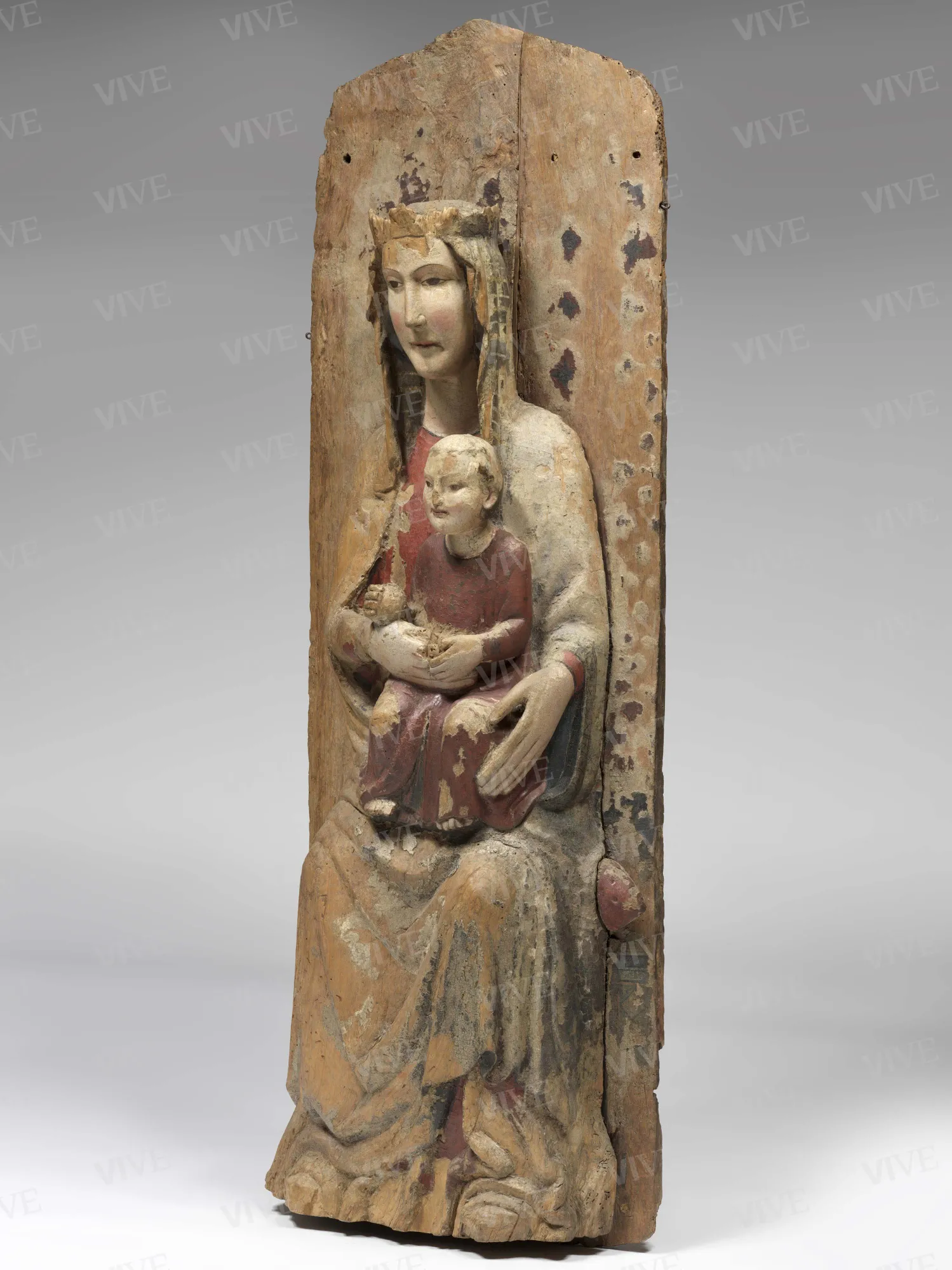
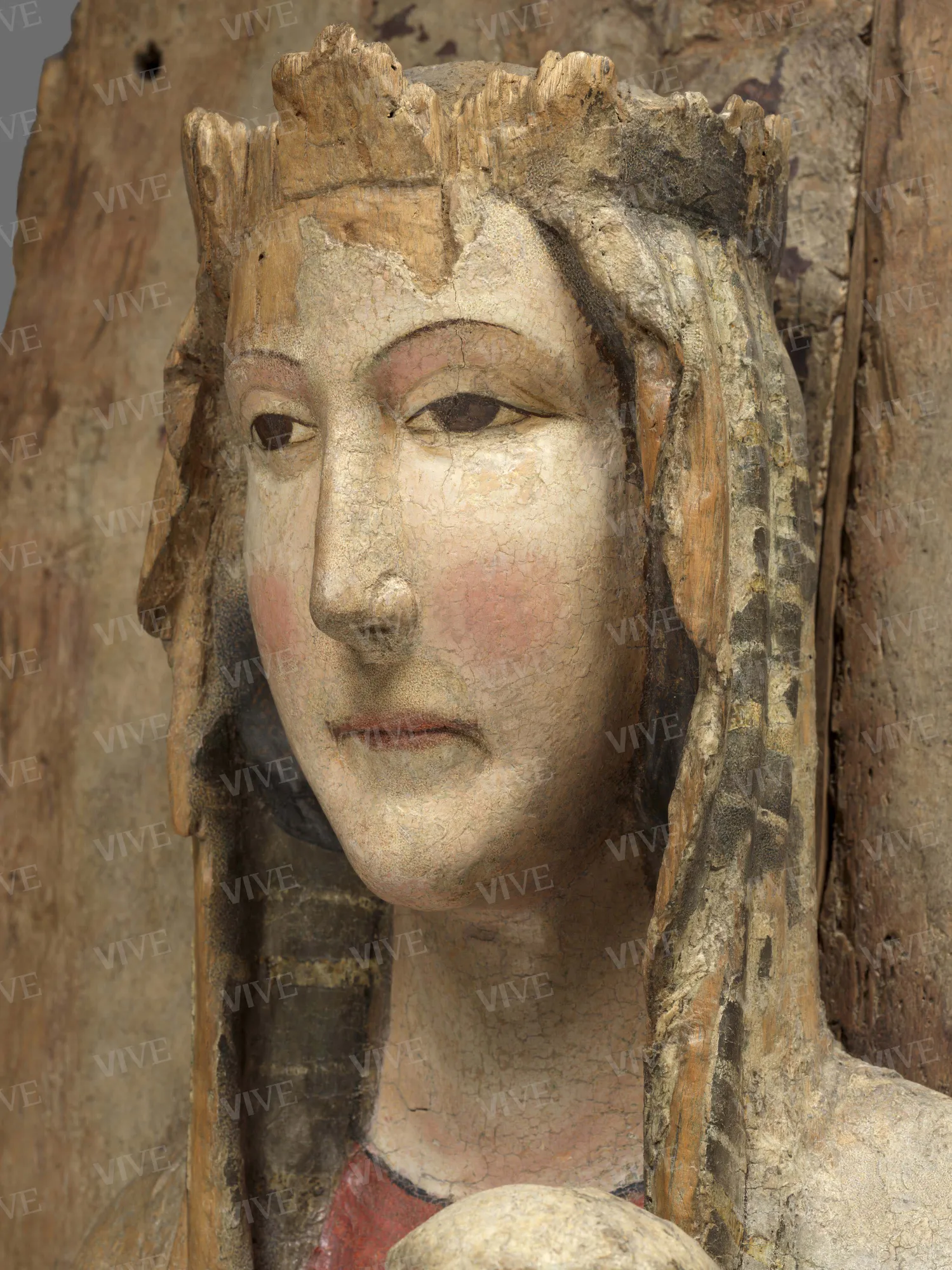
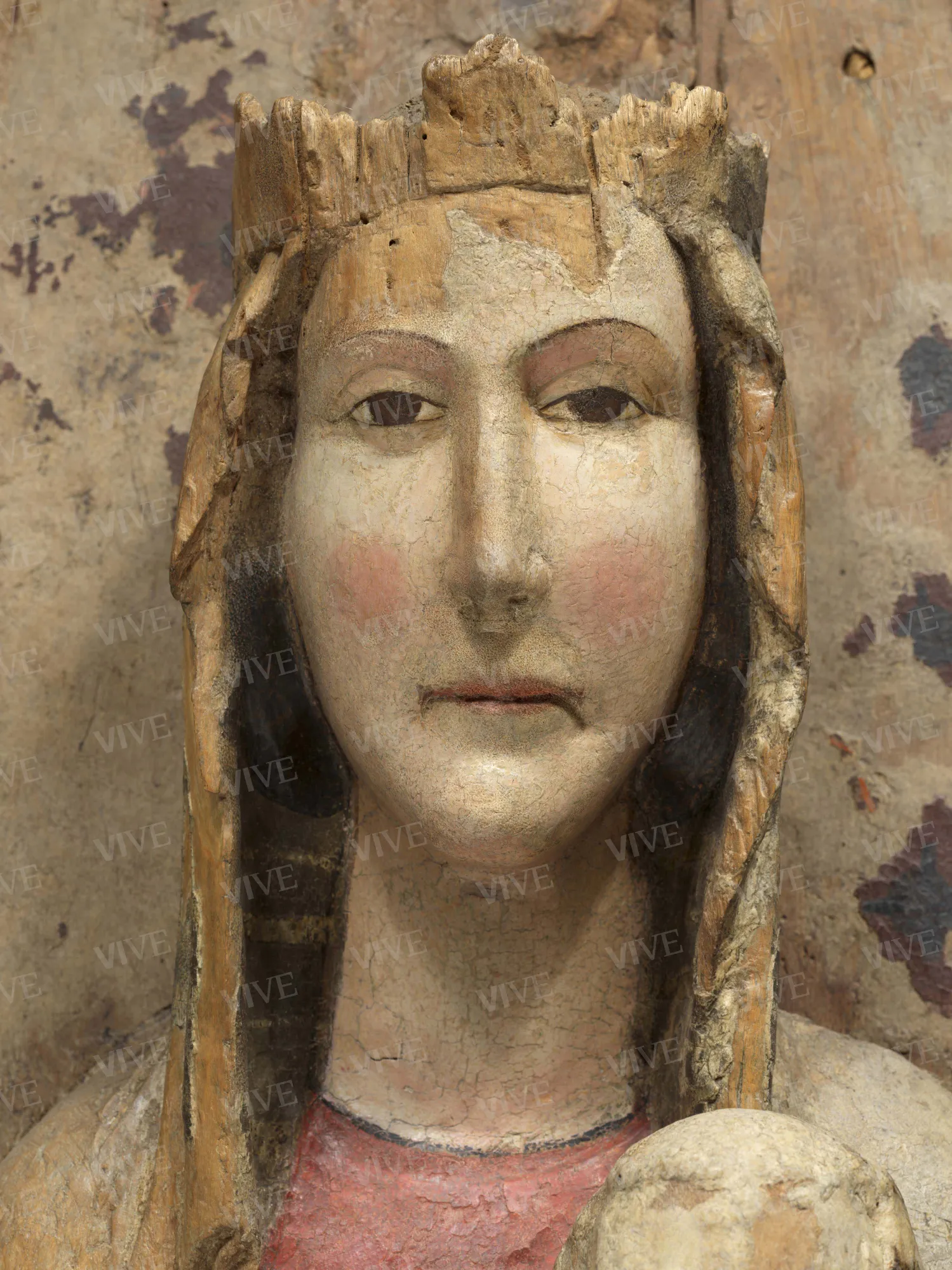
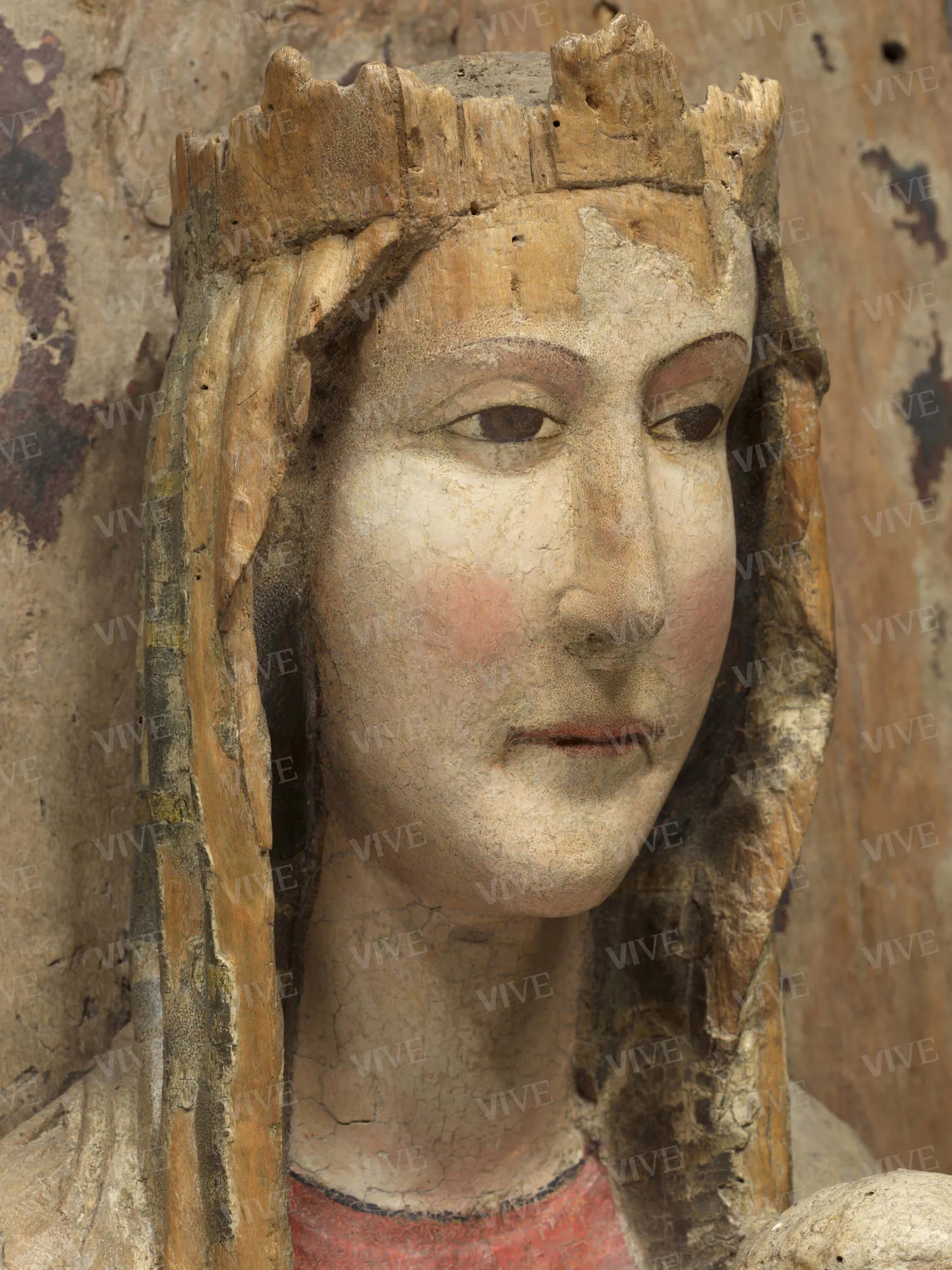
The figure of the Virgin, which is entirely hollow, is leaning against a cuspidate wooden structure with traces of polychromy. These are the remains of a tabernacle, perhaps originally fitted with painted doors. The Virgin is holding the Child on her lap. He is arranged frontally and clad in a purple tunic, originally decorated with geometric motifs of which few traces remain. The Virgin, with an iconic expression, is seated on a throne with a red cushion and supports the Child with both hands. She is wearing a red tunic and a cloak, which has now almost entirely lost its original polychromy.
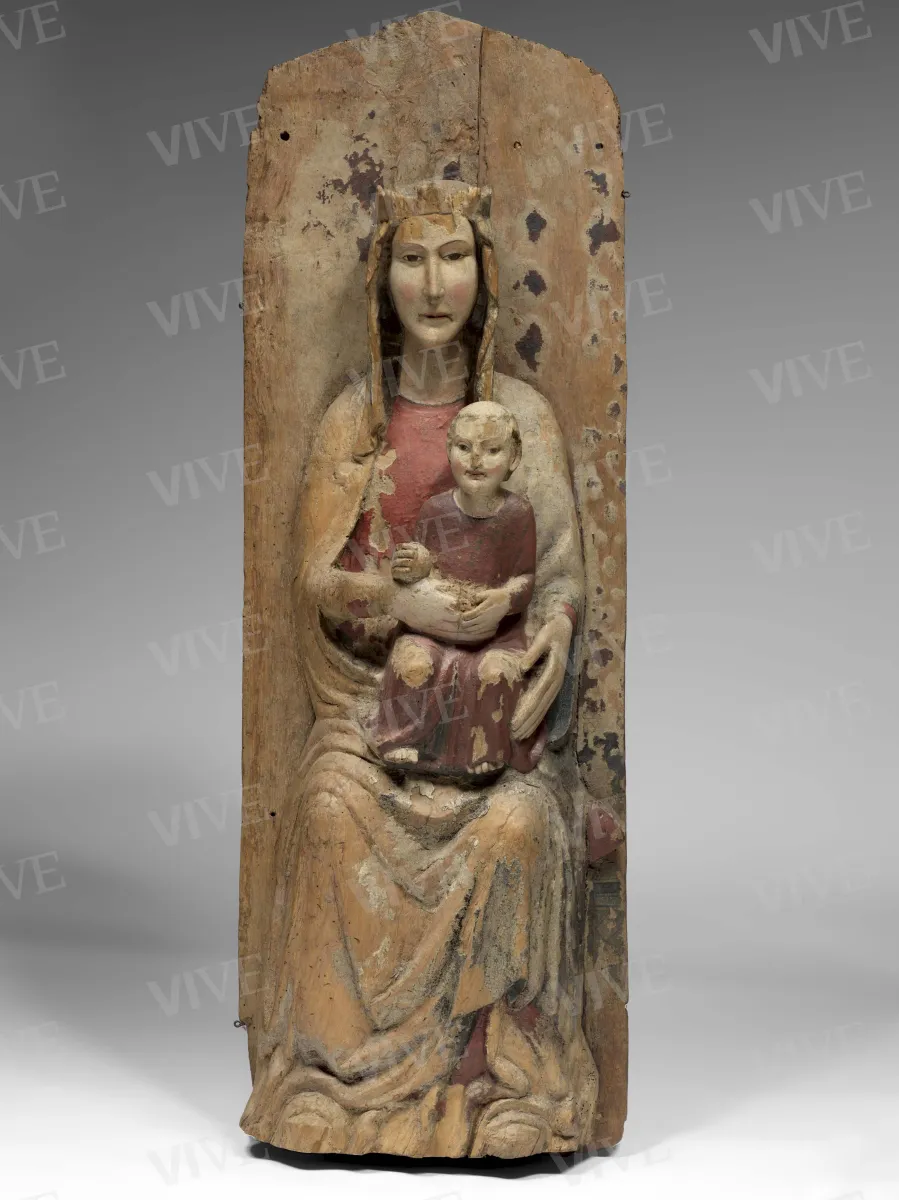
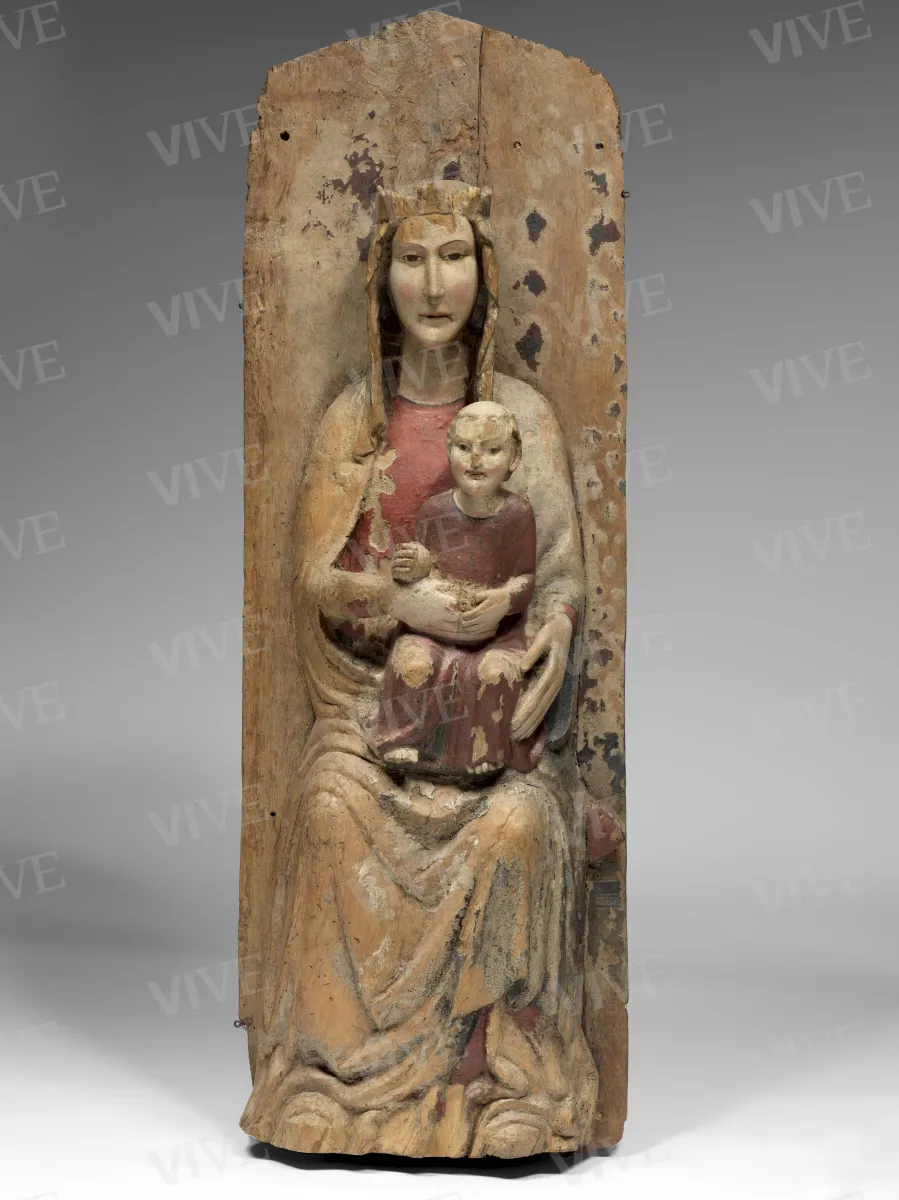
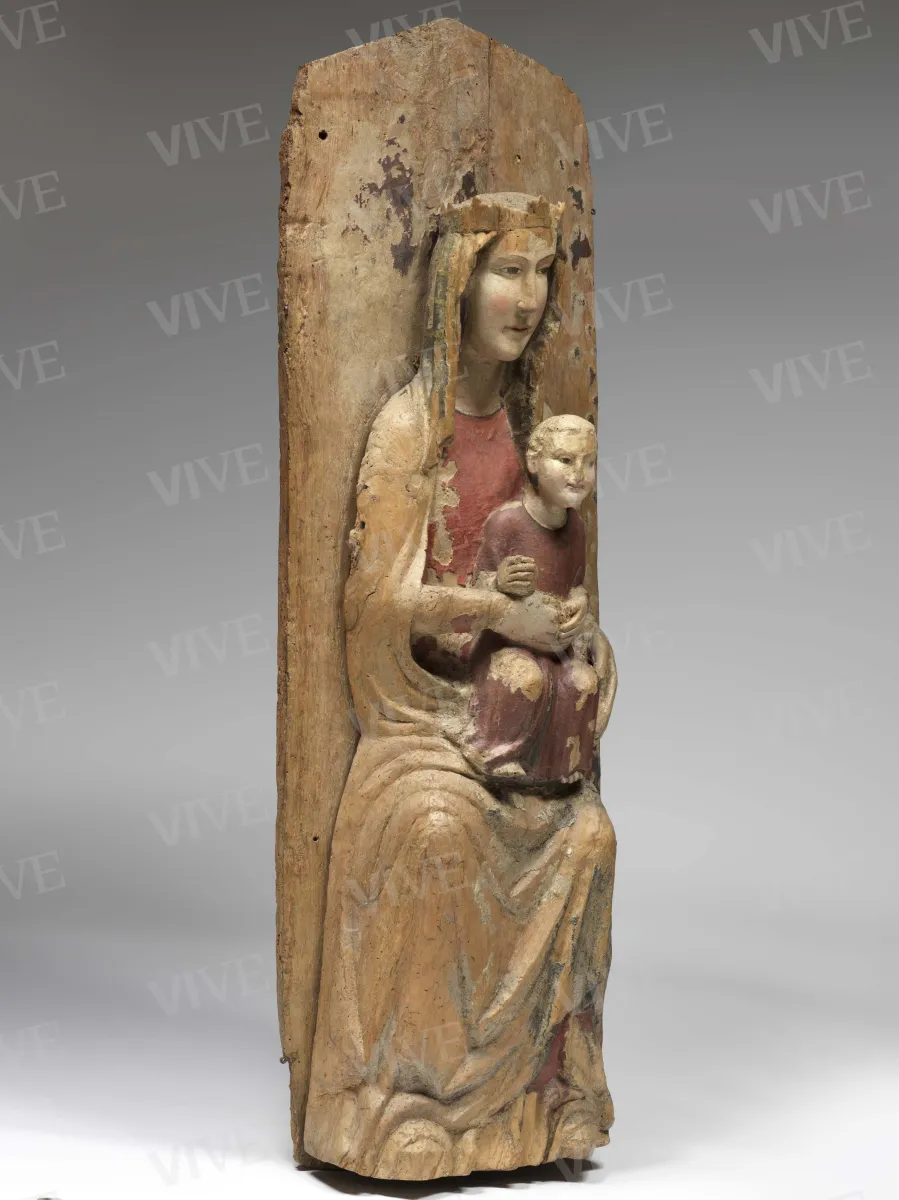
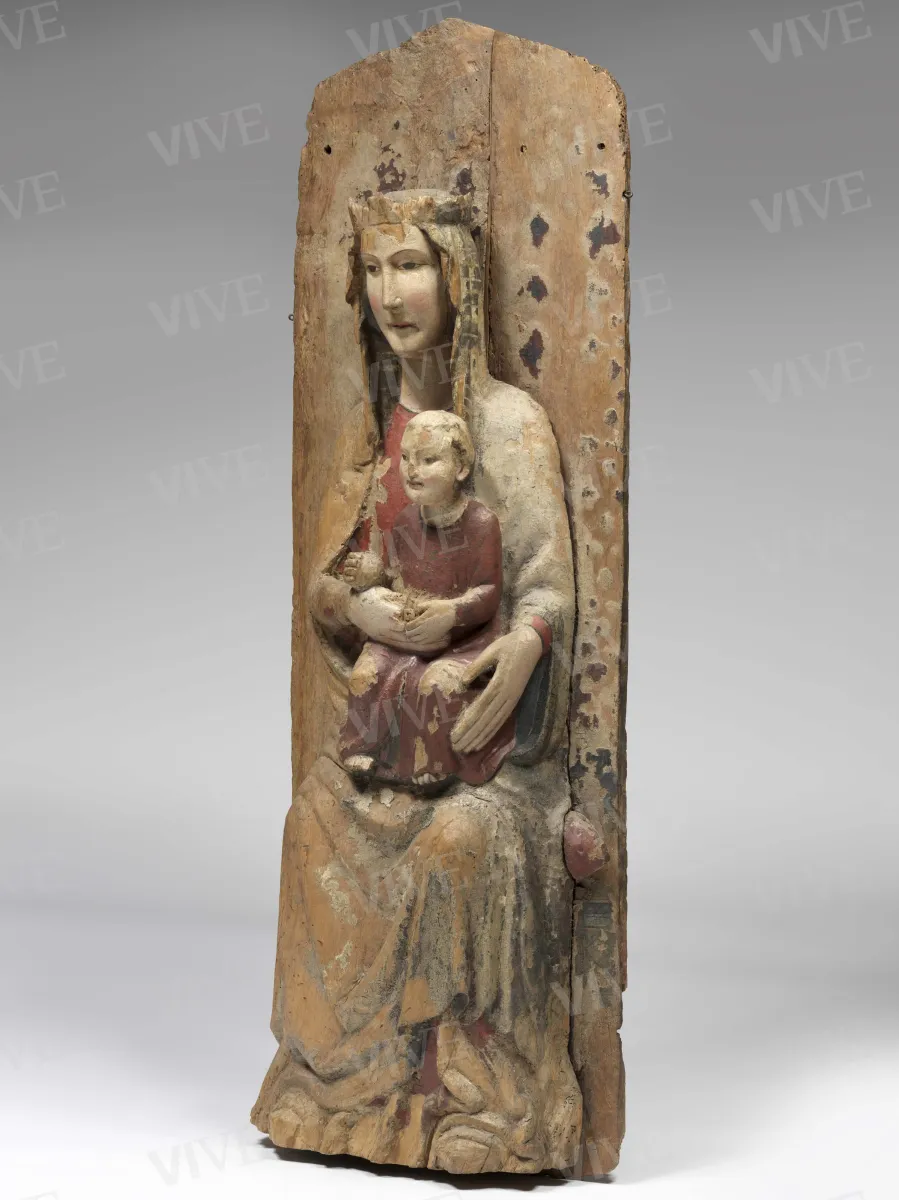
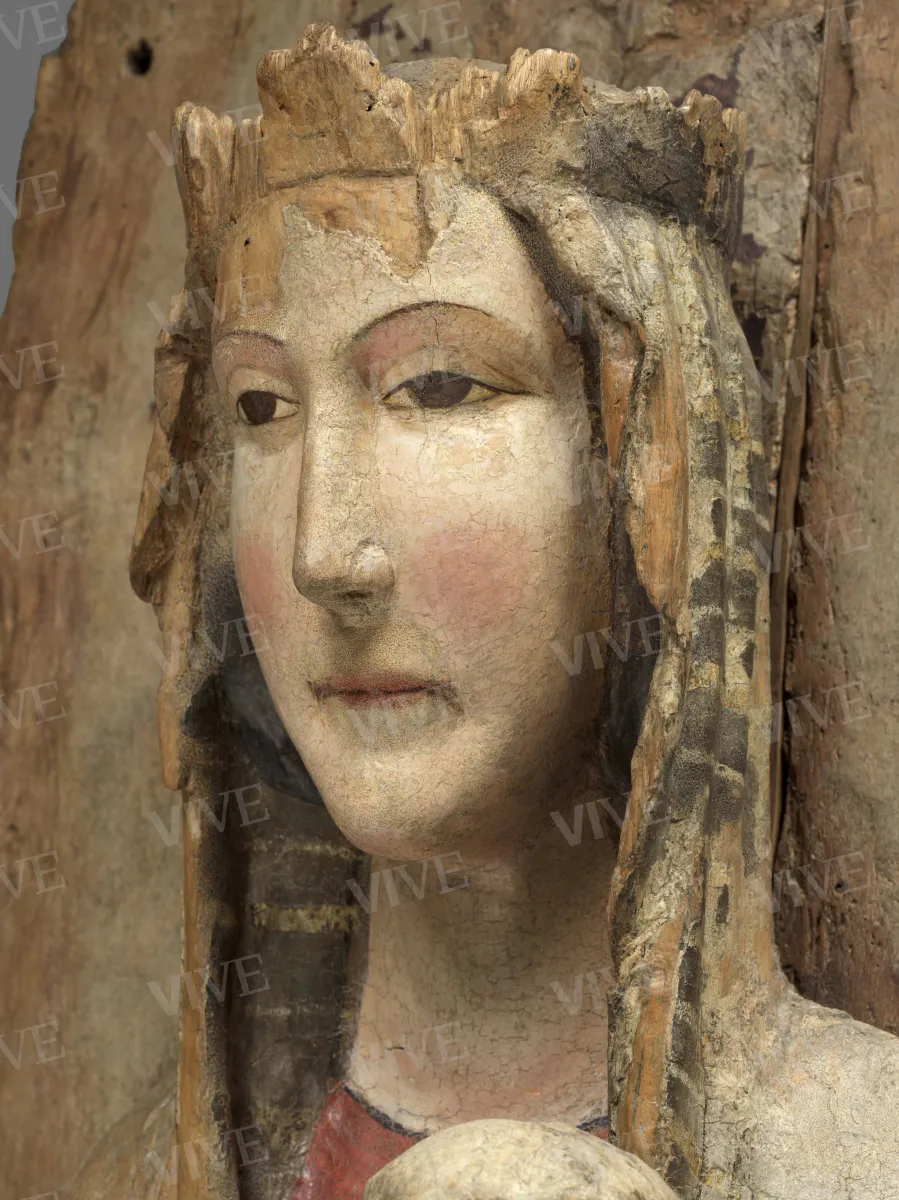
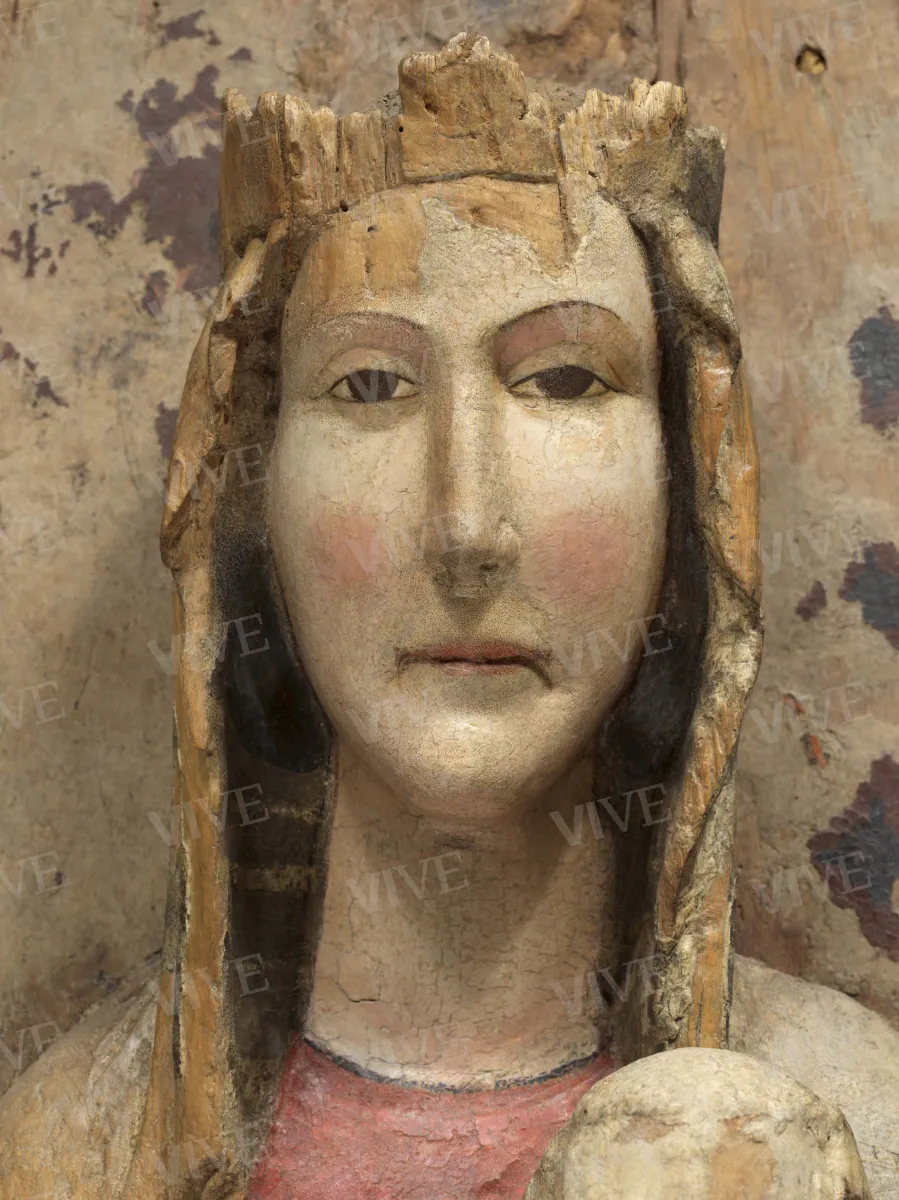
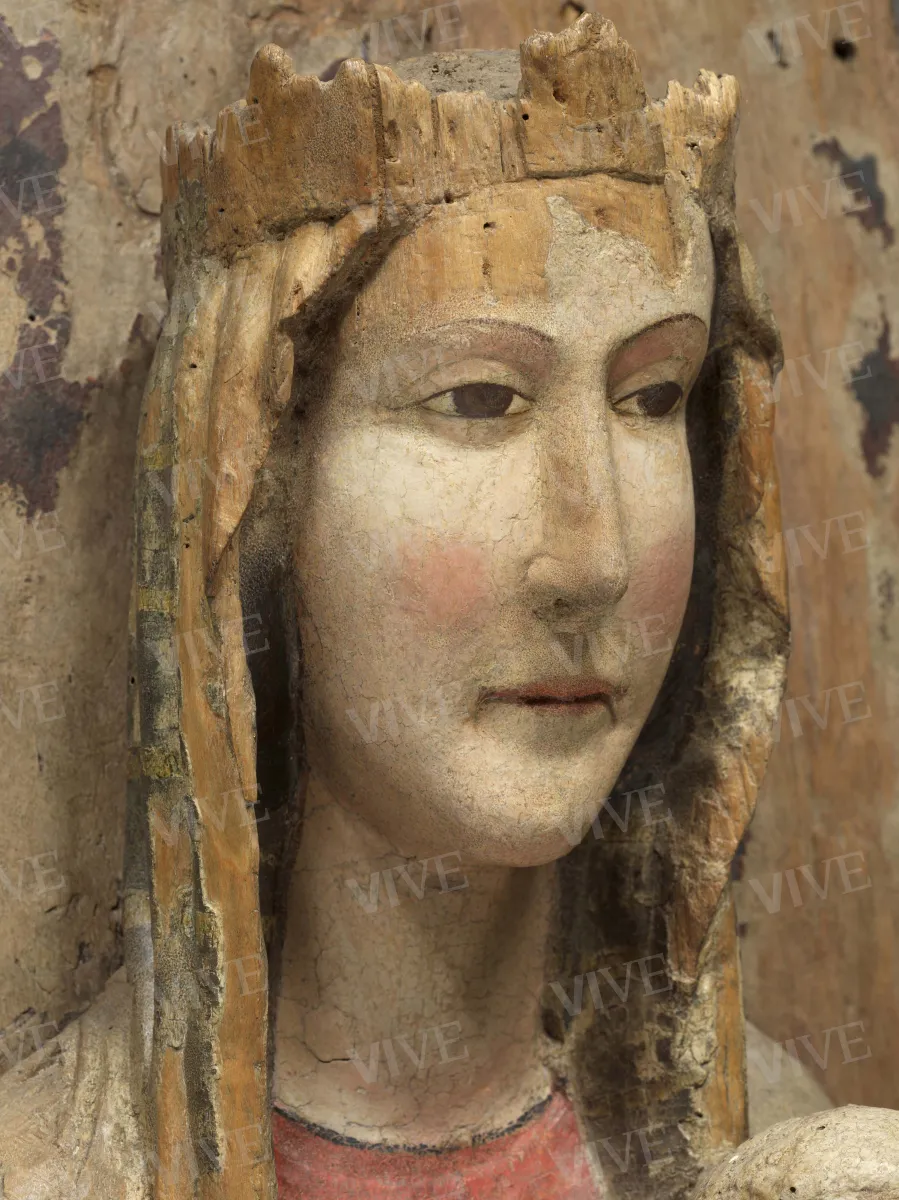
The figure of the Virgin, which is entirely hollow, is leaning against a cuspidate wooden structure with traces of polychromy. These are the remains of a tabernacle, perhaps originally fitted with painted doors. The Virgin is holding the Child on her lap. He is arranged frontally and clad in a purple tunic, originally decorated with geometric motifs of which few traces remain. The Virgin, with an iconic expression, is seated on a throne with a red cushion and supports the Child with both hands. She is wearing a red tunic and a cloak, which has now almost entirely lost its original polychromy.
Despite its mediocre state of preservation, the work is still of a remarkably high quality. Stylistic elements such as the subtle elegant linear tracing of the sharp, polished faces and the soft treatment of the draped clothing make it similar to the group of works attributed to the Master of Santa Caterina Gualino, who takes his name from a sculpture originally in the Gualino collection in Turin and later in the De Carlo collection in Florence. He is traditionally considered to be trained in Umbria, but some critics disagree, citing the fact that most of the works attributed to him are found in or are from the Abruzzi, but above all that his overtly Gothic style seems to be closer to the plastic wood sculptures of Angevin Naples that marked much of the artistic production of the Abruzzi throughout the fourteenth century. There is no doubt, however, regarding the similarity of the stylistic features of the Palazzo Venezia sculpture and this particular master’s works, which lead us to reliably hypothesize that the sculpture comes directly from his workshop (Fachechi 2011, 76).
Stefania Paone
Entry published on 12 February 2025
Mediocre; extensive loss of paint film and marginal loss of parts of faces and characters’ draped clothing.
Rome, Museo Artistico Industriale.
Ferrari Giulio (a cura di), Museo Artistico Industriale di Roma. Catalogo delle Collezioni, Roma 1906, p. 30, n. 1;
Fachechi Grazia Maria, Museo Nazionale del Palazzo di Venezia. Sculture in legno, Roma 2011, pp. 75-76.