Vittoriano


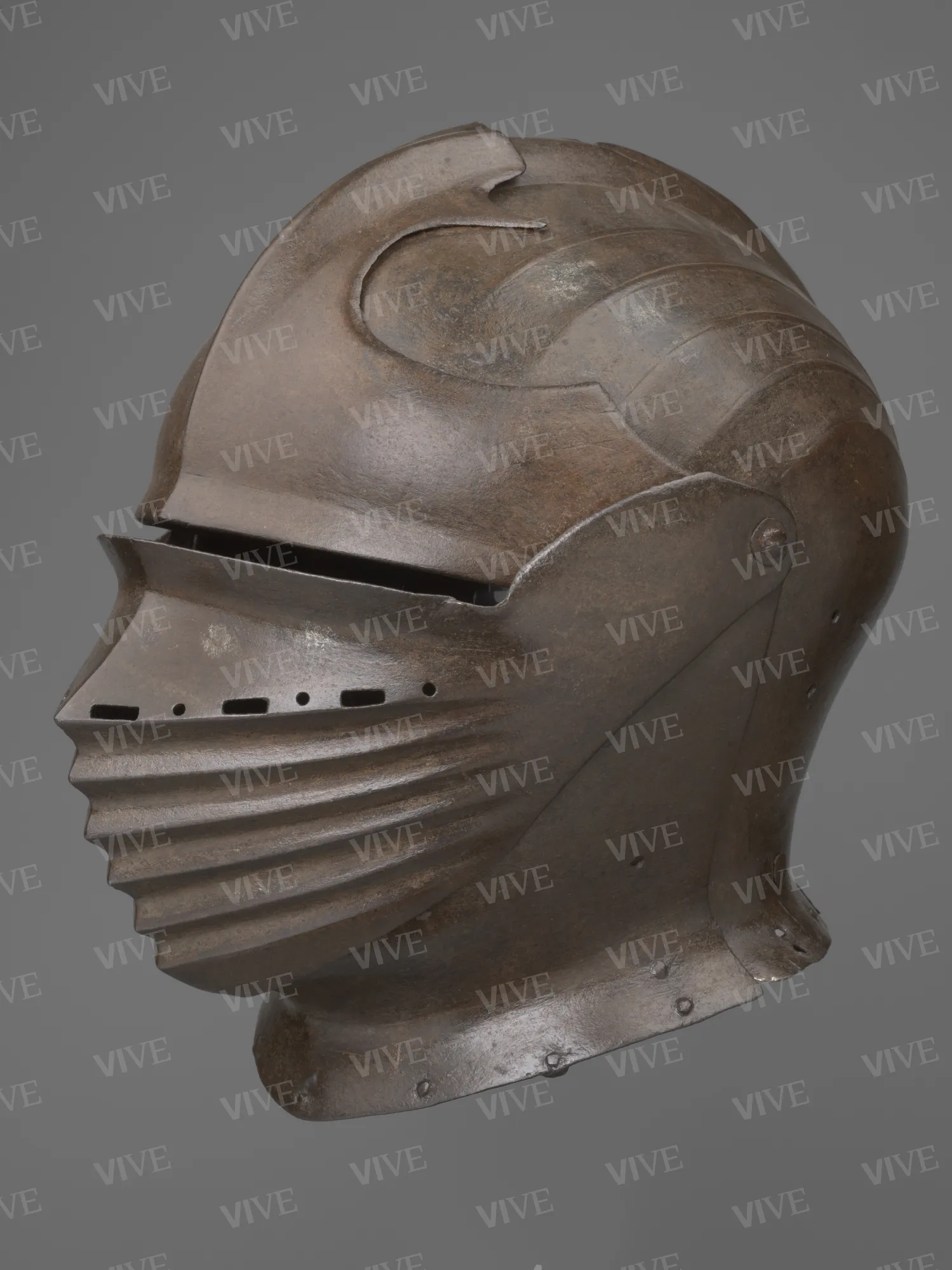
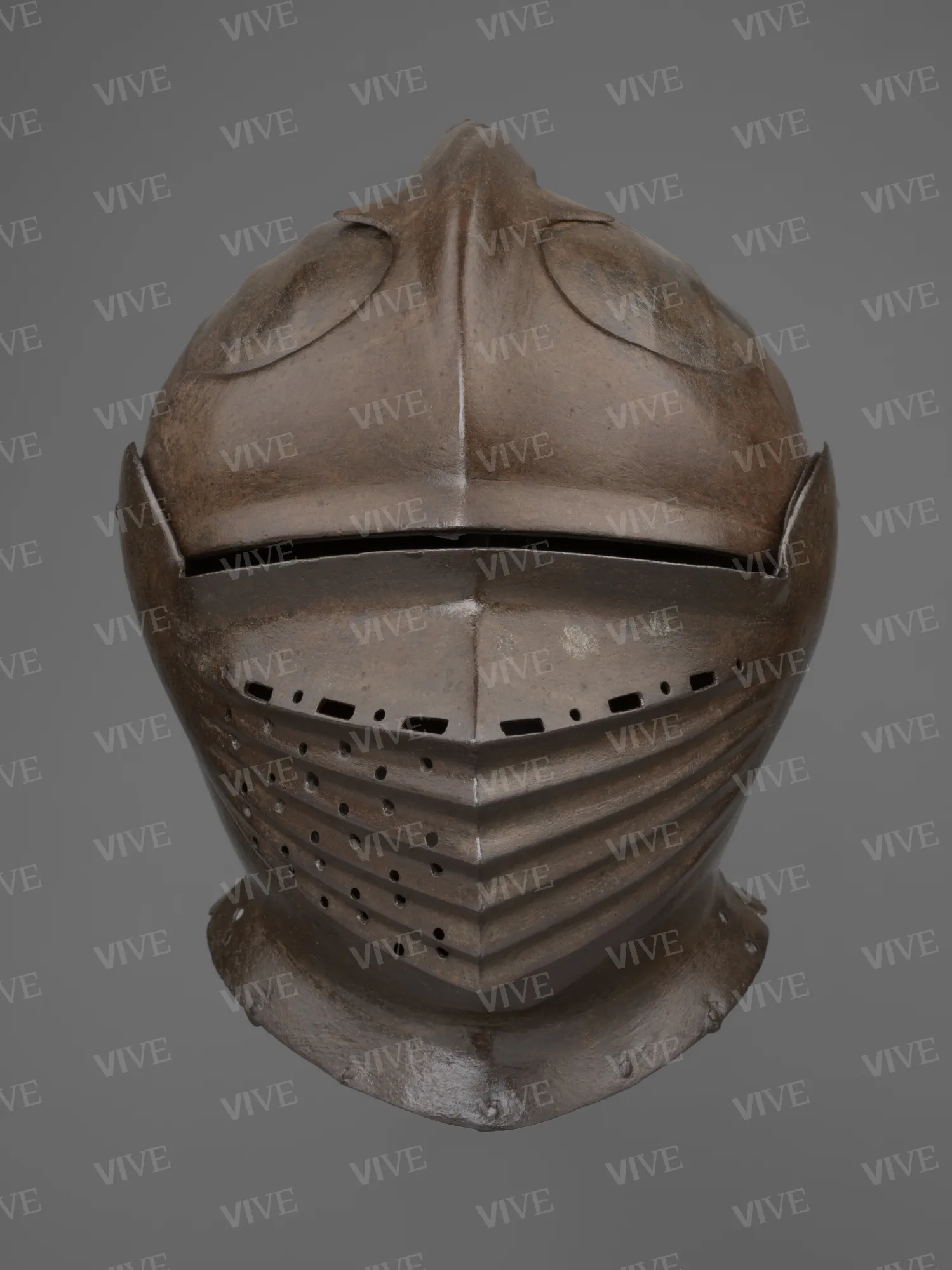
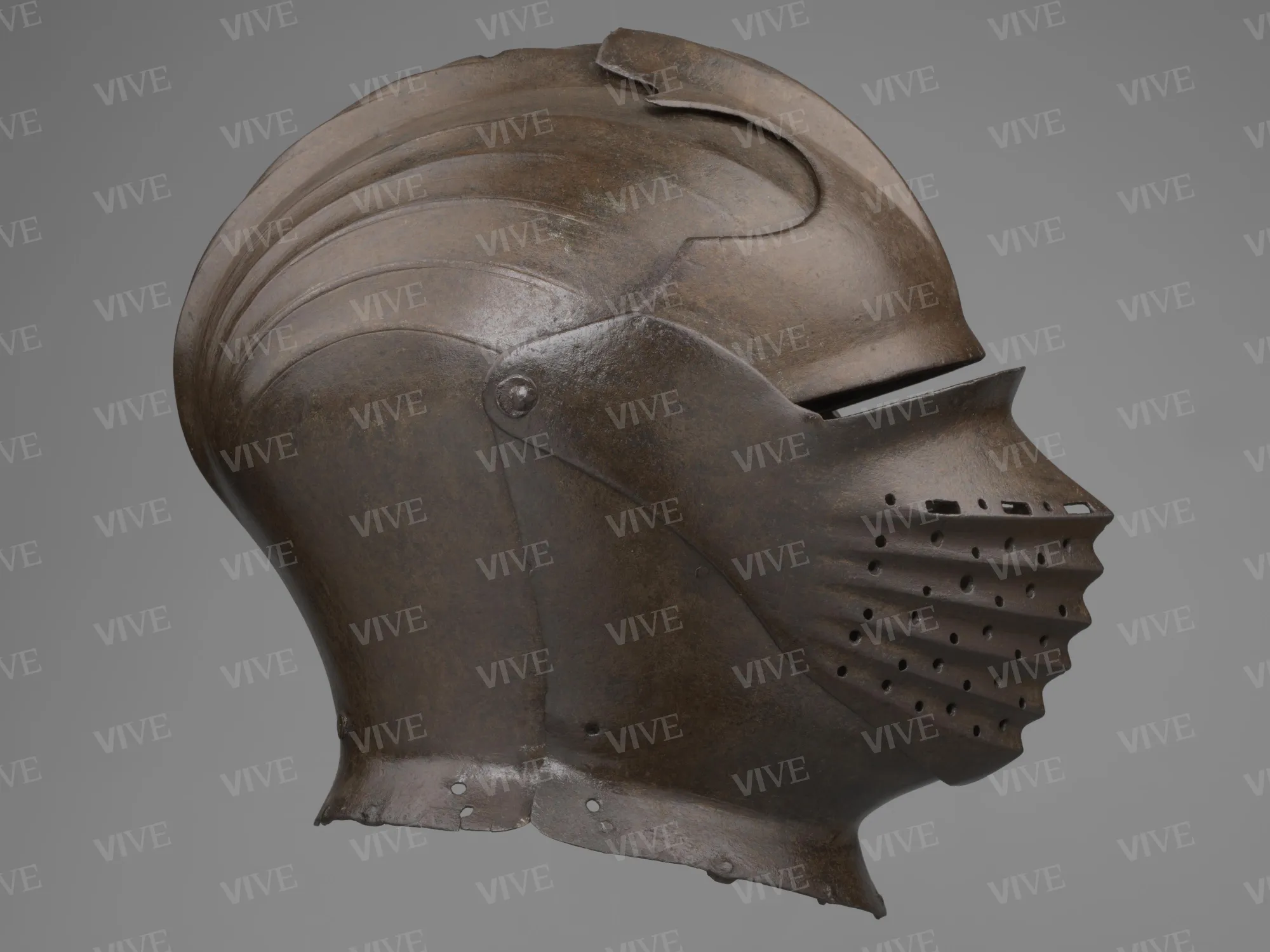
The helmet features a skullcap with fan-shaped edges extending from the back of the neck, and includes a helical central crest designed to accommodate a heraldic emblem. The reinforced frontal plate is characterized by three cusps, with the central cusp protruding above the crest. The ventail is of the "bellows" type, incorporating ventilation openings exclusively on the right side. Additionally, holes around the neck are provided for the attachment of a chainmail gorget.
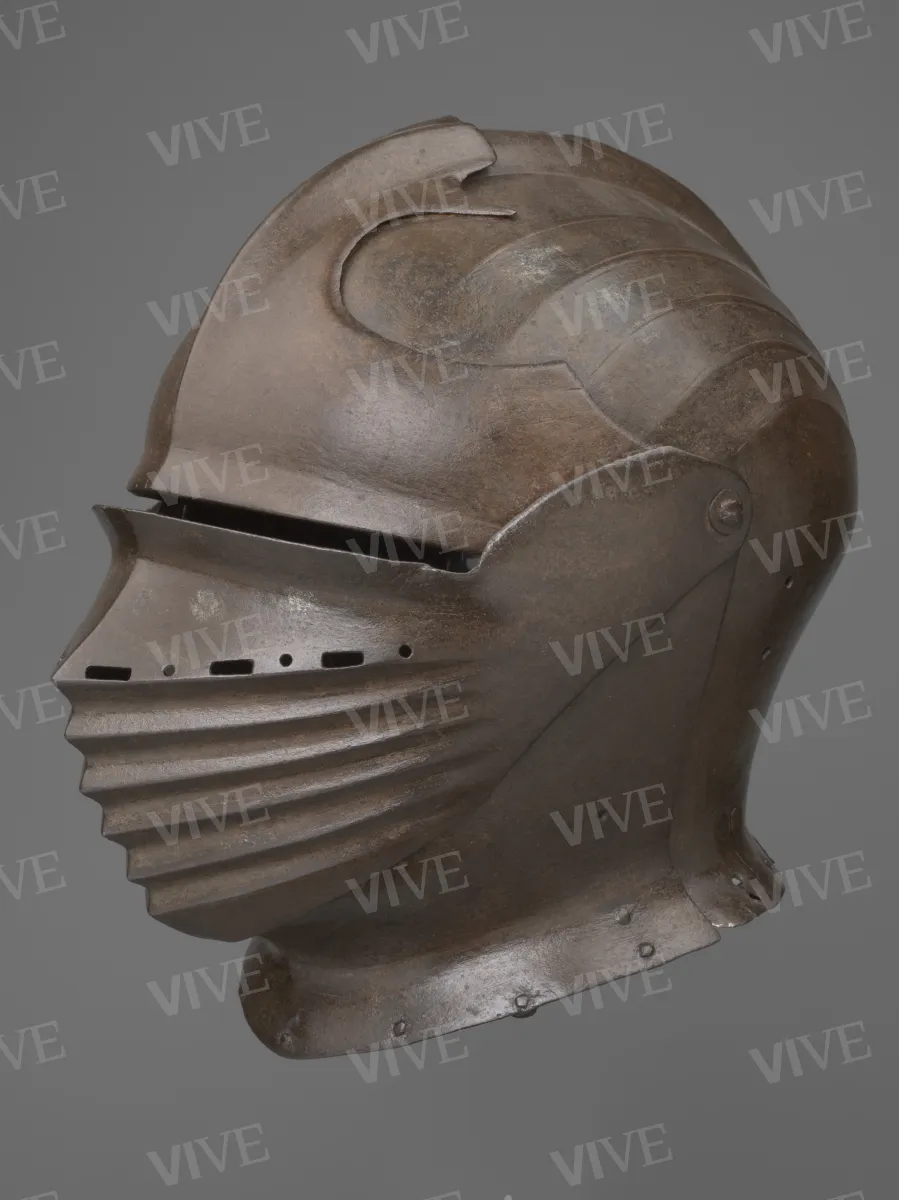
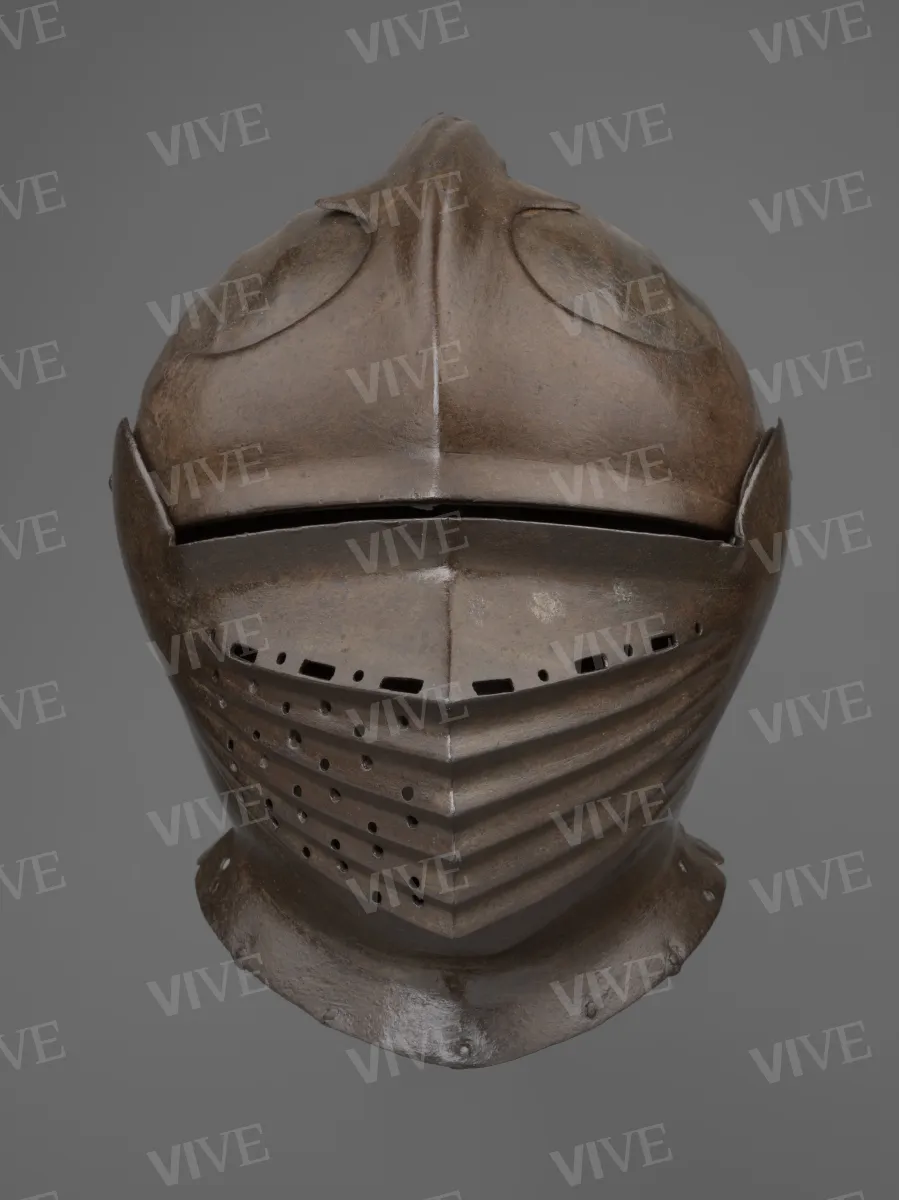
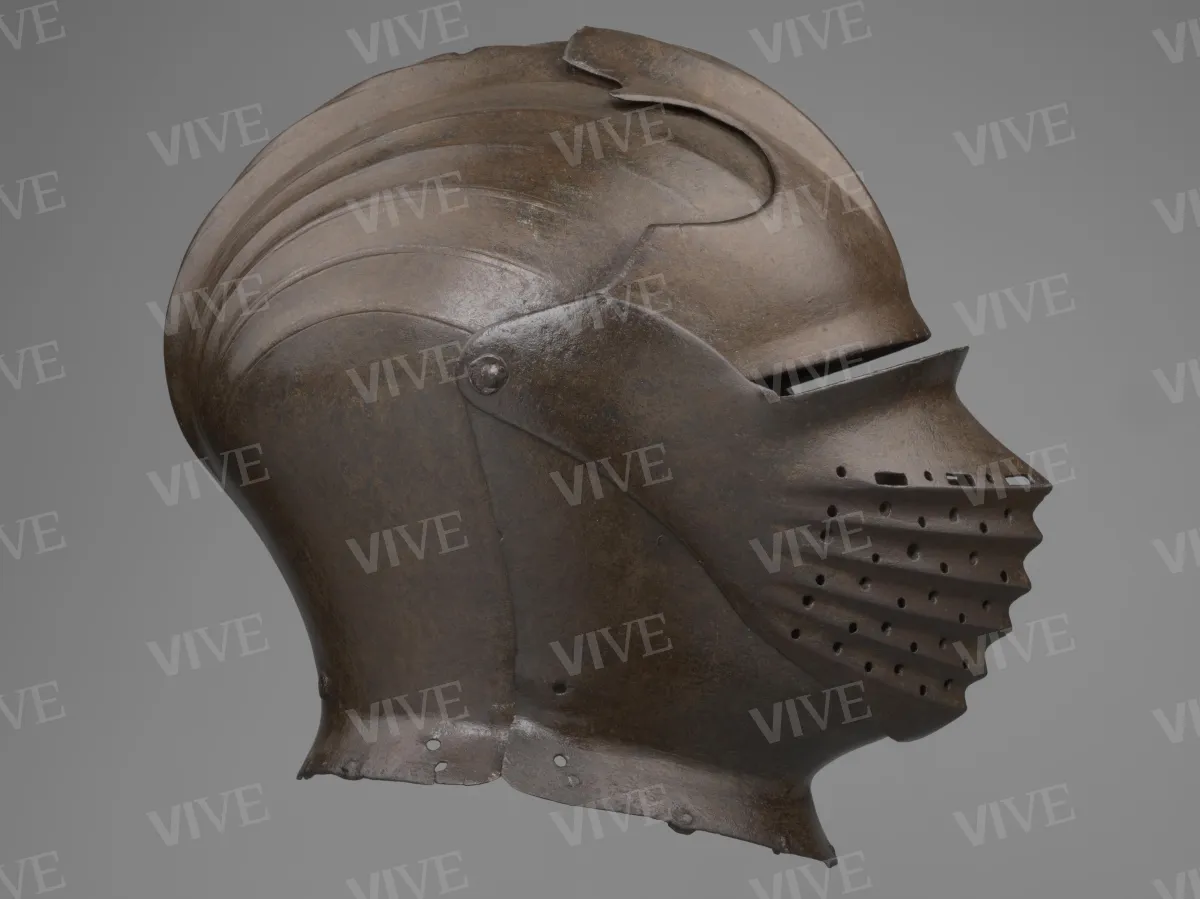
The helmet features a skullcap with fan-shaped edges extending from the back of the neck, and includes a helical central crest designed to accommodate a heraldic emblem. The reinforced frontal plate is characterized by three cusps, with the central cusp protruding above the crest. The ventail is of the "bellows" type, incorporating ventilation openings exclusively on the right side. Additionally, holes around the neck are provided for the attachment of a chainmail gorget.
Despite its apparent simplicity, this helmet possesses several significant features. Scalini (2018, 134) highlights the extraordinary nature of this piece as an exemplary transitional helmet between the sallet with ventail, familiar from Venetian iconography such as Giorgione’s portrait known as Gattamelata in the Uffizi, and the modern helmets of the sixteenth century. The angular craftsmanship is reminiscent of the Germanic style, which is unsurprising given that, in the early sixteenth century, German cannellini workmanship was so successful that even Italian armorers began to incorporate this style into their creations—see also, for instance, the helmet housed in the Stibbert Museum in Florence (inv. 2804). Scalini (2018) also notes other comparable examples of transitional helmets, including those found in Passariano at Villa Manin, the National Museum of Ravenna, the Kretzschmar von Kienbusch Collection in Philadelphia, or the one previously sold by Harold L. Peterson (Christie’s, July 5, 1978, lot 176), which notably feature a visor instead of a ventail.
Riccardo Franci
Entry published on 12 June 2025
Fair. Surfaces altered by old oxidation.
Collezione Odescalchi, 1959;
Rome, Museo Nazionale di Palazzo Venezia, June 30, 1959.
Rome, Museo Nazionale di Palazzo Venezia, Antiche armi dal sec. IX al XVIII. Già Collezione Odescalchi, May–July 1969;
Rome, Museo Nazionale di Castel Sant’Angelo; Roma, Museo Nazionale di Palazzo Venezia, Armi e potere nell’Europa del Rinascimento, July 26–November 11, 2018.
di Carpegna Nolfo (a cura di), Antiche armi dal sec. IX al XVIII. Già Collezione Odescalchi, catalogo della mostra (Roma, Museo Nazionale di Palazzo Venezia, maggio-luglio 1969), con schede a cura del curatore, Roma 1969, p. 10, n. 34;
di Carpegna Nolfo, Le armi Odescalchi, Roma 1976, p. 10;
Scalini, in Scalini Mario (a cura di), Armi e potere nell’Europa del Rinascimento, catalogo della mostra (Roma, Museo Nazionale di Castel Sant’Angelo; Roma, Museo Nazionale di Palazzo Venezia, 26 luglio-11 novembre 2018), Cinisello Balsamo 2018, n. IV.11, p. 134.