Vittoriano


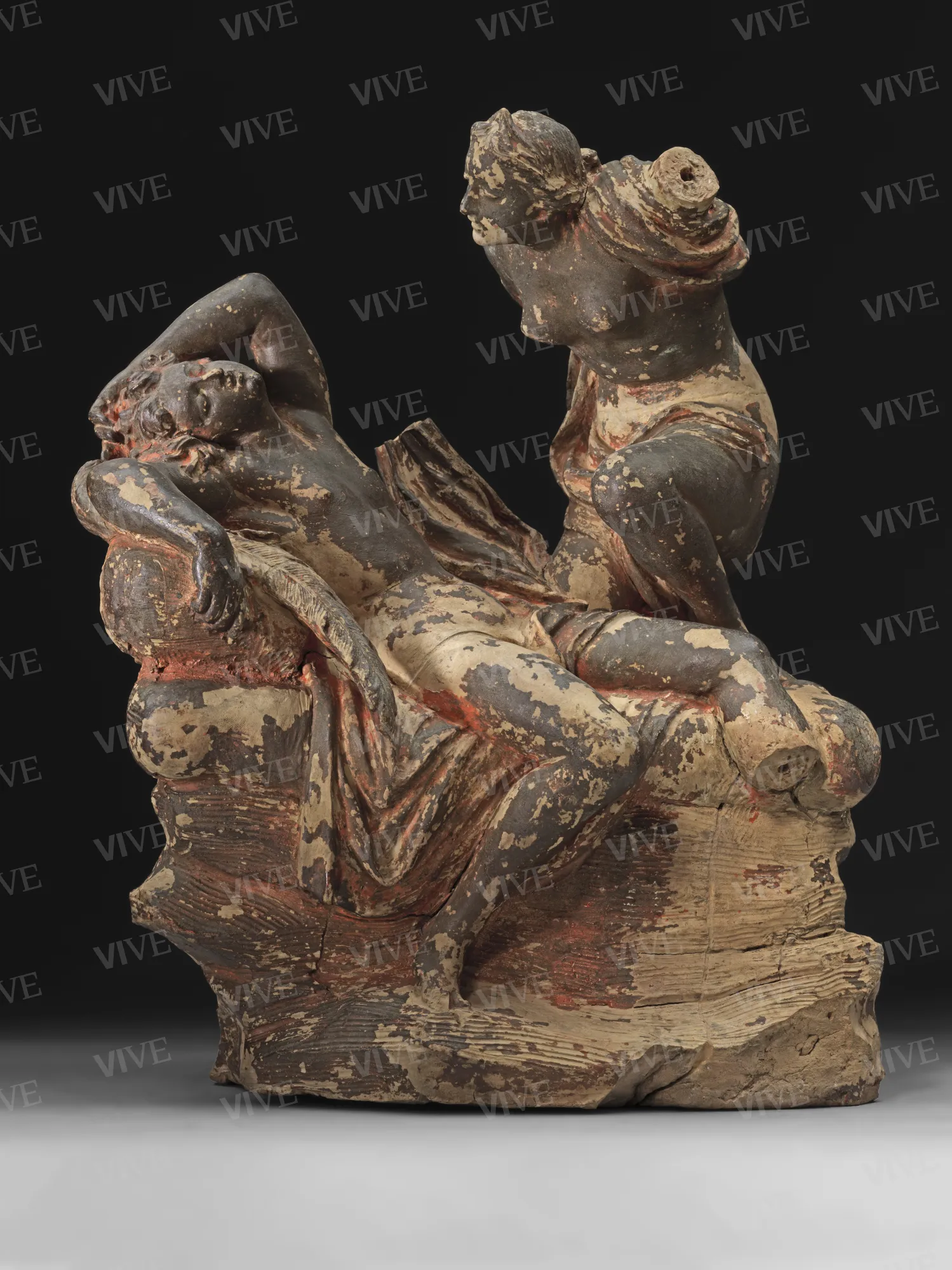
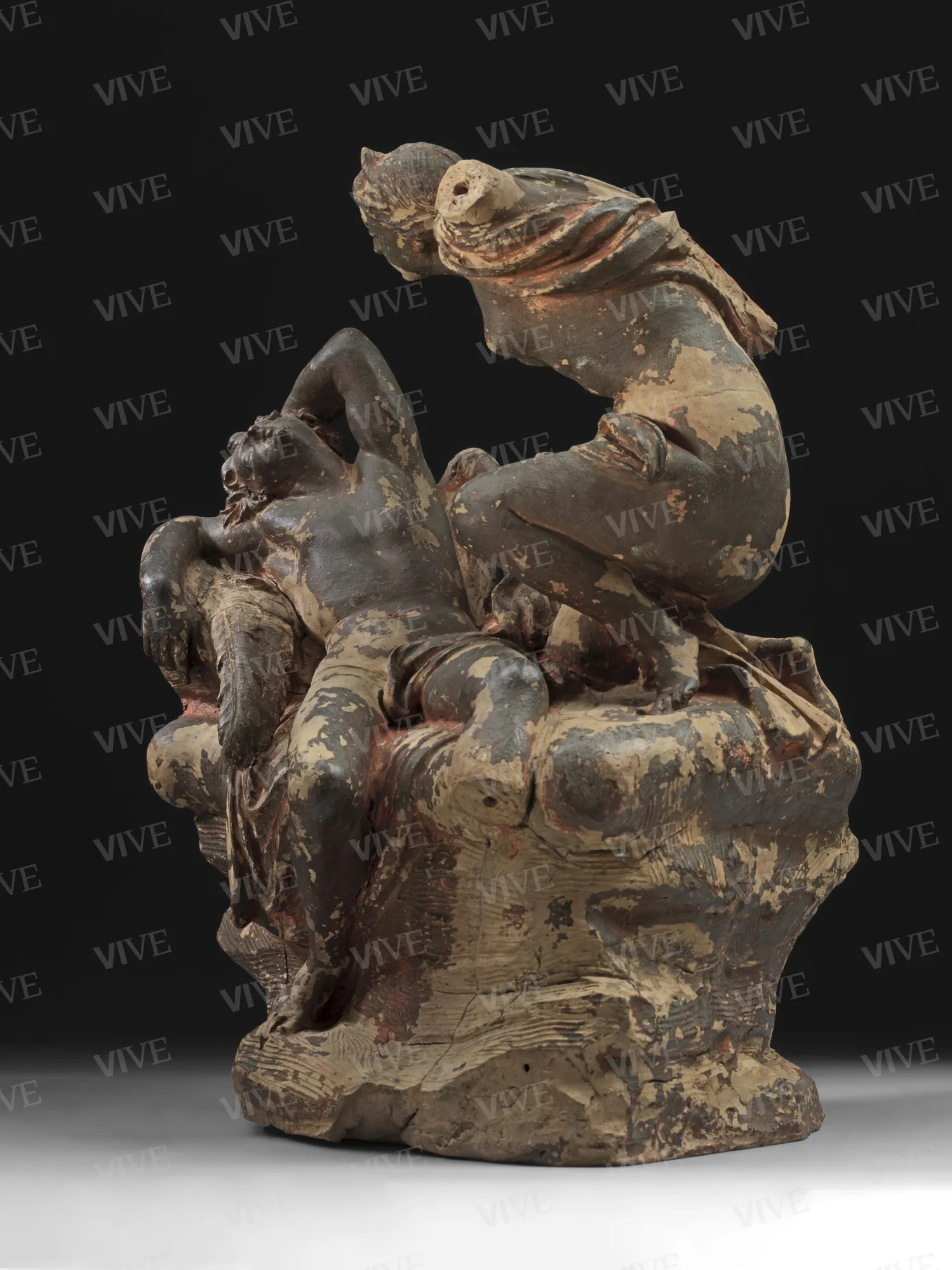
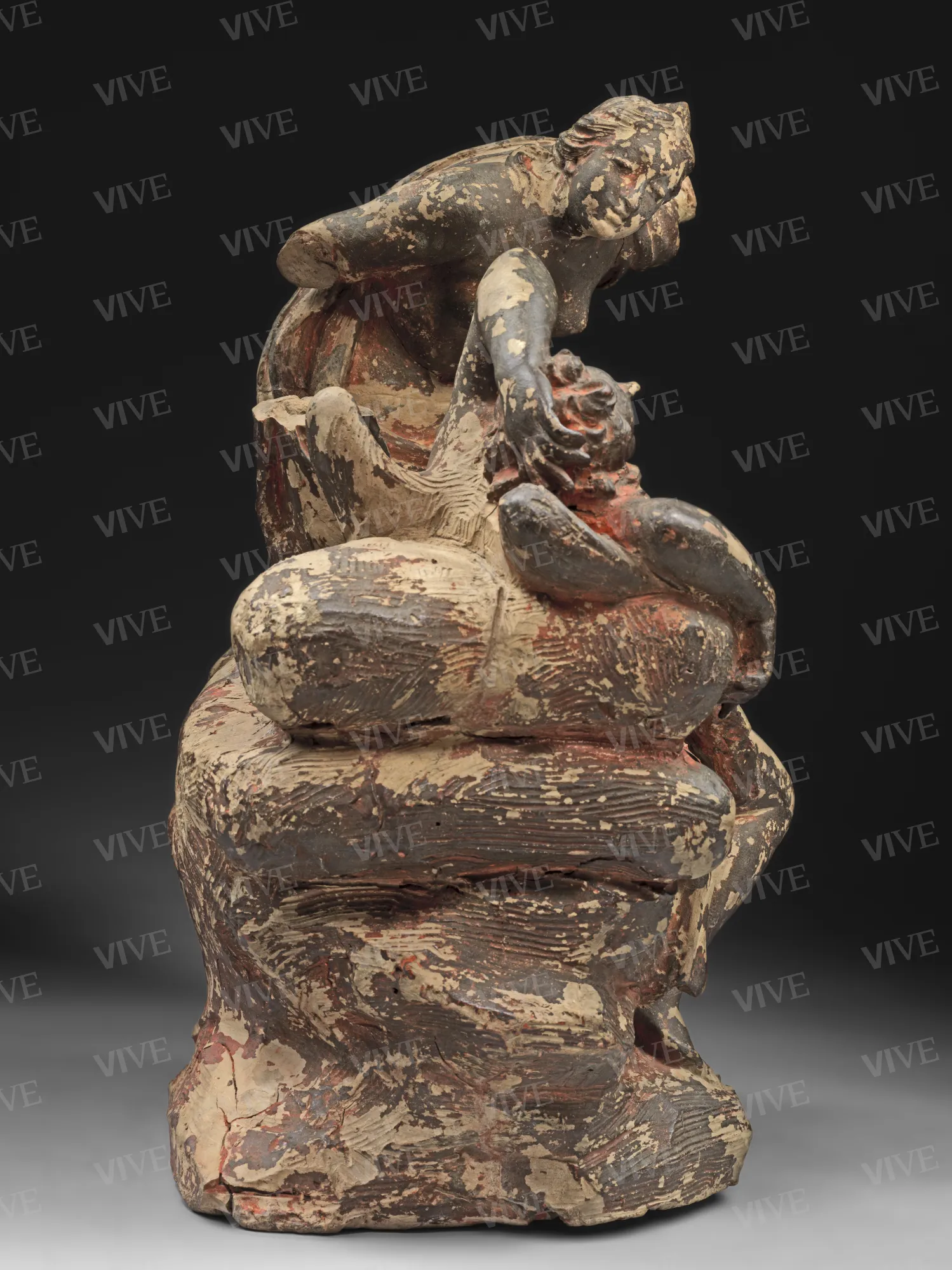
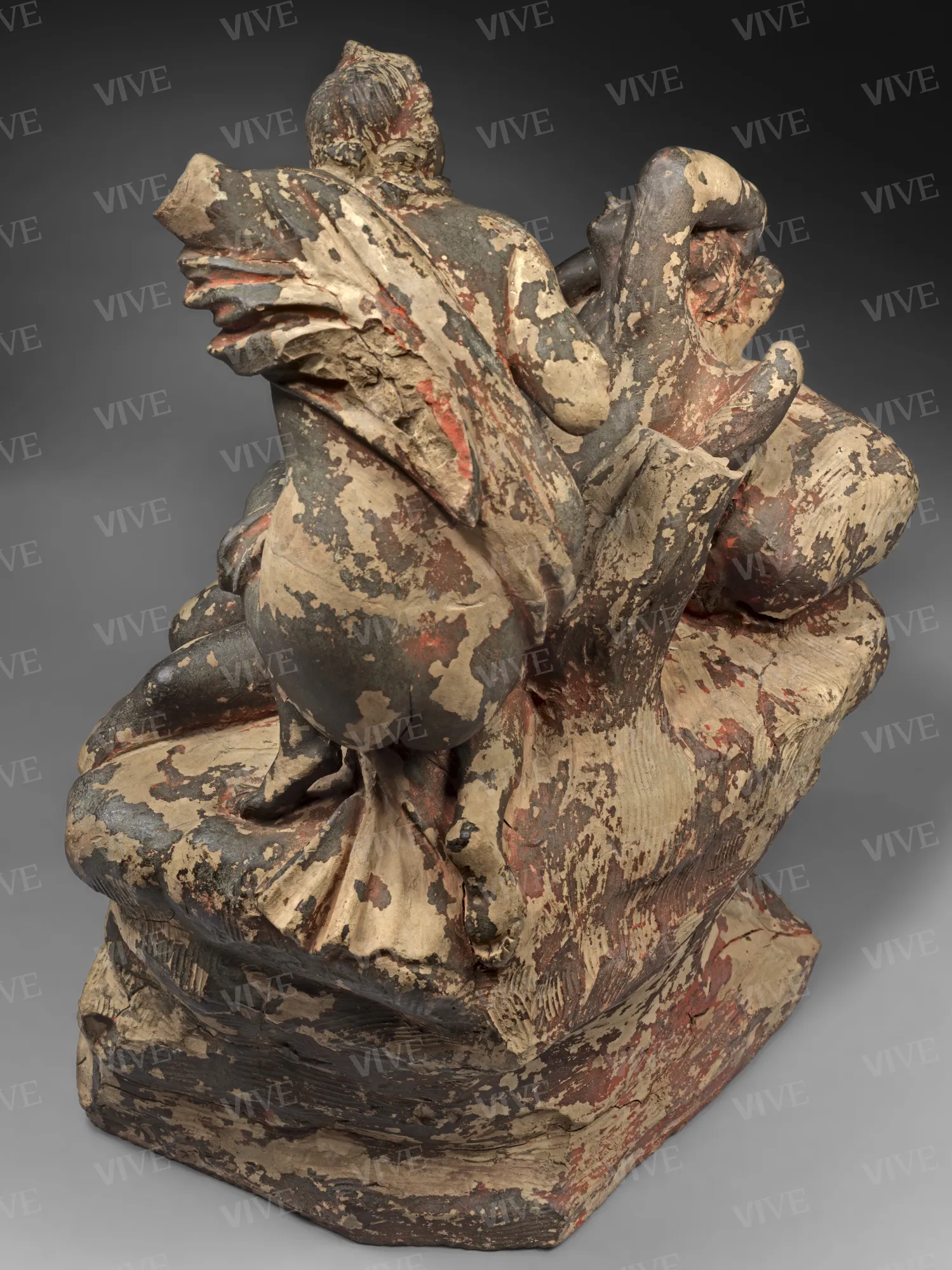
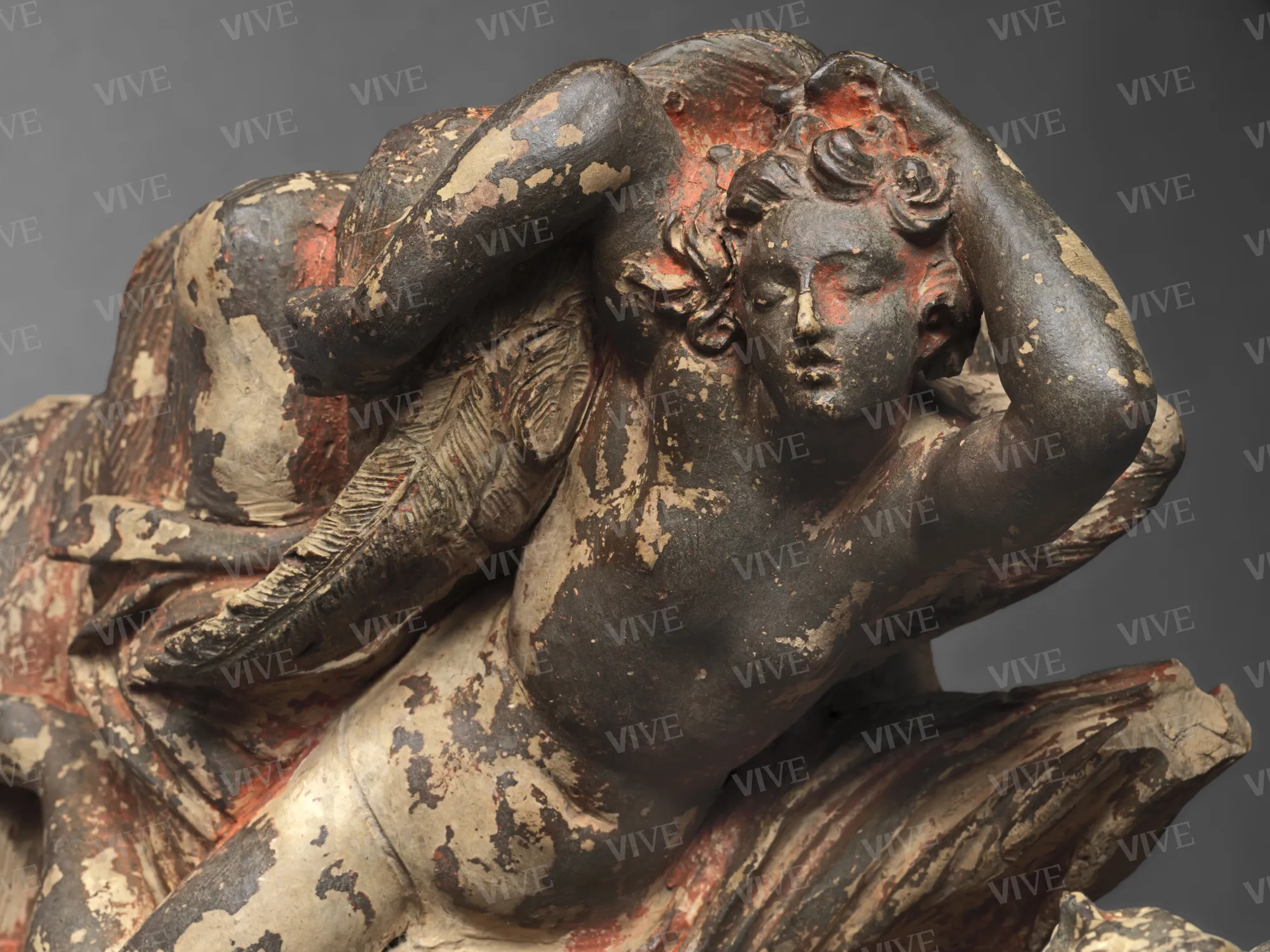
The sculpture depicts Cupid reclining on a high support designed to resemble a bed, positioned in a precarious manner with his legs splayed and extending beyond the edge, and his arms resting beside his head, which is surrounded by flowing, tousled hair. Approaching from the right, Psyche is portrayed advancing cautiously, her legs bent, captured as she lifts the cloak to reveal the nude form of her beloved. In accordance with Apuleius’ narrative in The Metamorphoses, she illuminates the nocturnal scene with a lamp (now missing) held in her left hand. This terracotta piece was created by Giulio Cartarè (Giulio Cartari), a student of Gian Lorenzo Bernini.
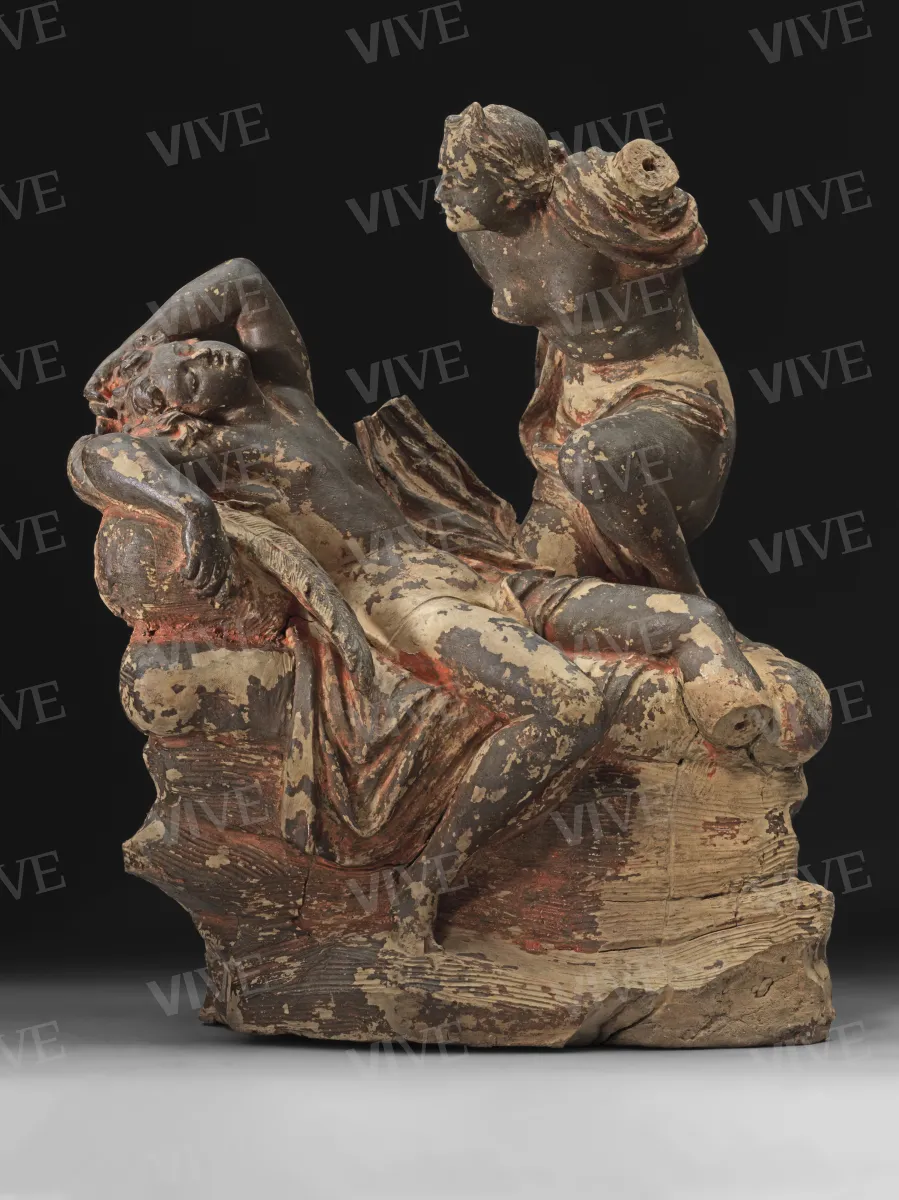
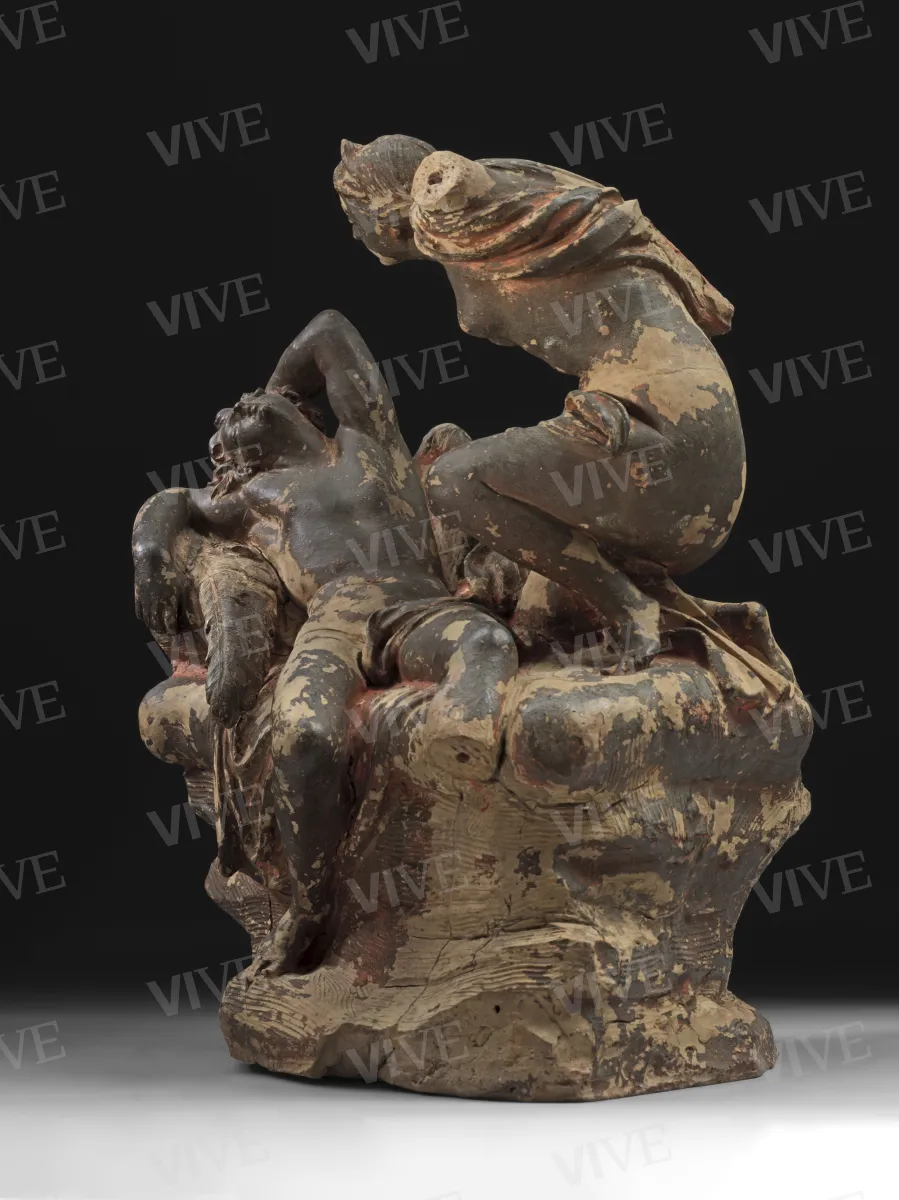
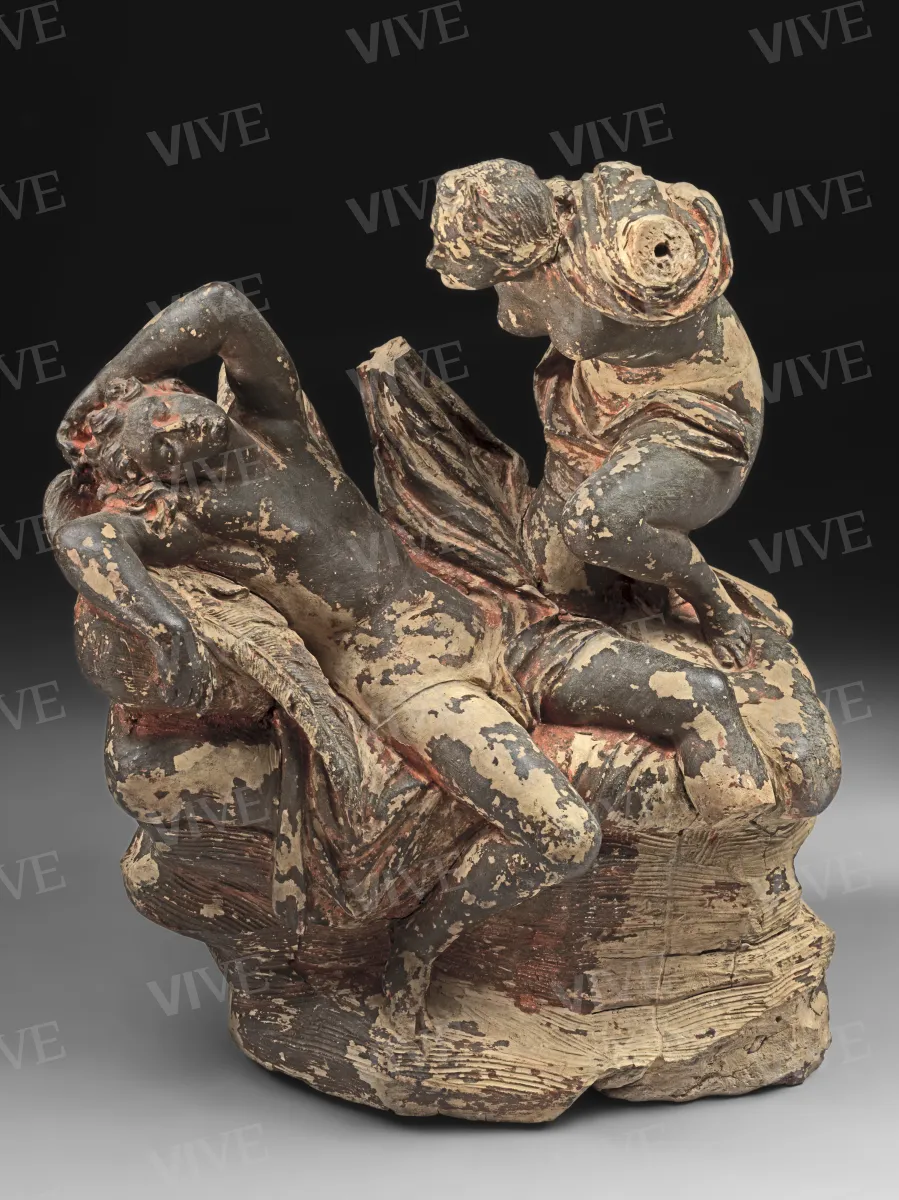
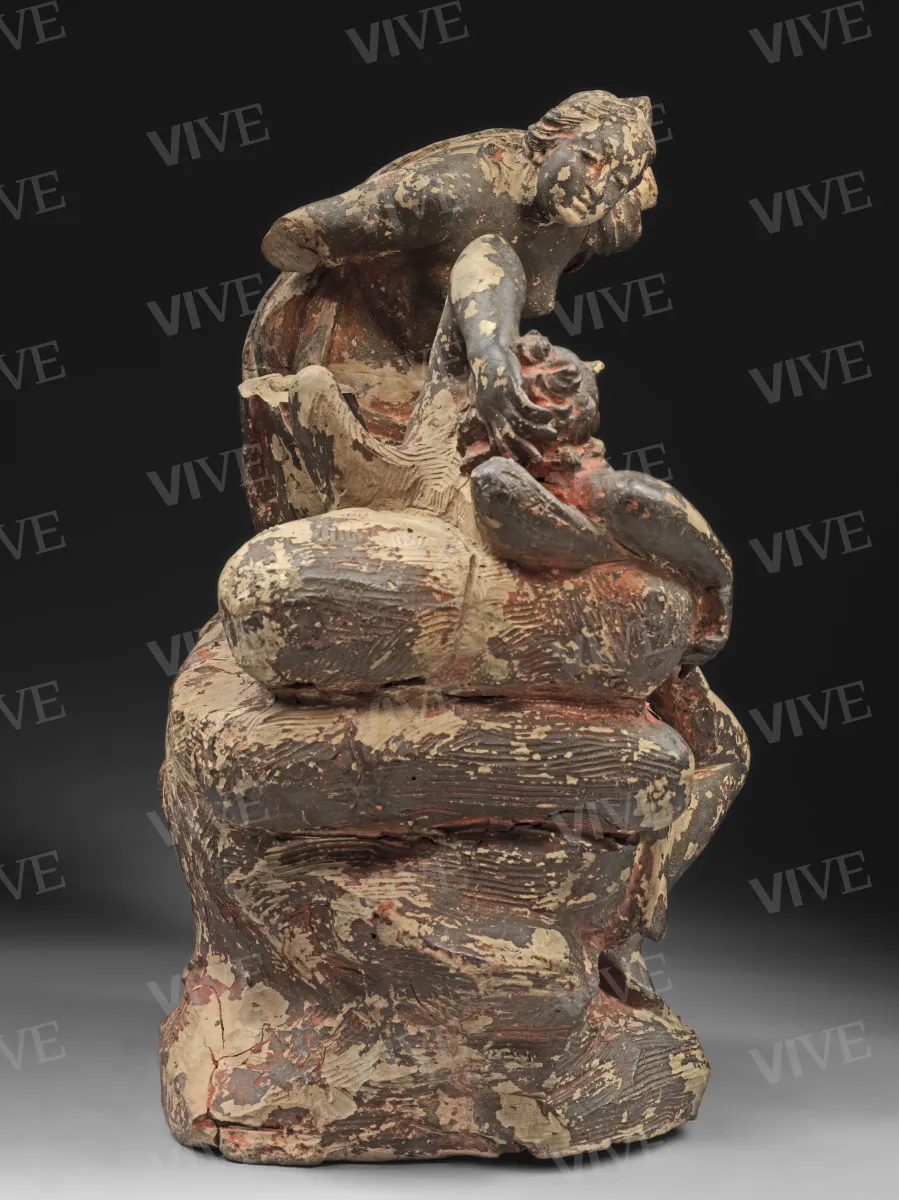
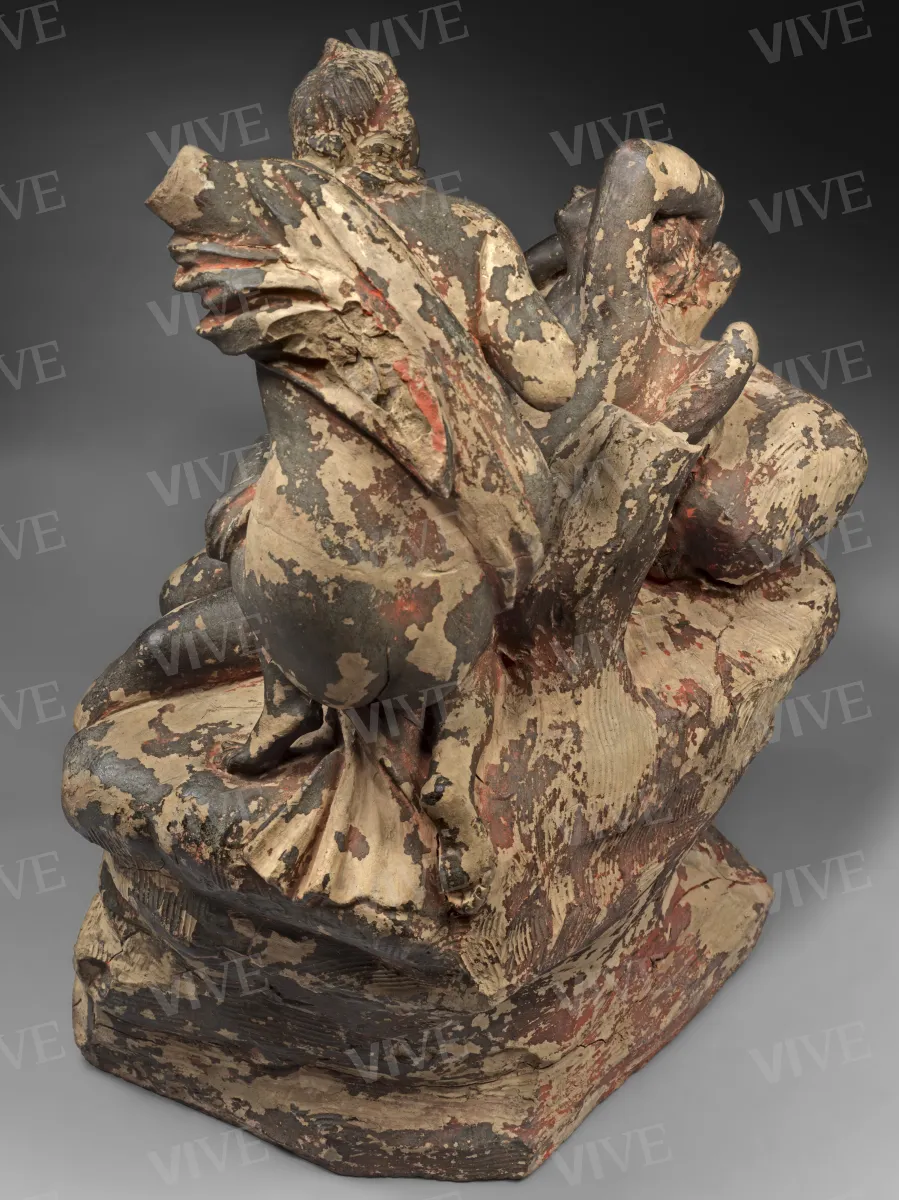
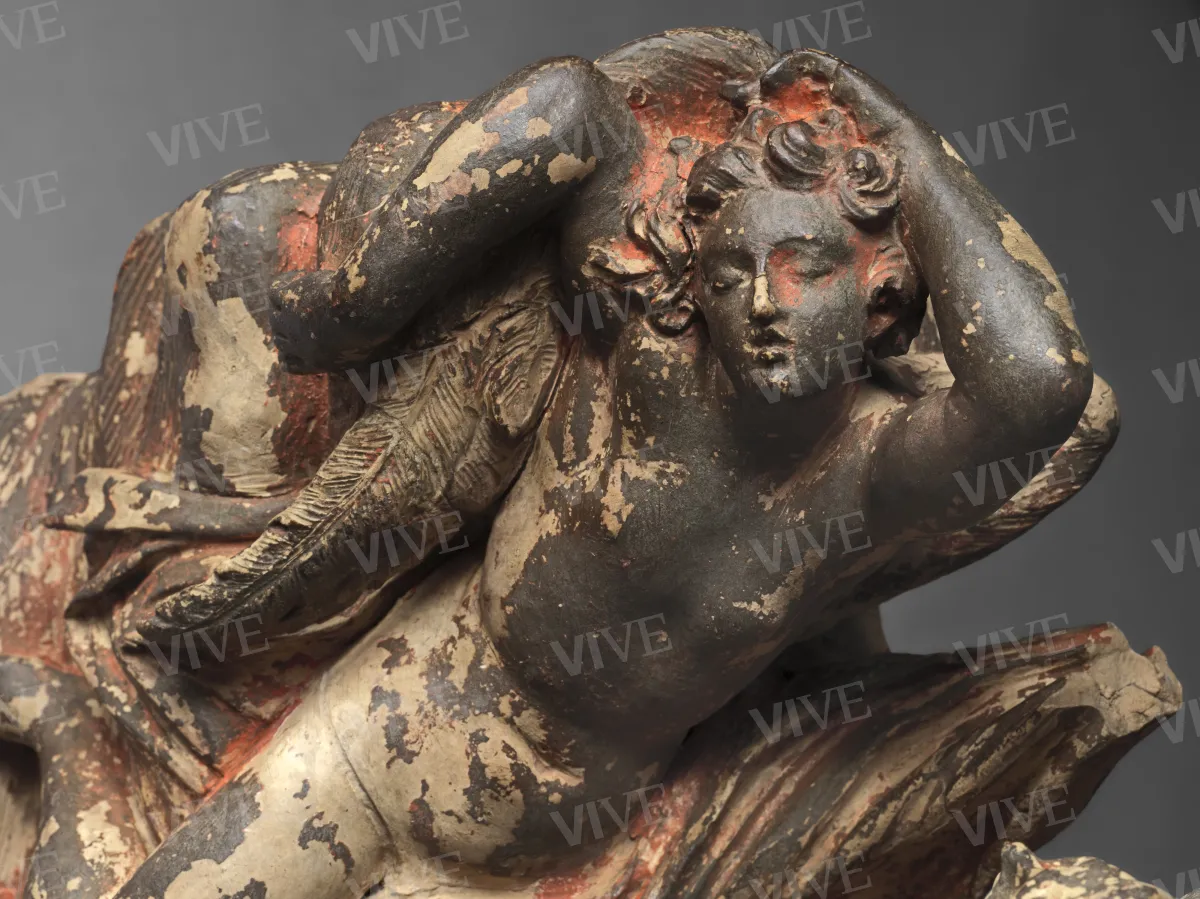
The sculpture depicts Cupid reclining on a high support designed to resemble a bed, positioned in a precarious manner with his legs splayed and extending beyond the edge, and his arms resting beside his head, which is surrounded by flowing, tousled hair. Approaching from the right, Psyche is portrayed advancing cautiously, her legs bent, captured as she lifts the cloak to reveal the nude form of her beloved. In accordance with Apuleius’ narrative in The Metamorphoses, she illuminates the nocturnal scene with a lamp (now missing) held in her left hand. This terracotta piece was created by Giulio Cartarè (Giulio Cartari), a student of Gian Lorenzo Bernini.
Initially published with a tentative attribution to Massimiliano Soldani Benzi (Brinckmann 1923), this terracotta was subsequently connected to the Bolognese artist Giuseppe Maria Mazza. It was further related to the small bronze statue of Diana and Endymion, which was at that time in the possession of the marchesi Bevilacqua (Santangelo 1954). Jennifer Montagu identified the work as a preparatory sketch for the marble group of Cupid and Psyche, executed by Giulio Cartarè (or Cartari) (1642–1699), now situated in the Summer Garden in Saint Petersburg (Zanuso 1996). Subsequent research has elucidated the historical context of this sculpture, which was commissioned in Rome by Queen Christina of Sweden and completed based on a design by Gian Lorenzo Bernini, for whom Cartari was the final prominent pupil. The group was acquired in 1719 by Tsar Peter the Great for 1050 thalers through his agent Yuri Kologrivov; following an extensive journey that included a stop in Amsterdam, it arrived in Saint Petersburg in 1721 (Androsov 2004). Stylistically, the terracotta is exemplary of the artistic approach adopted by Cartari in the late 1670s, during which time he was recommended by Bernini to serve Queen Christina of Sweden as a trusted artist and specialist in the restoration of ancient marbles—a role he fulfilled for nearly a decade (1680–1689). His study of classical sculpture and background as a restorer are evident in the articulation of the postures of Cupid and Psyche, particularly with respect to Cupid, whose stance reflects the influence of the Arianna prototype formerly housed at the Villa Medici in Rome. Concurrently, his close association with Bernini enabled him to approach the classical model with creative latitude, achieving a level of expressive refinement that imbues the work with an elegiac quality emblematic of the emerging Arcadian sensibility within the Roman cultural milieu.
Jacopo Curzietti
Entry published on 16 October 2025
Poor. The terracotta piece is missing the lower portion of the Cupid’s left leg, both arms of the Psyche figure, and a section of the cloak she holds aloft.
2010: restoration by Davide Fodaro and Livia Sforzini.
Rome, Collezione Ludwig Pollak, documented in 1932;
Rome, Museo Nazionale di Palazzo Venezia, 1952.
Brinckmann Abert Erich, Barock-Bozzetti. Italienische Bildhauer. Italian Sculptors, I, Frankfurt am Main 1923, p. 138;
Santangelo Antonino (a cura di), Museo di Palazzo Venezia. Catalogo delle sculture, Roma 1954, p. 84;
Zanuso Susanna, Giulio Cartari, in Bacchi Andrea (a cura di), Scultura del '600 a Roma, Milano 1996, pp. 793-794;
Marchionne Gunter Alfredo, Giovan Lorenzo Bernini e Giulio Cartarè, in Fagiolo dell'Arco Maurizio, Berniniana. Novità sul regista del Barocco, Ginevra-Milano 2002, pp. 218-227;
Androsov Sergej Olegovič, Pietro il Grande e la scultura italiana, Sankt Peterburg 2004, pp. 364-365;
Giometti Cristiano (a cura di), Museo Nazionale del Palazzo di Venezia. Sculture in terracotta, Roma 2011, pp. 72-73, n. 63.