Vittoriano


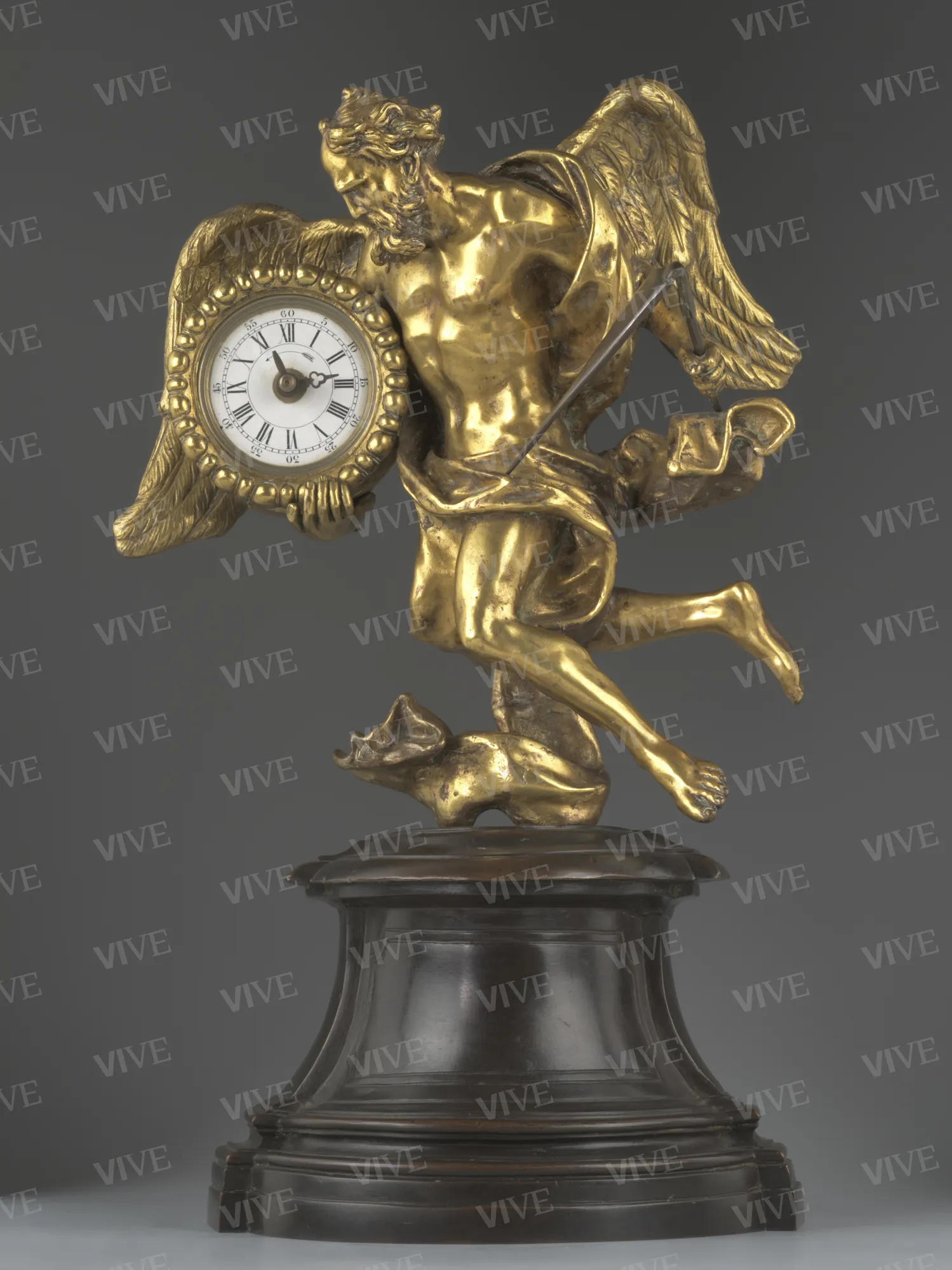
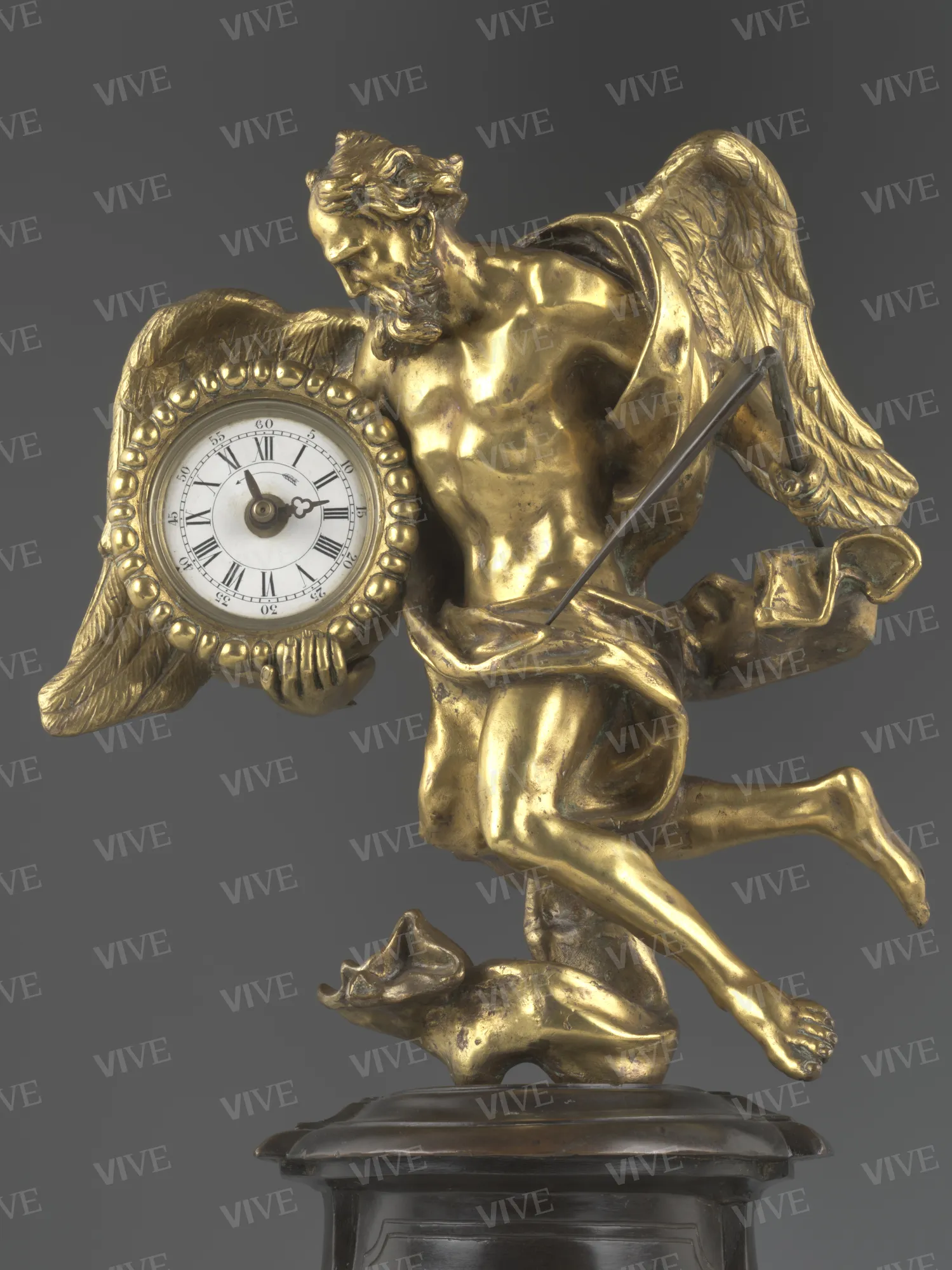
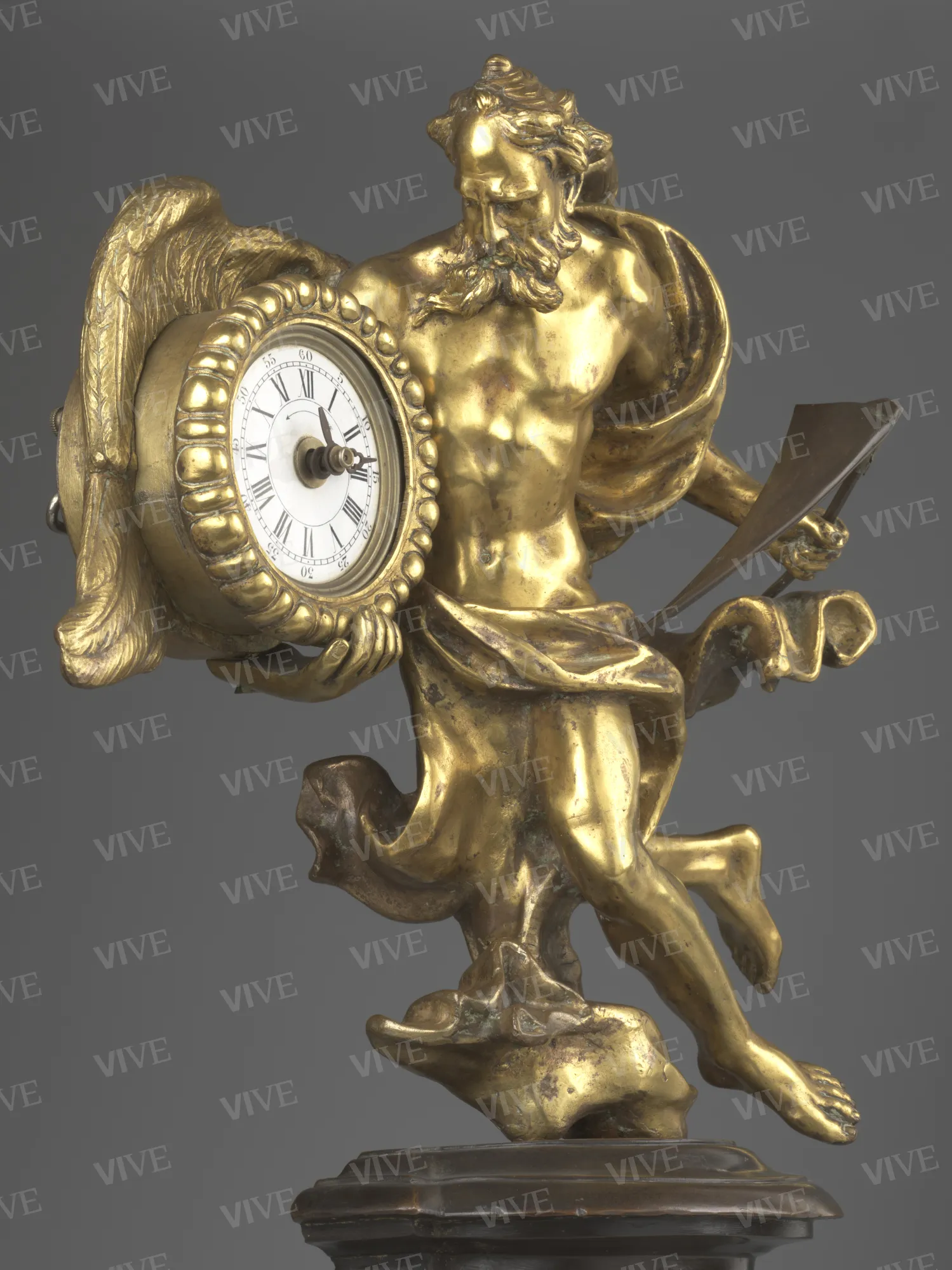
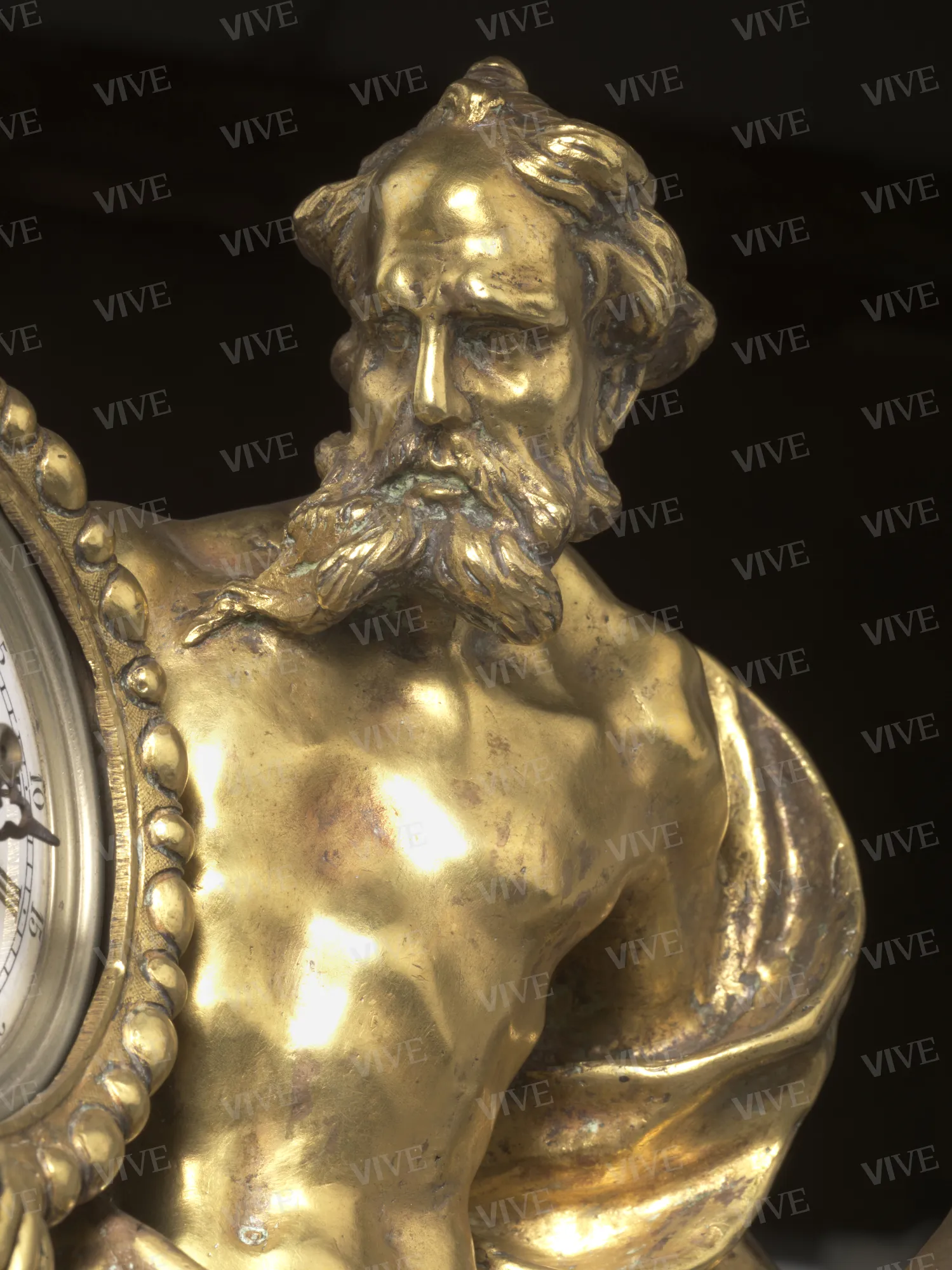
The bronze statuette, depicting Cronus in flight, is mounted on a tapered semi-circular base. The figure is portrayed holding a scythe in his left hand and a clock with a round face in his right. Although this piece was once attributed to the Baroque sculptor Balthasar Permoser, current scholarship attributes it to the Roman school dating to the final quarter of the seventeenth century.
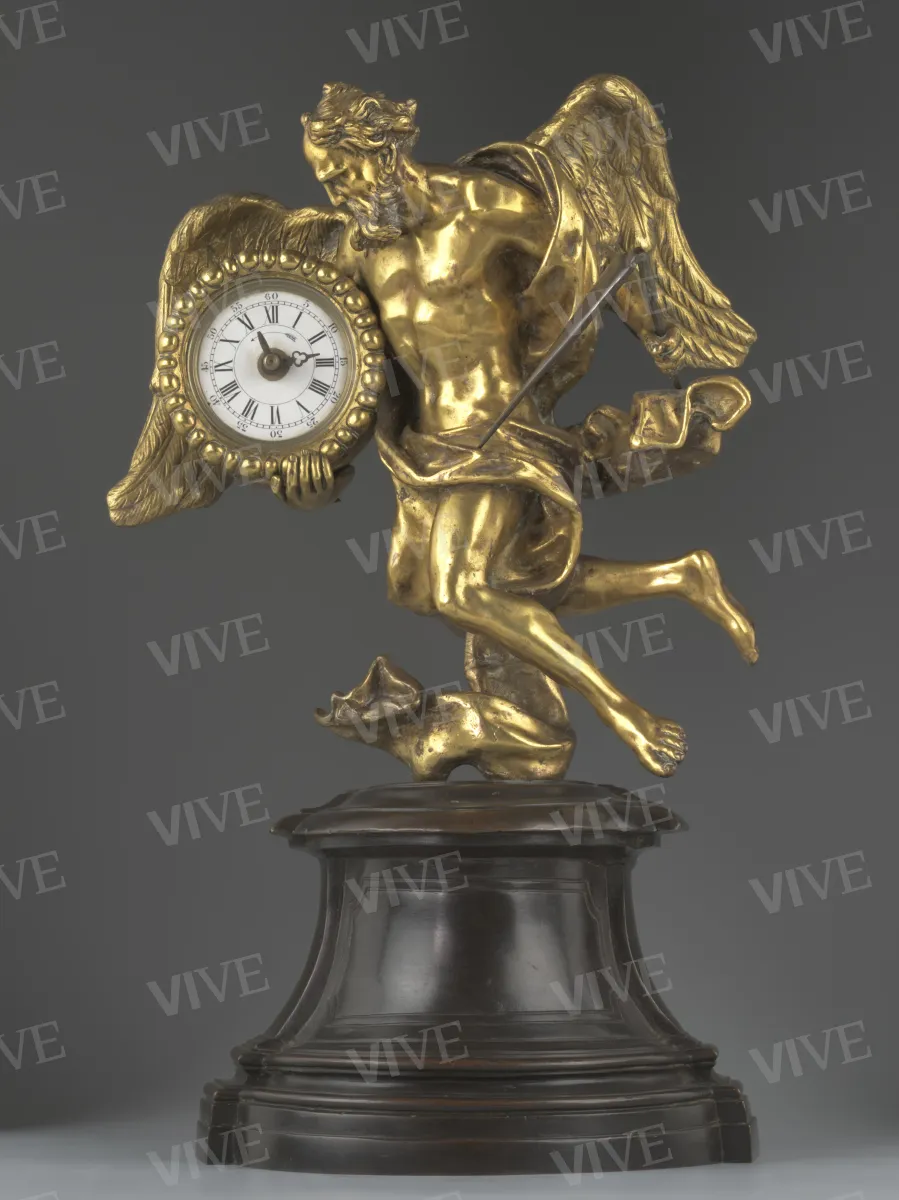
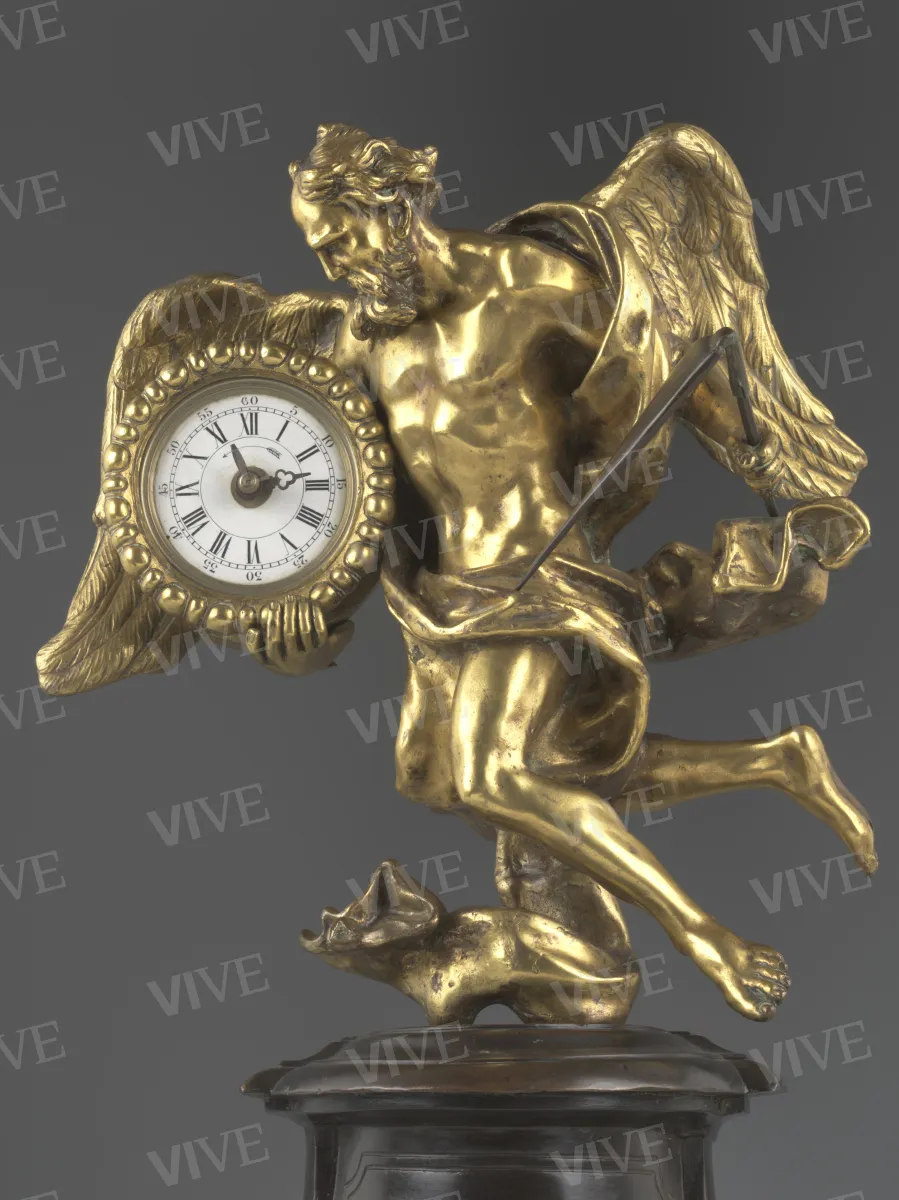

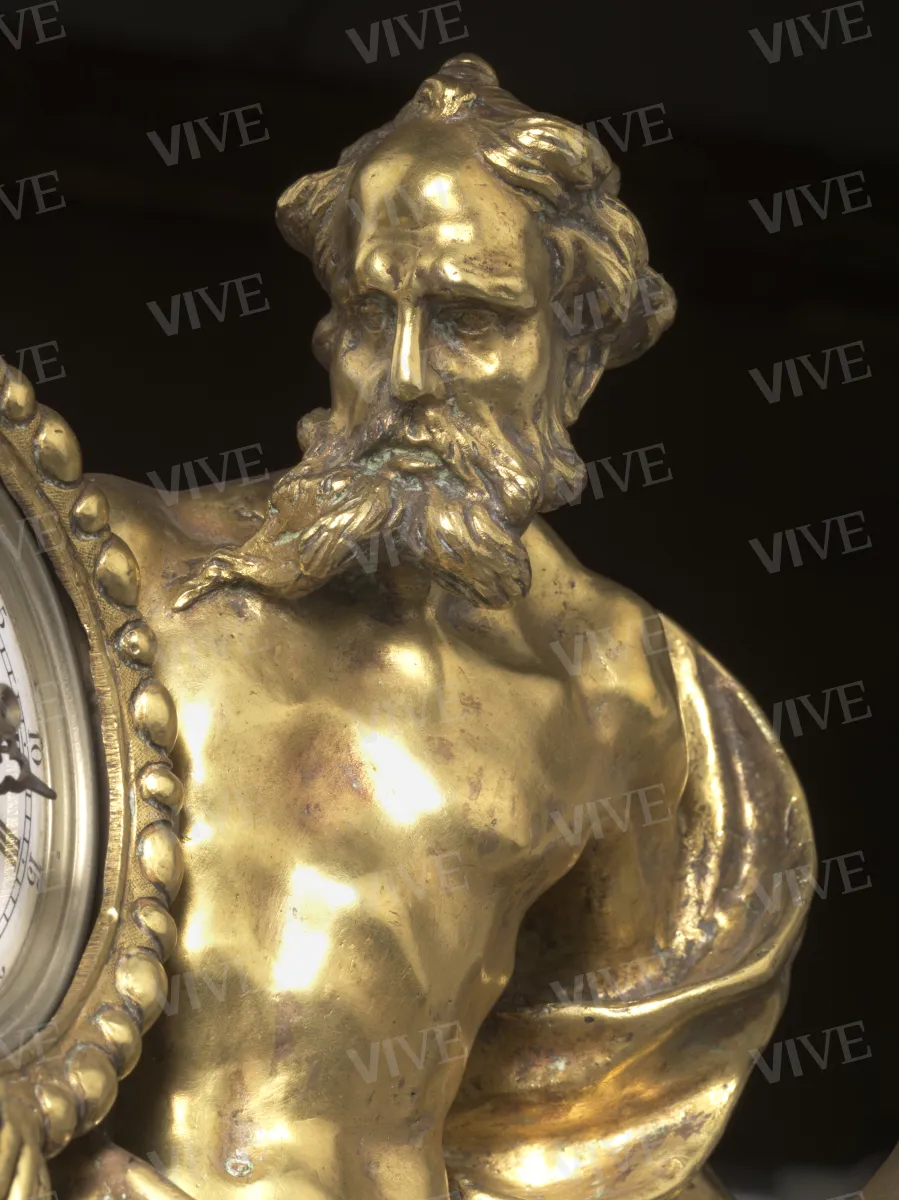
The bronze statuette, depicting Cronus in flight, is mounted on a tapered semi-circular base. The figure is portrayed holding a scythe in his left hand and a clock with a round face in his right. Although this piece was once attributed to the Baroque sculptor Balthasar Permoser, current scholarship attributes it to the Roman school dating to the final quarter of the seventeenth century.
The clock originating from Palazzo Doria al Corso was acquired by the Museo di Palazzo Venezia in 1961, classified as a "Roman work from approximately the mid-seventeenth century" and attributed to "a design by Gian Lorenzo Bernini" (Acquisti 1961, 364). The lost sketch by Bernini, once owned by the antiquarian Fallani in Rome, features an elderly figure with wings, grasping a scythe in his right hand and holding a circular medallion in his left. The drawing was published by Fraschetti (1900, pp. 256, 437), Brauer and Wittkower (1931, pp. 250–251, plate 113a), and Panofsky (1975, p. 112, note 50), who provisionally attributed the work to the design of either a clock or a mirror. These elements, both appropriate for the allegorical depiction of “transience” (Panofsky 1975), are also evident in graphic documentation associated with Bernini’s lost mirror created for Queen Christina of Sweden’s Roman residence. This work is associated with an autograph drawing housed in the Royal Collection at Windsor Castle (circa 1662; inv. RCIN 905586), as well as subsequent reproductions located in the Nationalmuseum in Stockholm (Montanari 1998, 372–373, figs. 36–37, 39), which are part of materials acquired in Rome by Nicodemus Tessin the Younger between 1687 and 1688 (Olin 2009, 13–14, 16, 18, 23, fig. 1). Among these, one piece (inv. NMH THC 1136), executed by an anonymous artist, portrays a mirror supported by two tritons and unveiled by Cronus in flight, who holds a scythe and a circular clock in his left hand (Olin 2009). Both Fagiolo dell’Arco (1967, 145, 243, fig. 74) and Fusconi (1986, no. 37, 49, 110) have identified, among the drawings attributed to Bernini’s circle, a series of studies concerning the design of a clock borne by “Saturn–Cronus,” consistent with the model exemplified by the small bronze held in the Museo di Palazzo Venezia.
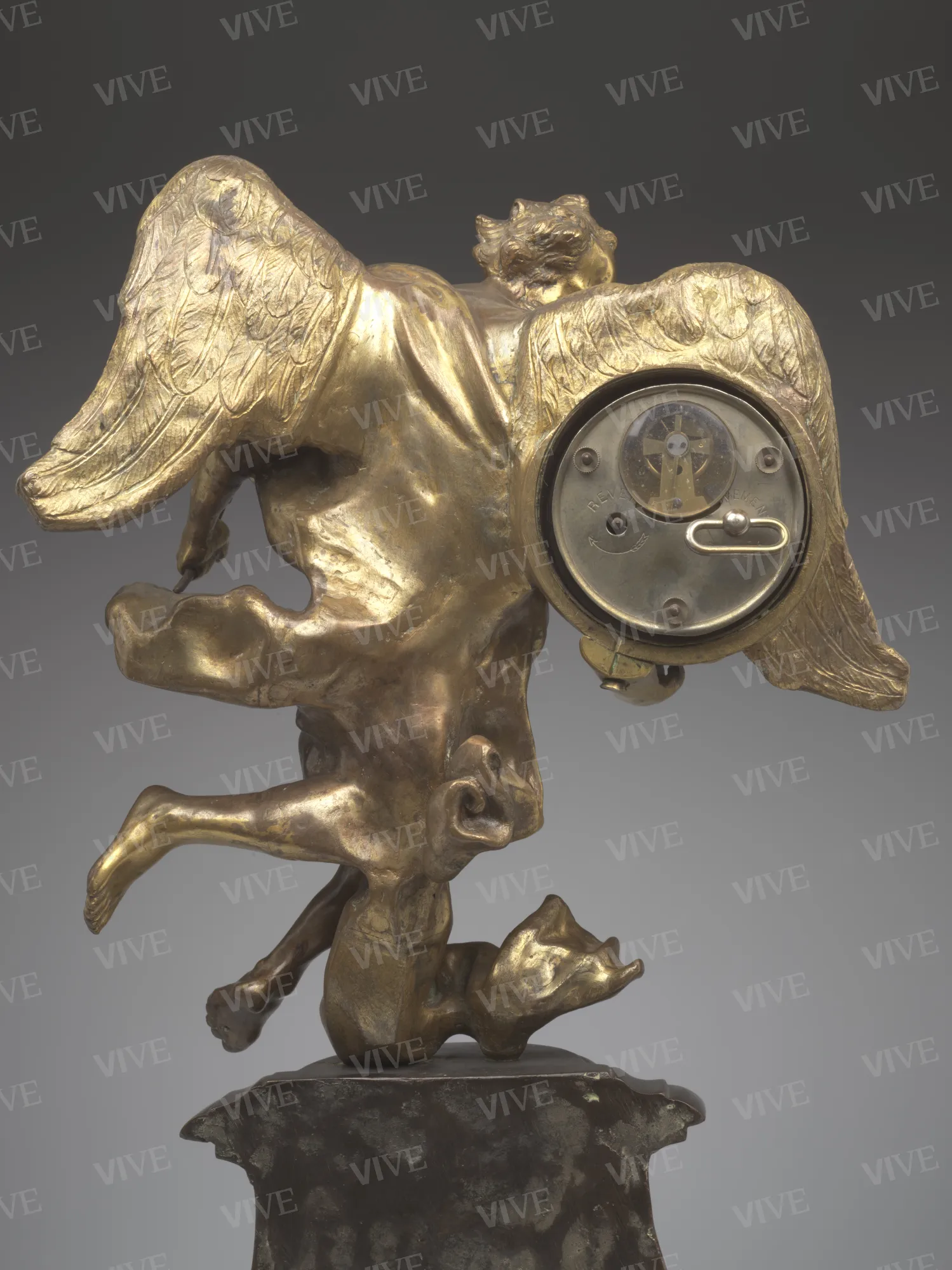
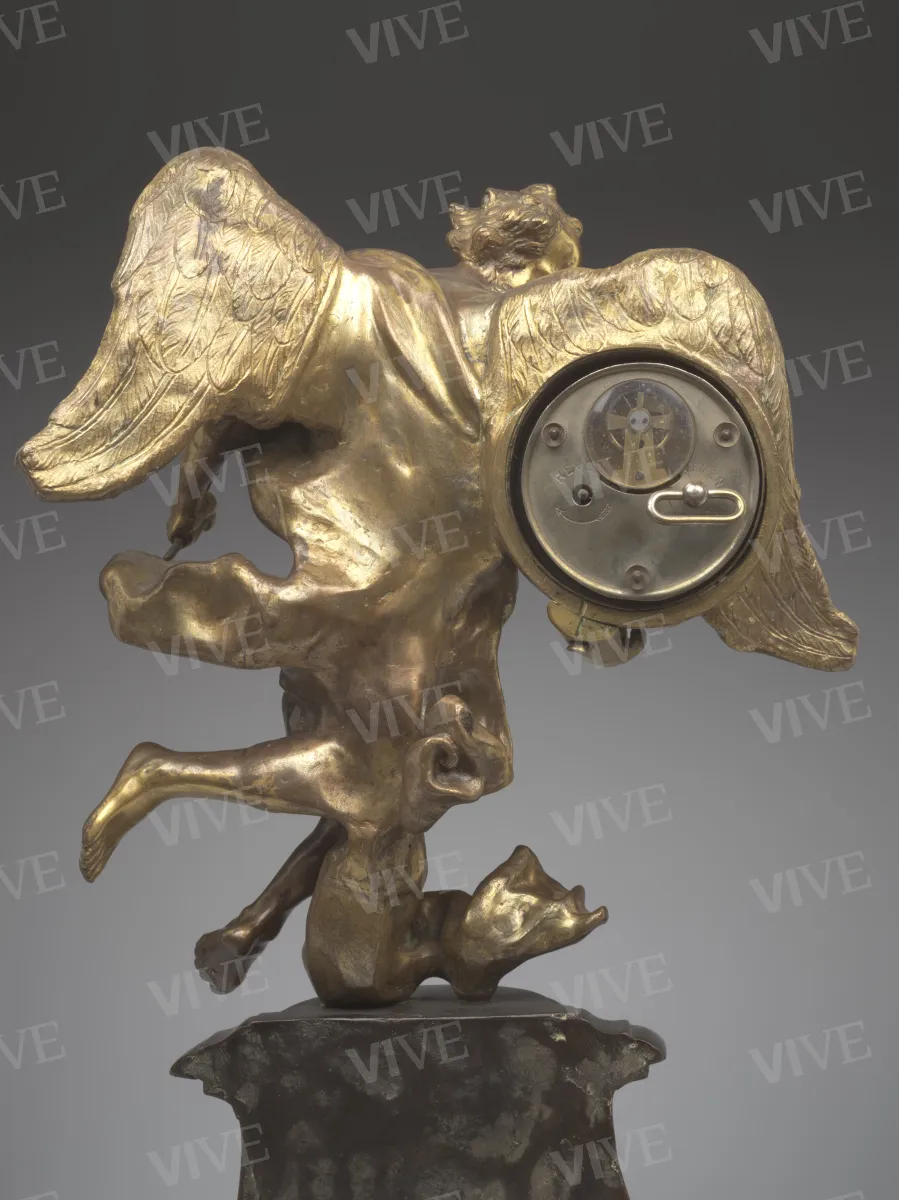
It is well established that Gian Lorenzo Bernini’s contributions to the decorative arts encompass a wide array of media, including cabinetmaking, textiles, silverware, and bronze casting, often involving close collaboration with his associates (Petrucci 2017, 341–364). Peter Dreyer (1976, 212, note 11) draws a comparison between a drawing of Time by Giovanni Battista Gaulli, held in the Cabinet des Dessins at the Musée du Louvre (inv. 9515), and a small bronze representing the same subject, which adorns a clock by Giovan Battista Foggini, crafted from ebony and semi-precious stones and currently part of a private collection. The sculpture was then attributed by Jennifer Montagu to a "non–Italian follower of Bernini" (Dreyer 1988, 164). Subsequently, Dreyer identified the artist as Balthasar Permoser (1651–1732), dating the work to 1689. Dreyer also credits Permoser with the creation of a small bronze statue housed in the Museo di Palazzo Venezia, noting its similarities to the Florentine piece in terms of physiognomic detail, the dynamic posture of the figure in flight, and the use of large, twisted drapery as a pedestal (Cannata 2011, 181). These compositional elements are likewise present in the stone sculpture of Cronus that Permoser executed circa 1690 for the Brauerschen Haus in Dresden (Dreyer 1988, 164), a work documented by a nineteenth–century drawing by Adolf von Menzel in the Kupferstichkabinett, Berlin (inv. SZ Menzel N 142; Asche 1978, 58, fig. 121). The theme of Time is exemplified by its placement atop a bronze clock tentatively attributed to Johann Paul Schor (González–Palacios 1984, I, 153), as well as by a nearly contemporaneous small bronze statue portraying Saturn devouring his children, currently housed in the Galleria Nazionale dell’Umbria; this latter piece may have originally served as a clock ornament (Santi 1985, 250). The prevalence of iconographic motifs derived from Gian Lorenzo Bernini’s oeuvre—particularly with regard to the decoration of timepieces—is further demonstrated by a Genoese clock crafted by Giovanni Pietro Callin in the late seventeenth century. The dial, painted by Giovanni Battista Gaulli, illustrates the allegory of Time revealing Truth and dispelling Falsehood (Ceretti 2021, no. 25, 174–177). The pictorial composition, derived from Bernini's designs for the sculptural group of the same name—of which Verità is preserved in the Galleria Borghese (Ceretti 2021, 174)—appears, in varying forms, on the dial of a nocturnal clock produced in Florence by the grand ducal workshops circa 1680 (Lenner 2005, no. 204, 496). Valeriani (1997, 250) contested the attribution of the clock’s context to the Baroque period within the Palazzo Venezia Museum, identifying the bronze figure through a photographic reproduction (1873) of artifacts crafted in the Roman foundry of silversmith Giuseppe Salvi, who succeeded Spagna in managing the workshop formerly owned by the Valadier family during the eighteenth century (Valeriani 1997, 248–250). Comprised of separately cast components, the Roman bronze was conceived for exclusive frontal viewing (Cannata 2011, 182). This interpretation is corroborated by the overall disregard for the back and the asymmetry of the forearm holding the replacement clock, which is affixed with a pin to the pod-framed case containing the dial (Cannata 2011).
Daria Gastone
Entry published on 16 October 2025
Fair. Some oxidation, loss of gilding, replacement mechanism.
Rome, Palazzo Doria al Corso, 1961.
ICCD OA, NCTN 1200865050, compiled by Dell’Ariccia A., 2004.
Fraschetti Stanislao, Il Bernini, la sua vita, la sua opera, il suo tempo, Milano 1900, pp. 256, 437;
Brauer Heinrich, Wittkover Rudolf, Die Zeichnungen des Gianlorenzo Bernini, Berlin 1931, pp. 250-251, tav. 113a;
Acquisti dei Musei e Gallerie dello Stato, in «Bollettino d’arte», XLVI, 1961, IV, pp. 358-367;
Fagiolo dell’Arco Maurizio, Fagiolo dell’Arco Marcello, Bernini una introduzione al gran teatro del barocco, Roma 1967, pp. 145, 243, fig. 74;
Panofsky Erwin, Studi di iconologia. I temi umanistici nell’arte del Rinascimento, Torino 1975, p. 112, nota 50;
Dreyer Peter, Ein unbekanntes Uhrengehäuse aus den Florentiner Werkstätten um 1700, in Kunst des Barock in der Toskana, München, 1976, pp. 208-212, nota 11;
Asche Sigfried, Balthasar Permoser leben und werk, Berlin 1978, p. 58, fig. 121;
González-Palacios Alvar, Il tempio del gusto. Le arti decorative in Italia fra classicismi e barocco. Roma e il Regno delle due Sicilie, I, Milano 1984, p. 153;
Santi, in Santi Francesco, Galleria Nazionale dell’Umbria. Dipinti, sculture e oggetti dei secoli XV-XVI, Roma 1985, p. 250, n. 264;
Fusconi, in Fusconi Giulia, Disegni decorativi del barocco romano, catalogo della mostra (Roma, Gabinetto dei Disegni e delle Stampe, Villa la Farnesina alla Lungara, 22 maggio-14 luglio 1986), Roma 1986, pp. 49, 110, n. 37;
Dreyer, in Giusti Annamaria (a cura di), Splendori di pietre dure. L’arte di Corte nella Firenze dei Granduchi, catalogo della mostra (Firenze, Sala Bianca di Palazzo Pitti, 21 dicembre 1988-30 aprile 1989), Firenze 1988, pp. 164-165, n. 39;
Valeriani Roberto, Gli Spagna. La fine della bottega, in González-Palacios Alvar (a cura di), L’oro di Valadier. Un genio nella Roma del Settecento, catalogo della mostra (Roma, Villa Medici, 29 gennaio-8 aprile 1997), Roma 1997, pp. 246-251;
Montanari Tomaso, Bernini e Cristina di Svezia. Alle origini della storiografia berniniana, in Angelini Alessandro (a cura di), Gian Lorenzo Bernini e i Chigi tra Roma e Siena, Siena 1998, pp. 331-477, figg. 36-37, 39;
Lenner, in Brusa Giuseppe (a cura di), La misura del tempo. L’antico splendore dell’orologeria italiana dal XV al XVIII secolo, catalogo della mostra (Trento, Castello del Buonconsiglio, 25 giugno-6 novembre 2005), Trento 2005, p. 496, n. 204;
Olin Martin, Disegni romani per mobili barocchi nella collezione Tessin del Museo Nazionale di Stoccolma, in Debenedetti Elisa (a cura di), Collezionisti, disegnatori e teorici dal Barocco al Neoclassico, vol. 25, Roma 2009, pp. 13-28, fig. 1;
Cannata, in Cannata Pietro, Museo Nazionale del Palazzo di Venezia. Sculture in bronzo, Roma 2011, pp. 180-182, n. 206;
Petrucci Francesco, Bernini inventore. Disegni berniniani per arti decorative, in Ebert-Schifferer Sybille, Marder Tod A., Schütze Sebastian (a cura di), Bernini disegnatore: nuove prospettive di ricerca, Roma 2017, pp. 341-364;
Ceretti, in Galli Lavinia (a cura di), La forma del Tempo, catalogo della mostra (Milano, Museo Poldi Pezzoli, 13 maggio 2020-27 settembre 2021), Milano 2021, pp. 174-177, n. 25.