Vittoriano


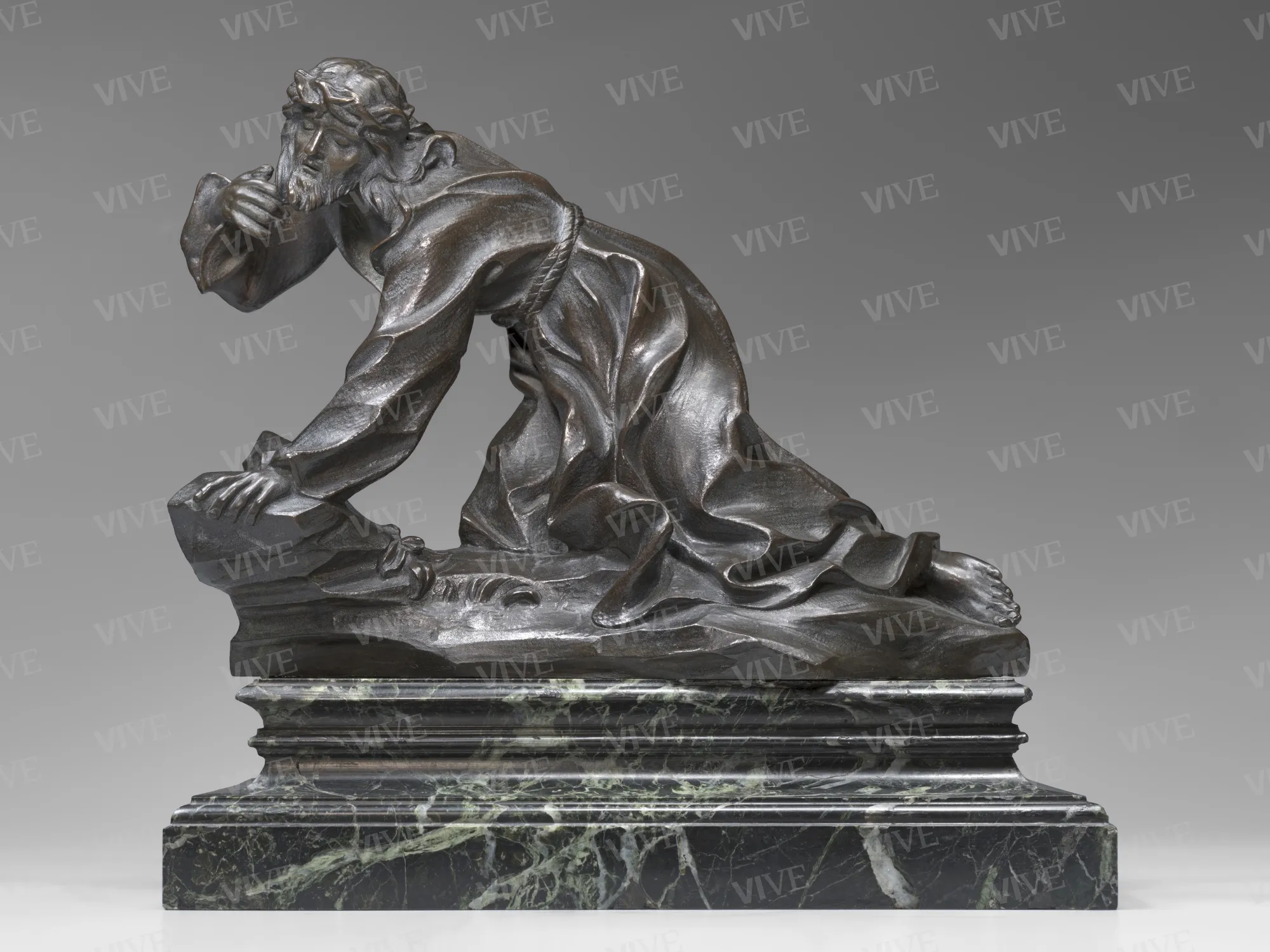
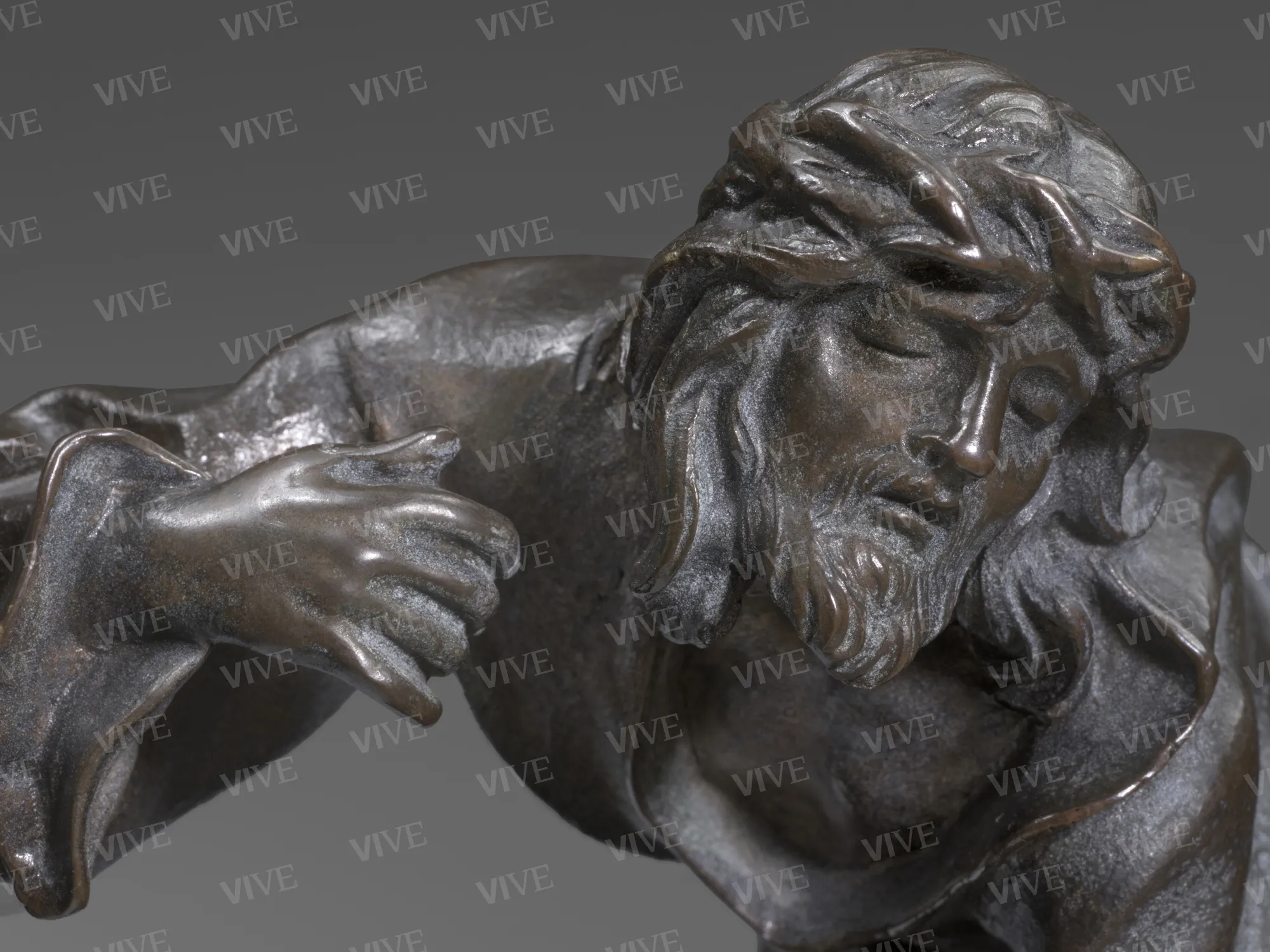
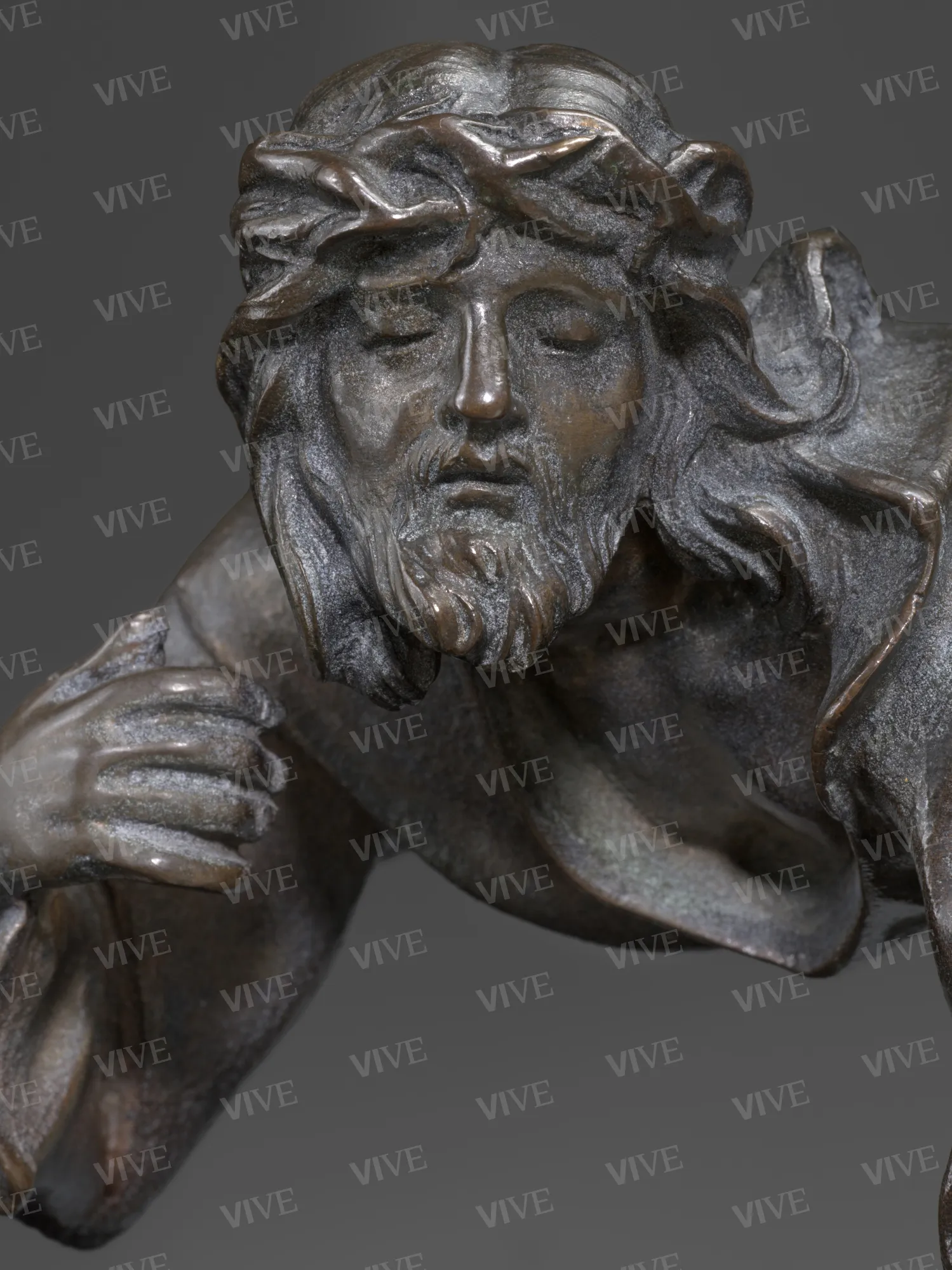
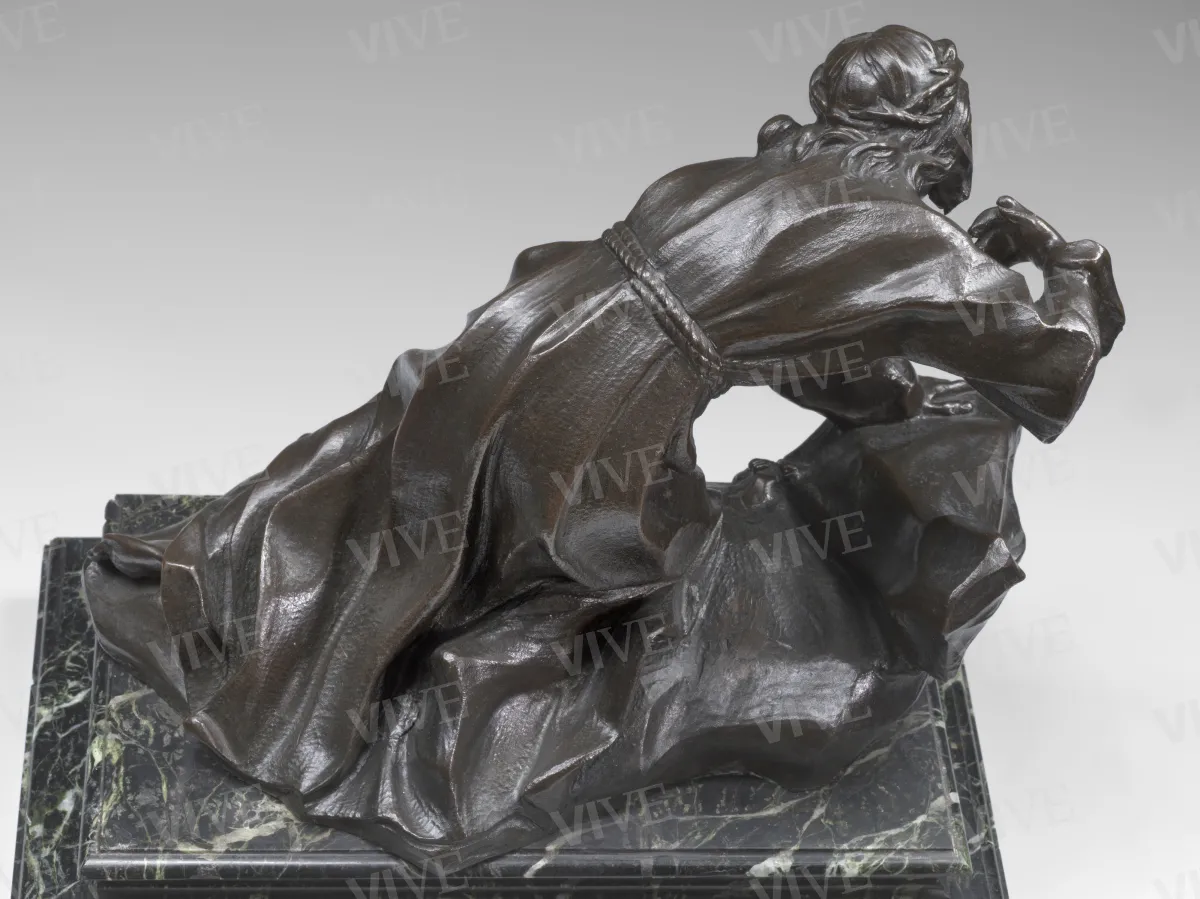
The small bronze statue depicts Christ during his ascent to Calvary and is part of a large group of sculptures based on a model attributed to Alessandro Algardi. The excellent quality of the casting allows us to attribute the sculpture entirely to Algardi, whose work, for formal reasons, can be dated to around 1650. Algardi’s invention enjoyed great success even beyond the borders of Italy, especially in Spain, thanks to the easy circulation of small-format bronzes.
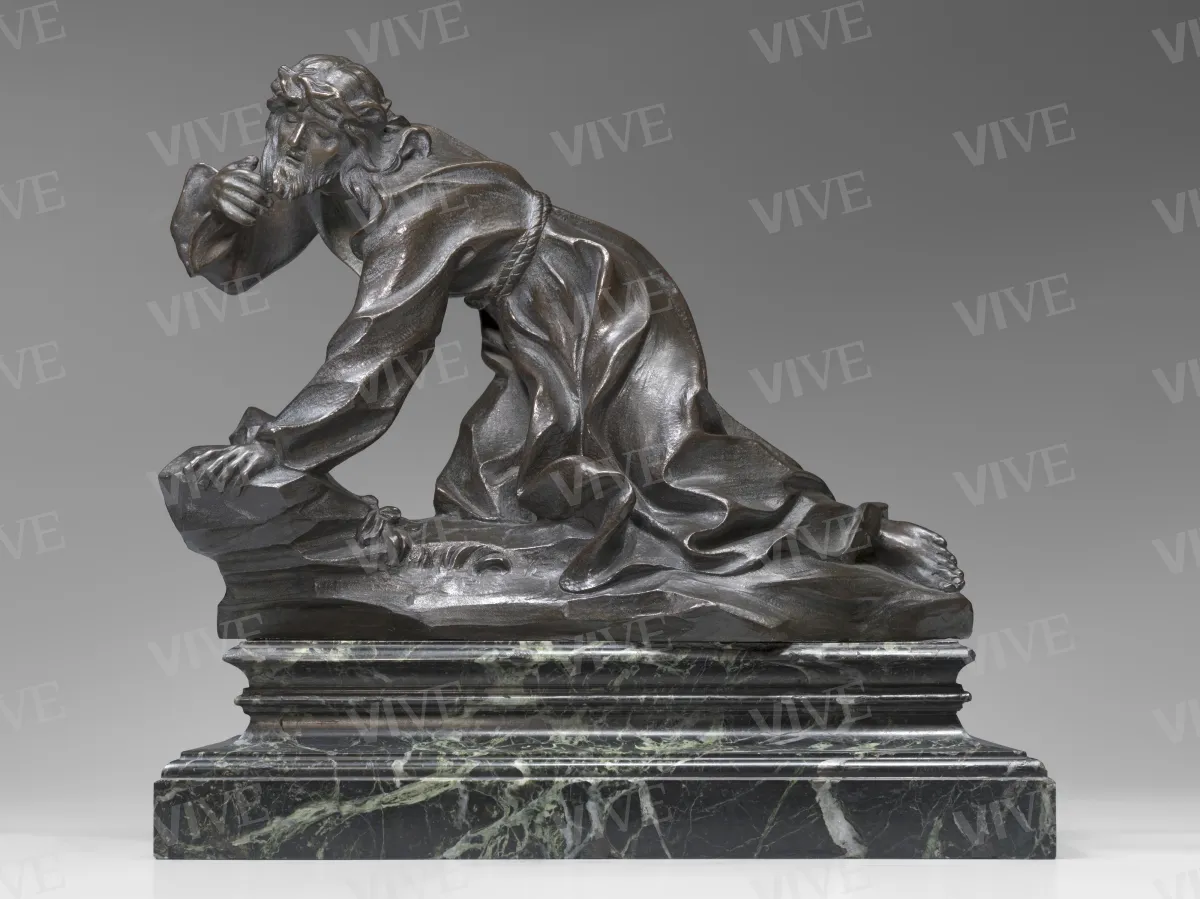
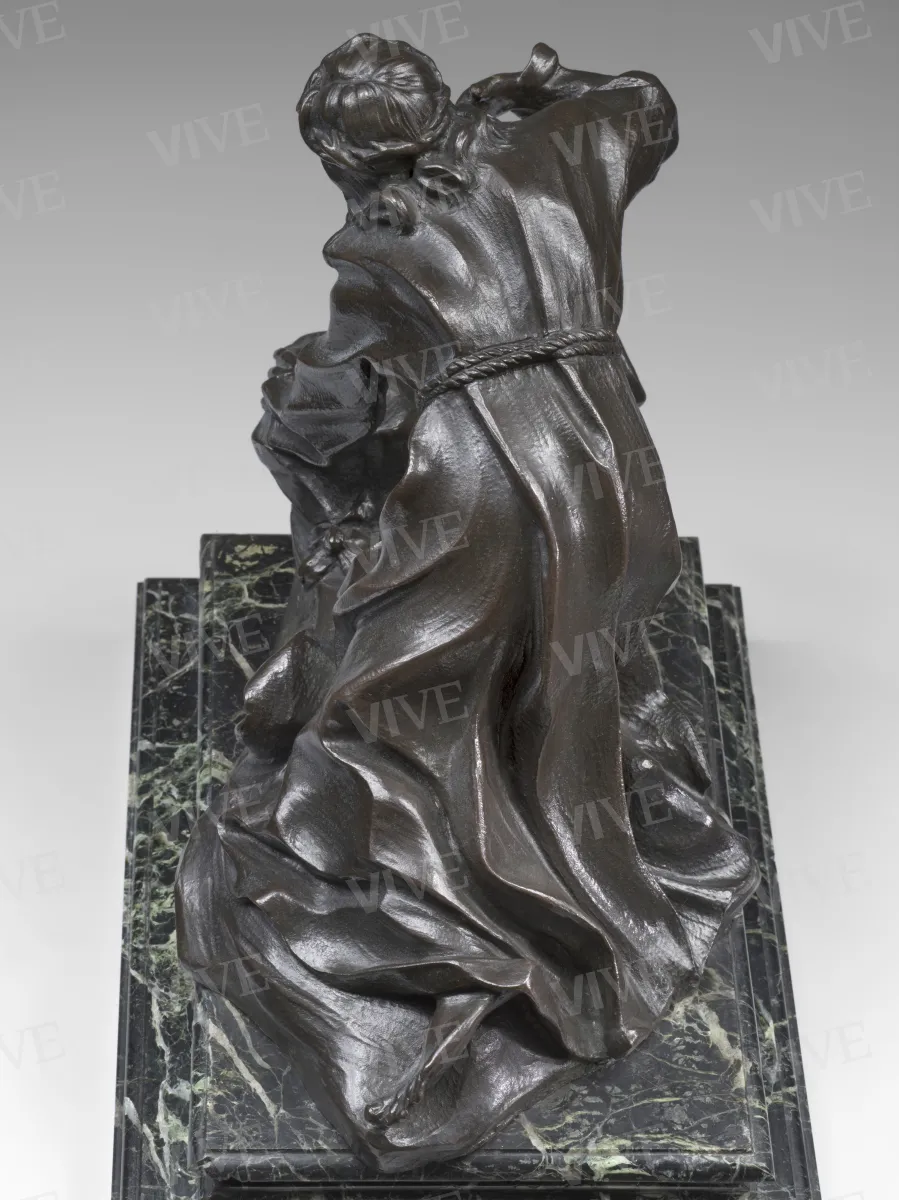
The small bronze statue depicts Christ during his ascent to Calvary and is part of a large group of sculptures based on a model attributed to Alessandro Algardi. The excellent quality of the casting allows us to attribute the sculpture entirely to Algardi, whose work, for formal reasons, can be dated to around 1650. Algardi’s invention enjoyed great success even beyond the borders of Italy, especially in Spain, thanks to the easy circulation of small-format bronzes.
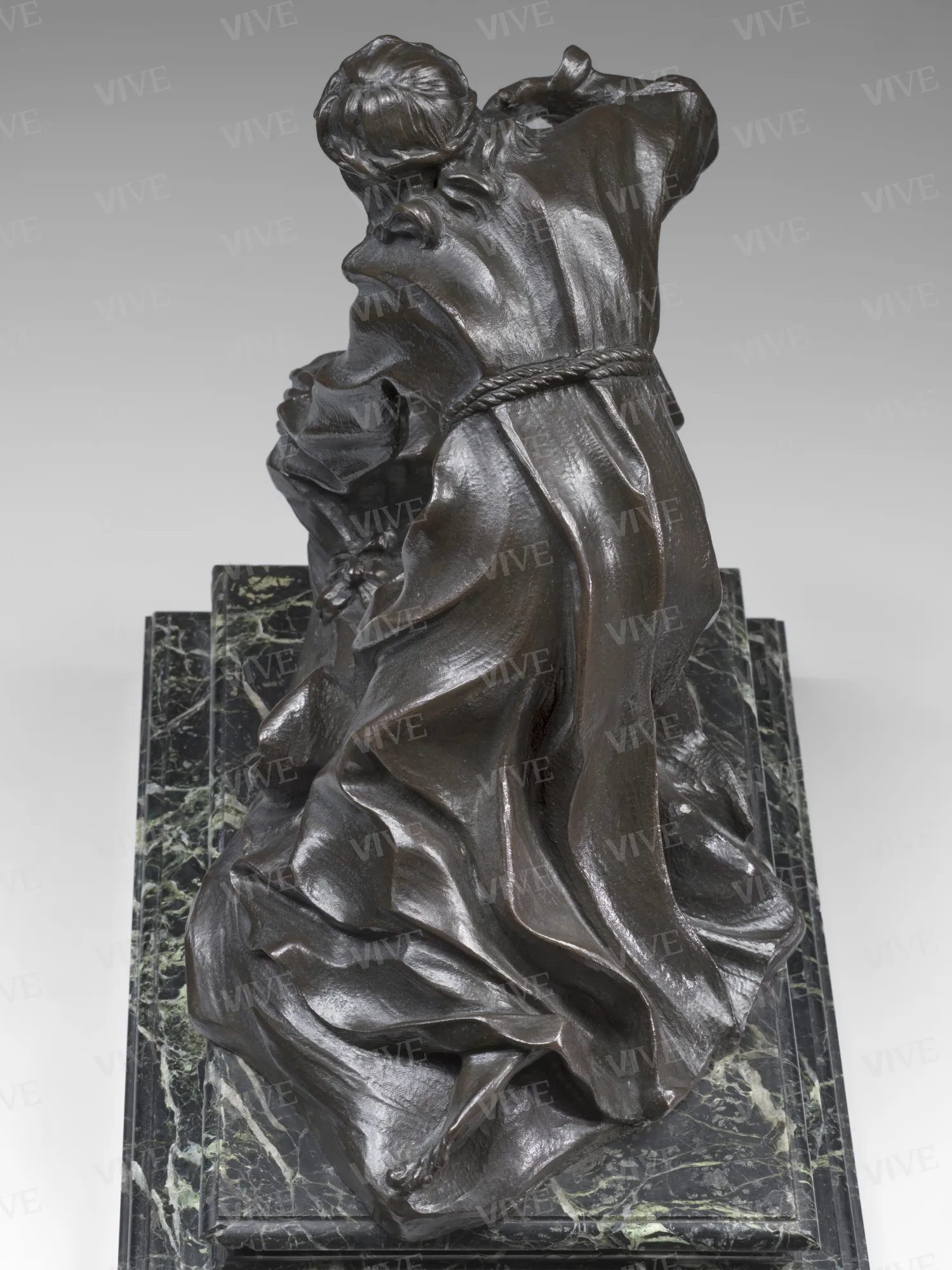
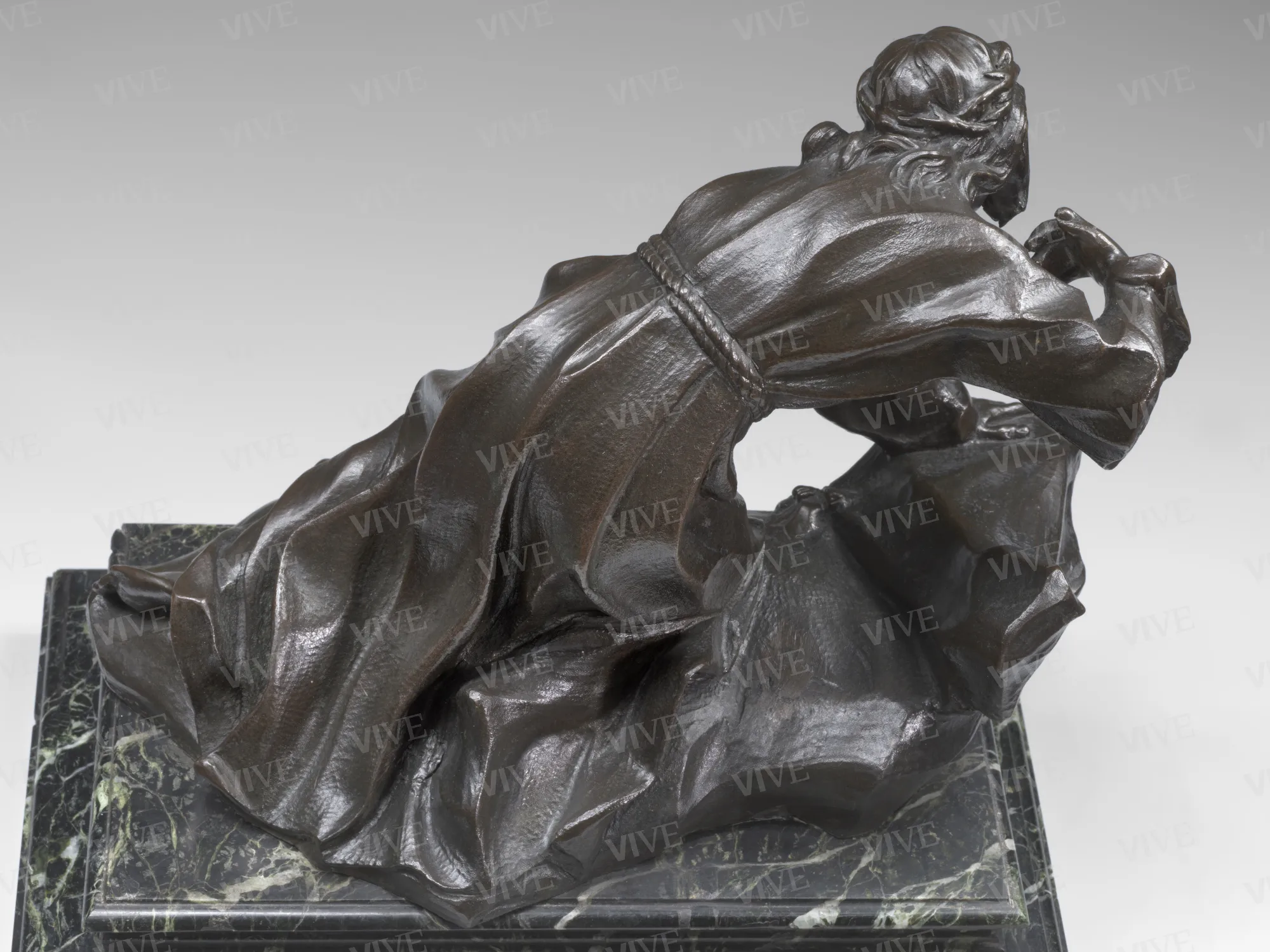
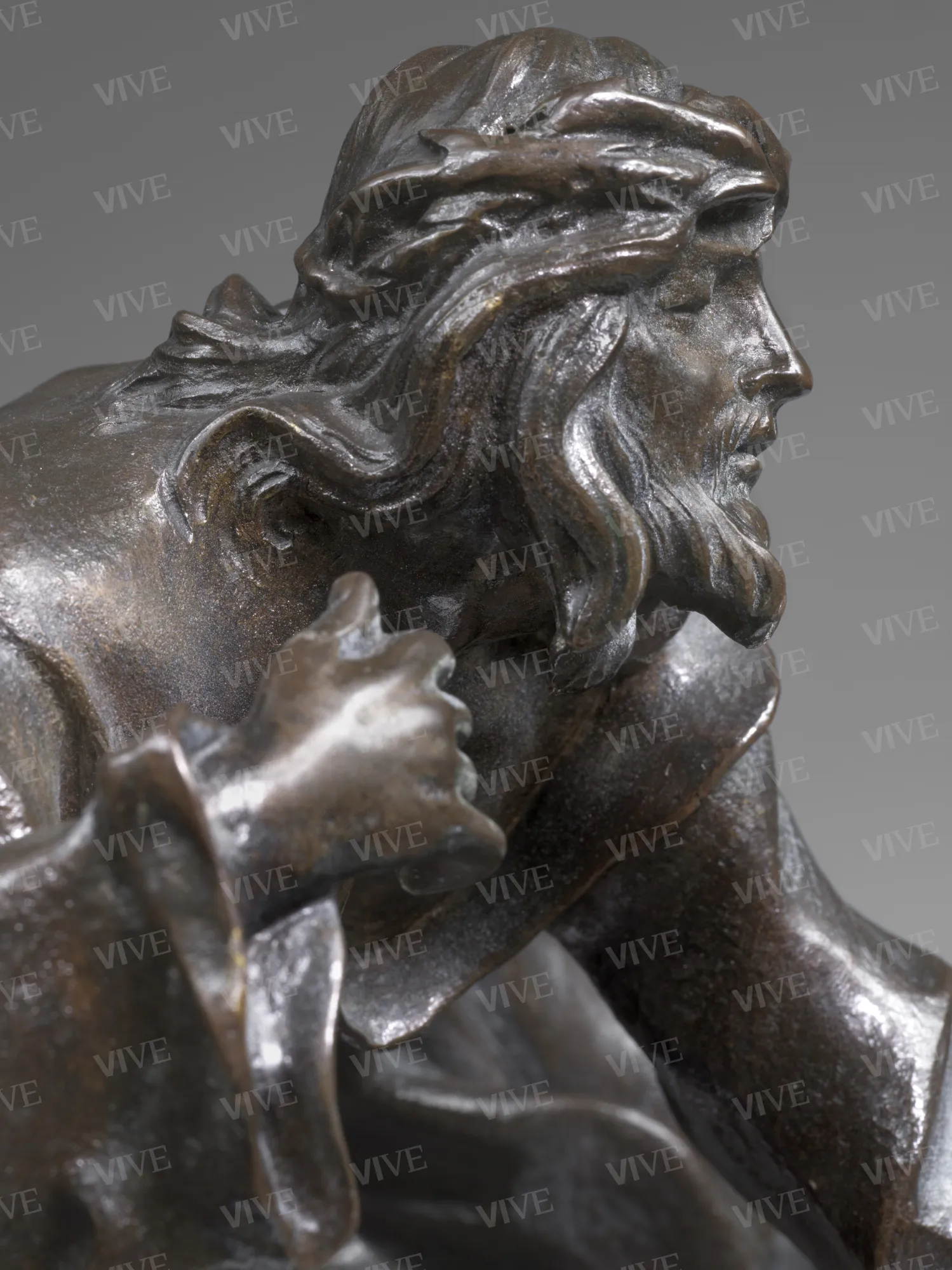
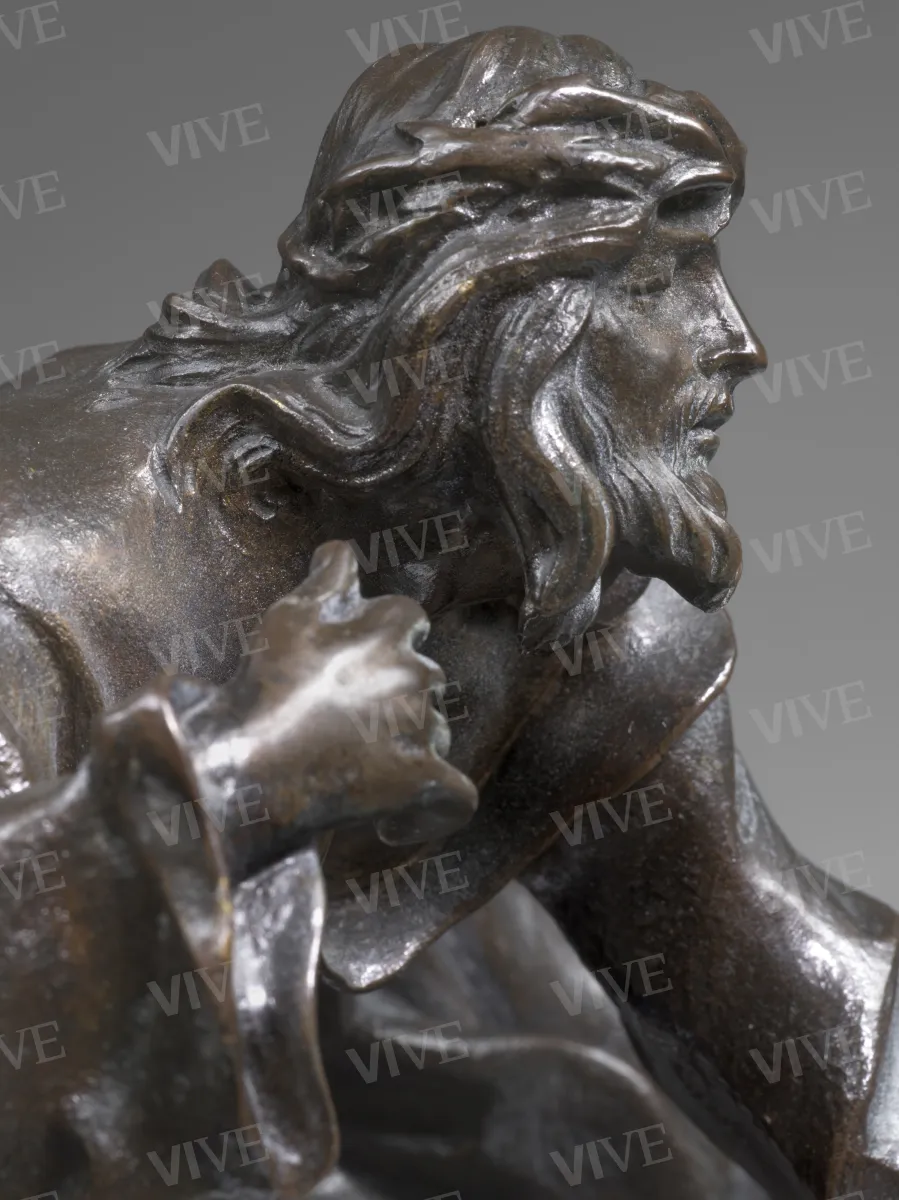
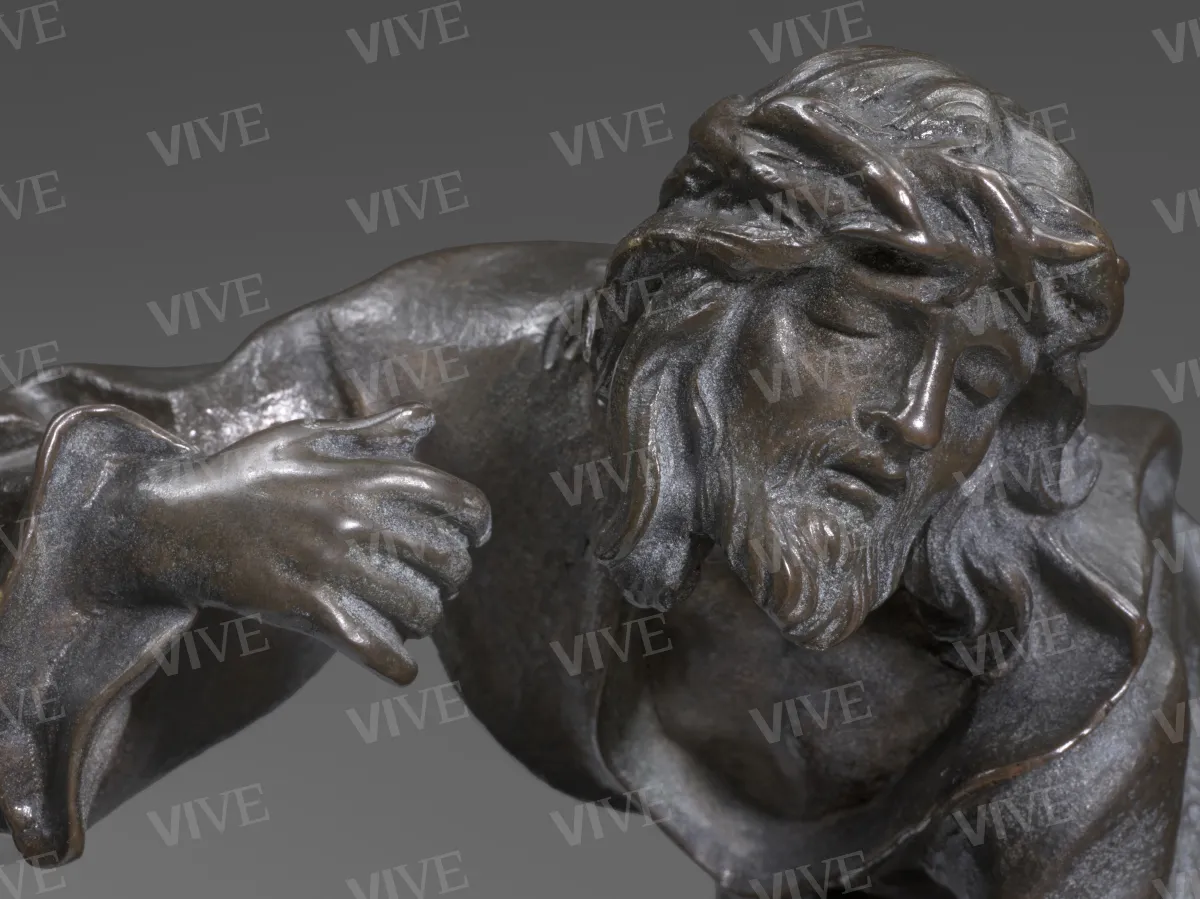
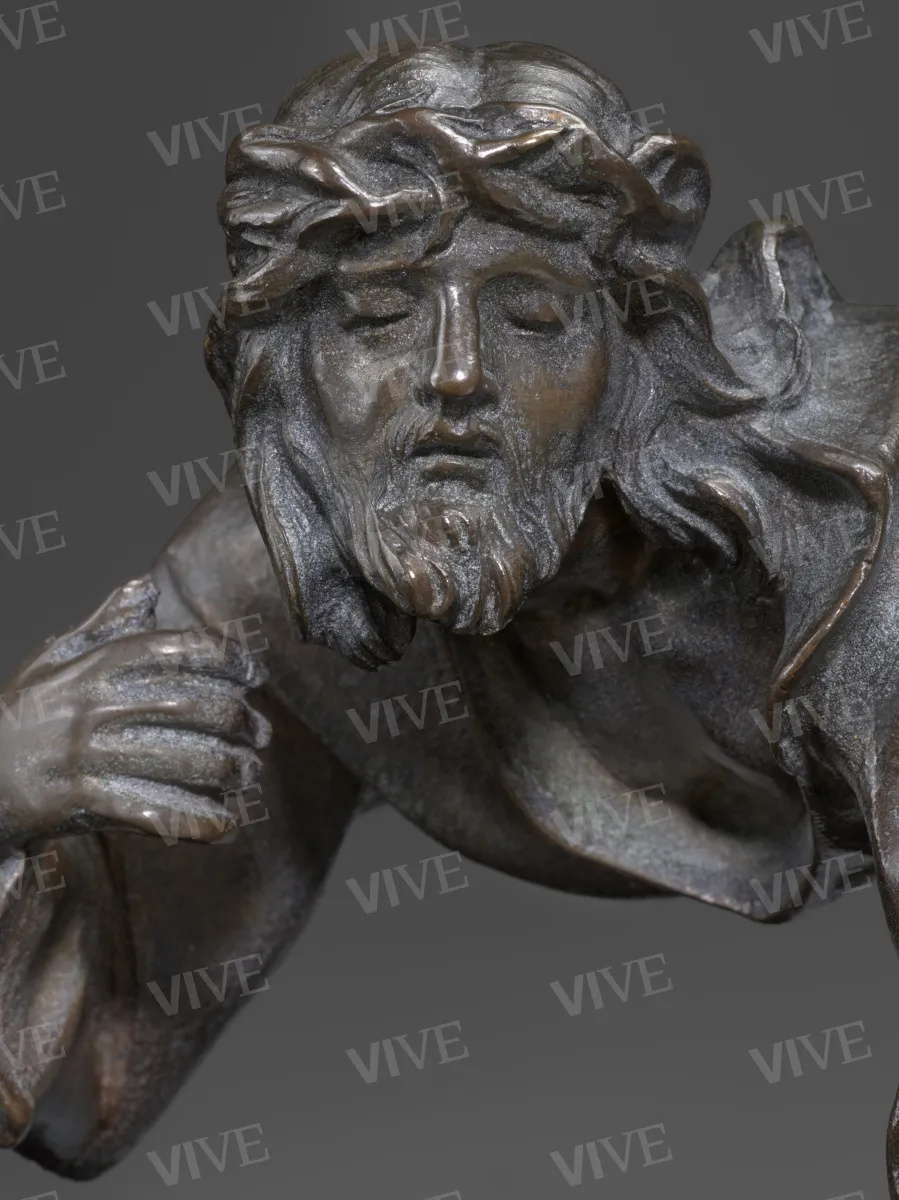
The small bronze depicts Christ during his ascent to Calvary, overwhelmed by the weight of the cross, under which he succumbs, collapsing to the ground. The dramatic episode of the Way of the Cross is depicted by capturing Jesus’ noble demeanor as he endures the painful ascent that culminates in his crucifixion. With his left hand, Christ supports himself on a rocky outcrop while, with his right, he clings to one arm of the cross, which is no longer present today but originally completed the bronze statue. However, an old photograph reported by Pietro Cannata (2011, 179) documents the presence of a similar object, possibly made of wood, which has been lost but was probably not contemporary, and an excessive crown of thorns, added to the original casting.
In the absence of any documentary evidence relating to the work in question, only an inventory note from 1690 attests to the presence of a sculpture similar to this model in the Roman collection of the goldsmith Antonio D’Amico Moretti (Montagu 1985, II, 324, n. 11.L.C.11). A Christ carrying a cross is first mentioned as “Italienisch, 18. Jahrhundert” in the catalog of the Städtische Galerie Liebieghaus in Frankfurt (1910, n. 329); this indication was certainly known to Leo Planiscig (1919, 159, n. 251) who, in reviewing the example in the Kunsthistorisches Museum in Vienna (inv. 8640), tended to attribute it to a eighteenth-century northern Italian artist or an “Italianizing” sculptor from beyond the Alps, oscillating between the names of the Venetian Giovanni Giuliani, active in Vienna from 1690 (Finocchi Ghersi 2001), and the Austrian Johan Baptist Hagenauer. The attribution of the model discussed here to Alessandro Algardi (1598–1654) is due, starting precisely from the example in the Museo di Palazzo Venezia , to Federico Hermanin (1924, 58–59), the first director of the Roman museum and proponent, in 1919, of the purchase of the bronze from the Fallani antique gallery (Hermanin 1924., 58). This proposal was not shared by Antonino Santangelo (1954, 73), who instead attributed the bronze to a sculptor from the circle of Andrea Bergondi, active in Rome in the second half of the eighteenth century. Twenty years later, Rudolf Preimesberger (1973, 234–235) attributed the work to Melchiorre Cafà, since the inventory of his master Ercole Ferrata included a “Christo del Calvario di Melchiorre de cera” (in Golzio 1935, 71); and he also attributed the model of the Baptism of Christ, now attributed to Algardi (see Museo di Palazzo Venezia, inv. 13474), to Cafà. Jennifer Montagu (1972, 69) strongly supported the attribution of the model of Christ carrying the cross to Algardi, initially with reference to a casting of very high quality in the collections of the Royal Ontario Museum in Toronto (inv. 977.24; see also Montagu 1985, II, 324, n. 11.C.13), and then including the bronze in the Museo di Palazzo Venezia in her seminal monograph on the sculptor in 1985 (ibid., 322, n. 11 and 323, n. 11.8.C), together with a corpus of seventeen plastic versions of the same model (Montagu 1985, 322–325).
Algardi’s invention (of which further examples are now known to have passed through the antiques market) was also very successful beyond the borders of Italy, especially in Spain, thanks to the easy circulation of small-format bronzes; a late derivation in polychrome wood, attributed to Alexandro Carnicero, is now in the Victoria & Albert Museum (London, inv. 102–1864; Montagu 1985, 324, n. 11.D.2); two other examples are preserved in the Chapter House of the monastery of Las Descalzas Reales (Montagu 1985, n. 11.D.3) and in the former Capuchin convent in Toledo (Castro 2007, 51, n. 54). Among the sculptures that have recently emerged on the antiques market, it is worth mentioning a beautifully crafted terracotta (with the letter “E” engraved on the bottom), presented by Guy Stair Santy at Tefaf in Maastricht in 2012; the clay model, accompanied by a report by Montagu, was then purchased by the Worcester Art Museum (Mass; inv. 2017.26) as an autograph by Algardi. The dating of the bronze in question to around 1650 has been convincingly argued by Montagu (1985, II, 322, n. 11) on the basis of its stylistic similarities with works such as the Pallavicini Crucifix (c. 1640–50; Montagu 1985, II, 333, n. 16.C.22) and Saint Nicholas of Tolentino, both in the terracotta model in the Museo di Palazzo Venezia (inv. 10760, dated 1652; see related entry here) and in other bronze versions (especially London, Brinsley Ford collection and Budapest, Museum of Applied Arts, inv. 11278).
The example in the Museo di Palazzo Venezia stands out for the excellent quality of the casting, enhanced by the sharp definition of the folds of the drapery and the careful retouching of certain details such as the hand resting on the rock, the intertwining of the rope around Christ’s waist, and the outline of the crown of thorns protruding from his hair.
Gerardo Moscariello
Entry published on 16 October 2025
Excellent. Brown patina evenly preserved.
Rome, Collezione Fallani, (before 1919).
Rome, Palazzo delle Esposizioni, Algardi. L’altra faccia del barocco, January 21–April 30, 1999.
Verzeichnis der Bildwerke in der Skulpturensammlung im Liebieghause, Frankfurt am Main 1910;
Planiscig Leo, Die Estensische Kunstsammlung. I. Skulpturen und plastiken des mittelalters und der renaissance, Wien 1919;
Hermanin Federico, Note su alcune opere di Alessandro Algardi, in «Belvedere», V, 1924, pp. 58-59;
Golzio Vincenzo, Lo studio di Ercole Ferrata, in «Archivi d’Italia», II, 1935, pp. 64-74;
Hermanin Federico, Il Palazzo di Venezia, Roma 1948, n. 300;
Museo di Palazzo Venezia. Catalogo delle sculture, Santangelo Antonino (a cura di), Roma 1954;
Golzio Vincenzo, Seicento e Settecento, Torino 1968, I, p. 396;
Montagu Jennifer, Le Baptême du Christ d’Alessandro Algardi, in «Revue de l’Art», XV, 1972, pp. 64-78;
Preimesberger Rudolf, Cafà, Melchiorre, ad vocem, in Dizionario biografico degli italiani, XVI, Roma 1973, pp. 234-235;
Montagu Jennifer, Alessandro Algardi, 2 voll., New Heaven-London 1985, p. 323, n. 11.C.8;
Montagu Jennifer, in Montagu Jennifer (a cura di), Algardi. L’altra faccia del barocco, catalogo della mostra (Roma, Palazzo delle Esposizioni, 21 gennaio-30 aprile 1999), Roma 1999, p. 200, n. 50;
Finocchi Ghersi Lorenzo, Giuliani, Giovanni, ad vocem, in Dizionario biografico degli italiani, LVI, Roma 2001;
Castro Juan Nicolau, El Ex convento de Madres Capuchinas. Un Museo de Arte Italiano en el Corazón de Toledo, in «Boletín de la Real Academic de Bellas Artes y Cinencias Históricas de Toledo», LIV, 2007, pp. 43-89;
Cannata, in Barberini Maria Giulia, Sconci Maria Selene (a cura di), Guida al Museo Nazionale del Palazzo di Venezia, Roma 2009, p. 78, n. 81;
Cannata Pietro (a cura di), Museo Nazionale del Palazzo di Venezia. 3. Sculture in bronzo, Roma 2011, pp. 162-163, n. 179;
Giometti Cristiano (a cura di), Museo Nazionale del Palazzo di Venezia. 4. Sculture in terracotta, Roma 2011.