Vittoriano


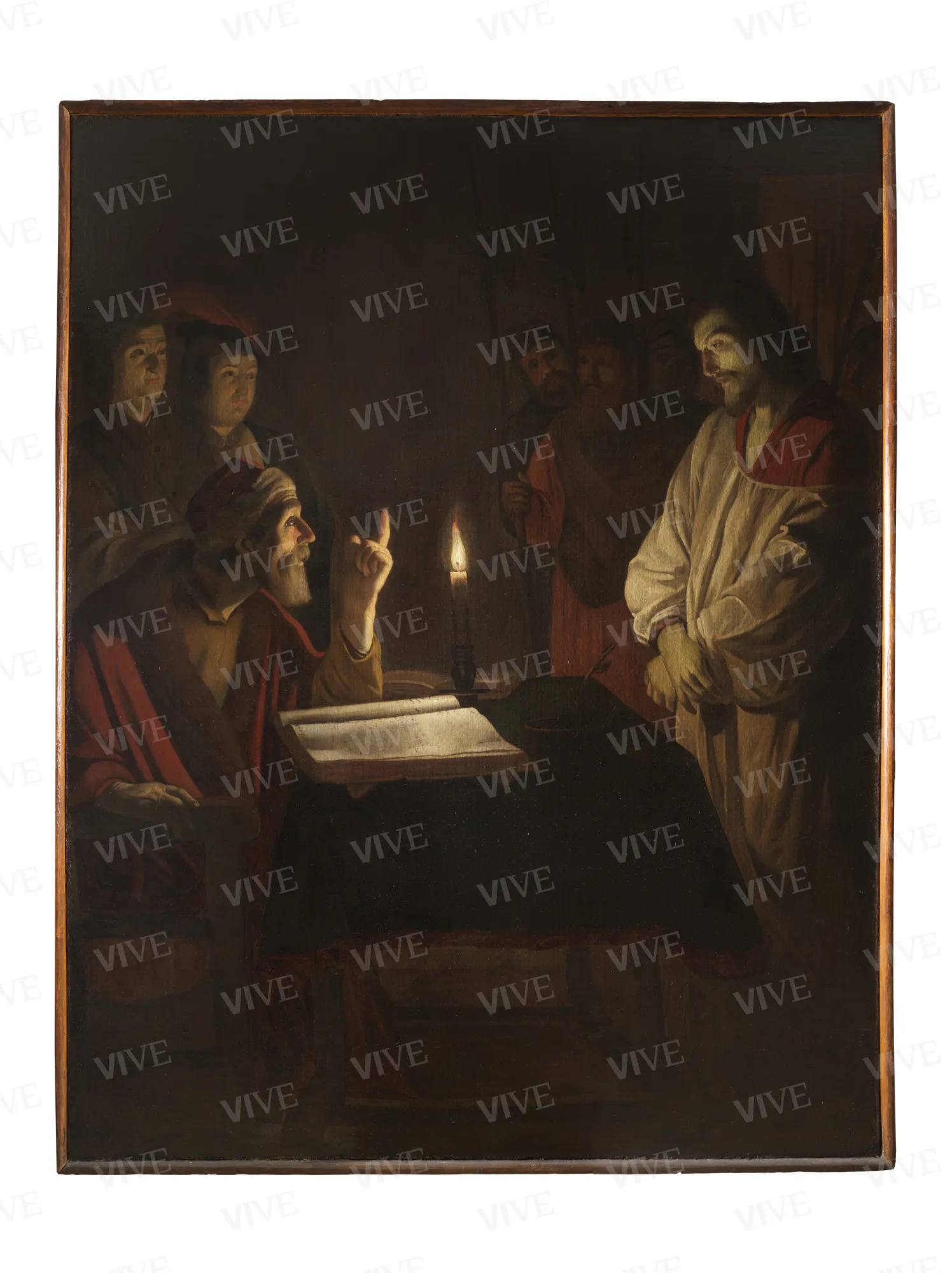
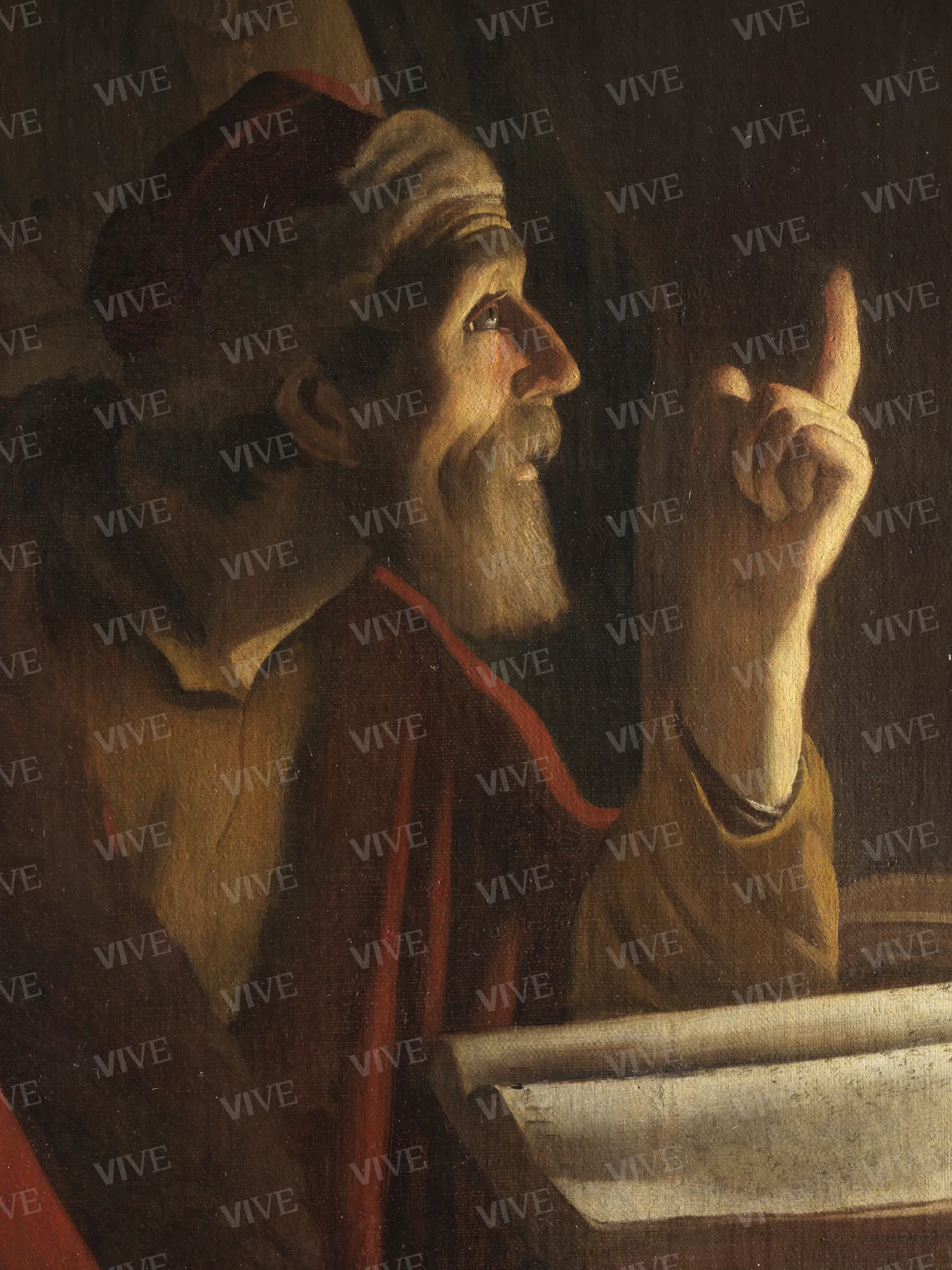
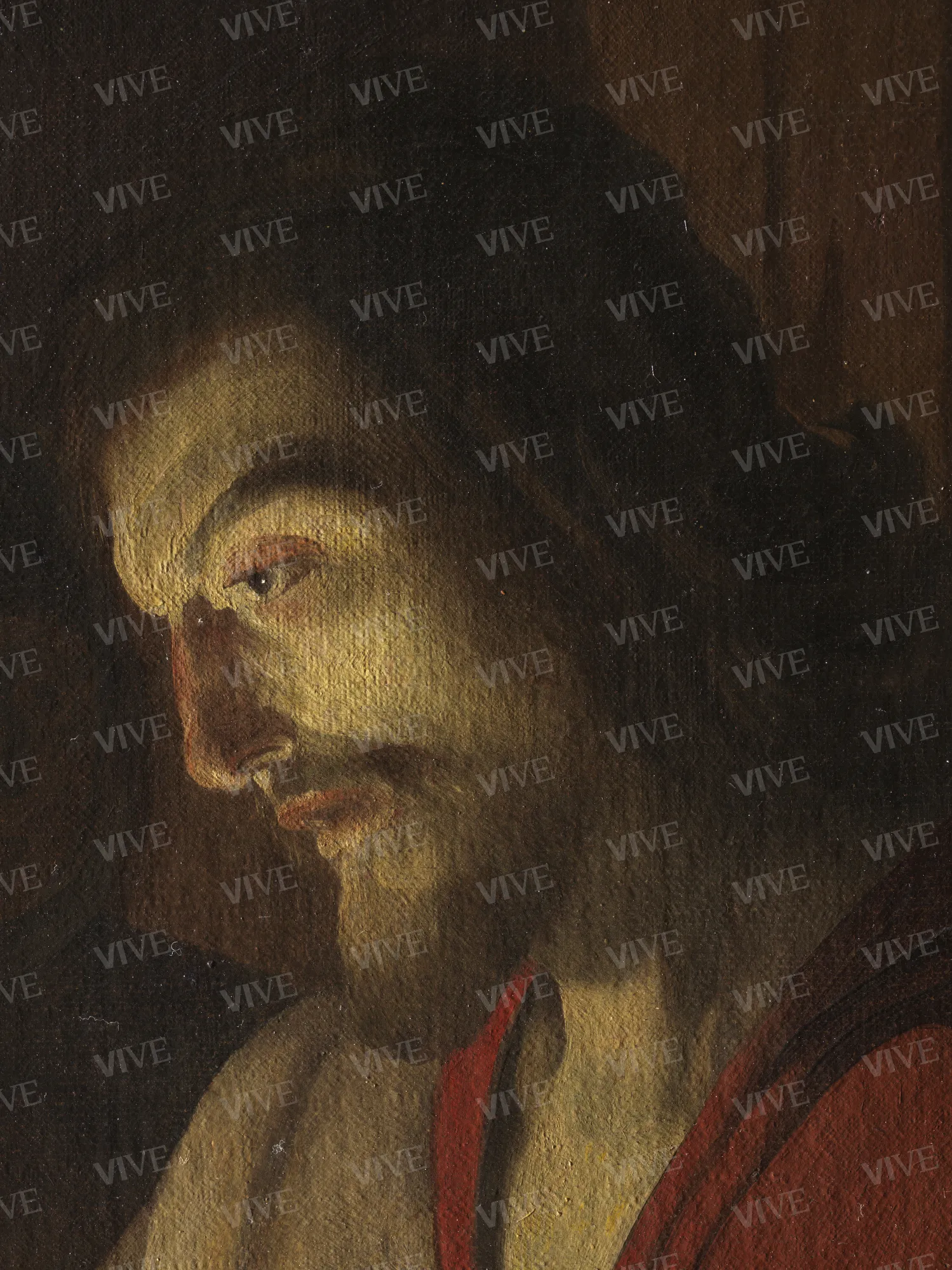
The painting illustrates the episode from the Passion where Christ, following his arrest, is presented before the high priest Caiaphas, who wants him condemned to death. The scene takes place at night, within an interior illuminated solely by candlelight, highlighting the figures of Christ, Caiaphas, and two scribes positioned behind them. This work is a reproduction of the renowned painting by Gerrit van Honthorst (Utrecht, 1592–1656), titled Christ before the High Priest, currently housed in the National Gallery, London (inv. NG3679), and originally executed during Honthorst’s Roman period in the 1610s.
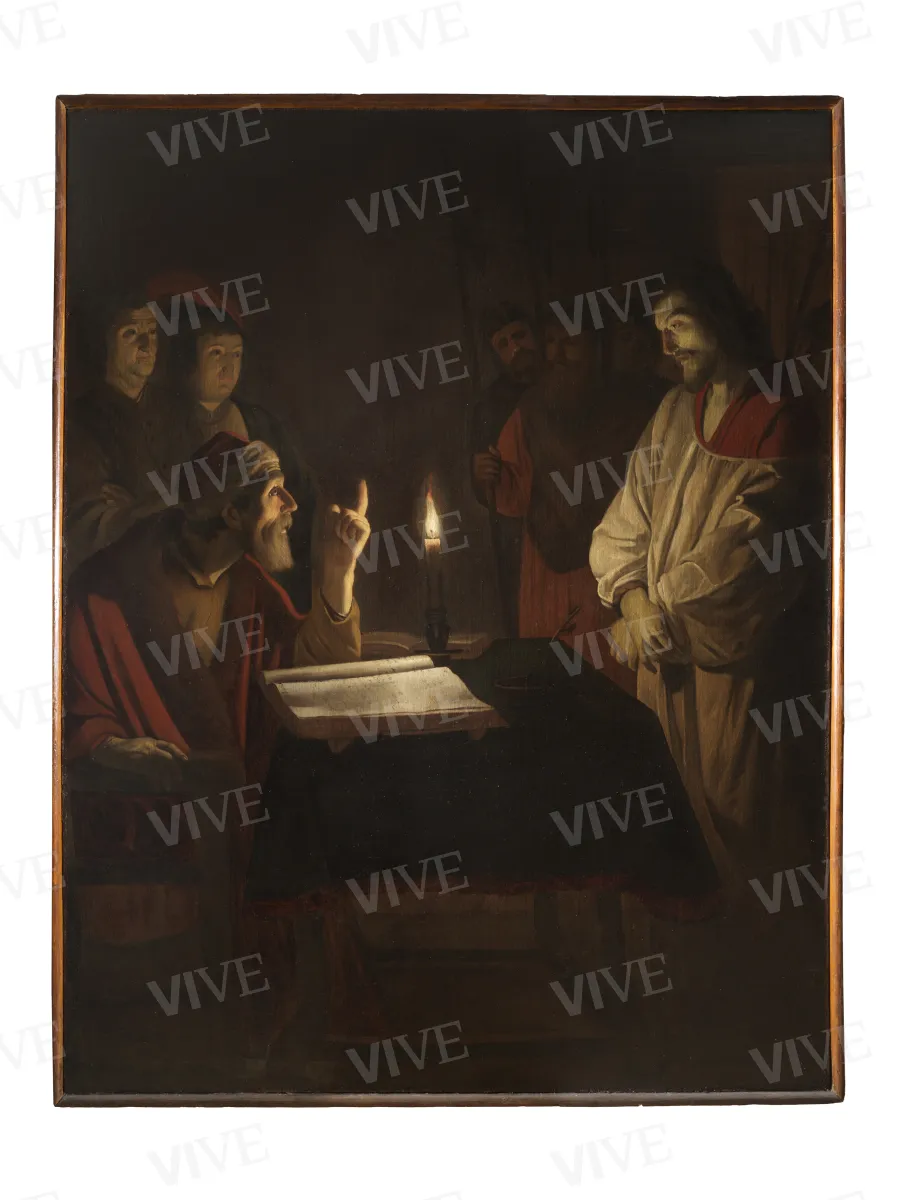
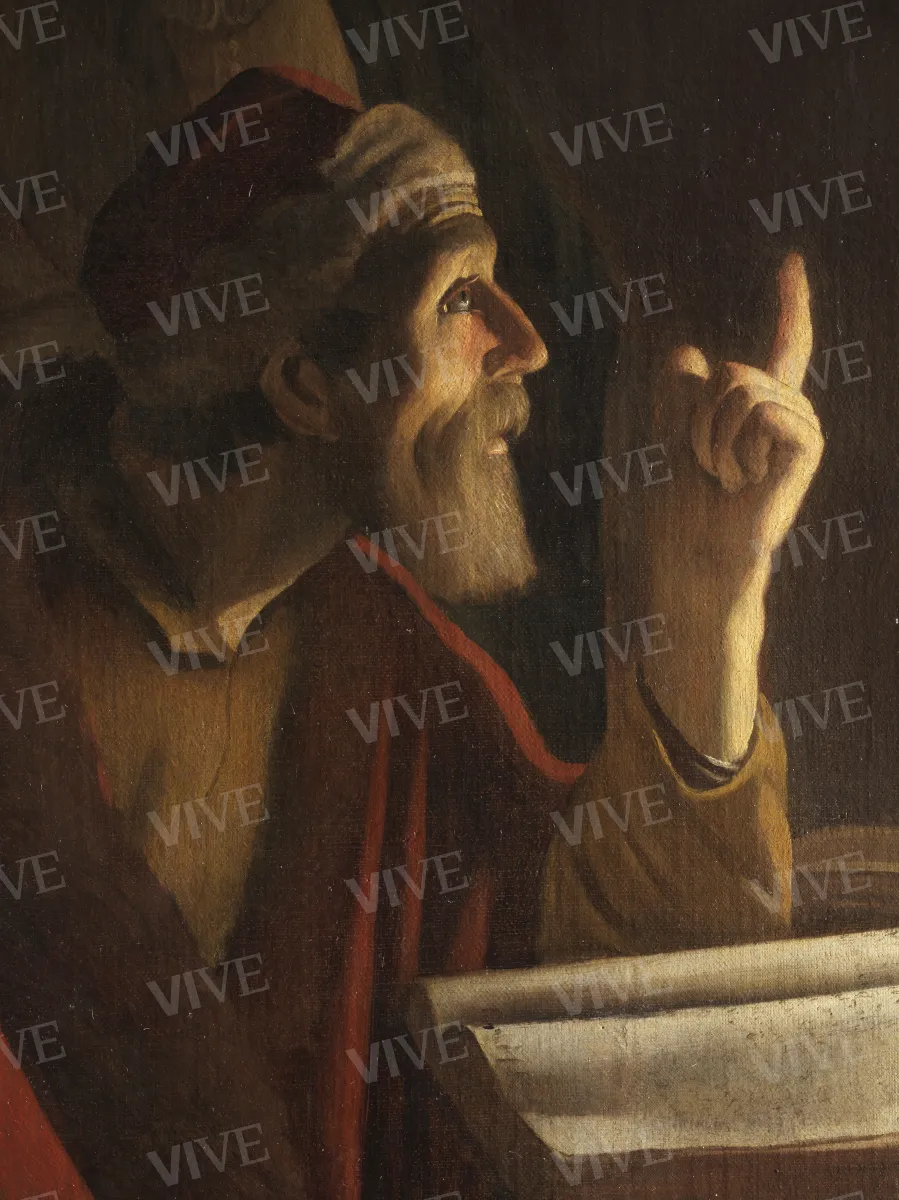
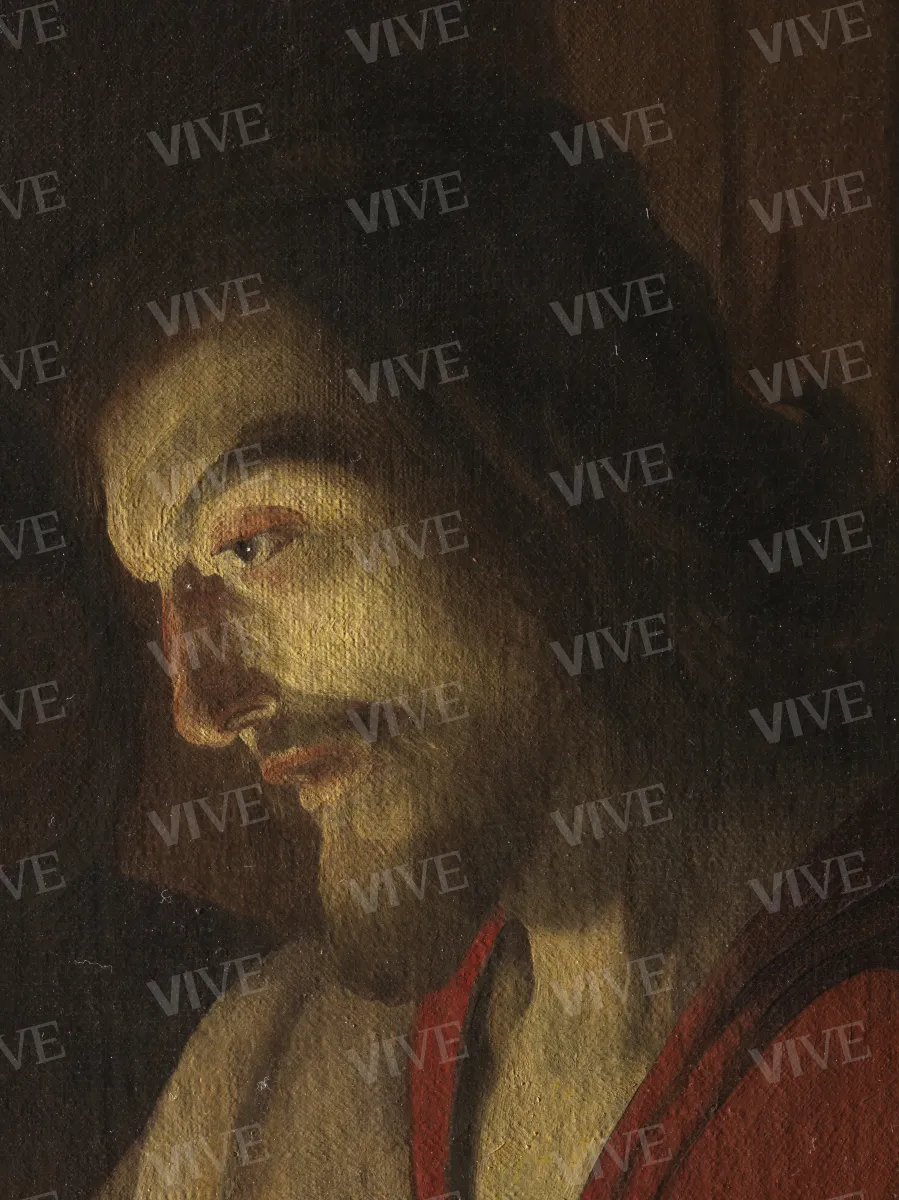
The painting illustrates the episode from the Passion where Christ, following his arrest, is presented before the high priest Caiaphas, who wants him condemned to death. The scene takes place at night, within an interior illuminated solely by candlelight, highlighting the figures of Christ, Caiaphas, and two scribes positioned behind them. This work is a reproduction of the renowned painting by Gerrit van Honthorst (Utrecht, 1592–1656), titled Christ before the High Priest, currently housed in the National Gallery, London (inv. NG3679), and originally executed during Honthorst’s Roman period in the 1610s.
The painting represents the episode from the Passion (Matthew 26:57; Mark 14:53–65; John 11:49) in which Christ, following his arrest, is presented before the high priest Caiaphas for judgment by the Sanhedrin in the presence of two witnesses. The scene is illuminated exclusively by candlelight situated on the table of the priest conducting the interrogation. This particular canvas is a reproduction of the renowned work completed during the artist's Roman period, spanning approximately 1610 to the spring of 1620 (Papi 2012, 366), by the Utrecht painter Gerrit van Honthorst (1592–1656)—also known as Gherardo delle Notti in Italian, due to his affinity for nocturnal compositions. The original painting (272 x 183 cm) is currently housed at the National Gallery in London (inv. NG3679). Commissioned by Marquis Vincenzo Giustiniani, the piece is dated between 1615 and 1617 (Papi 2000, 136–137; Judson, Ekkart 1999, 10; Brown 2001, 314, no. D.15). The London canvas serves as a compelling testament to the talents recognised in the Dutch painter by his patron and client, the Marquis Giustiniani (Megna 2003, 94–99). Giustiniani commended him for his capacity to “give the right light to the color of each part,” ensuring that “the eye remains satisfied with the union of light and dark without altering its own color” (Giustiniani 1981, 44). This particular skill, prevalent among Flemish painters, was distinguished by Giustiniani from the “true and proper light” characteristic of Caravaggio, whose works Honthorst had also studied during his time in Rome. Evidence of this is found in the earliest documented activity of the Dutch artist: a drawing signed and dated 1616 of Caravaggio’s Crucifixion of Saint Peter in the Cerasi chapel at Santa Maria del Popolo (Oslo, Nasjonalmuseet, inv. NG.K&H.B. 15597). Scholars attribute Honthorst’s exploration of artificial light in the Giustiniani painting either to his familiarity with the nocturnal compositions of Jacopo Bassano and Tintoretto gained in Venice (Müller Hofstede 1987, 14; Judson, Ekkart 1999, 10–11), or to his engagement with Luca Cambiaso’s painting of the same subject—using lume di notte, previously held in the Giustiniani collection and currently housed at the Accademia Linguistica di Belle Arti in Genoa (Papi 2000, 136). The reputation of Honthorst’s painting, as documented by Sandrart who observed it in Rome within the Giustiniani collection in 1628 (Sandrart 1675, II, 303), is evidenced by the substantial number of contemporary copies produced. Notably, at least two are publicly held: one formerly in the sacristy of the Romann basilica of Santa Croce in Gerusalemme (Hoogewerff 1924, 10; presently untraceable) and another in the sacristy of Sant’Andrea della Valle. Of the more than twenty known pictorial derivations identified by scholars, it remains possible that the example housed in the Museo di Palazzo Venezia—whose origin is uncertain—corresponds to one of the copies cited in the literature as having an unknown location (Judson, Ekkart 1999, 80–81). The version currently under review, which simplifies the prototype (or perhaps one of its finer replicas) and adopts a comparatively flattened pictorial technique, can be attributed to seventeenth-century craftsmanship.
Maria Giulia Cervelli
Maria Giulia Cervelli
Entry published on 16 October 2025
Compromised.
von Sandrart Joachim, L’Academia Todesca della Architectura, Scultura et Pittura, oder Teutsche Academie der edlen Bau-, Bild- und Mahlerey-Künste, 2 voll. (I, Erster Theil, in 3 libri; II, Zweyter Theil), Nürnberg, bey Johann-Philipp Miltenberger, 1675;
Hoogewerff Godefridus J., Gherardo delle Notti, 28 riproduzioni con testo e catalogo, Roma 1924;
Giustiniani Vincenzo, Discorsi sulle arti e sui mestieri, Banti Anna (a cura di), Firenze 1981;
Müller Hofstede Justus, Artificial Light in Honthorst and Terbrugghen, in Rüdiger Klessmann (a cura di), Hendrick ter Brugghen und die Nachfolger Caravaggios in Holland, Braunschweig 1987, pp. 13-44;
Judson J. Richard, Ekkart Rudolf E.O., Gerrit van Honthorst, 1592-1656, Doornspijk 1999;
Papi Gianni, Gherardo delle notti. Gerrit Honthorst in Italia, Soncino 2000;
Brown, in Danesi Squarzina Silvia (a cura di), Caravaggio e i Giustiniani. Toccar con mano una collezione del Seicento, catalogo della mostra (Roma, Palazzo Giustiniani, 26 gennaio-15 maggio 2001; Berlino, Altes Museum, 15 giugno-9 settembre 2001), Milano 2001;
Megna Tommaso, Gherardo delle Notti a Roma: le commissioni pubbliche, il "patronage" Giustiniani e nuovi elementi documentari, in Cappelletti Francesca (a cura di), Decorazione e collezionismo a Roma nel Seicento. Vicende di artisti, committenti, mercanti, Roma 2003, pp. 87-100;
Papi Gianni, Fiamminghi e olandesi a Roma, in Vodret Rossella (a cura di), Roma al tempo di Caravaggio, catalogo della mostra (Roma, Museo Nazionale di Palazzo Venezia, 16 novembre 2011-5 febbraio 2012), 2 voll., Milano 2012, I, pp. 364-379.