Vittoriano


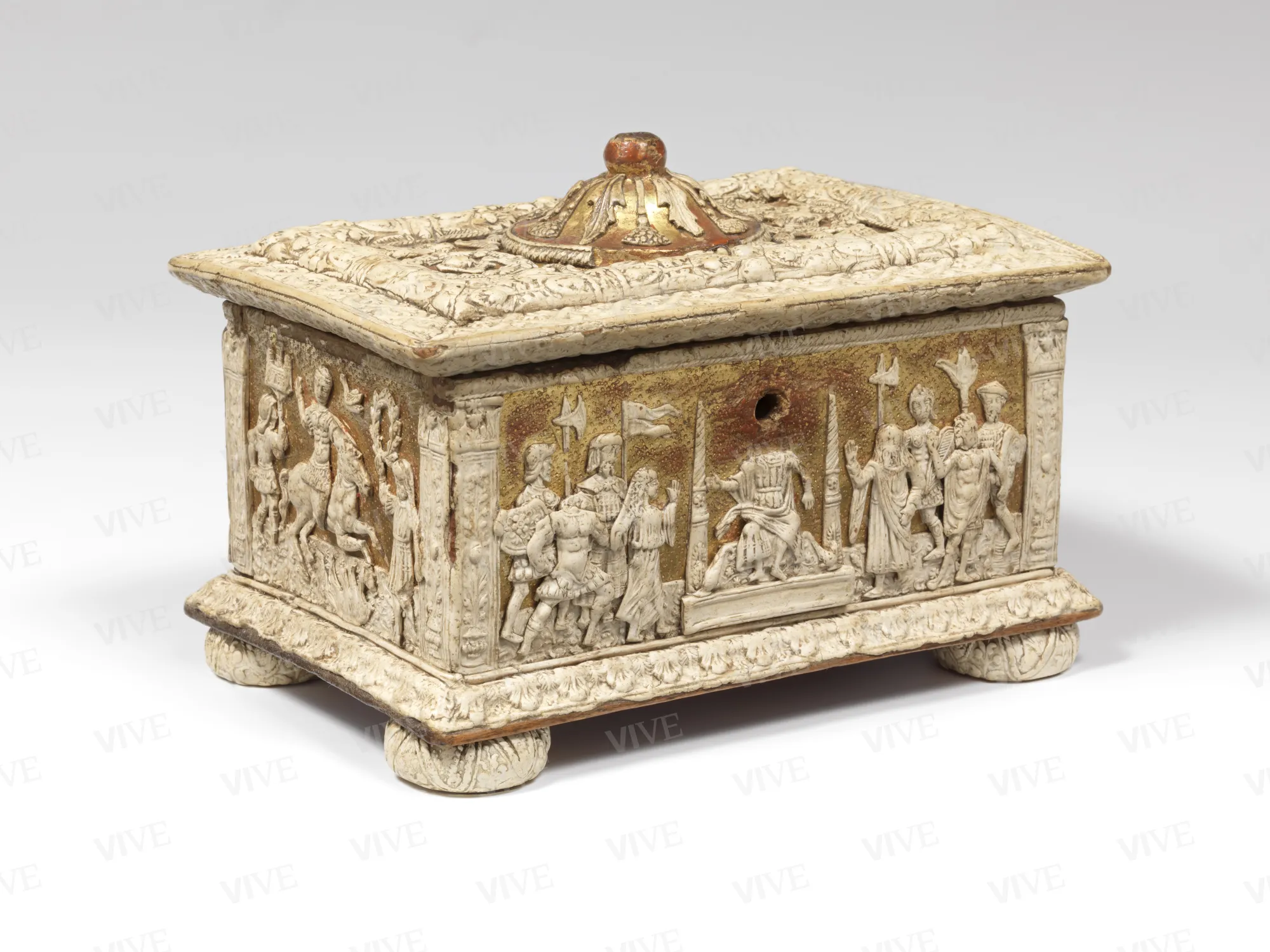
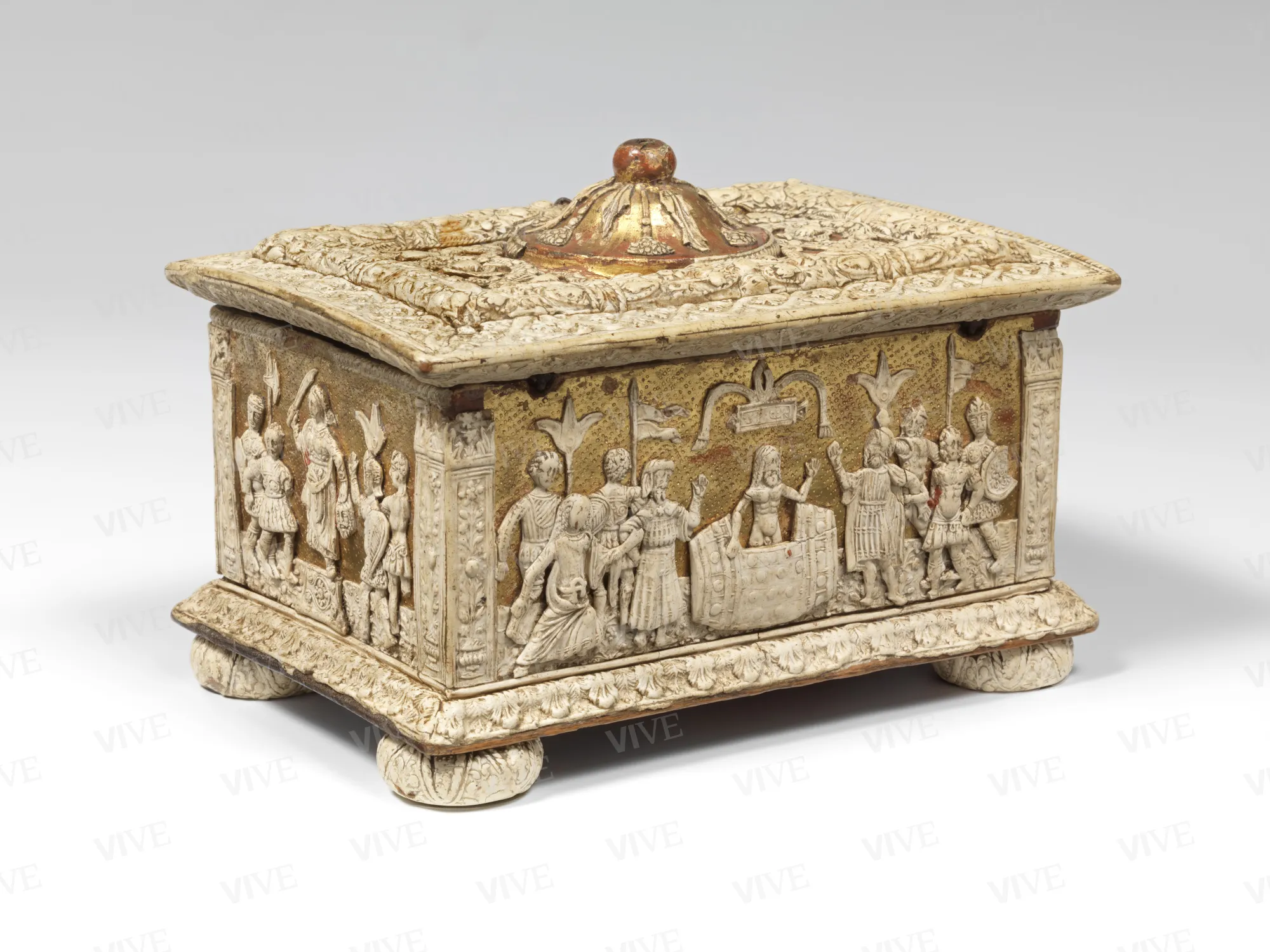
This casket, produced by a workshop known as “dei temi morali e amorosi” (of moral and amorous themes) due to its recurring decorative motifs, originates from northeastern Italy and dates back to the early sixteenth century. It is adorned with reliefs in pastiglia, depicting scenes from Roman history, which served as instructive examples for the private client who commissioned this valuable object.
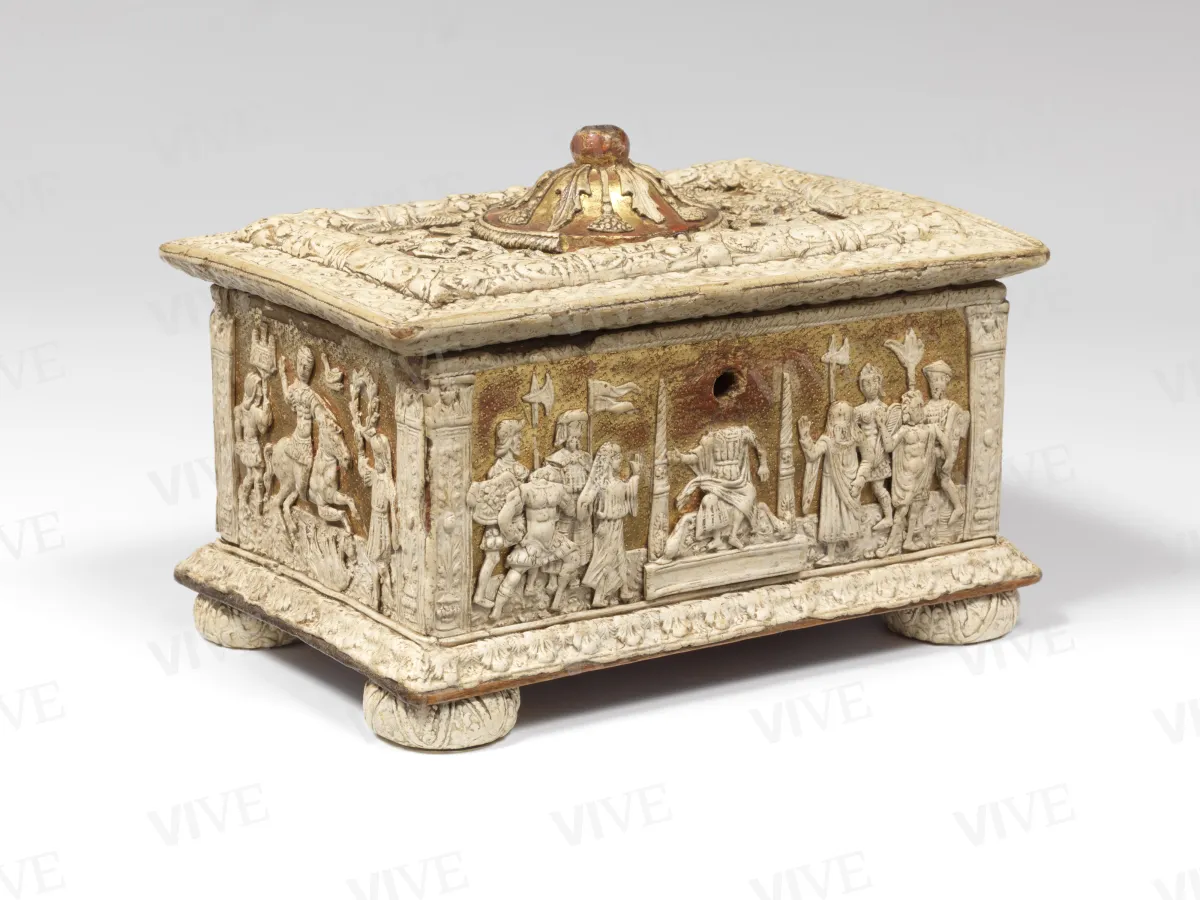
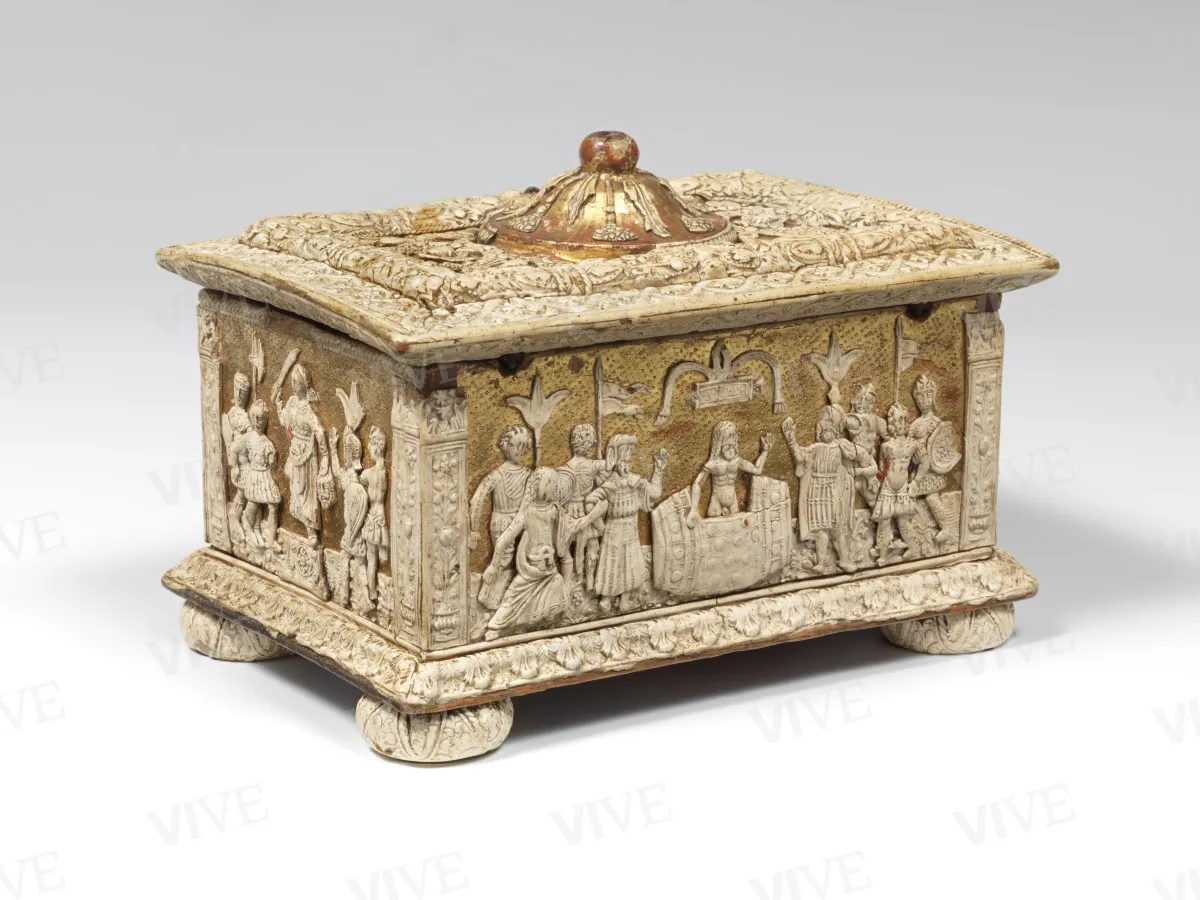
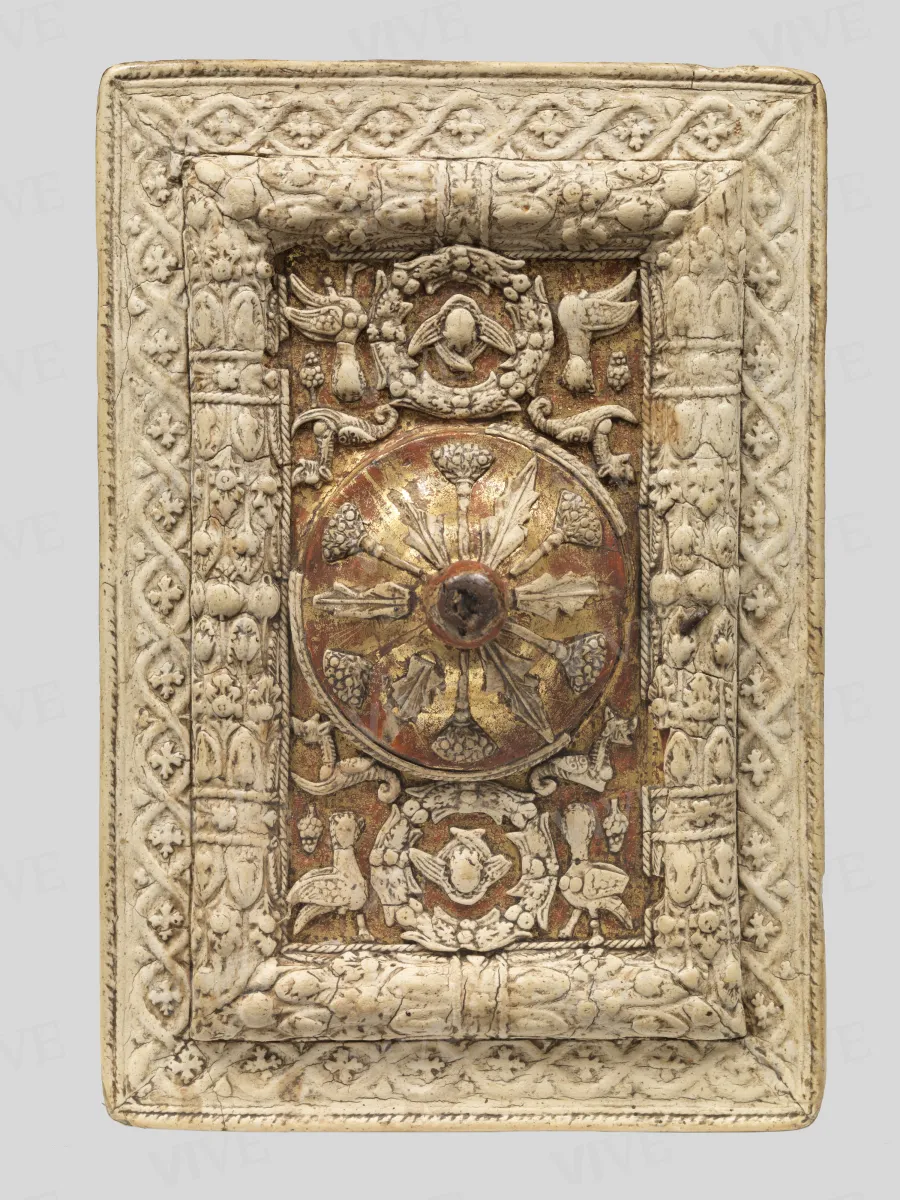
This casket, produced by a workshop known as “dei temi morali e amorosi” (of moral and amorous themes) due to its recurring decorative motifs, originates from northeastern Italy and dates back to the early sixteenth century. It is adorned with reliefs in pastiglia, depicting scenes from Roman history, which served as instructive examples for the private client who commissioned this valuable object.
The casket, which features a hinged lid with lock, has a rectangular base similar to items 5202 and 7016. These items are all made by the same manufacturer but have different origins. This particular example is from the Wurts Collection and was received through the bequest of Henriette Tower Wurts in 1933, who was the wife of US diplomat George Wurts.
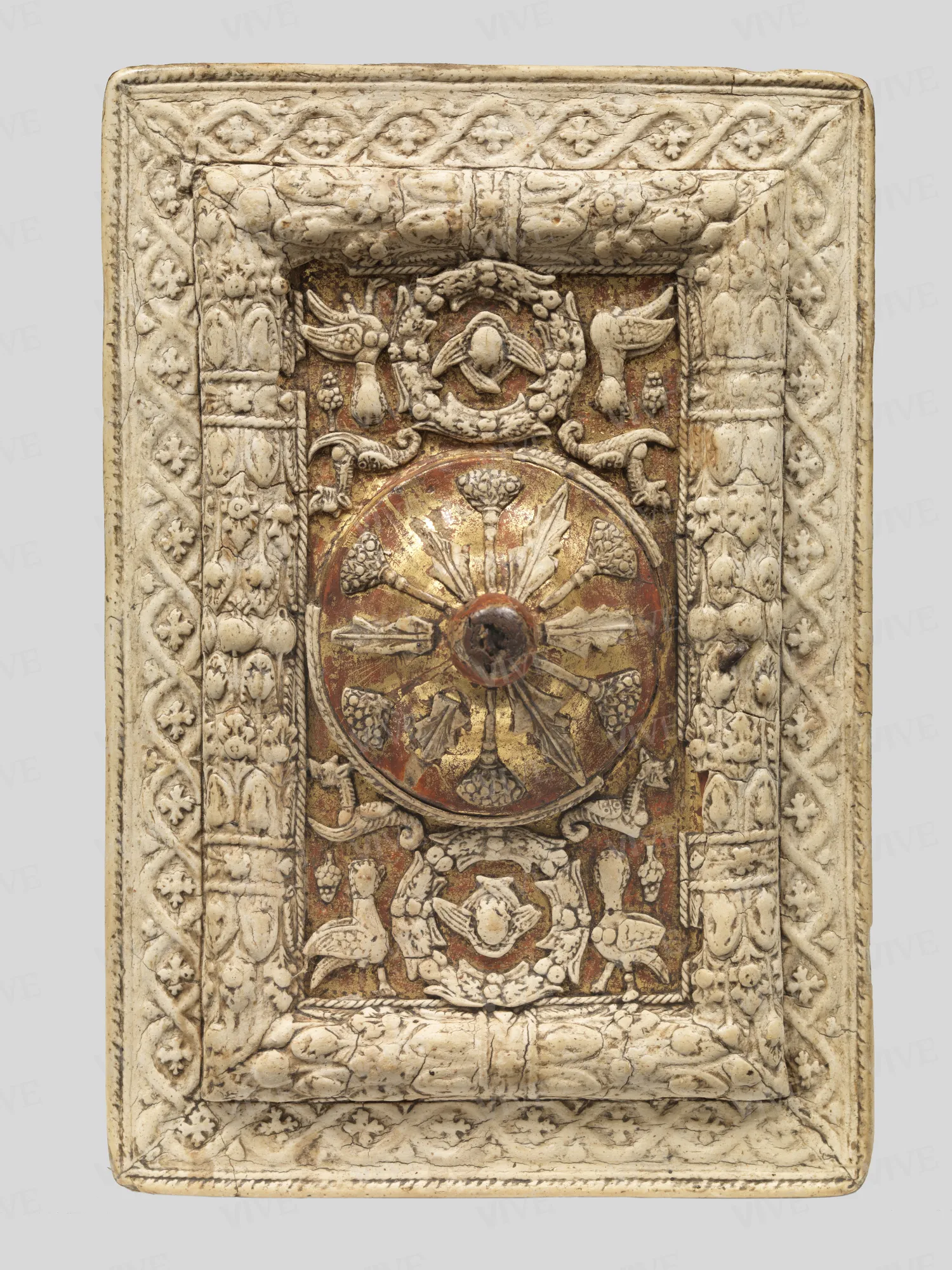
The work is constructed from gilded wood, featuring burnishing and punching with a wheel punch. It is covered with relief decorations in pastiglia, including the four onion-shaped corner feet. The decorations consist of plant motifs with leaves and palmettes. Each side displays an architectural frame formed by corner pillars with shafts adorned with candelabra and capitals, which support a continuous architrave. Within these frames are depictions of episodes from Roman history and a biblical story: Claudius and Virginia (front); Judith with the head of Holofernes (left side); Marcus Curtius throwing himself into the abyss (right side); the torture of Attilius Regulus in the barrel (back). These subjects likely aligned with the preferences of the private client for whom the artifact was made, and who used it to store small everyday objects. The interpretation of the front scene is not definitive: one suggestion is that it illustrates a scene from the History of Virginia (Hermanin 1948), which we feel is acceptable. Other proposals include episodes from Trajan and the Widow (De Winter 1984) and Scipio’s Continence (Pommeranz 1995; Bortolotto 2006, 9). The lid, featuring a flattened hemisphere with a knob at the top, has two concentric garland frames and additional phytomorphic motifs: in the spaces on either side, there are cherubs within garlands, accompanied by birds and flying dragons.
Initially attributed to the Venetian school along with the other pieces in the series mentioned (Hermanin 1948, 382), the piece in question was later assigned to a workshop referred to as the Bottega dei temi morali e amorosi (Workshop of Moral and Amorous Themes). This name was created to identify a workshop known for producing caskets decorated primarily with edifying motifs and love scenes, depicted in “large and readable forms” (De Winter 1984, 36, cat. 106). The entire series, identified by previous critics, was attributed to this workshop, which is considered Venetian due to its recurrent use of materials such as alder wood, with the exception of inv. 10171, which has a different attribution history (see corresponding entry). Following extensive research that attempted, albeit unsuccessfully, to attribute this production to specific centres such as Venice, Ferrara, and Padua, it is now generally accepted that it originates from northeastern Italy. This conclusion is supported by documentary evidence confirming the significant local circulation of similar products (Ceccarelli 2009, 371).
Lorenzo Mascheretti
Entry published on 12 June 2025
Good.
On the bottom, handwritten, on a label: “1040”;
on the bottom, handwritten, directly on the wood: “5730” and “41030.”
Rome, George Washington Wurts and Henrietta Tower collection;
Rome, Museo Nazionale di Palazzo Venezia, donation of Henrietta Tower Wurts, 1933.
Hermanin Federico, Il Palazzo di Venezia, Roma 1948, p. 382;
De Winter Patrick M., A Little-known Creation of Renaissance Decorative Arts: The White Lead Pastiglia Box, in «Saggi e Memorie di Storia dell’Arte», 14, 1984, pp. 7-42;
Pommeranz Johannes, Pastigliakästchen. ein Beitrag zur Kunst- und Kulturgeschichte der italienischen Renaissance, Münster 1995, pp. 189-190, cat. 232;
Bertolotto Claudio (a cura di), Un cofanetto del Rinascimento nel Castello di Adelaide di Susa, catalogo della mostra (Susa, Castello della contessa Adelaide, 16 settembre-29 ottobre 2006), Rivoli 2006;
Ceccarelli Tiziana, I cofanetti in pastiglia istoriati del Museo Nazionale del Palazzo di Venezia in Roma. Nuove ipotesi sul “Cofanetto di Tivoli”, in Venturi Gianni, Cappelletti Francesca (a cura di), Gli dei a corte. Letteratura e immagini nella Ferrara estense, Firenze 2009, pp. 361-391.