Vittoriano


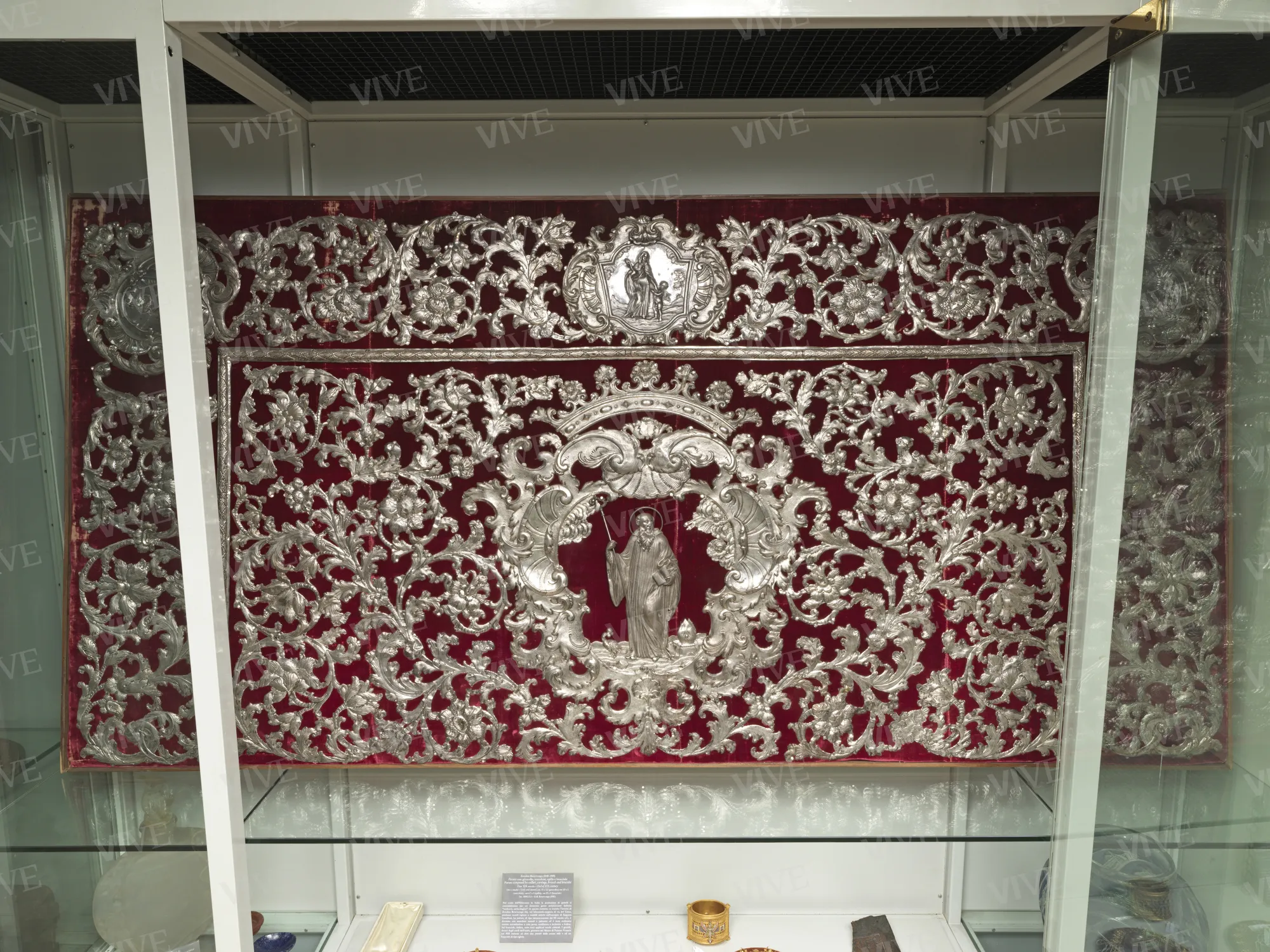
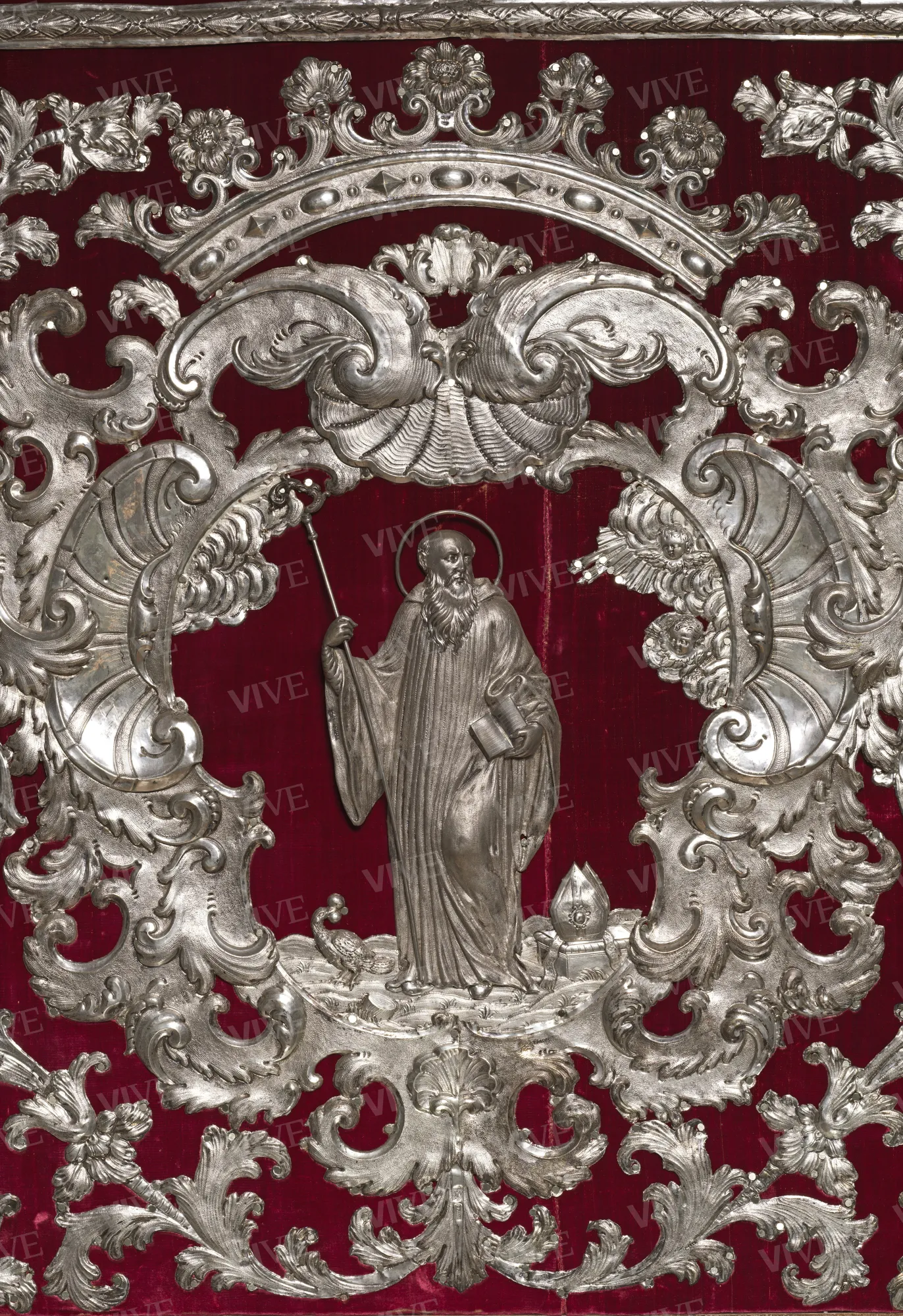
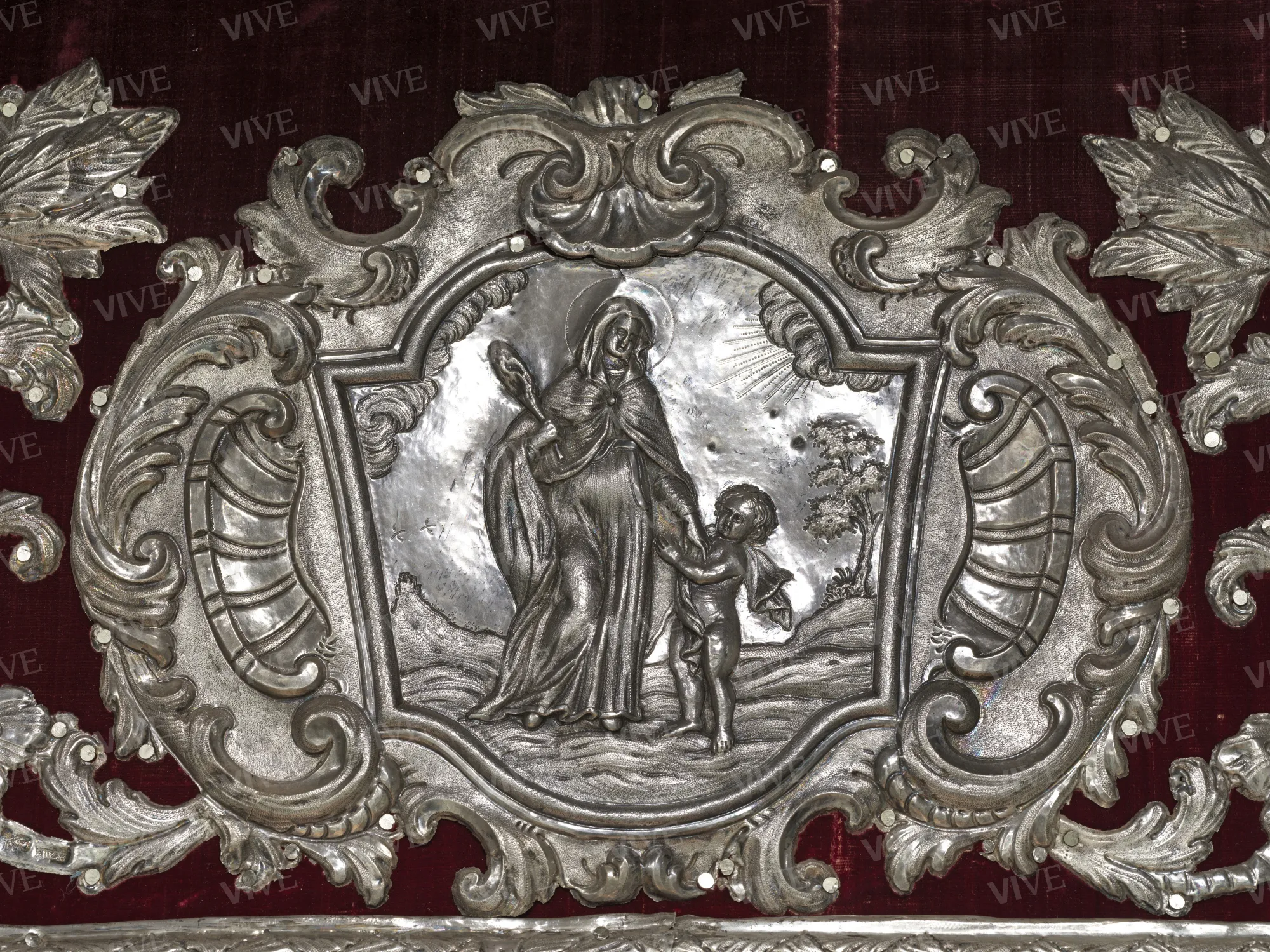
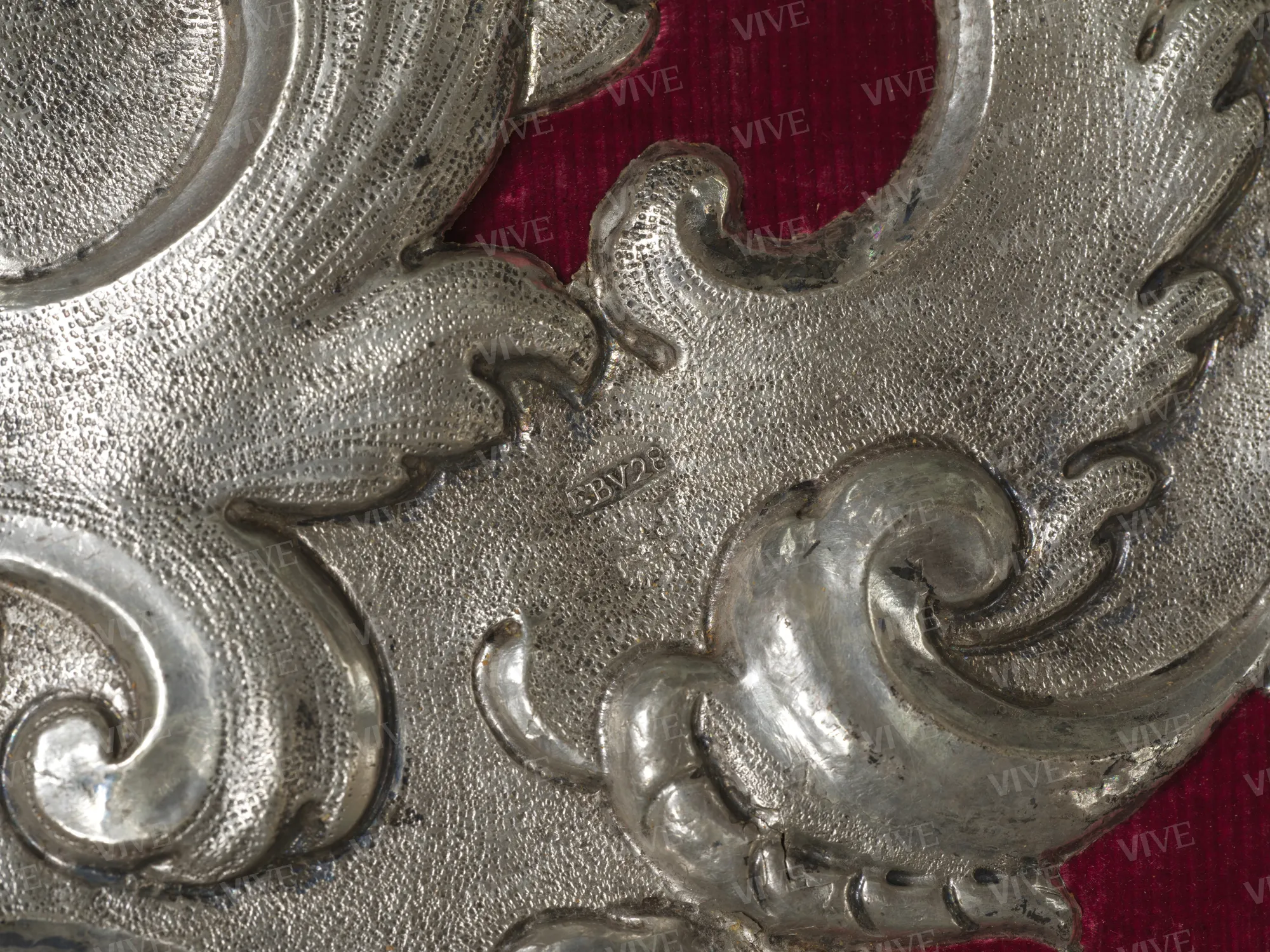
The rectangular altar frontal, featuring a flat panel draped in crimson velvet, is adorned with intricate floral scrolls rendered in silver foil. Centrally positioned on the front within a shaped reserve accented by volutes is an image of Saint Benedict the Abbot standing, accompanied by a raven and a miter at his feet. The upper frame displays, at its center, the Madonna del Soccorso, flanked by two corner panels that present the Gallegra coat of arms and the dedicatory inscription. This piece exemplifies early eighteenth-century Palermo goldsmith craftsmanship.
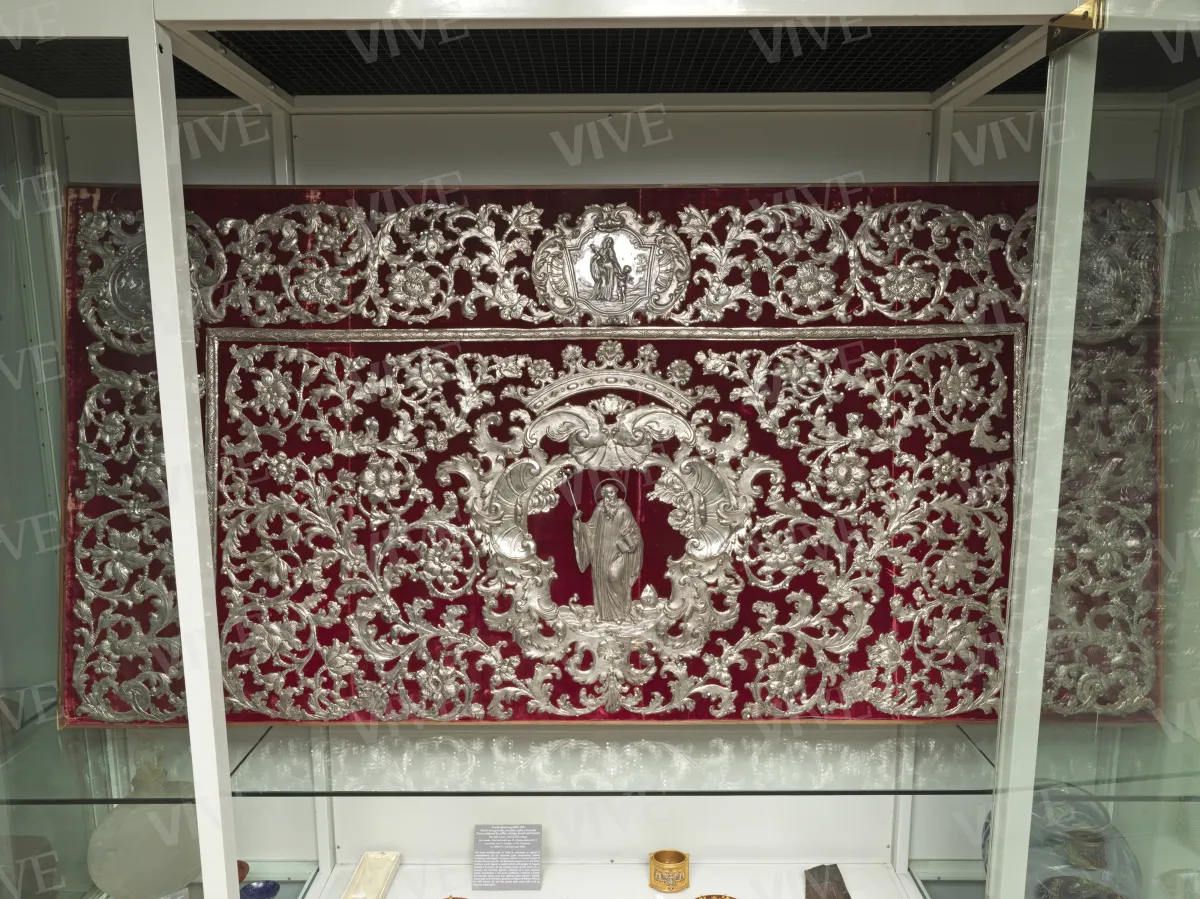
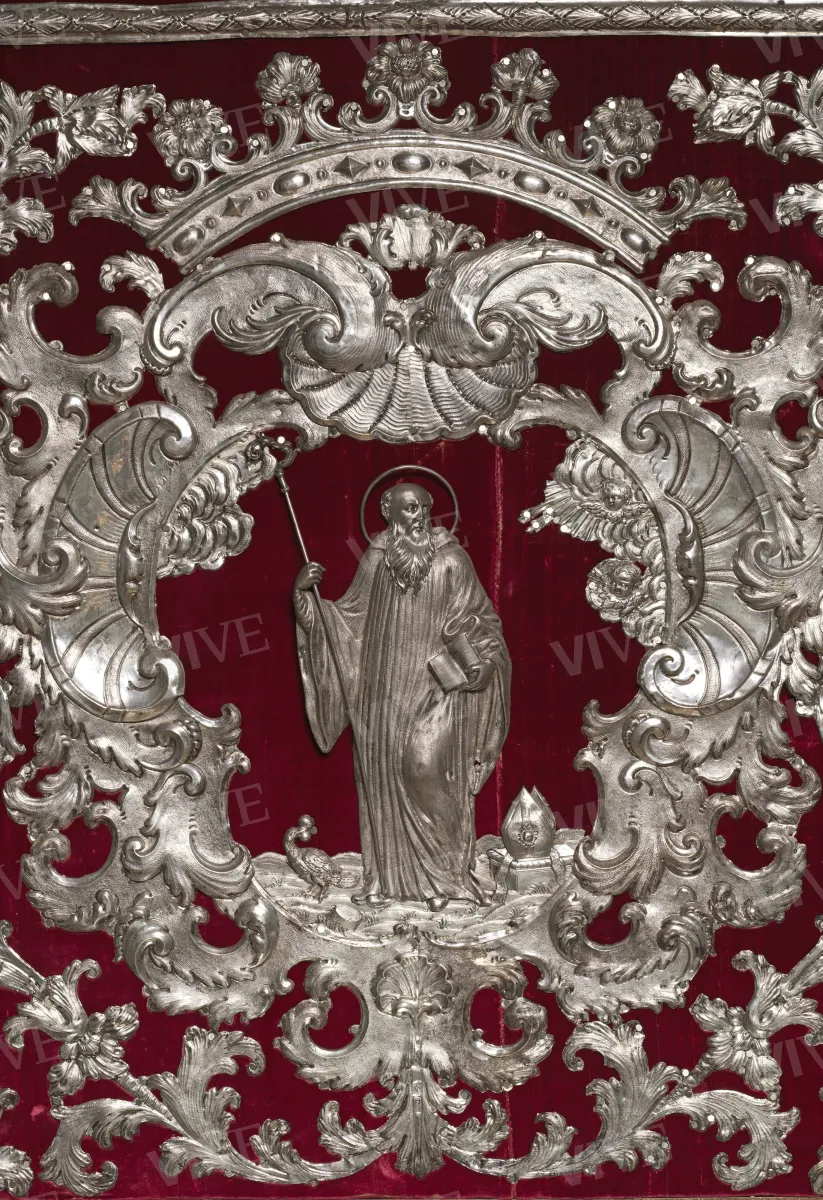
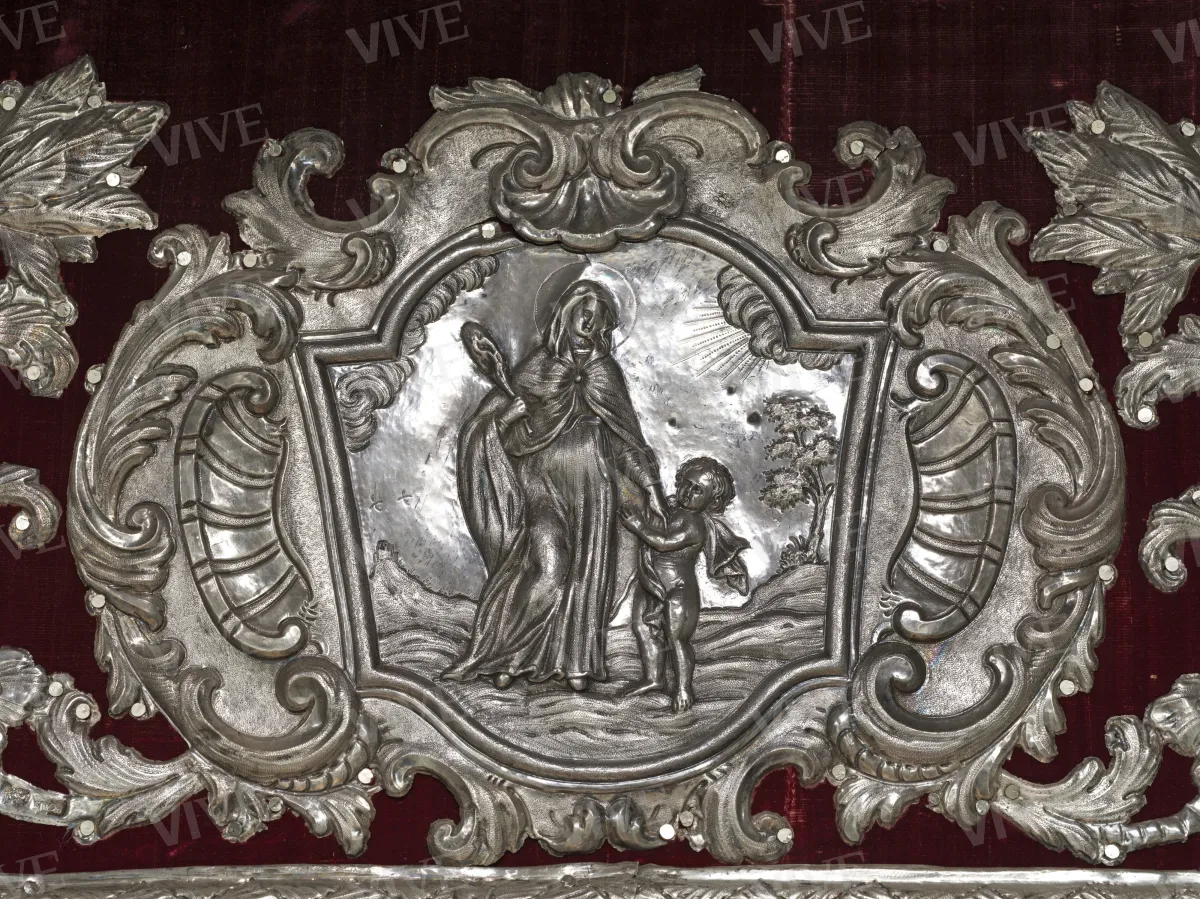
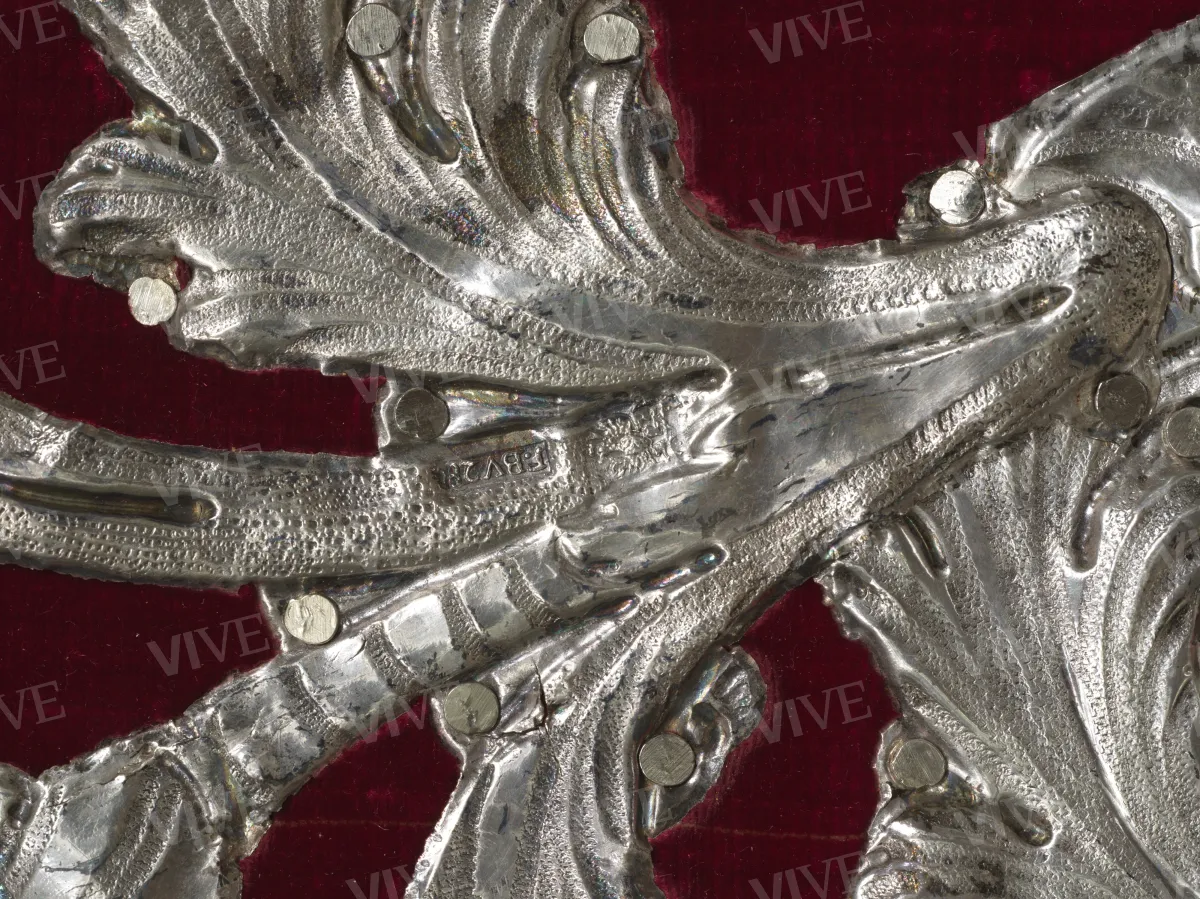
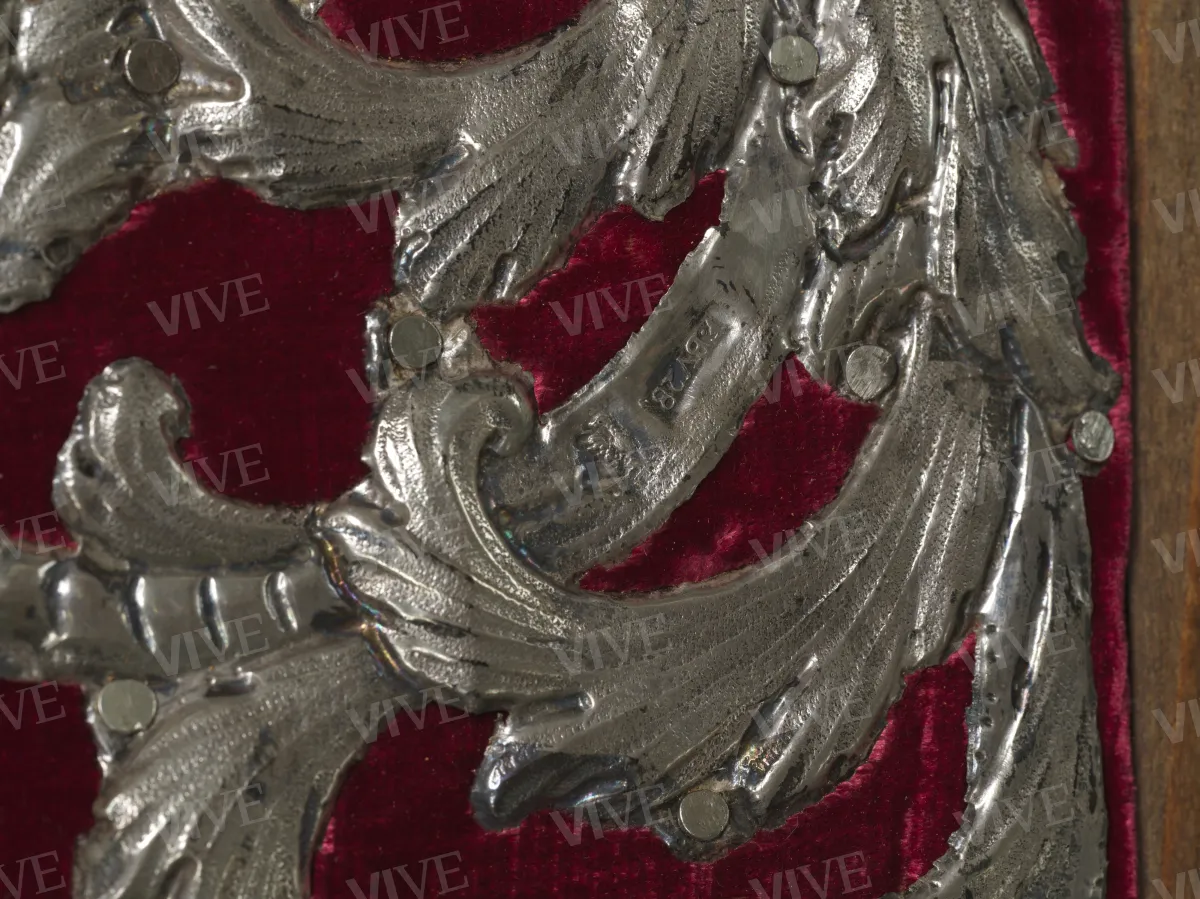
The rectangular altar frontal, featuring a flat panel draped in crimson velvet, is adorned with intricate floral scrolls rendered in silver foil. Centrally positioned on the front within a shaped reserve accented by volutes is an image of Saint Benedict the Abbot standing, accompanied by a raven and a miter at his feet. The upper frame displays, at its center, the Madonna del Soccorso, flanked by two corner panels that present the Gallegra coat of arms and the dedicatory inscription. This piece exemplifies early eighteenth-century Palermo goldsmith craftsmanship.
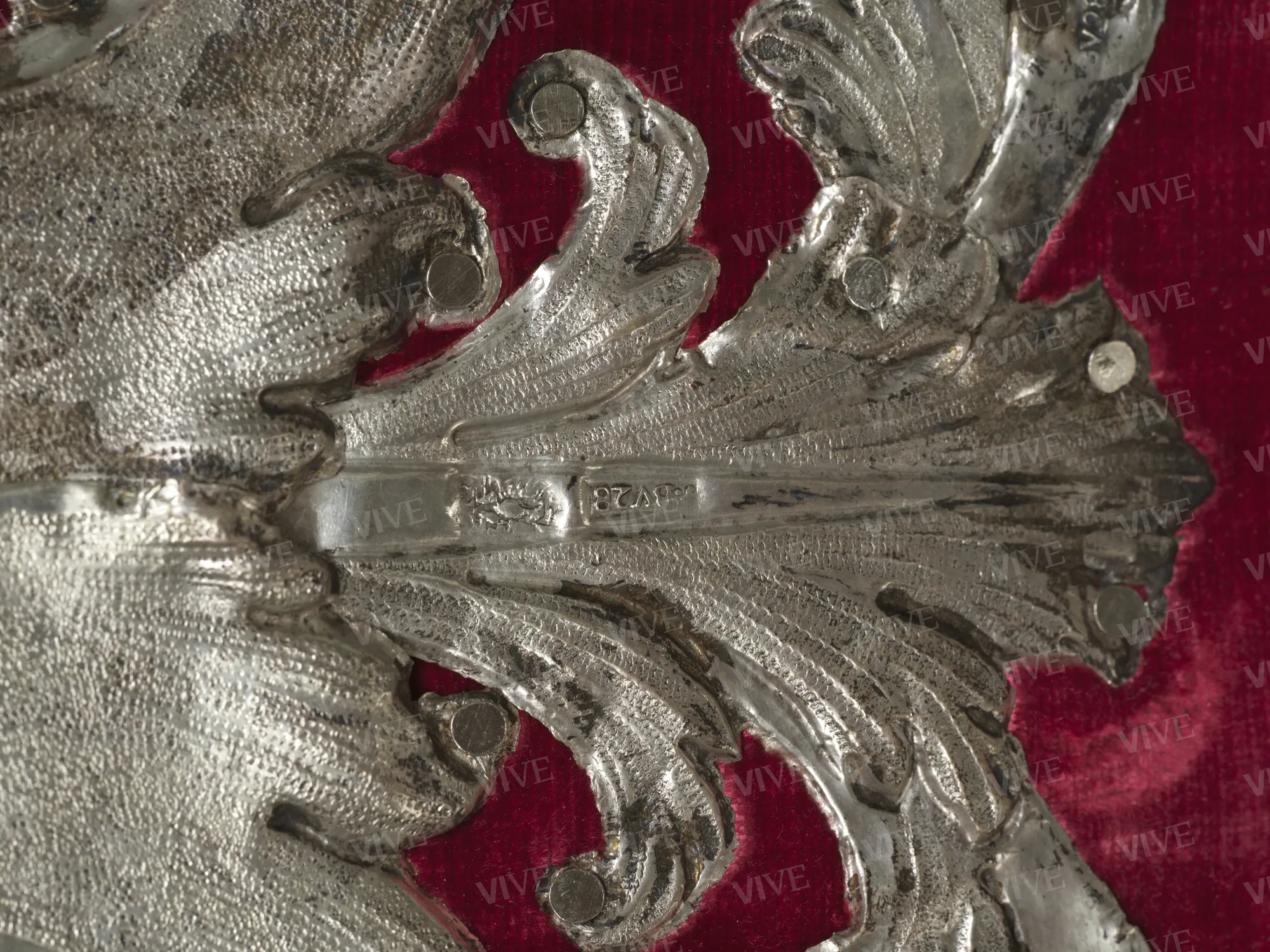
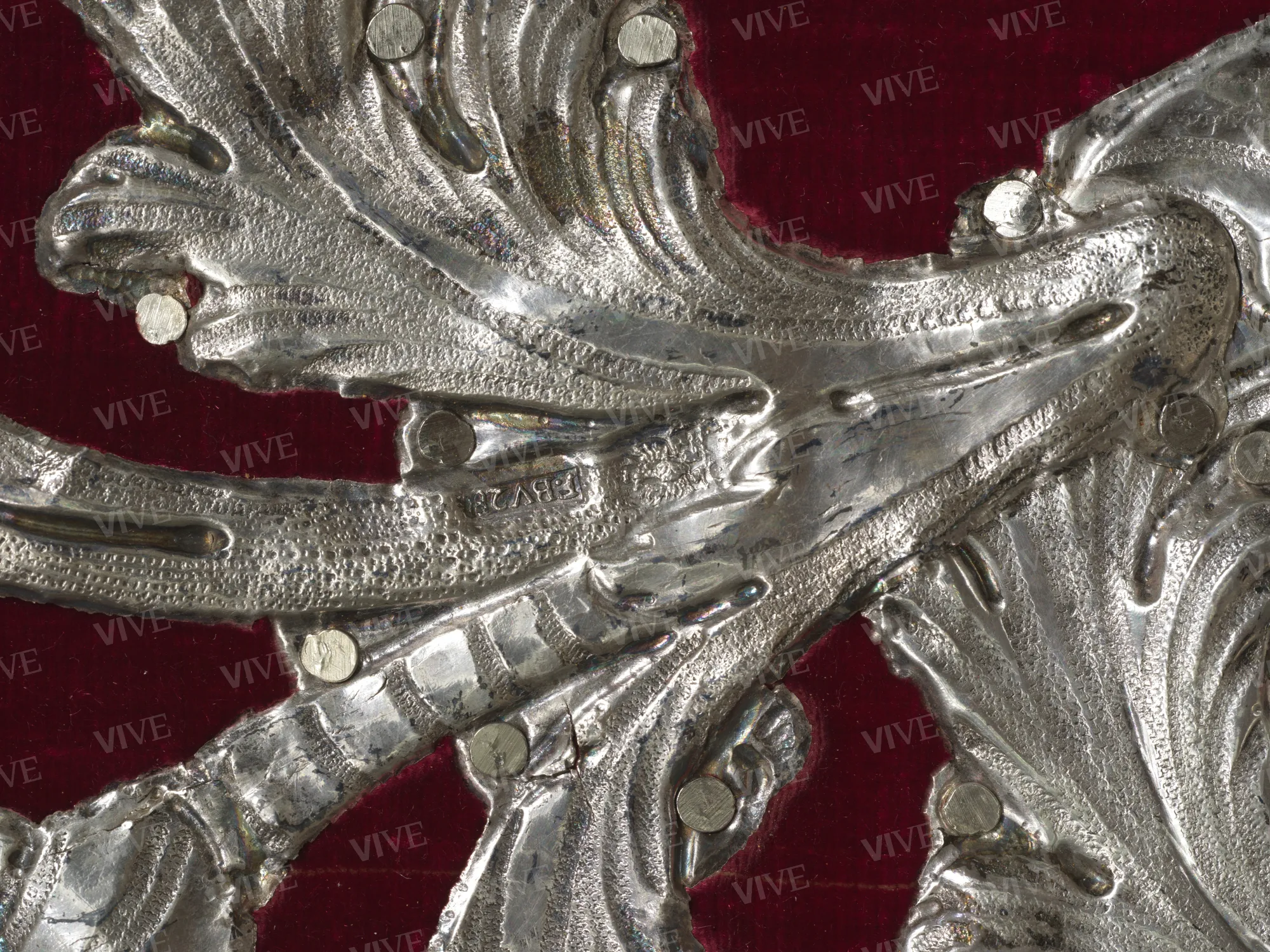
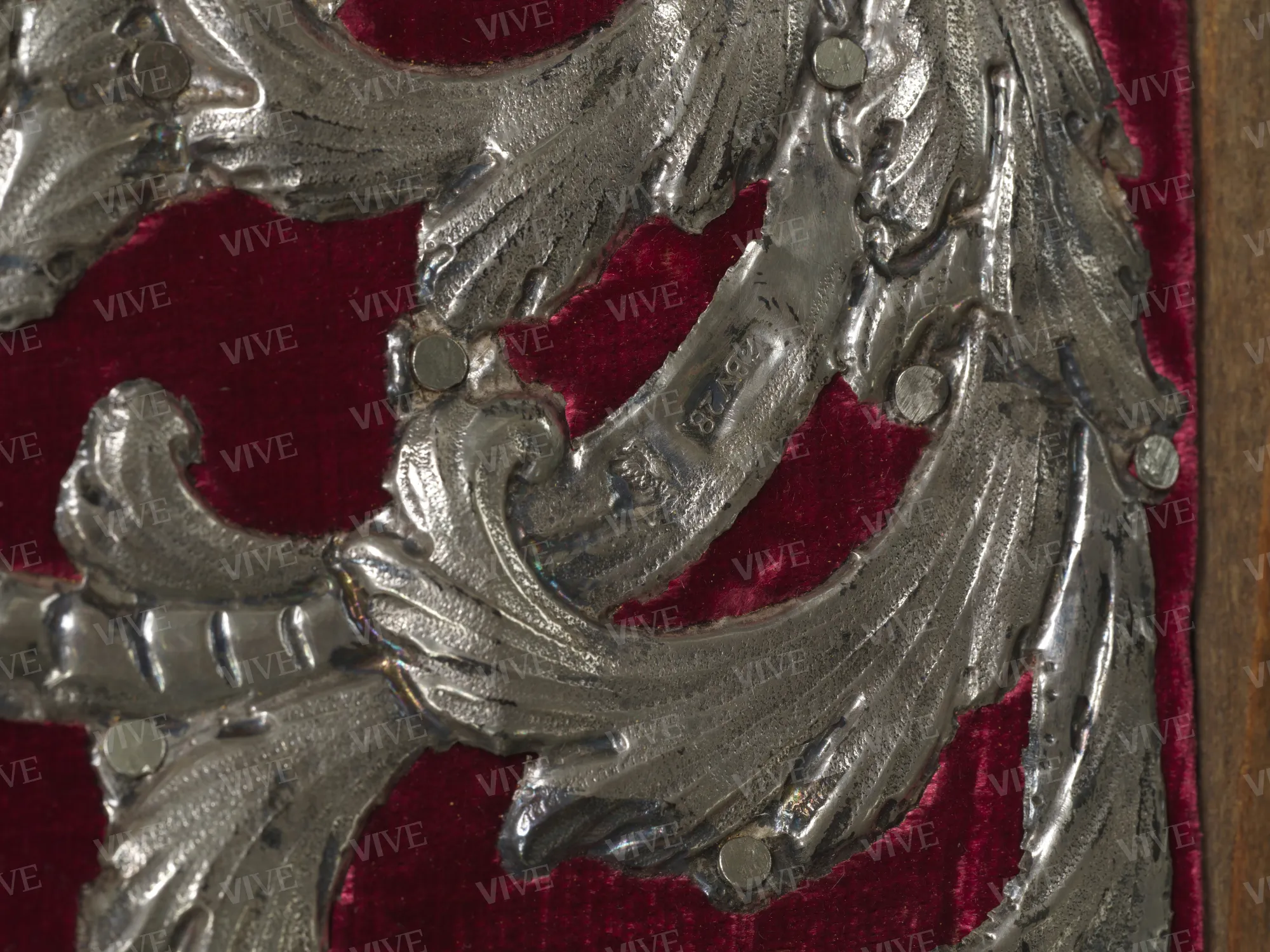
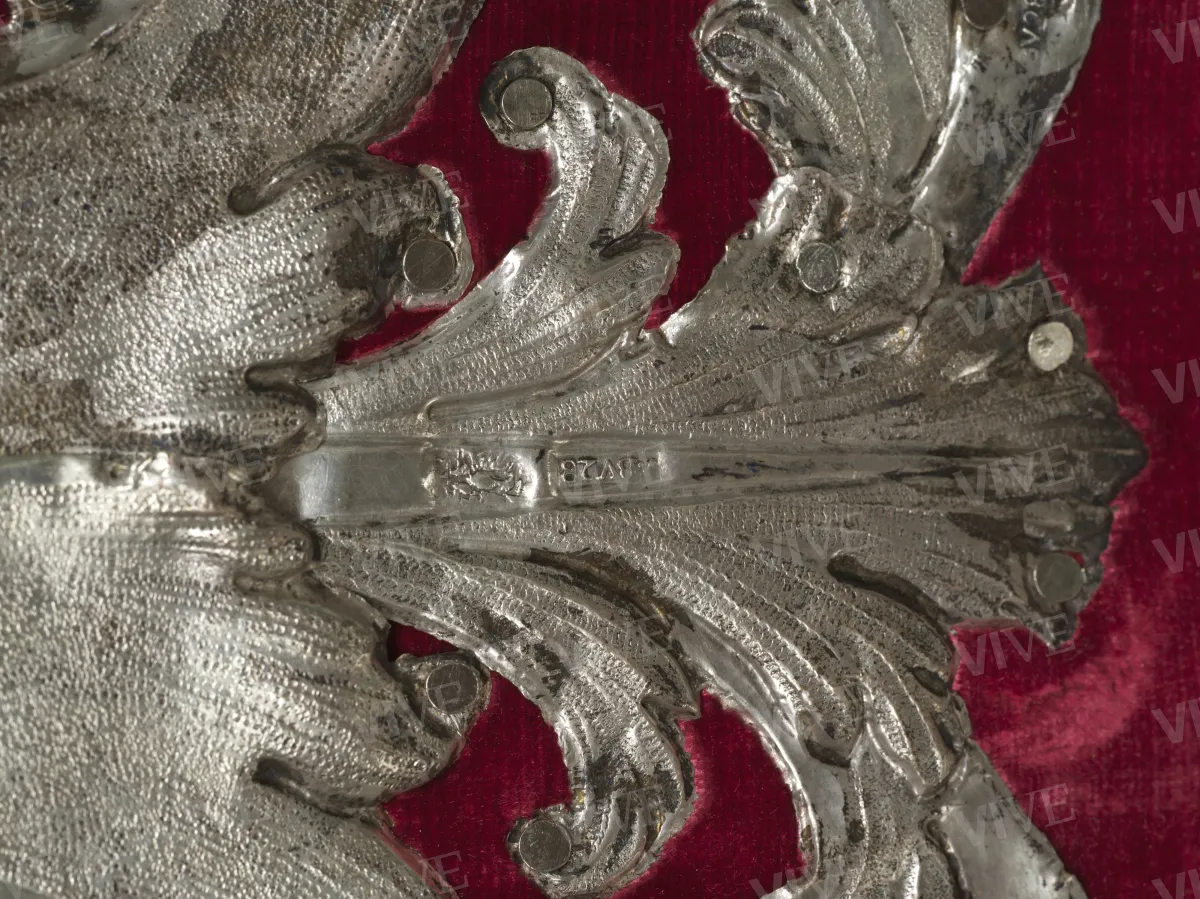
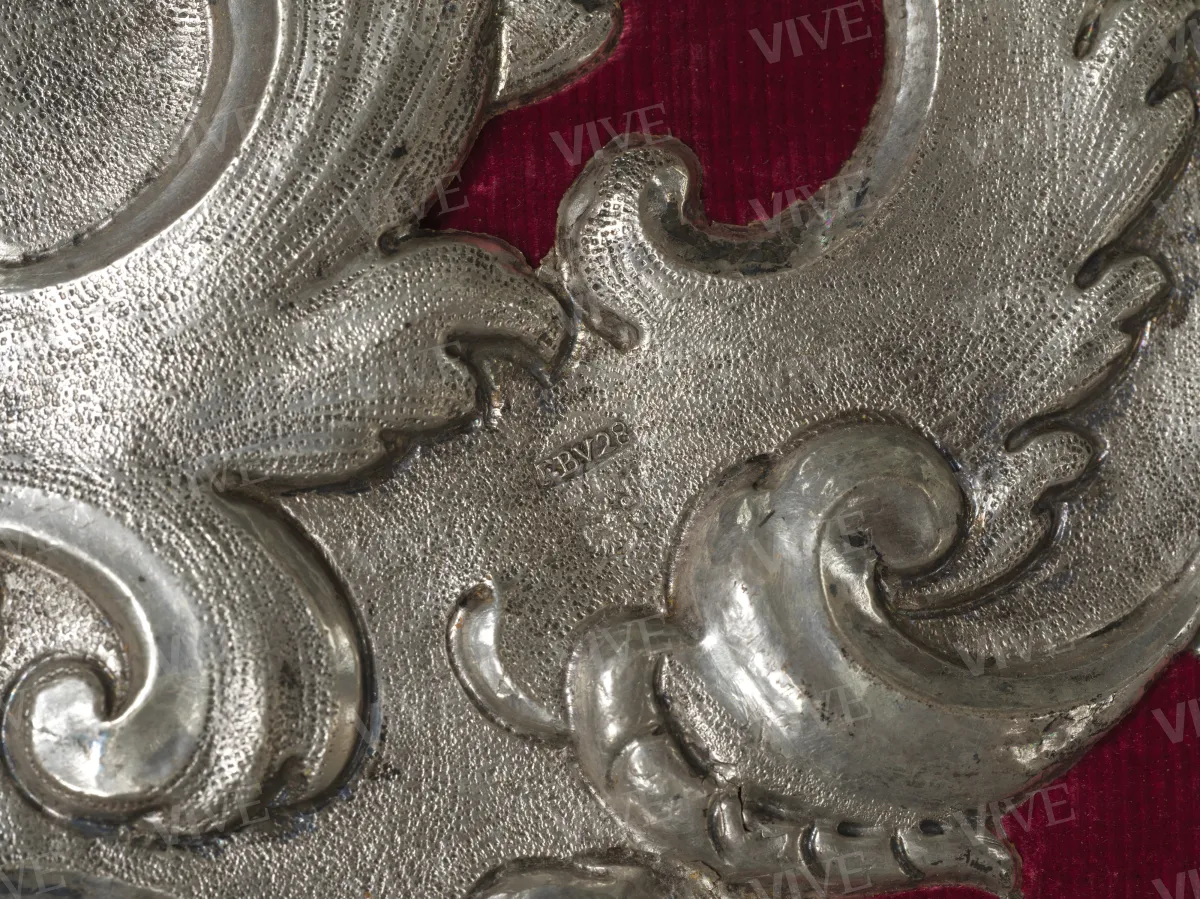
The altar frontal, formerly in the Tower Wurts Collection, was described by Angelo Lipinsky (1977) as the “only valuable altar frontal to have arrived at the Museum of Palazzo Venezia, the work of a Palermo goldsmith” from 1528. Misinterpreting the inscriptions and marks stamped on the silver frieze, the scholar confirmed the attribution of the work to a sixteenth-century commission by three Benedictine nuns descended from the “Gallemi barons” (Lipinsky 1985, 223). Aurigemma (1989, 280) refuted this attribution, accurately interpreting the mark as "aquila a volo alto" (eagle in flight), which was utilized in Palermo beginning in the second decade of the eighteenth century. The alphanumeric stamp corresponding to the consul of silversmiths, later identified as Francesco Burgarello, was dated to 1728 (Barraja 1996, 74; Travagliato 2001, 458). Bernini (1995, 28) substantiates the chronology by linking the heraldic arms featured on the corner medallions to the Gallegra baronial family. Travagliato (2001, 457) further determines that the altar frontal originally came from the Benedictine monastery of Santa Maria del Soccorso in Mistretta, managed by Abbess Anna Gallegra between 1725 and 1728, with the institution subsequently suppressed and vacated in 1881 (Travagliato 2001; Fachechi 2014, 349–350).
This work integrates goldsmithing with textile art, resulting in a composition noted for its significant chromatic impact (Civiletto 2008, 281–282). The silver foil embellishment, set within a perimeter frame on three sides only (Bongiovanni 1992, 234), adheres to a decorative scheme established at the end of the seventeenth century by Palermo architect Giacomo Amato (possibly in collaboration with Antonio Grano) who designed a silver altar frontal on crimson velvet for the Jesuit fathers of Casa Professa (Di Natale 2017, 43, fig. 29).
This characteristic ornamental motif appears both in the altar frontal of the Assumption from Santa Maria delle Grazie Church in Gioiosa Guardia, attributed to Consul Francesco Burgarello in 1723 (Bongiovanni 1989, 277), and in the depiction of the Assumption flanked by Saint Joseph and Saint Rosalia, produced for San Domenico Church in Palermo during the first half of the eighteenth century (Vadalà 2001, 459; Vadalà 2008, 203). The altar frontal housed in the Museo di Palazzo Venezia is distinguished by its meticulously rendered naturalistic decorative scheme, comprising leafy volutes and related motifs, interspersed with corolla flowers and figurative elements (Civiletto 2008, 287–288). The iconography of Saint Benedict is depicted centrally within a crowned reserve, attired as the abbot of Montecassino and accompanied by a raven bearing bread in its beak. This representation aligns with the model introduced by silversmith Nibilio Gagini (circa 1603), as seen in one of the medallions that remain from the now-lost altar frontal originally belonging to the Benedictine abbey of San Martino alle Scale in Monreale (Di Natale 1989, 211; Bernini 1995, 28). The same subject is prominently featured within the central medallion of a silver and gilded wood altar frontal from the Church of Santa Maria degli Angeli in Castroreale. This piece, attributed to Filippo Juvarra and dated to 1700, is referenced in Macchiarella Fiorentino (1988, 250–251, no. 47) and Aurigemma (1989, 280).
Daria Gastone
Entry published on 16 October 2025
Good. Oxidation, deformation of the silver frames, worn velvet.
Left corner: “A. 15. AGOSTO / VI INDIT[IONE] 1528”;
right corner: “A spese della R[everendissi]ma Madre Abb[adess]a / D [onna] Susanna de’ Baroni Gallegra / and of D:[onna] Anna Ex Abb[adess]a and / D[onna] Ninfa Sorelle.”
Marks
The silver frieze displays several distinct impressions: an eagle with outspread wings and its head facing left, positioned over the initials “RVP” within a shaped field; and “F.BV28” presented in a rectangular field.
Coat of arms
In the two corner folders, the content is quartered as follows: the first section features a rooster accompanied by three six-pointed stars; the second displays a left-handed figure wielding a sword alongside a snake; the third contains an eight-pointed comet star set upon a convex band; and the fourth presents a crenellated tower with windows, which remains closed.
Rome, George Washington Wurts and Henrietta Tower Collection;
Rome, Museo Nazionale di Palazzo Venezia, donated by Henrietta Tower Wurts, 1933.
Trapani, Museo Regionale Pepoli, Ori e argenti di Sicilia dal Quattrocento al Settecento, July 1–October 30, 1989;
Palermo, Albergo dei Poveri, Splendori di Sicilia. Arti Decorative dal Rinascimento al Barocco, December 10, 2000–April 30, 2001..
Inventory W. Objects from the bequest of Mrs. Henriette Tower Wurts deposited at the Museo del Palazzo di Venezia, n.p., n.d., 49, n. 1158, inv. n. 1415/8385;
Lipinsky Angelo, Typed inventory card, V. 8385, April 15, 1977, Archivio del Museo Nazionale del Palazzo di Venezia;
Catalogo Argenti I, n. 8385/C 297, Archivio del Museo Nazionale del Palazzo di Venezia.
Lipinsky Angelo, Oreficerie palermitane nel Museo di Palazzo Venezia in Roma, in Giuffrè Maria, La Motta Manfredi, Le arti in Sicilia nel Settecento. Studi in memoria di Maria Accascina, Palermo 1985, pp. 221-228, figg. 1-3;
Macchiarella Fiorentino, in Ciolino Caterina, Orafi e argentieri al Monte di Pietà. Artefici e botteghe messinesi del sec. XVII, catalogo della mostra (Messina, Monte di Pietà, 18 giugno-18 luglio 1988), Messina 1988, pp. 250-251, n. 47;
Di Natale, in Di Natale Maria Concetta (a cura di), Ori e argenti di Sicilia dal Quattrocento al Settecento, catalogo della mostra (Trapani, Museo Regionale Pepoli, 1 luglio-30 ottobre 1989), Milano 1989, pp. 211-212, n. II, 37;
Aurigemma, in Di Natale Maria Concetta (a cura di), Ori e argenti di Sicilia dal Quattrocento al Settecento, catalogo della mostra (Trapani, Museo Regionale Pepoli, 1 luglio-30 ottobre 1989), Milano 1989, pp. 280-281, n. II, 140;
Bongiovanni, in Di Natale Maria Concetta (a cura di), Ori e argenti di Sicilia dal Quattrocento al Settecento, catalogo della mostra (Trapani, Museo Regionale Pepoli, 1 luglio-30 ottobre 1989), Milano 1989, pp. 277-278, n. II, 135;
Bongiovanni Gaetano, Cultura e manualità dei paliotti architettonici nella Sicilia nord-occidentale, in Ruggieri Tricoli Maria Clara, Il teatro e l’altare. Paliotti “d’architettura” in Sicilia, Palermo 1992, pp. 229-244;
Bernini Dante, La Sicilia nelle collezioni di Palazzo Venezia, in «Kalós. Arte in Sicilia», VII, 3, 1995, pp. 26-29, figg. 5-7;
Barraja Silvano, I marchi degli argentieri e orafi di Palermo dal XVII secolo ad oggi, Milano 1996, p. 74;
Travagliato, in Di Natale Maria Concetta (a cura di), Splendori di Sicilia. Arti Decorative dal Rinascimento al Barocco, catalogo della mostra (Palermo, Albergo dei Poveri, 10 dicembre 2000-30 aprile 2001), Milano 2001, pp. 456-458, n. 148;
Vadalà, in Di Natale Maria Concetta (a cura di), Splendori di Sicilia. Arti decorative dal Rinascimento al Barocco, catalogo della mostra (Palermo, Albergo dei Poveri, 10 dicembre 2000-30 aprile 2001), Milano 2001, pp. 458-459, n. 149;
Vadalà, in Rizzo Salvatore (a cura di), Architetture barocche in argento e corallo, catalogo della mostra (Lubecca, Katharinenkirche, 15 luglio-26 agosto 2007; Vicenza, Pinacoteca Civica, Palazzo Chiericati, 7 settembre-7 ottobre 2007), Catania 2008, p. 203, n. 24;
Civiletto Roberta, Paliotti siciliani tessili “a rilievo plastico” in argento tra Sei e Settecento. Felice commistione d’arte tessile e argentaria, in Rizzo Salvatore (a cura di), Il Tesoro dell’Isola. Capolavori Siciliani in argento e corallo dal XV al XVIII secolo, catalogo della mostra (Praga, Maneggio di Palazzo Wellestein, 19 ottobre-21 novembre 2004), Catania 2008, pp. 281-301;
Fachechi Grazia Maria, George Washington Wurts, Henriette Tower, una collezione "di curiosità e opere d’arte" e una villa "magnificent, the handsomest ever bestowed on Rome", in Perini Folesani Giovanna, Ambrosini Massari Anna Maria (a cura di), Riflessi del collezionismo, tra bilanci critici e nuovi contributi, Atti del convegno (Urbino, Palazzo Albani, Aula Clemente XI, 3-5 ottobre 2013), 2014, pp. 339-357;
Di Natale Maria Concetta, I disegni di opere d’arte decorativa di Giacomo Amato per i monasteri di Palermo, in De Cavi Sabina (a cura di), Giacomo Amato. I disegni di Palazzo Abatellis. Architettura, arredi e decorazione nella Sicilia Barocca, Roma 2017, pp. 33-56, fig. 29.