Vittoriano


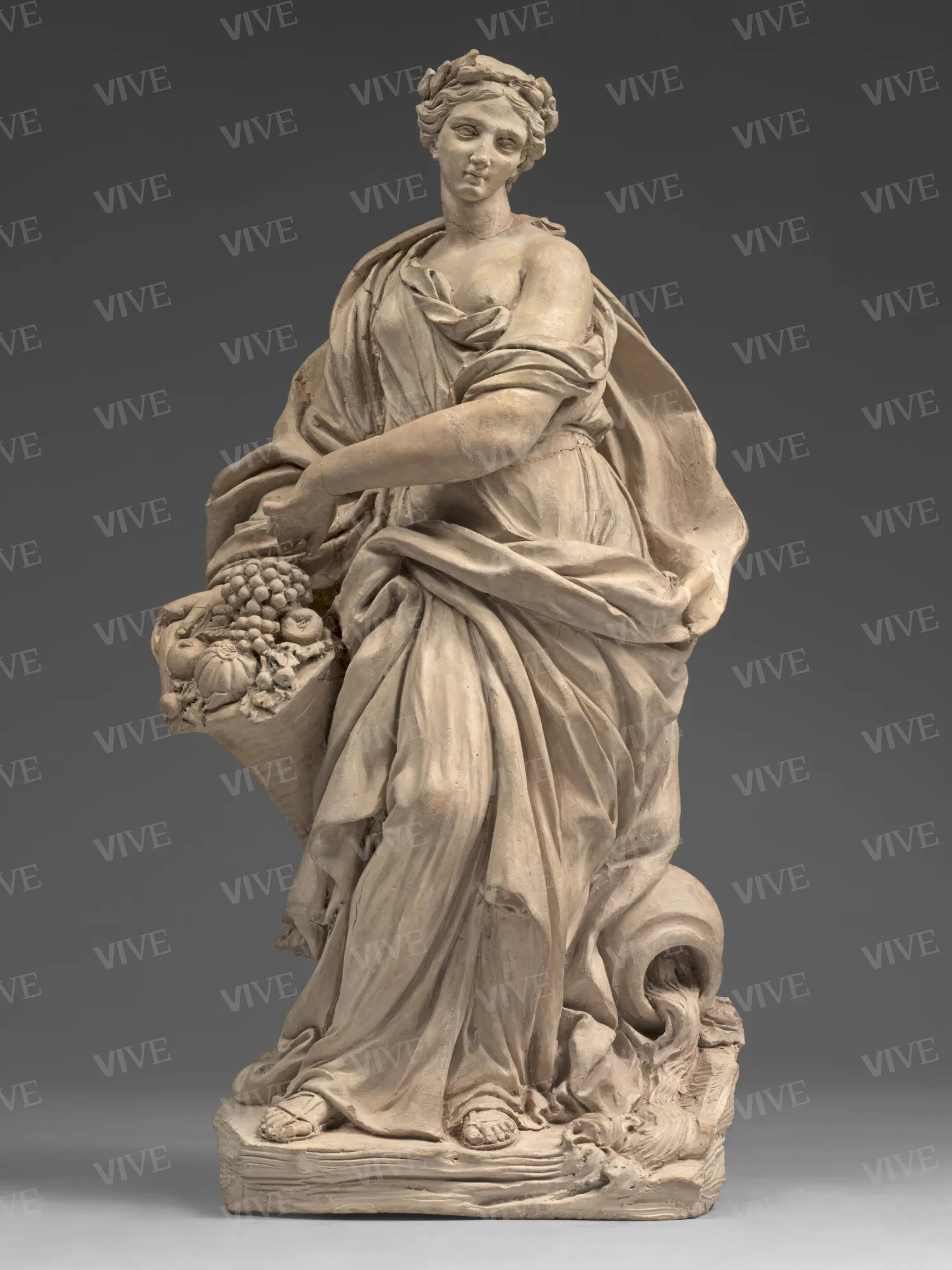
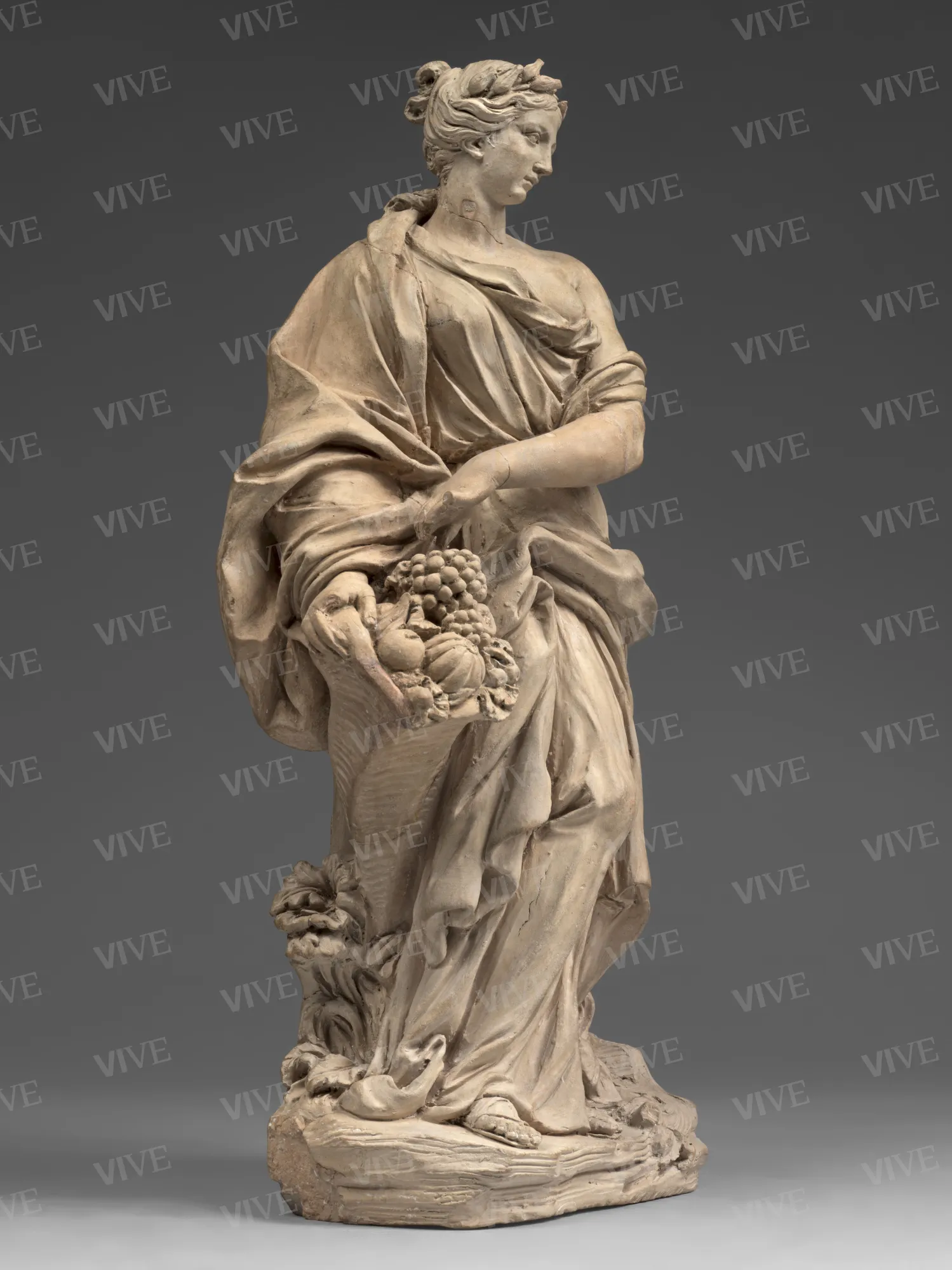
This terracotta piece is a bozzetto crafted by the Florentine sculptor Filippo della Valle as a preparatory study for the monumental statue of Fertility at the Trevi Fountain. The small clay figure was initially integrated into a wooden model commissioned by architect Nicola Salvi, providing enhanced oversight of the architectural composition and decorative elements.
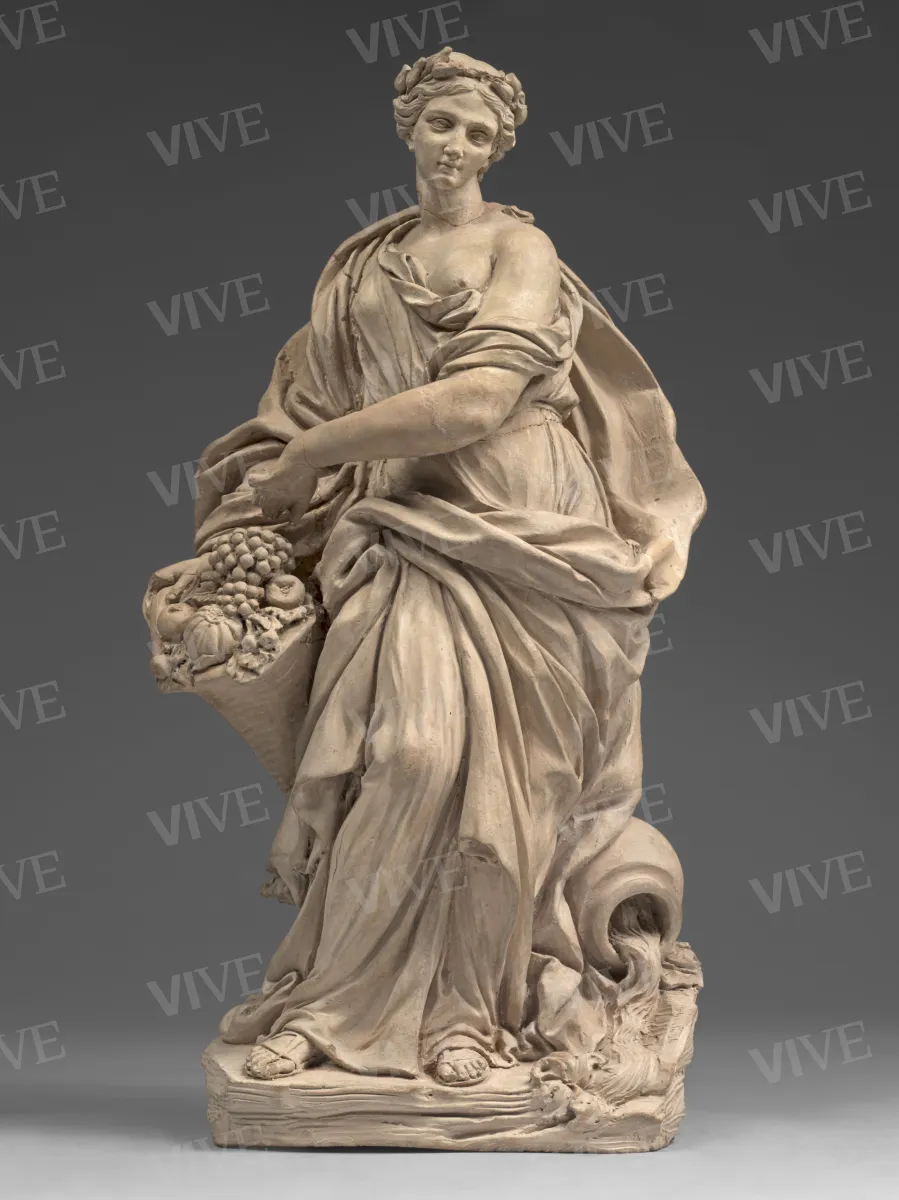
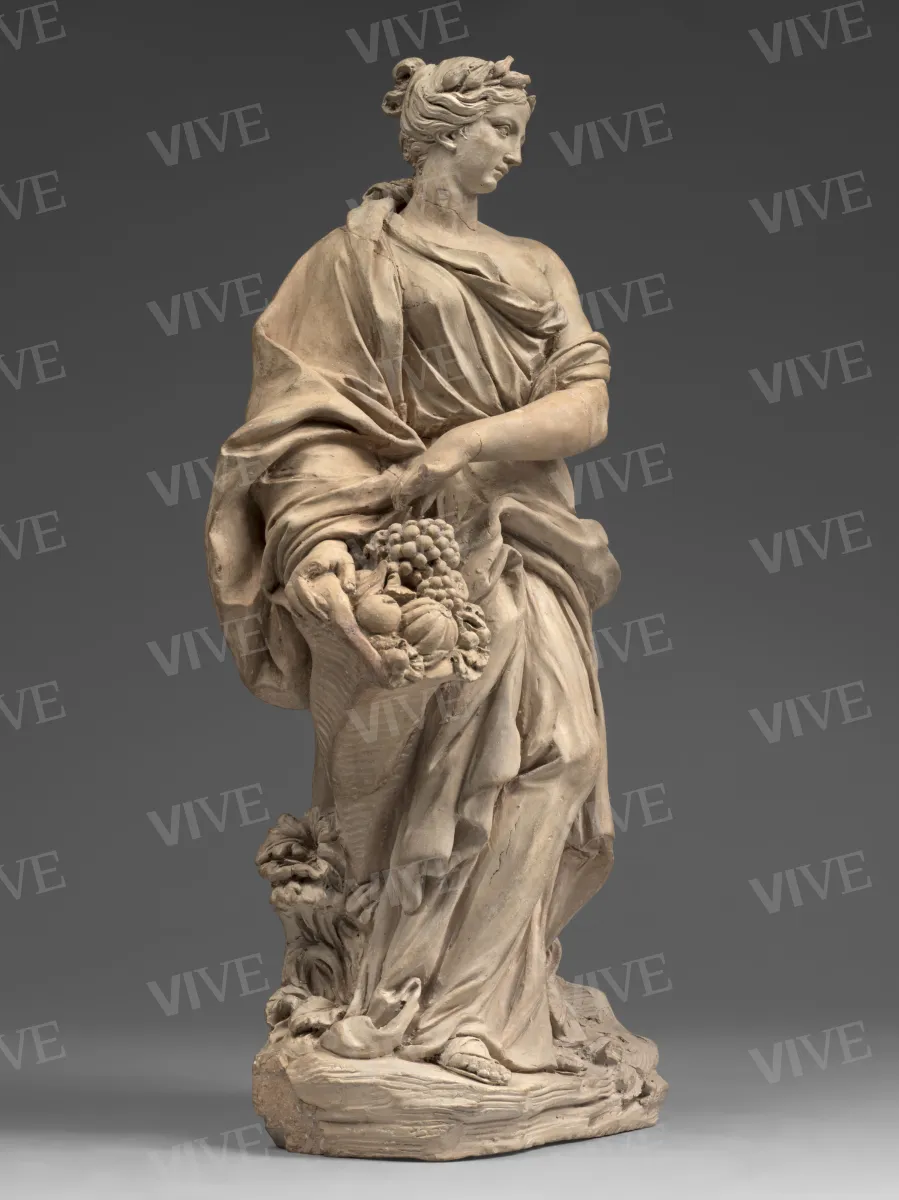
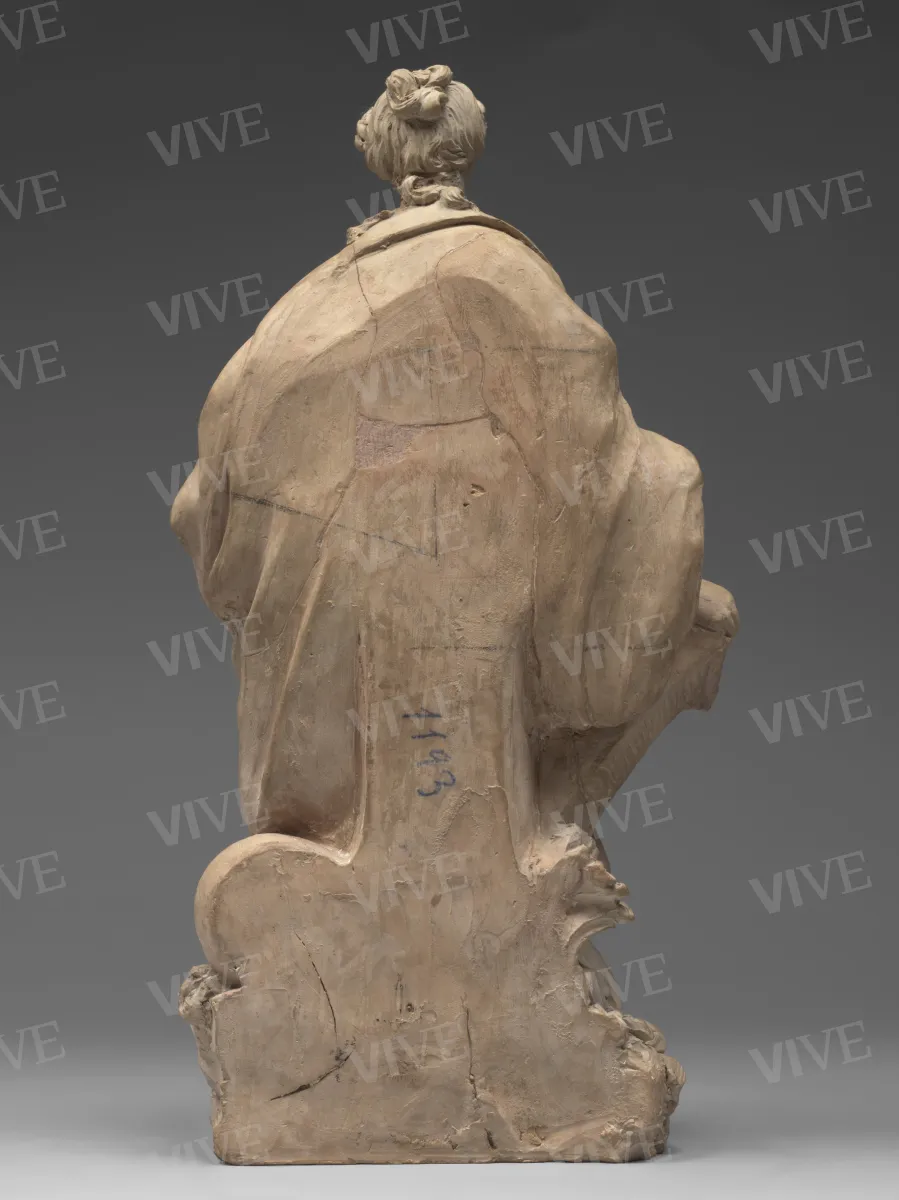
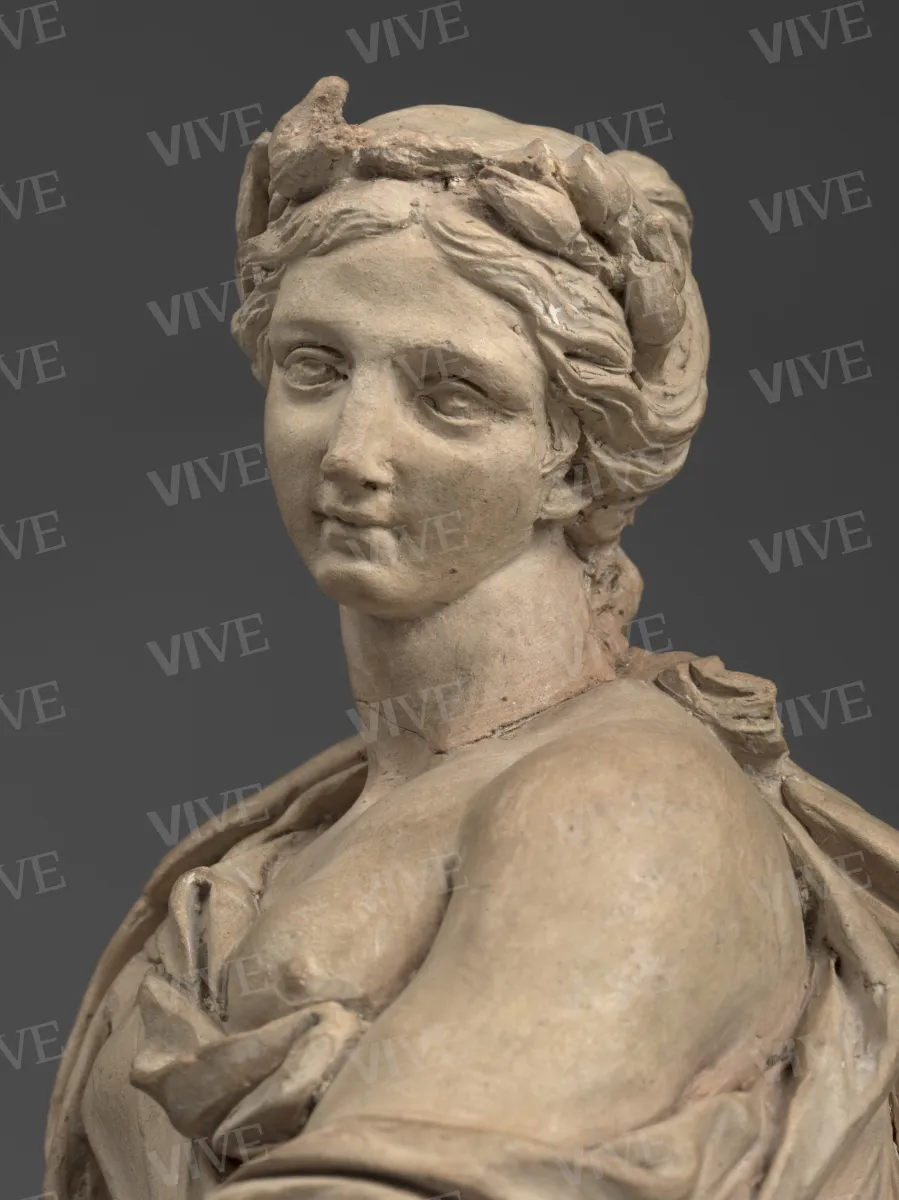
This terracotta piece is a bozzetto crafted by the Florentine sculptor Filippo della Valle as a preparatory study for the monumental statue of Fertility at the Trevi Fountain. The small clay figure was initially integrated into a wooden model commissioned by architect Nicola Salvi, providing enhanced oversight of the architectural composition and decorative elements.
In 1733, the carpenter Carlo Camporese constructed a 1:15 scale wooden model of the Trevi Fountain based on architect Nicola Salvi's design, intended to assist sculptors and carvers involved in the monument's creation (Di Marco 2017, 2; Parisi 2023, 82–83). The commission for the monumental figures was originally assigned to Giovanni Battista Maini (1690–1752). However, Maini passed away before the project could be completed, having produced only the preliminary plaster models. He was succeeded by Pietro Bracci and Filippo della Valle (1698–1768), who were responsible for the creation of the statue of Oceanus accompanied by tritons and sea horses, as well as the allegorical sculptures representing Health and Fertility, respectively. The small terracotta piece housed in the Museo di Palazzo Venezia is closely associated with the second figure; at one time, the statuette was affixed to the wooden fountain model, which is currently held by the Museum of Rome (Santangelo 1954, 86–87).
Since the early twentieth century, the small-scale clay sculpture has been regarded as a bozzetto for the marble statue (Guida generale 1911, 234). Initially attributed to Pietro Bracci (Il Settecento italiano 1932, 126, n. 12), subsequent scholarship has generally favoured Filippo della Valle as the author (Riccoboni 1942, 291; Hermanin 1948, 287; Santangelo 1954, 86–87; Honour 1959, 177; Santangelo 1959, 95, n. 189b; Cardilli Alloisi 1986, 178–179; Vigliarolo 2009, 91).
Armando Schiavo (1956, 126–127), whose conclusions were subsequently supported by Vernon Hyde Minor (1997, 258, n. 42,A) and John Pinto (1991, 70,71), asserted that the terracotta elements were not part of the original wooden model but were added in the nineteenth century. This position is corroborated by Erasmo Pistolesi’s laudatory pamphlet, Modello della Fontana di Trevi ridotto al 15° dell’originale attribuito a Niccola Salvi, which documents that Camporese’s original model, displayed in the gallery of Count Zeloni at Palazzo Albani in Rome, comprised solely the architectural components. According to Pistolesi (1855, 4,5), subsequent additions, including the "cliff, basin or aquarium, monumental statue, and decorative elements", were made by the new owner.
Nevertheless, the thermoluminescence analyses indicate that the statuette dates to the 1770s. Drawing on this evidence, Cristiano Giometti (2009, 102–103, cat. 104) posited that the terracotta is a reduced-scale replica created for the wooden model, attributed to an unidentified Roman sculptor shortly after the installation of the marble statue in the fountain in May 1762.
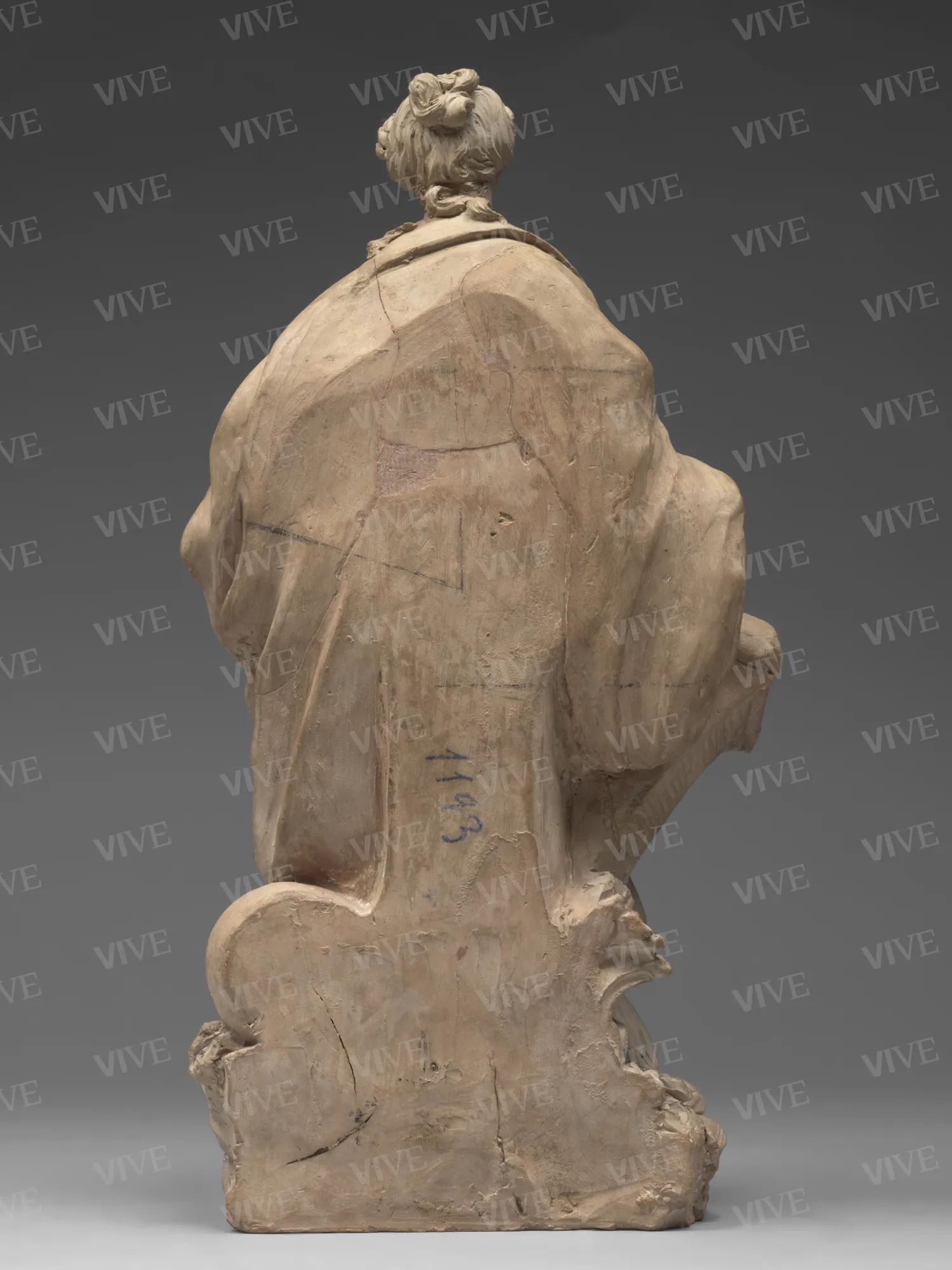
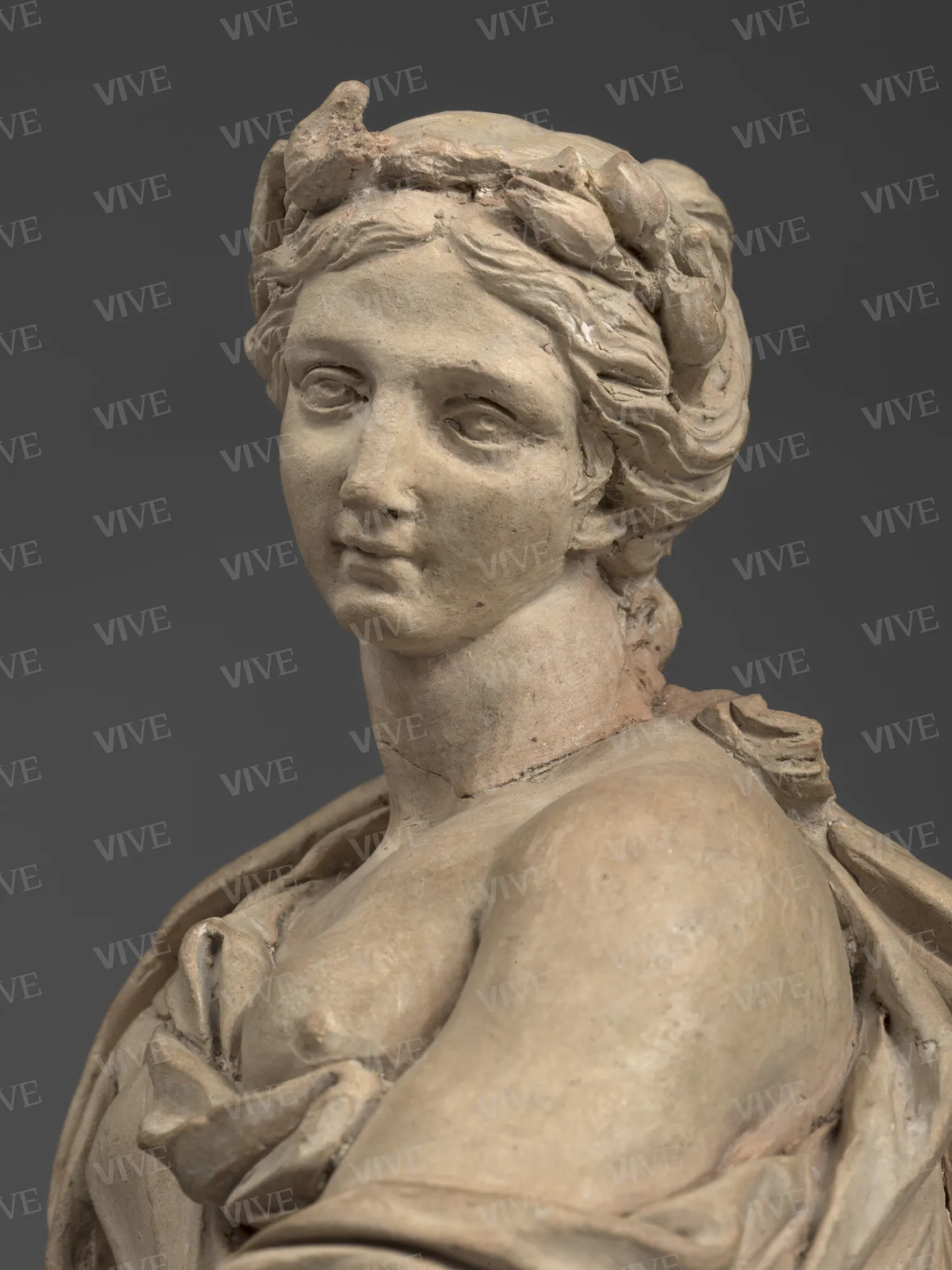
Recently, Camilla Parisi (2023), drawing on the research of Davide Fodaro and Livia Sforzini (2017, 99–103), has reaffirmed the perspective that the small figure of Fertility (along with that of Oceanus, also housed in the Museum of Palazzo Venezia (inv. 1190), and the figure of Health, which was rediscovered by the same scholar in a private collection) should be regarded as bozzetti produced by Filippo della Valle and Pietro Bracci. These models were designed to be incorporated into the wooden maquette of the fountain, providing the designer with a comprehensive view of its overall layout. This facilitated the assessment of potential variations, exemplified by several clay reliefs currently incorporated into the Camporese structure, which differ from those adorning the fountain in the Piazza di Trevi (Parisi 2023, 85). Fertility is depicted with ears of corn as her crown, holding a traditional cornucopia filled with nature's bounty in her right hand. At her left foot stands an overturned vase from which a fountain of water flows. Stylistic parallels can be observed between this piece and other clay bozzetti created by the Florentine sculptor. Like Oceanus (by Bracci) and Health, Fertility features a flat reverse, displays remnants of historical white pigment, and remains in satisfactory condition. The work underwent restoration by the Istituto Superiore per la Conservazione e il Restauro during 2016–2017.
Marco Scansani
Entry published on 16 October 2025
Fair.
Rome, Museo Nazionale di Castel Sant'Angelo, 1920;
Rome, Museo Nazionale di Palazzo Venezia, dal 1920.
Pistolesi Erasmo, Modello della fontana di Trevi ridotto al 15° dell'originale attribuito a Niccola Salvi descritto da Erasmo Pistolesi esistente nella galleria del conte Zeloni al palazzo Albani in Roma, Roma 1855;
Esposizione internazionale di Roma 1911: guida generale delle mostre retrospettive in Castel Sant’Angelo, Bergamo 1911;
Il Settecento italiano, Milano 1932;
Riccoboni Alberto, Roma nell'arte. La scultura nell'evo moderno dal Quattrocento ad oggi, Roma 1942;
Hermanin Federico, Il Palazzo di Venezia, Roma 1948;
Santangelo Antonino (a cura di), Museo di Palazzo Venezia. Catalogo delle sculture, Roma 1954;
Schiavo Armando, La fontana di Trevi e le altre opere di Nicola Salvi, Roma 1956;
Honour Hugh , Filippo Della Valle, in «The Connoisseur», CXLIV, 1959, pp. 172-179;
Santangelo, in Lavagnino Emilio (a cura di), Il Settecento a Roma, catalogo della mostra (Roma, 19 marzo-31 maggio 1959), Roma 1959;
Cardilli Alloisi Luisa, La Fontana di Trevi: appendice, in Il trionfo dell'acqua. Immagini e forme dell'acqua nelle arti figurative, catalogo della mostra (Roma, Istituto Nazionale per la Grafica, 4 novembre 1986-11 gennaio 1987), Roma 1986;
Pinto John, Il modello della fontana di Trevi, in Contardi Bruno, Curcio Giovanna (a cura di), In urbe architectus. Modelli, disegni, misure: la professione dell'architetto Roma 1680-1750, catalogo della mostra (Roma, Museo Nazionale di Castel Sant'Angelo, 12 dicembre 1991-29 febbraio 1992), Roma 1991;
Minor Vernon Hyde, Passive Tranquillity: The Sculpture of Filippo Della Valle, Philadelphia 1997;
Giometti Cristiano, Museo Nazionale del Palazzo di Venezia: sculture in terracotta, Roma 2011;
Vigliarolo, in Barberini Maria Giulia, Sconci Maria Selene (a cura di), Guida al Museo Nazionale del Palazzo di Venezia, Roma 2009, p. 91;
Di Marco Fabrizio, L’esecuzione del modello: Carlo Camporese, in Leone Rossella, Liserre Francesca Romana (a cura di), Un fondale per l’Acqua Vergine. Il modello della Fontana di Trevi: storie e restauro, Roma 2017, pp. 29-34;
Fodaro Davide, Sforzini Livia, L'Oceano e la Fertilità: il restauro dei modelli in terracotta del Museo di Palazzo Venezia, in Leone Rossella, Liserre Francesca Romana (a cura di), Un fondale per l’Acqua Vergine. Il modello della Fontana di Trevi: storie e restauro, Roma 2017, pp. 99-103;
Parisi Camilla, Filippo Della Valle scultore (1698-1768), Milano 2023.