Vittoriano


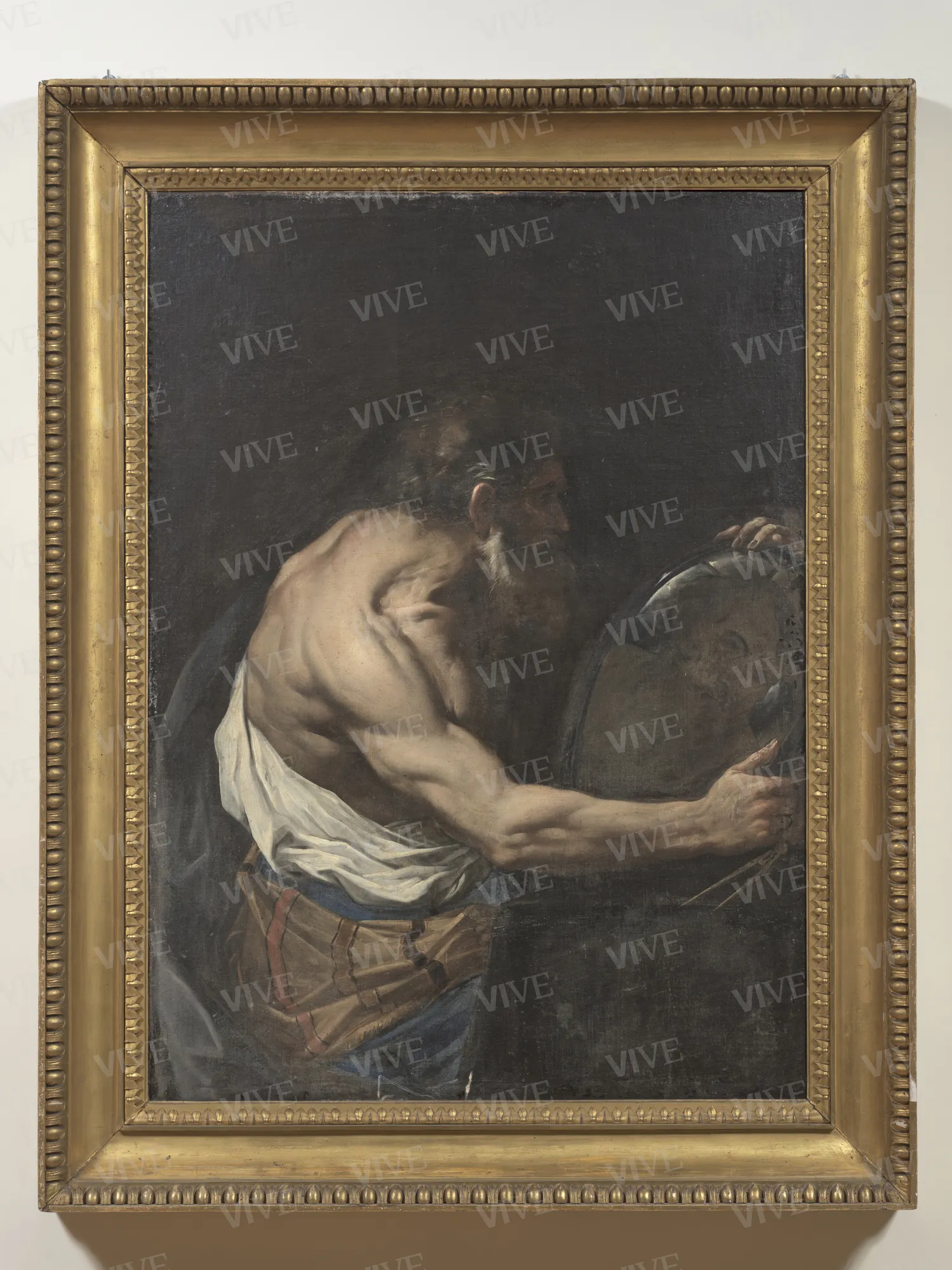
The work represents an Allegory of Drawing, a personification recognizable thanks to the attributes of the compass and mirror. The meaning of this painting can be explained in the context of Roman culture at the turn of the fourth and fifth decades of the seventeenth century. For stylistic reasons, it is possible to cautiously attribute the work to Pier Francesco Mola (1612–1666), who worked in Rome for many years.


The work represents an Allegory of Drawing, a personification recognizable thanks to the attributes of the compass and mirror. The meaning of this painting can be explained in the context of Roman culture at the turn of the fourth and fifth decades of the seventeenth century. For stylistic reasons, it is possible to cautiously attribute the work to Pier Francesco Mola (1612–1666), who worked in Rome for many years.
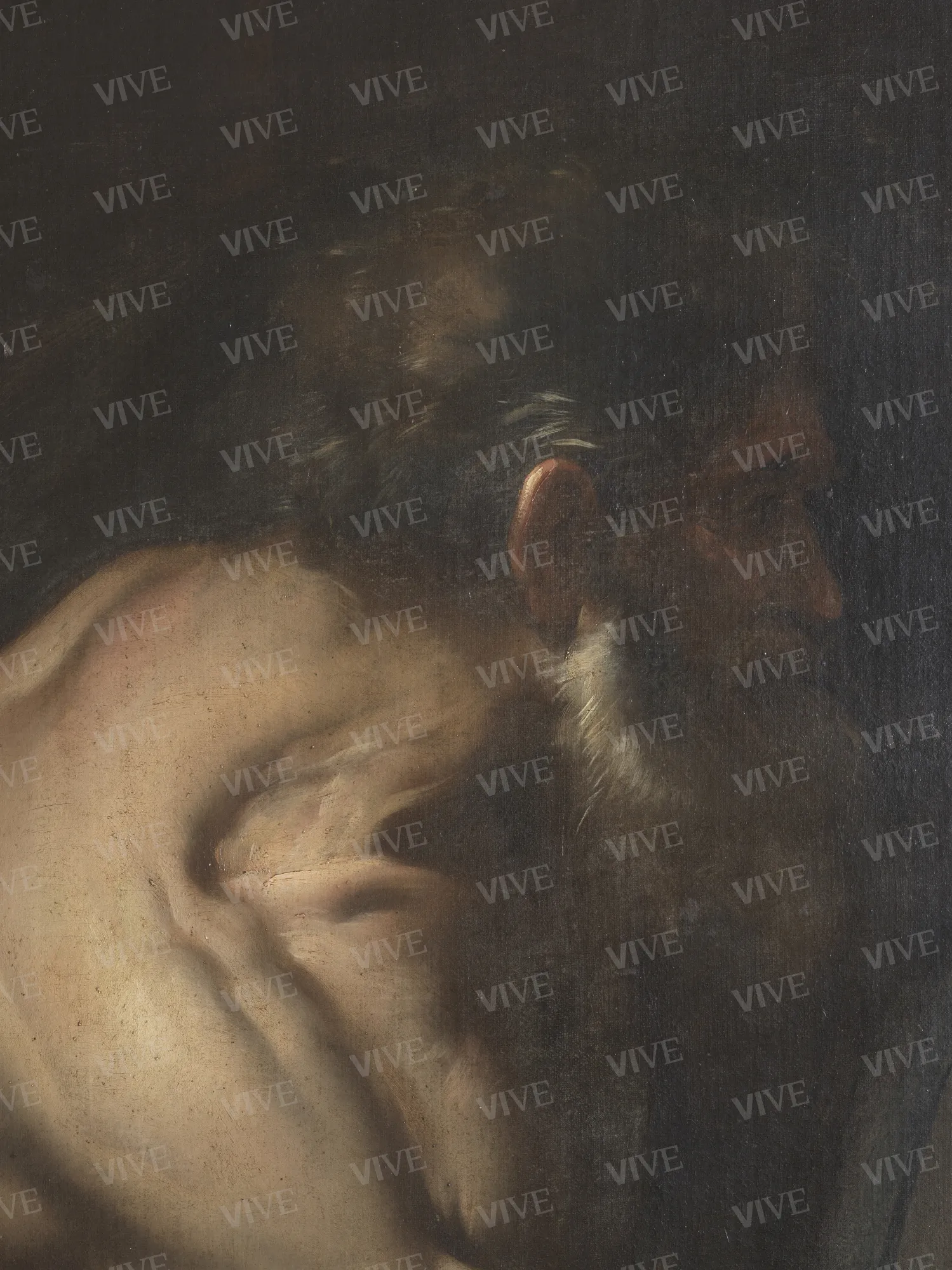
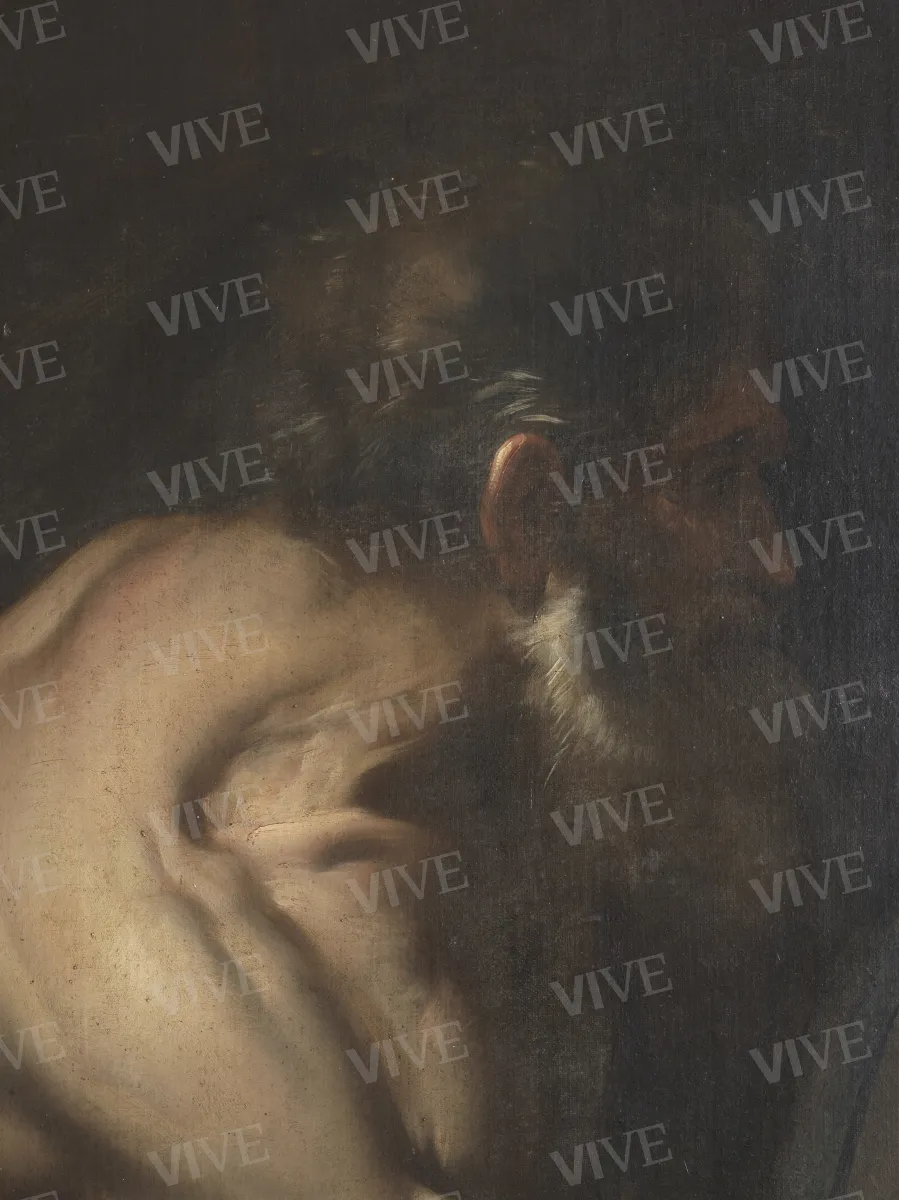
The Museo Nazionale di Palazzo Venezia holds this unpublished work but lacks information about its provenance, history or acquisition. The painting depicts a male figure in three-quarter profile with a thick beard and draped in antique style. He holds a mirror, admiring himself while a compass lies on the table. The subject, an allegory of Drawing, offers a dual interpretation. The two objects, the mirror and the compass, originate from the iconography of Drawing as articulated by Cesare Ripa (Ripa 1613, 196). However, the figure diverges from this model in that he is not depicted as a young man, does not don contemporary attire, and is not adorned with a laurel wreath. The attributes of this character imply that he may symbolize or elicit the image of the ancient Athenian sculptor Demetrius, who is lauded by sources such as Quintilian (Inst. orat., XII, 10, 9) and Lucian (Philopseud., 20) as a proficient portraitist. Demetrius is noted for his focus on depicting reality over beauty and is frequently cited in the critical discourse of the mid-seventeenth century concerning the concept of beauty (Bellori [1672] 2009, I, 211; Mahon 1947, 256–257). The construction of the figure appears to be influenced by the examination of the Arrotino (Knife Grinder), which was part of the antiquities collection at Villa Medici in Rome until 1677 and has been the subject of extensive scholarly debate (Cecchi, Gasparri 2009, 68, cat. 58). Notably, the profile of the twisted back closely resembles the perspective of the statue depicted in the drawing by Pietro Testa for Cassiano dal Pozzo, which was incorporated into his Museo Cartaceo in 1637 (Fusconi 2014). In terms of the resolution of the connection between the neck and shoulders, accentuated by highlights, this character exhibits a notable comparison to the figure of the stoner on the left in Anton van Dyck’s Stoning of Saint Stephen (Tatton Park, Egerton Collection), executed during his sojourn in Italy and potentially intended for the church of San Giacomo degli Spagnoli in Rome (Brown 1999, 166, n. 32; Arcangeli 2004; 34–35; Barnes 2004, II.19). Di Mola also produced a red and black pencil drawing that documents his involvement in the aforementioned altarpiece by Van Dyck (British Museum inv. 1946,0713.89; Turner 1999, I, n. 230; De Marchi 2013, 60). These features, combined with a pictorial approach influenced by the cultural traditions of Emilia and Ferrara (notably Guido Reni and Guercino) and an emphasis on Lombard naturalism—evident in the depiction of the hand, drapery, and subtleties such as the highlights on the white beard—support the attribution of this artwork to Pier y Mola (1612–1666), a “close friend” with Pietro Testa. Notable features, including the brushwork that illuminates light within darkness, the precise treatment of whites, and the patch-based shading techniques influenced by Guercino, are evident in works attributed to Mola. An example is The Preaching of St. John the Baptist (National Gallery, London, inv. NG69; Cocke 1972, 41, 48, n. 19). The depiction of musculature reminiscent of Hercules aligns this painting with the Meeting of Jacob and Rachel in the Hermitage (inv. 141), which Sutherland Harris has suggested dates to approximately the 1650s (Laureati 1989, 184; Petrucci 2012, 347).The creation of the painting can be definitively dated after Mola's meeting with Pietro Testa in 1637 and subsequent to the publication of Cassiano’s Museo Cartaceo. Another noteworthy post quem is 1641—the year attributed to the frescoes in the chapel of the church of the Madonna del Carmelo in Coldrerio. At that time, although Mola had cultivated his own distinctive style, he demonstrated an eclectic approach by integrating entire passages from other artists’ works and transforming them into cohesive and effective compositions (Tantillo 1989, 202–204). While the canvas demonstrates a sophisticated integration of references, the compositional parallels with the painting held at the Hermitage indicate that this work should be dated within the interval between these two points—specifically, after the artist's return to Rome.
The referenced work has not been published.
Giulia Spoltore
Entry published on 16 October 2025
Good. The original paint film’s oxidation prevents optimal viewing of the artwork.
Ripa Cesare, Iconologia Di Cesare Ripa Pervgino Cav.re De S.ti Mavritio, E Lazzaro: Nella Qvale Si Descrivono Diverse Imagini di Virtù, Vitij, Affetti, Passioni humane, Arti, Discipline, Humori, Elementi, Corpi Celesti, Prouincie d'Italia, Fiumi, Tutte le parti del Mondo, ed altre infinite materie, Siena 1613, p. 196;
Mahon Denis, Studies in Seicento Art and Theory, London 1947;
Cocke Richard, Pier Francesco Mola, Oxford 1972;
Laureati Laura, I dipinti, in Kahn-Rossi Manuela (a cura di), Pier Francesco Mola 1612-1666, catalogo della mostra (Lugano, Museo Cantonale d’Arte, 23 settembre-19 novembre 1989; Roma, Musei Capitolini, 3 dicembre-31 gennaio 1990), Milano 1989, pp. 148-201;
Tantillo Almamaria, Gli affreschi, in Kahn-Rossi Manuela (a cura di), Pier Francesco Mola 1612-1666, catalogo della mostra (Lugano, Museo Cantonale d’Arte, 23 settembre-19 novembre 1989; Roma, Musei Capitolini, 3 dicembre-31 gennaio 1990), Milano 1989, pp. 202-219;
Brown Christopher, Van Dyck 1599-1641, München 1999;
Turner Nicholas, Italian Drawings in the British Museum, Roman Baroque Drawings, London 1999;
Arcangeli Luciano, La pittura religiosa di Van Dyck e la conoscenza dell’arte italiana, in Bernardini Maria Grazia (a cura di), Anton Van Dyck. Riflessi italiani, catalogo della mostra (Milano, Palazzo Reale, 19 febbraio-20 giugno 2004), Milano 2004, pp. 31-41;
Barnes Susan J., Van Dyck. A Complete Catalogue of Paintings, 2 voll., New Haven 2004;
Bellori Giovan Pietro, Le vite de' pittori, scultori e architetti moderni, [Roma 1672], a cura di Borea Evelina, introduzione di Previtali Giovanni, postfazione di Montanari Tomaso, 2 voll., Torino 2009;
Cecchi Alessandro, Gasparri Carlo, La Villa Médicis 4: Le collezioni del cardinal Ferdinando: i dipinti e le sculture, Roma 2009;
Petrucci Francesco, Pier Francesco Mola (1612-1666): materia e colore nella pittura del ‘600, Roma 2012;
De Marchi Andrea, Mola il disegno e la pittura; psicologia e filologia a confronto, Milano 2013
Fusconi Giulia, Copia della statua dello Scita, il cosidetto “Arrotino”, in Canevari Angiola, Fusconi Giulia, Pietro Testa e la nemica fortuna: un artista filosofo (1612-1650) tra Lucca e Roma, a cura di A. Roma 2014, pp. 152-153, n. I.1.