Vittoriano


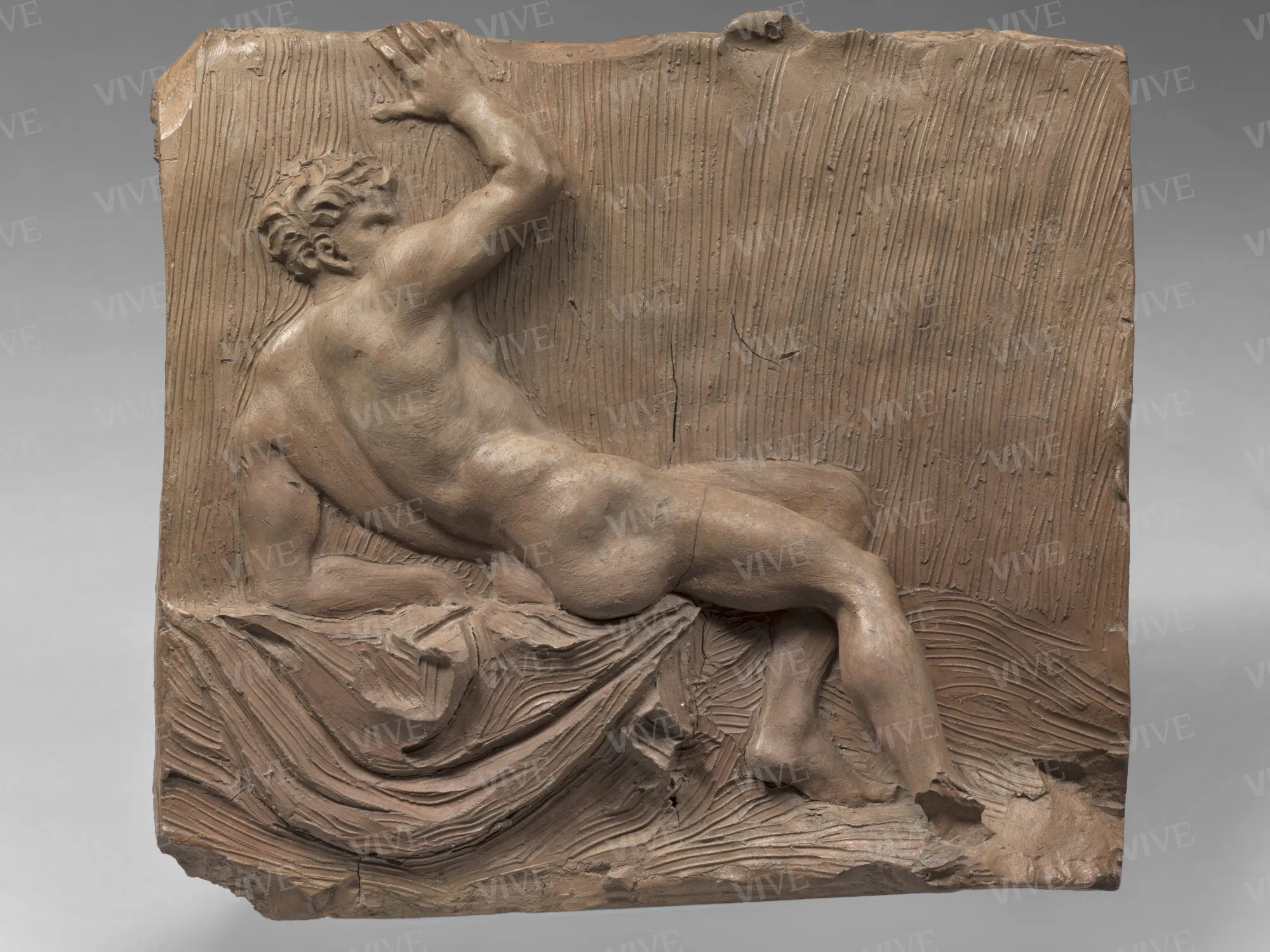
This distinguished academic piece from the collection of tenor Evan Gorga has previously been attributed to both Vincenzo Pacetti (1746–1820) and Tommaso Righi (1722/23–1802), two renowned and thoroughly documented sculptors active in Rome during the late eighteenth century. While a definitive assignment remains unattainable at present, the evidence suggests that the work is most likely associated with the Pacetti school. Furthermore, the terracotta exhibits a distinctly neoclassical influence, evident in its refined plastic modeling.
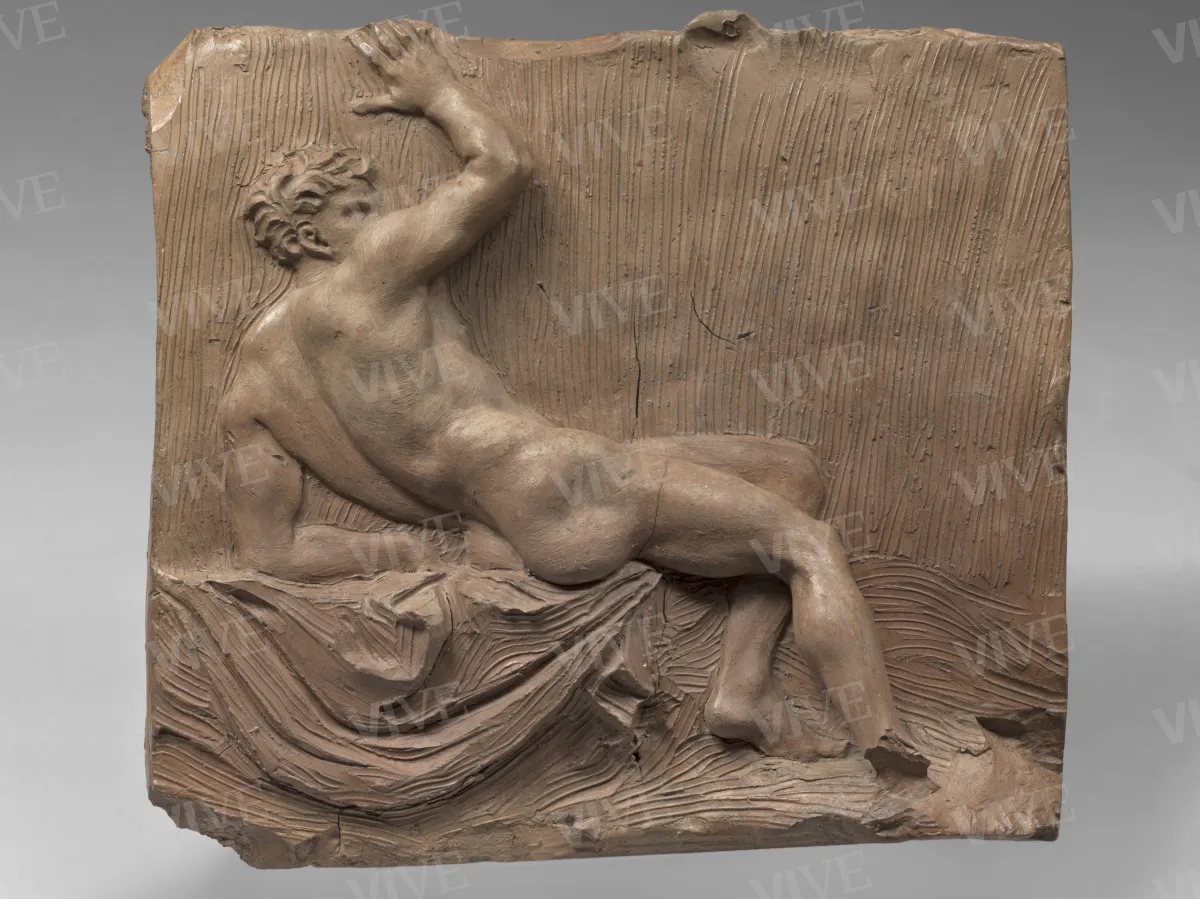
This distinguished academic piece from the collection of tenor Evan Gorga has previously been attributed to both Vincenzo Pacetti (1746–1820) and Tommaso Righi (1722/23–1802), two renowned and thoroughly documented sculptors active in Rome during the late eighteenth century. While a definitive assignment remains unattainable at present, the evidence suggests that the work is most likely associated with the Pacetti school. Furthermore, the terracotta exhibits a distinctly neoclassical influence, evident in its refined plastic modeling.
Identifying this work within the Gorga Collection catalogue published in 1948 presents certain challenges. Antonino Santangelo previously attributed it to Vincenzo Pacetti (1746–1820) in an academic study, a view later endorsed by Hugh Honour (1960, 179). More recently, Cristiano Giometti (2011) suggested Tommaso Righi (c. 1722/23–1802) as the possible creator, citing decisive parallels with four signed terracottas from the Accademia Carrara in Bergamo—formerly part of the Volpi di Collezione Misurata in Rome and subsequently owned by Federico Zeri, who published them in a brief essay during the mid-1980s (Zeri 1985, 63–64; see also Bacchi, Rossi 2000, 68–69)—and with a drawing of a nude preserved at the Accademia di San Luca in Rome, highlighted by Angela Negro (2002, 83, fig. 7). Nonetheless, this attribution raises several concerns, as technical and stylistic comparisons with the aforementioned terracottas previously associated with Zeri differ significantly from Righi’s established artistic language and its subsequent developments.
The piece housed in the Museo Nazionale di Palazzo Venezia exemplifies an exercise in artistic training, notable for its significant simplification of classically-inspired forms prevalent in Italian academies from the late eighteenth century onward. Conversely, attributing the former Zeri terracottas to the 1750s is impossible, as these works bear the artist’s initials, which would not have been allowed considering the anonymous nature of submissions to annual academic competitions. Consequently, it is more plausible to date the four reliefs previously owned by Zeri to the first half of the 1760s, aligning with Righi’s initial commissions upon his appointment at the Scuola del Nudo in the Accademia di San Luca. In contrast, the relief in the Museo Nazionale di Palazzo Venezia displays more advanced stylistic characteristics, making it virtually impossible to associate it with Righi’s formative period, despite differing in quality from the Bergamo terracottas.
Considering the dynamic expression of the forms held in tension—a posture that became canonical for nude studies from at least the latter half of the seventeenth century—and the marked simplicity of the surrounding environment, it appears most plausible to attribute this work to one of the younger sculptors born after 1740 who received their training at the Academy between 1770 and 1785. Notably, the pronounced resemblance between this terracotta and the Olympic deities (Jupiter, Venus, Mars, and Apollo) depicted in bas-relief on antique yellow marble by Vincenzo Pacetti in 1784 for the Casino Nobile at Villa Borghese further supports the attribution. It may even be appropriate to consider Camillo, Vincenzo Pacetti’s younger brother—active in Rome until 1805 before relocating to Milan—as the potential creator of this piece.
Alessio Costarelli
Entry published on 16 October 2025
Fair. Fractures concentrated at the base have resulted in damage to the tablet's corners and the figure's right foot.
Rome, Collezione Evangelista (Evan) Gorga, until 1948;
Rome, Museo Nazionale di Palazzo Venezia, acquired in 1949.
Collezioni Gorga. Raccolte archeologiche e artistiche, Roma 1948;
Museo di Palazzo Venezia. Catalogo delle sculture, Santangelo Antonino (a cura di), Roma 1954, p. 89;
Honour Hugh, Vincenzo Pacetti, in «The Connoisseur», vol. CXLVI (1960), n. 589, pp. 179-180;
Zeri Federico, Appunti su Tommaso Righi, in «Antologia di Belle Arti», n.s., 25/26 (1985), pp. 63-64;
Bacchi Andrea, Rossi Francesco (a cura di), La Donazione Federico Zeri. Cinquanta sculture per Bergamo, catalogo della mostra (Bergamo, Palazzo della Ragione, 30 marzo-25 giugno 2000), Bergamo 2000, pp. 68-69;
Negro Angela, Per Tommaso Righi, in Debenedetti Elisa (a cura di), Sculture romane del Settecento. La professione dello scultore, vol. 2, Roma 2002, p. 83 e fig. 7;
Giometti Cristiano (a cura di), Museo Nazionale di Palazzo Venezia. 4. Sculture in terracotta, Roma 2011, p. 101, n. 102.