Vittoriano


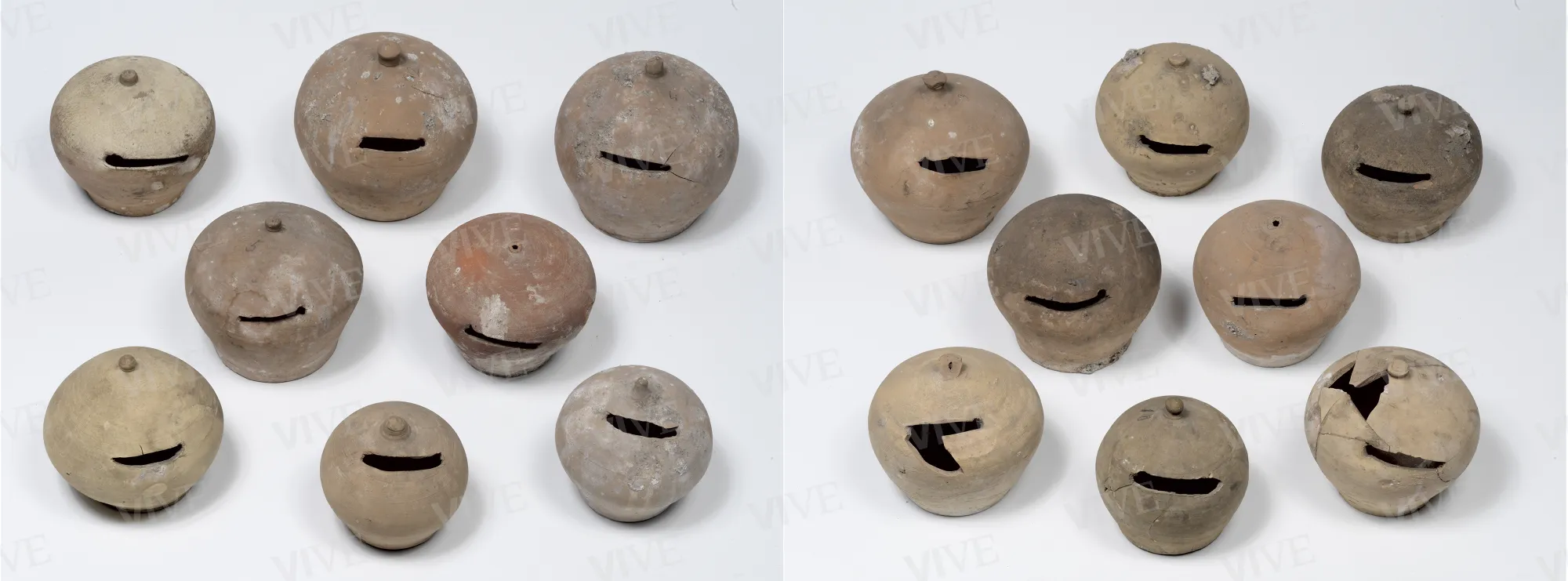
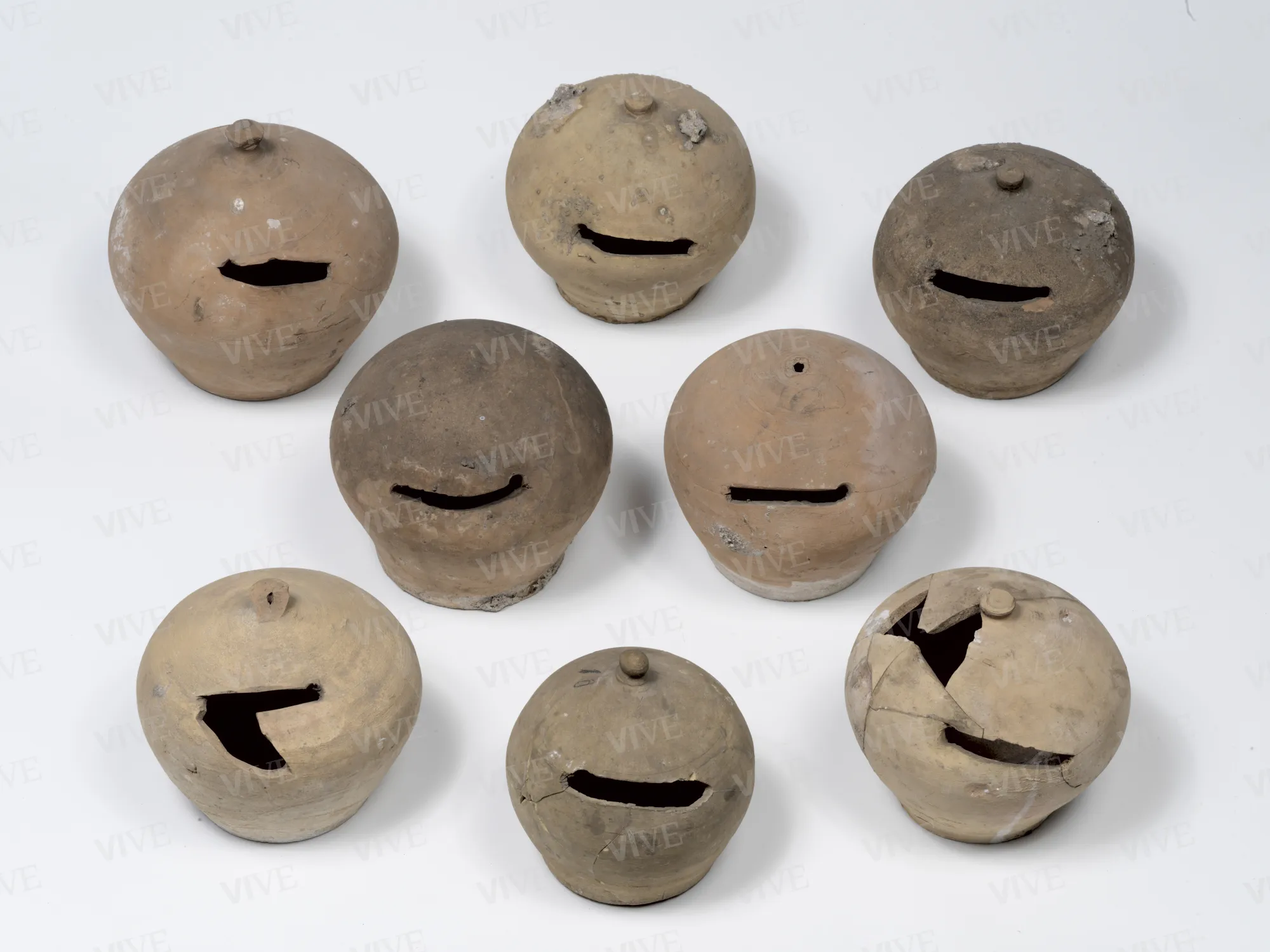
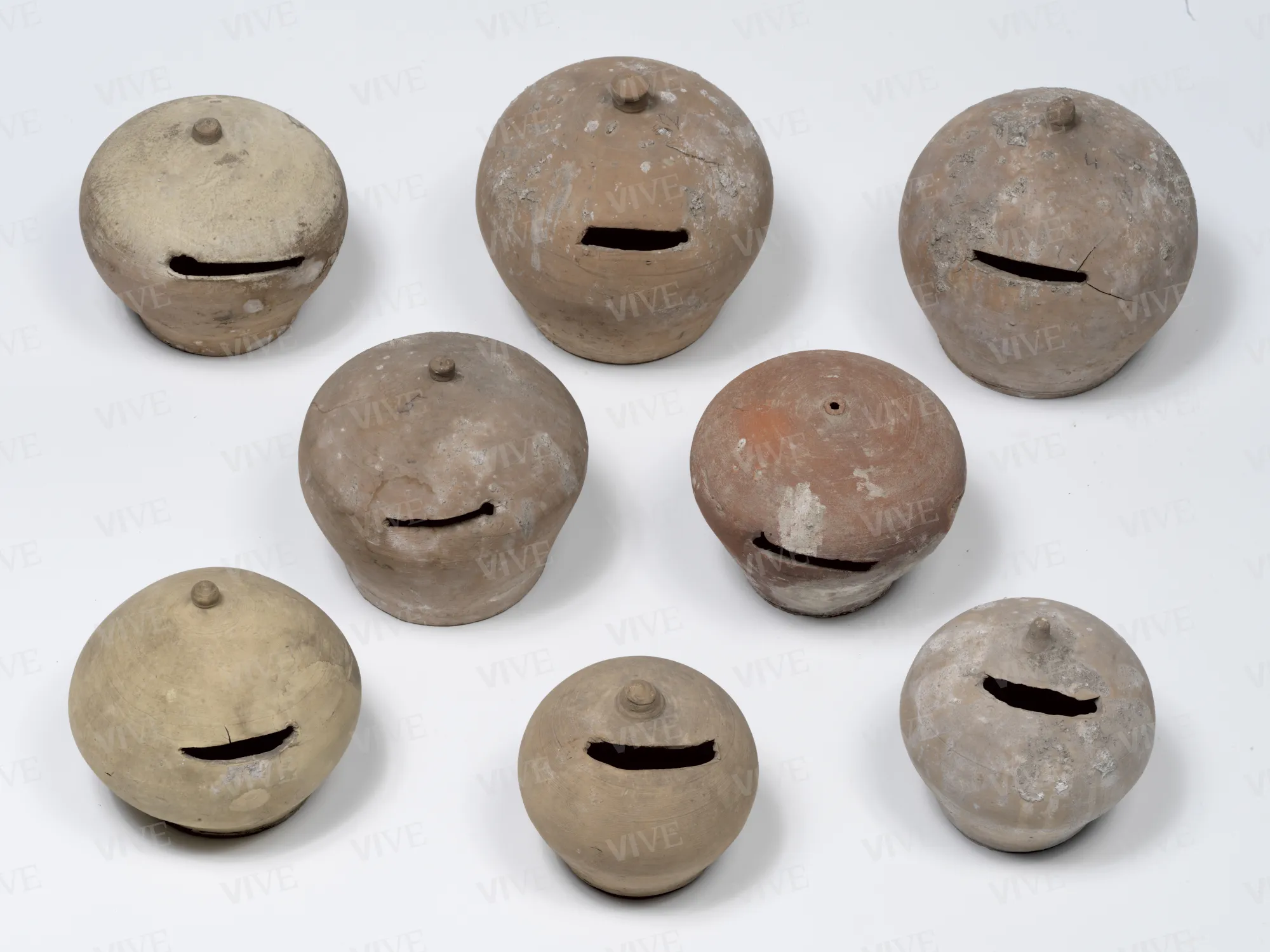
These terracotta money boxes were discovered underground during restoration work at Palazzo Venezia between the late nineteenth century and early twentieth century. They contained numerous medals depicting Pope Paul II, also known as Barbo. Created during the construction of the building, which commenced in 1455, the purpose of these money boxes was to hold foundation medallions—objects inserted into the foundations of buildings to commemorate the client.

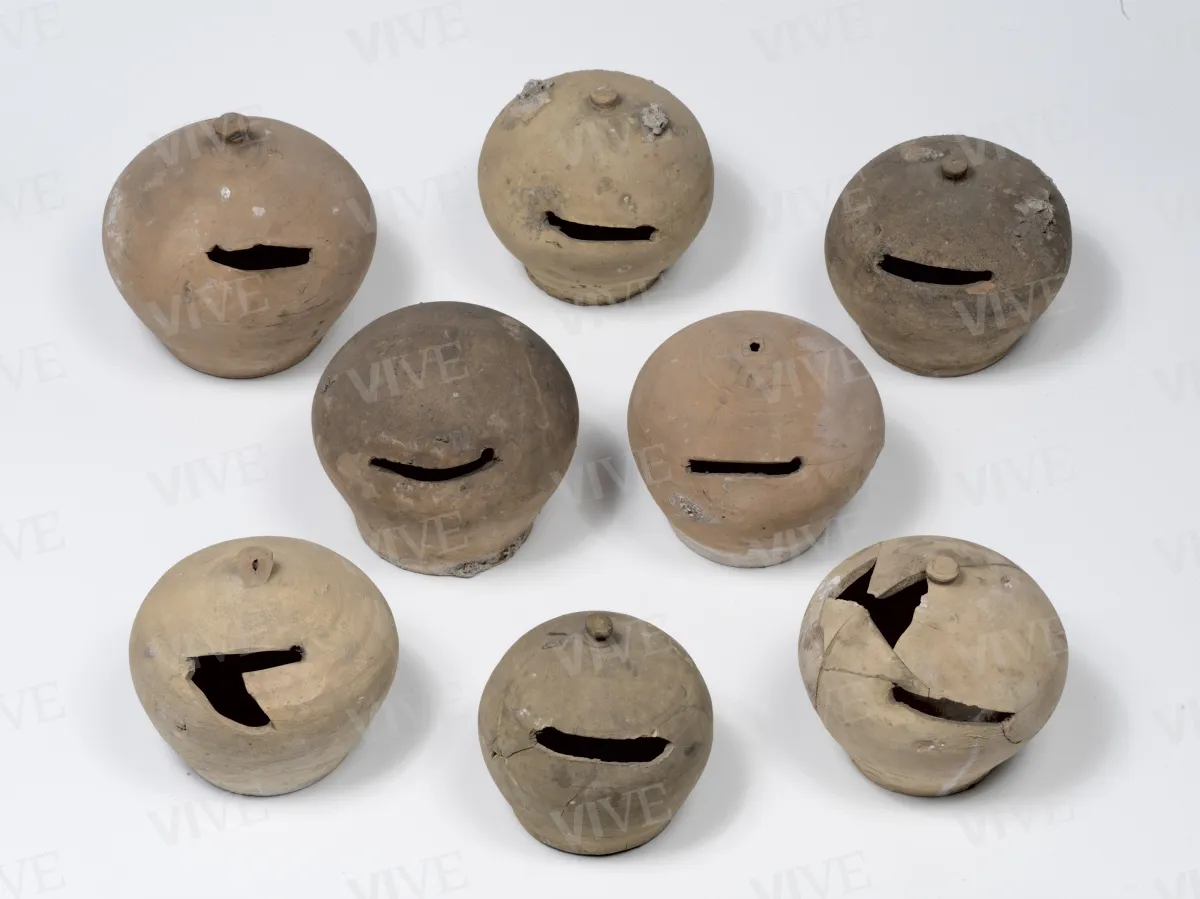

These terracotta money boxes were discovered underground during restoration work at Palazzo Venezia between the late nineteenth century and early twentieth century. They contained numerous medals depicting Pope Paul II, also known as Barbo. Created during the construction of the building, which commenced in 1455, the purpose of these money boxes was to hold foundation medallions—objects inserted into the foundations of buildings to commemorate the client.
Terracotta money boxes, likely crafted by Roman workers during the construction of the Palazzo di San Marco (now Palazzo Venezia), feature a spheroid body atop a large truncated base, with a small grip on the top and a sizable oblique opening on the front. These artifacts are devoid of decoration or markings, composed of fine light red earthenware, and exhibit widespread lime traces. In the literature, they are referred to as dindaroli or pignatte, as noted in handwritten records preserved in the museum archive (Balbi De Caro 1973, p. 34). During his commencement of construction on the Palazzo di San Marco in 1455, Cardinal Pietro Barbo advocated for the inclusion of foundation medals, a practice involving the insertion of objects connected to their commissioner into building sites to ensure their legacy (Hill 1910).
Documents related to the factory indicate that the builder of the building had allocated funds to purchase 129 pots, referred to as "bochalette" or "pignatis," to place medals in the new walls.” These funds were renewed in 1470 and continued until March 1471, indicating a consistent practice during the construction of the palace commissioned by the pontiff (Weiss 1958, pp. 74–75). The first evidence of the discovery of these pots dates back to 1876, during the reconstruction of the palazzo’s foundations. Despite challenges caused by flooding, earthen pots shaped like money boxes were found inside the wall, spaced three meters apart (Lanciani 1902, ed. 1989, pp. 68–69). Each pot contained two, three, or five cast medals bearing the effigy of Pietro Barbo, some with his cardinal titles and others with his papal titles, dating from 1455 to 1465. On the reverse side of many medals was a design of the façade of Palazzo Venezia, featuring battlements and two soaring towers (inv. 2992).
During the restoration and consolidation works conducted between 1911 and 1931, an additional sixteen containers and numerous loose medals were discovered, buried without any covering. At least three of these terracotta artifacts were found in the wall near the entrance to what is now Via del Plebiscito, another was concealed in a wall on the second floor of the building, and yet another was located in a niche above a door (Balbi De Caro 1973, pp. 24–28; Casanova 1980, pp. 22–26, n. 4). The placement of money boxes by the client throughout the Palazzo di San Marco signifies the pope’s appreciation for foundation medals at a time when this practice was still emerging. Notably, in 1468, Cardinal Jacopo Ammannati Piccolomini reportedly admonished the pontiff for his perceived vanity due to the substantial number of medals interred within the palace’s foundations (Barberini 2008, p. 51, note 5).
Giulia Zaccariotto
Entry published on 27 March 2025
Good.
Palazzo Venezia, excavations.
Some of the money boxes are currently on display in the museum.
Hill George Francis, The Medals of Paul II, in «Numismatic Chronicle», s. 4, X, 1910, pp. 340-369;
Weiss Roberto, Un umanista veneziano. Papa Paolo II, Venezia 1958;
Balbi De Caro Silvana, Di alcune medaglie di Paolo II rinvenute nelle mura del Palazzo di Venezia in Roma, in «Medaglia», III, 1973, 5, pp. 24-34;
Casanova, Maria Letizia, Palazzo Venezia: Paolo II e le fabbriche di San Marco, Roma 1980;
Lanciani Rodolfo, Storia degli scavi di Roma e notizie intorno le collezioni romane di antichità (1000-1530), Roma 1989;
Barberini, Maria Giulia, Il Palazzo di Venezia. La dimora privata del cardinale Pietro Barbo e il palazzo di Paolo II, in Barberini, Maria Giulia (a cura di), Tracce di pietra. La collezione dei marmi di Palazzo Venezia, Roma 2008, pp. 13-54.