Vittoriano


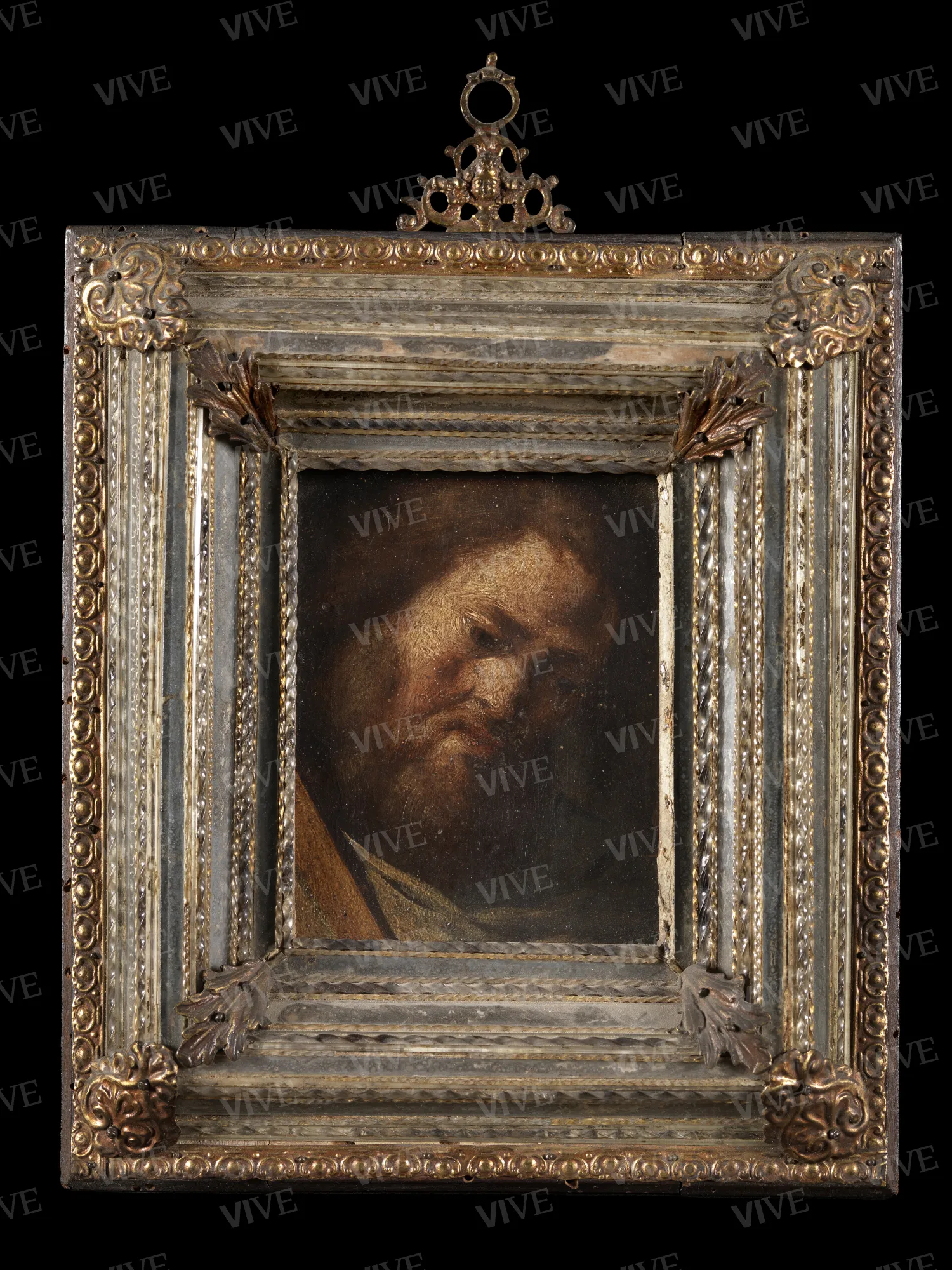
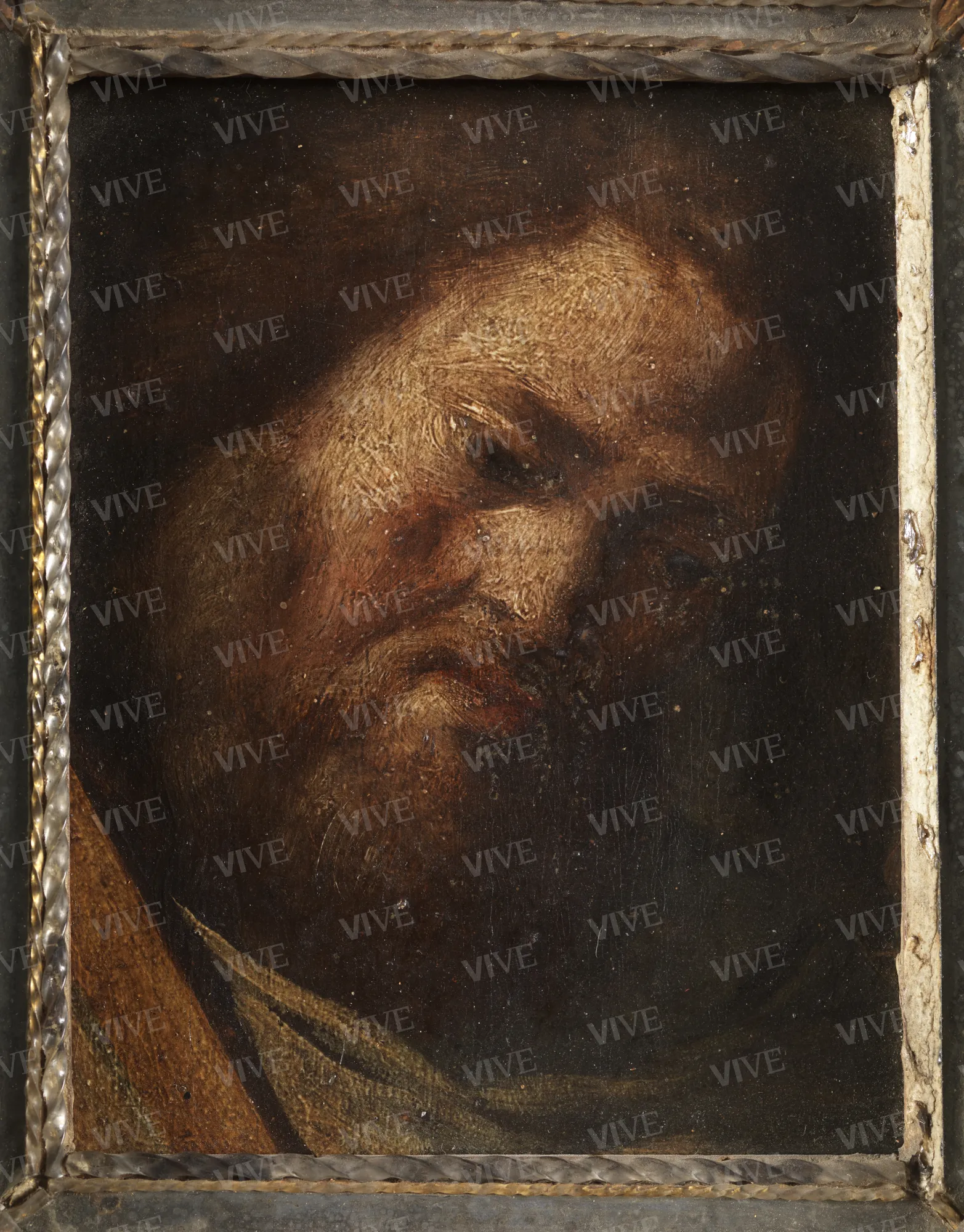
The face of a bearded man, potentially identifiable as a saint, is a fragment of a painting attributed to northern Italian art from the first half of the sixteenth century, where the influence of Lorenzo Lotto has been noted. The panel is enclosed in a Murano glass frame with silver and bronze fittings.
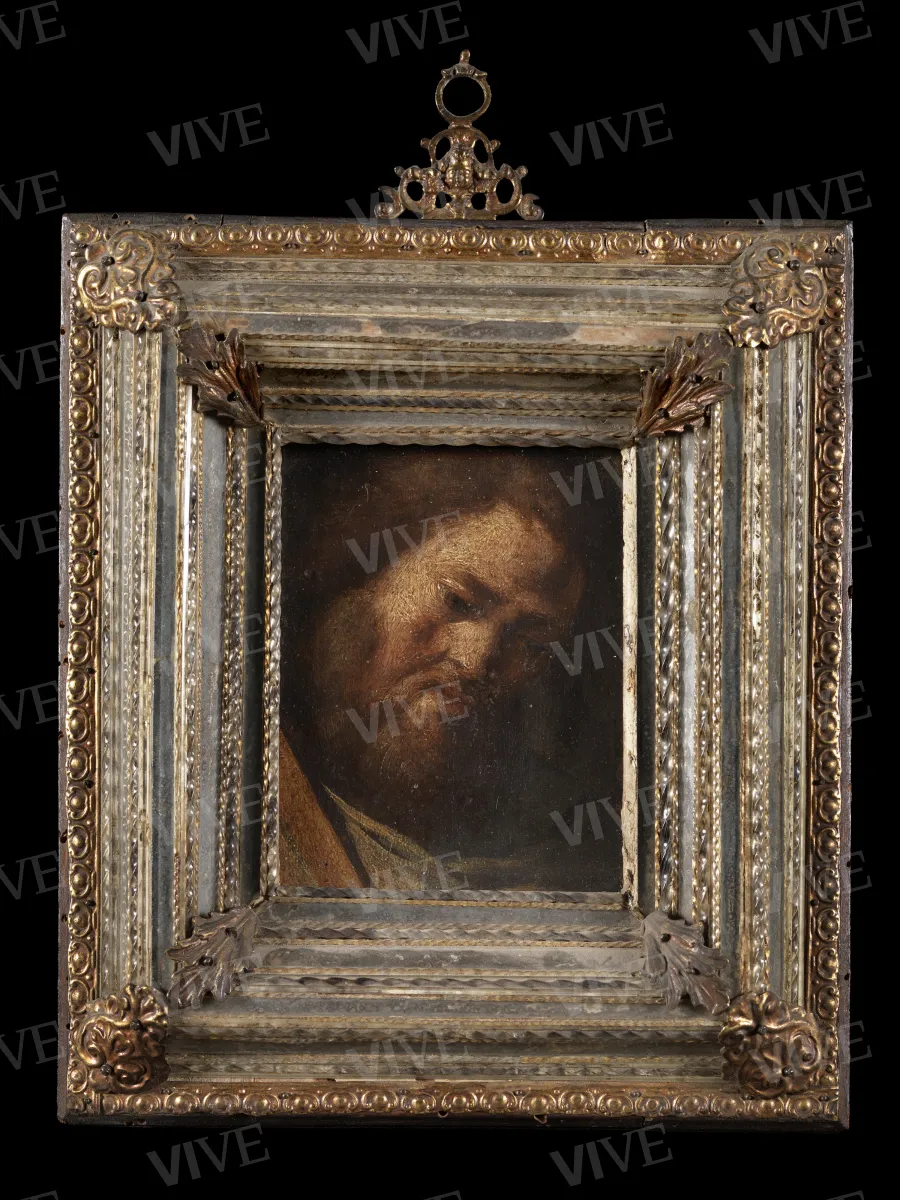
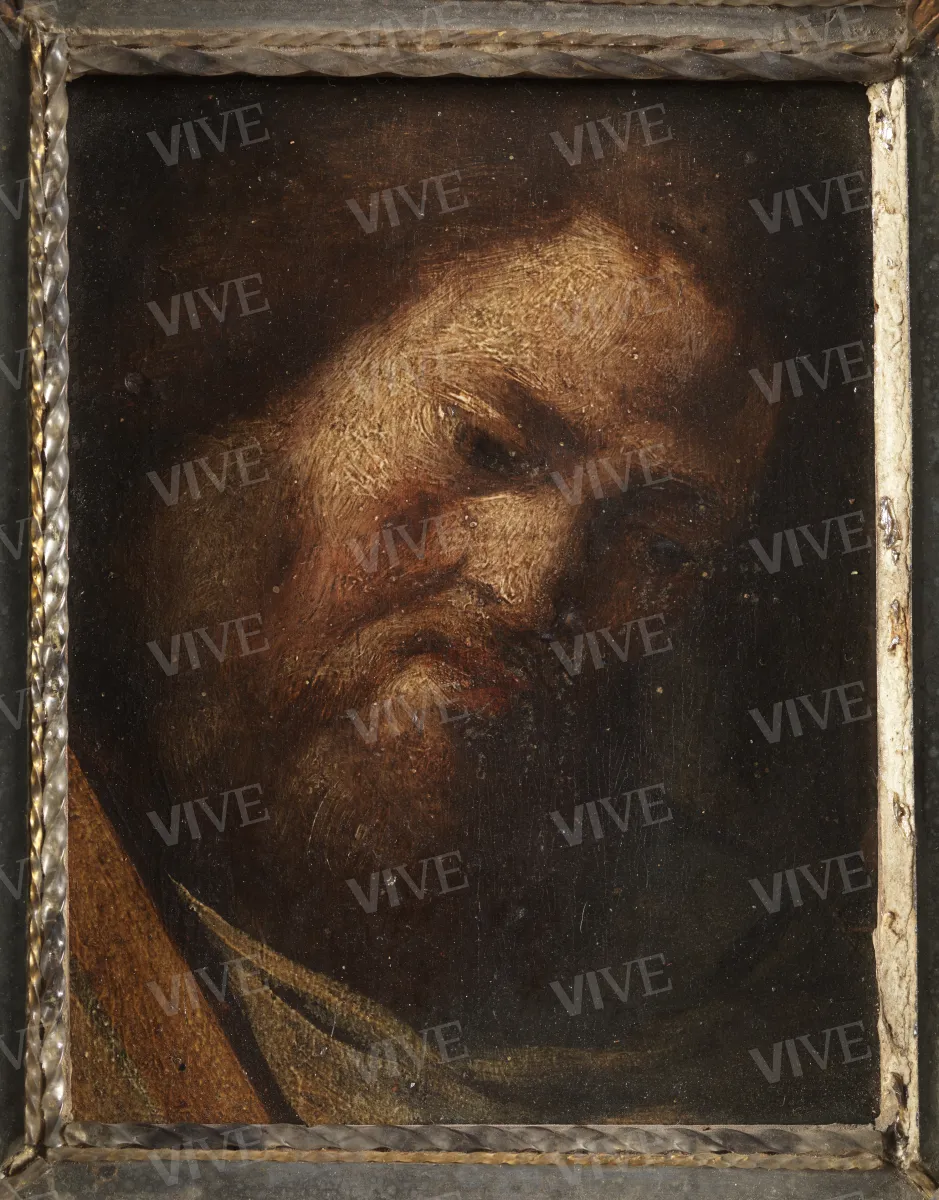
The face of a bearded man, potentially identifiable as a saint, is a fragment of a painting attributed to northern Italian art from the first half of the sixteenth century, where the influence of Lorenzo Lotto has been noted. The panel is enclosed in a Murano glass frame with silver and bronze fittings.
The painting portrays a male figure with his head inclined to the right. The melancholic expression is characterized by downcast eyes and lips pursed in an almost sulky grimace. The lighting highlights only the left side of his face, casting the rest in deep shadow, and reveals his red cheeks, which are covered by a thick beard and long hair. In the lower left corner of the painting, a fragment of the gray robe worn by the figure is visible, intersected by a diagonal wood-colored shadow, possibly cast by a cane or stick.
The artwork—acquired in 1931 by the Museo di Palazzo Venezia with funds from Henriette Hertz (as confirmed by a label) and originating from the collection of Enzo Montisci—features an inscription on the reverse side that likely pertains only to the frame and its creation: “Pericoli e Notari fecit Roma.“ It is possible that the name Pericoli refers to the lawyer Pietro Pericoli, who owned a “modest but well-assorted collection of paintings” in Rome, as catalogued in 1872. However, the painting in question does not appear in this catalog (1872 Catalog).
Reliable information regarding this work is not available. The small size of the piece and the confined relationship between the figure and the surrounding space suggest that it may be a fragment from a larger, now-lost composition. According to the internal archives of the Museo di Palazzo Venezia, this panel is attributed to Lorenzo Lotto. This attribution, although not entirely conclusive, can be justified by the fact that the physiognomy of the slightly inclined head, with its prominent beard and long hair forming an almost pyramidal shape, bears resemblance to some of the heads painted by Lotto.
The head of the figure, seemingly accompanied by a stick, draws an effective comparison to the study of Saint Roch housed in the Musée du Louvre, indicative of an invention from at least the mid-1520s (inv. RF 53019; Beguin 2008, 29–34). In the absence of additional evidence and pending a desired cleaning of the panel, while not discounting a connection to Lotto’s later works, it is advisable to assign the piece broadly to northern Italian production during the first half of the sixteenth century.
Lorenzo Mascheretti
Entry published on 12 June 2025
Fair.
On the frame, at the top: “Pericoli e Notari fecit Roma”;
on the frame, at the bottom: label “Acquistato col fondo HERTZ” (Purchased with the HERTZ fund).
Collezione Enzo Montisci, before 1931;
Rome, Museo Nazionale di Palazzo Venezia, purchased in 1931.
Catalogo della raccolta dei quadri posseduti in Roma dall’avvocato Pietro Pericoli, Roma 1872;
Beguin Sylvie, Note sur un dessin de Saint Roch de Lorenzo Lotto, in «Artibus et Historiae», 58, XXIX, 2008, pp. 29-34.