Vittoriano


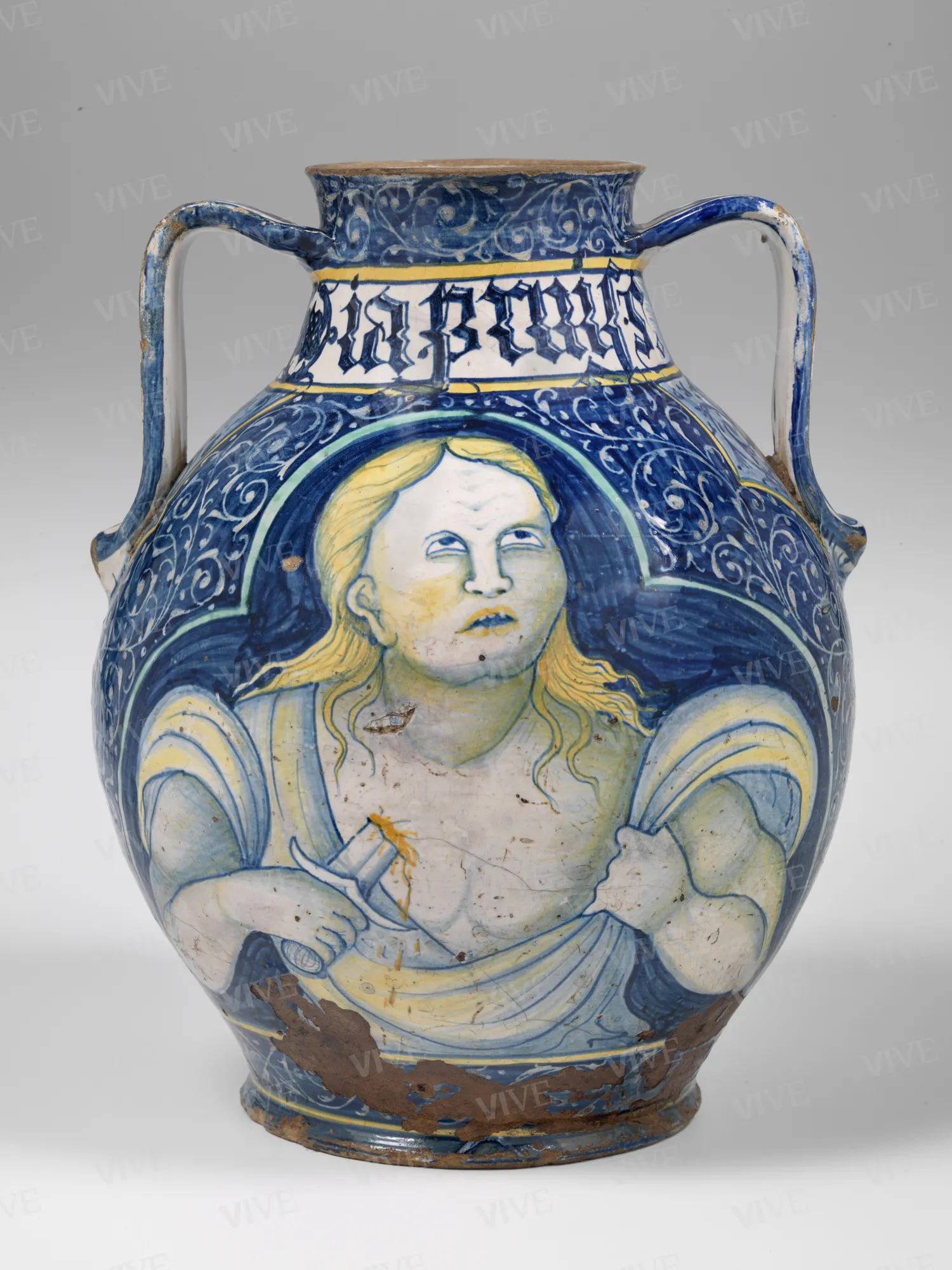
A pharmacy jar from the Orsini-Colonna collection, crafted in polychrome majolica, features a depiction of Dido stabbing herself in the chest. The neck of the jar is inscribed with the name of the medicine: “dia pruis s” (diaprunis solutivuum).
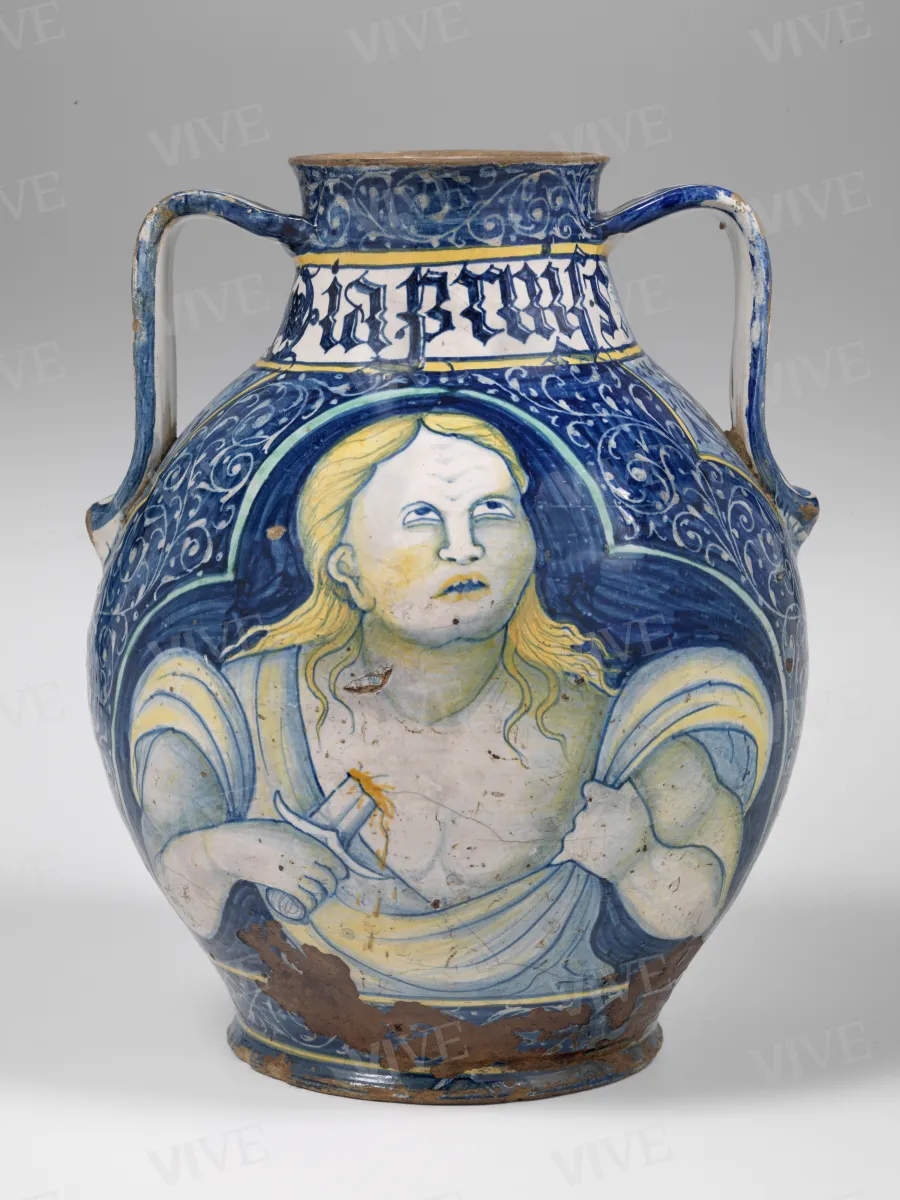
A pharmacy jar from the Orsini-Colonna collection, crafted in polychrome majolica, features a depiction of Dido stabbing herself in the chest. The neck of the jar is inscribed with the name of the medicine: “dia pruis s” (diaprunis solutivuum).
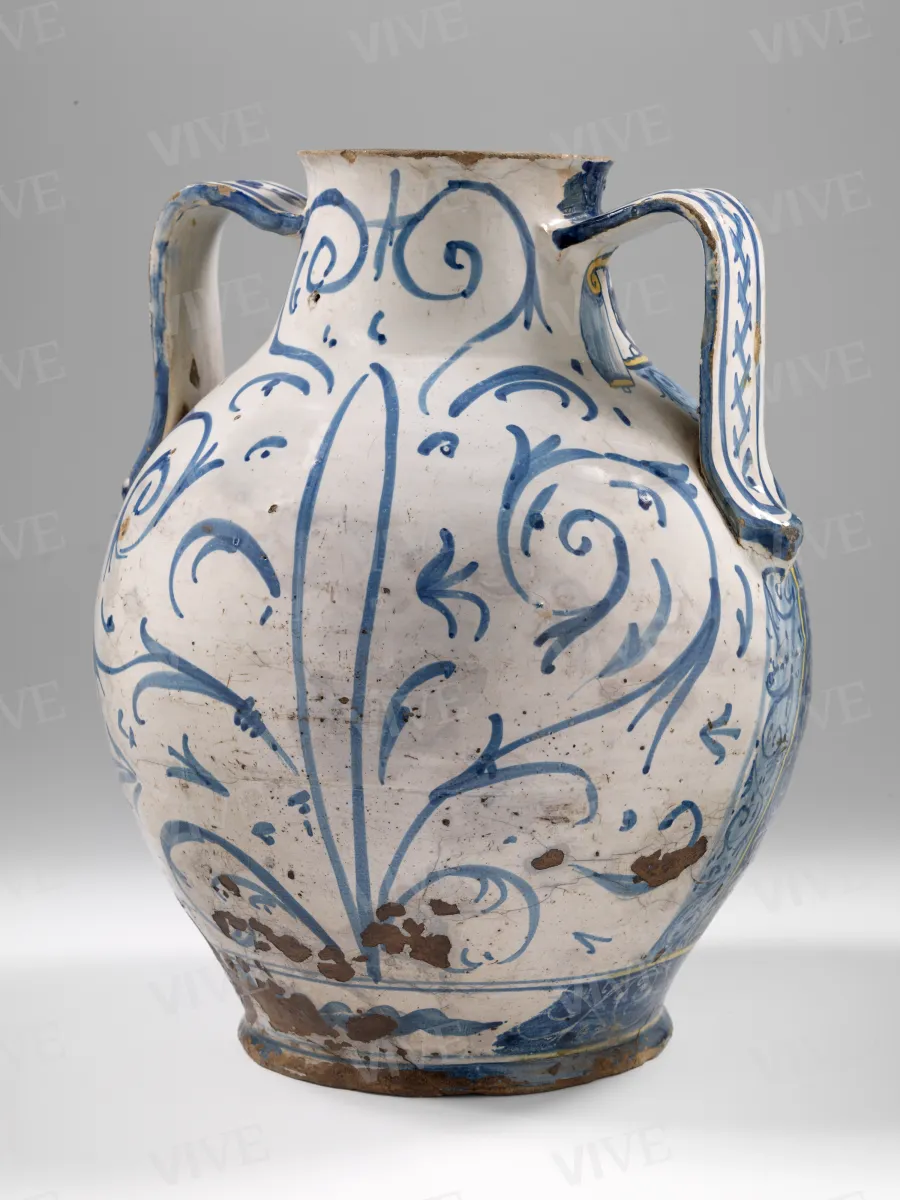
A tall globular vase with a flared neck, everted rim, and two ribbon handles connecting the neck to the shoulder. It is decorated with blue and yellow colors on tin glaze.
The vase features an illustration of Dido committing suicide by stabbing herself in the chest with a dagger. The neck of the vase is adorned with a cartouche that contains an inscription in Gothic script: ‘dia pruis s’, identifying the medicine held within the vase (diapruno solutivo). The vase, along with its pendant decorated with the same subject, which is also preserved in the Museo di Palazzo Venezia (inv. 984), is part of a notable apothecary set produced in Italy during the sixteenth century. Identified as Orsini-Colonna after a two-handled bottle in the British Museum depicting a bear embracing a column with the inscription “Et Sarrimo Boni Amici” (And we shall be good friends), this group has experienced various attribution changes. Initially assigned to the workshops of Faenza, research by Fiocco and Gherardi in 1984 confirmed its correct authorship to the workshop of Castelli (Teramo) under Orazio Pompei (a master born around 1507, who signed his name on several majolica pieces). The excavation of the warehouse beneath Pompei's home, where the words “Haec est domus Horatii figuli 1562” are inscribed on the entrance door, uncovered fragments that confirmed the attribution. The collection features intricate, elaborate forms such as dragon-spouted ewers inspired by metal containers, bottles, albarelli, and pill boxes, often adorned with male and female figures or scenes of mythological and allegorical nature. These objects possess significant aesthetic value and have consistently captivated early collectors of Italian majolica. As a result, items from this collection are now found in renowned public and private collections of Italian majolica.
Luca Pesante
Entry published on 12 June 2025
Good.
“Dia pruis s” (diaprunis solutivuum).
Purchased by Ugo Iandolo, 1919;
Rome, Museo Nazionale di Palazzo Venezia, 1919.
Fiocco Carola, Gherardi Gabriella, Il corredo Colonna-Orsini nella produzione cinquecentesca di Castelli. Proposte per un'attribuzione, in Pani Ermini Letizia (a cura di), Antichi documenti sulla ceramica di Castelli, Atti del convegno, Castelli 1984, Roma 1985, pp. 67-104;
Barberini Maria Giulia, Sconci Maria Selene, Guida al Museo Nazionale del Palazzo di Venezia, Roma 2009.